On July 1, 2026, multiple global outlets simultaneously reported a scientific breakthrough: researchers built a synthetic cell from scratch — starting with nothing but inert chemical molecules — that can grow, replicate its genetic material, and divide into two 「daughters.」 It’s called SpudCell. But the 190-page paper describing this work — praised by a Nobel laureate as 「an impressive step」 — was rejected by the top-tier journal Cell. And then things got unusual: instead of following the standard academic playbook of uploading to a preprint server for peer scrutiny first, the team sent the manuscript directly to journalists.
Together, those two moves detonated the synthetic biology community.
What Did They Actually Build?
Let’s be clear up front: SpudCell is not 「artificial life.」 It can’t survive on its own — scientists have to continuously feed it sugars, lipids, enzymes, and the ribosomes essential for making proteins. It has no defense system, no waste disposal. By any biological definition, it’s not 「alive.」
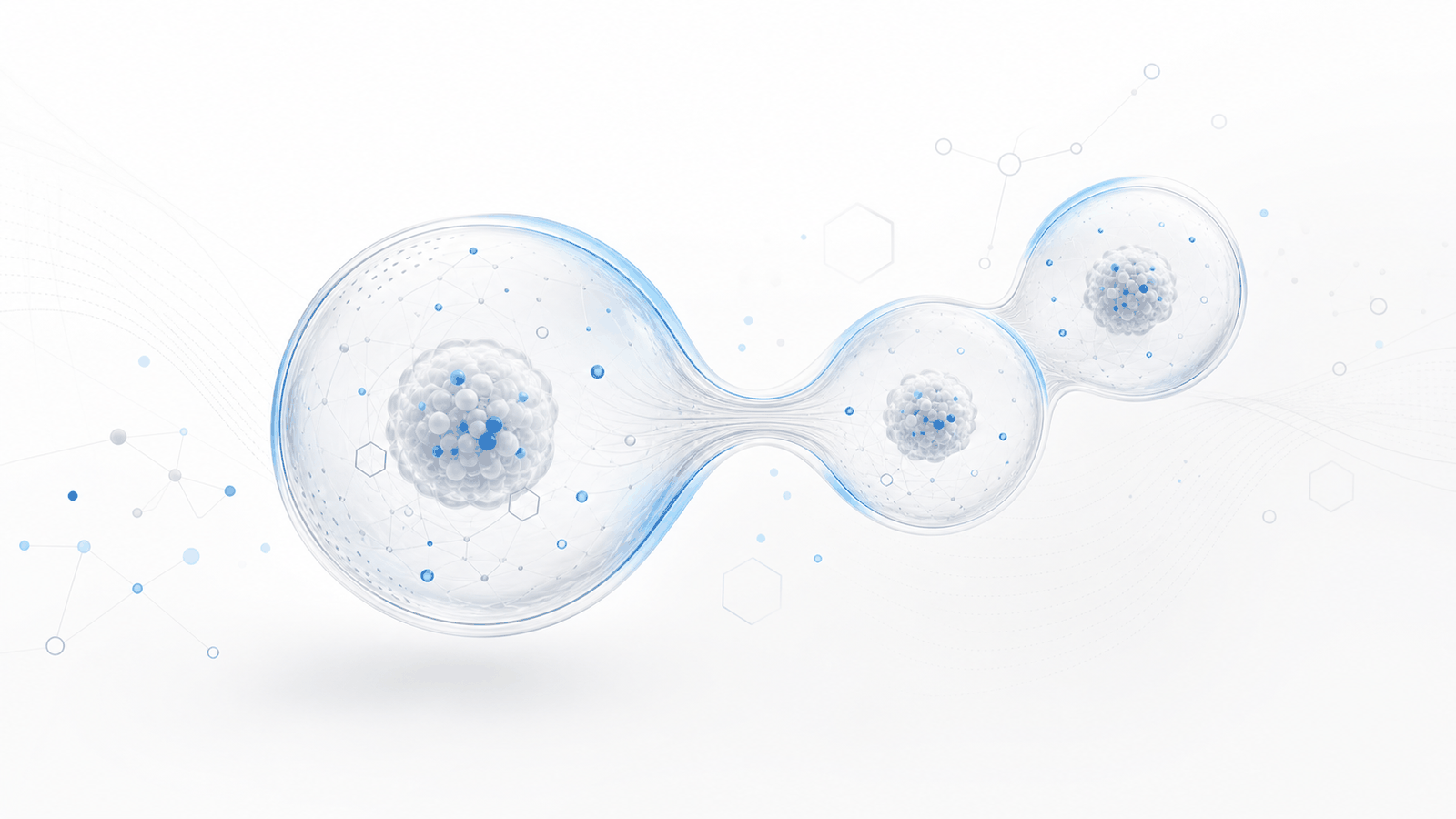
But it did something nobody had done before: it linked growth, DNA replication, and cell division — the three things only living cells do — into a single, complete cell cycle.
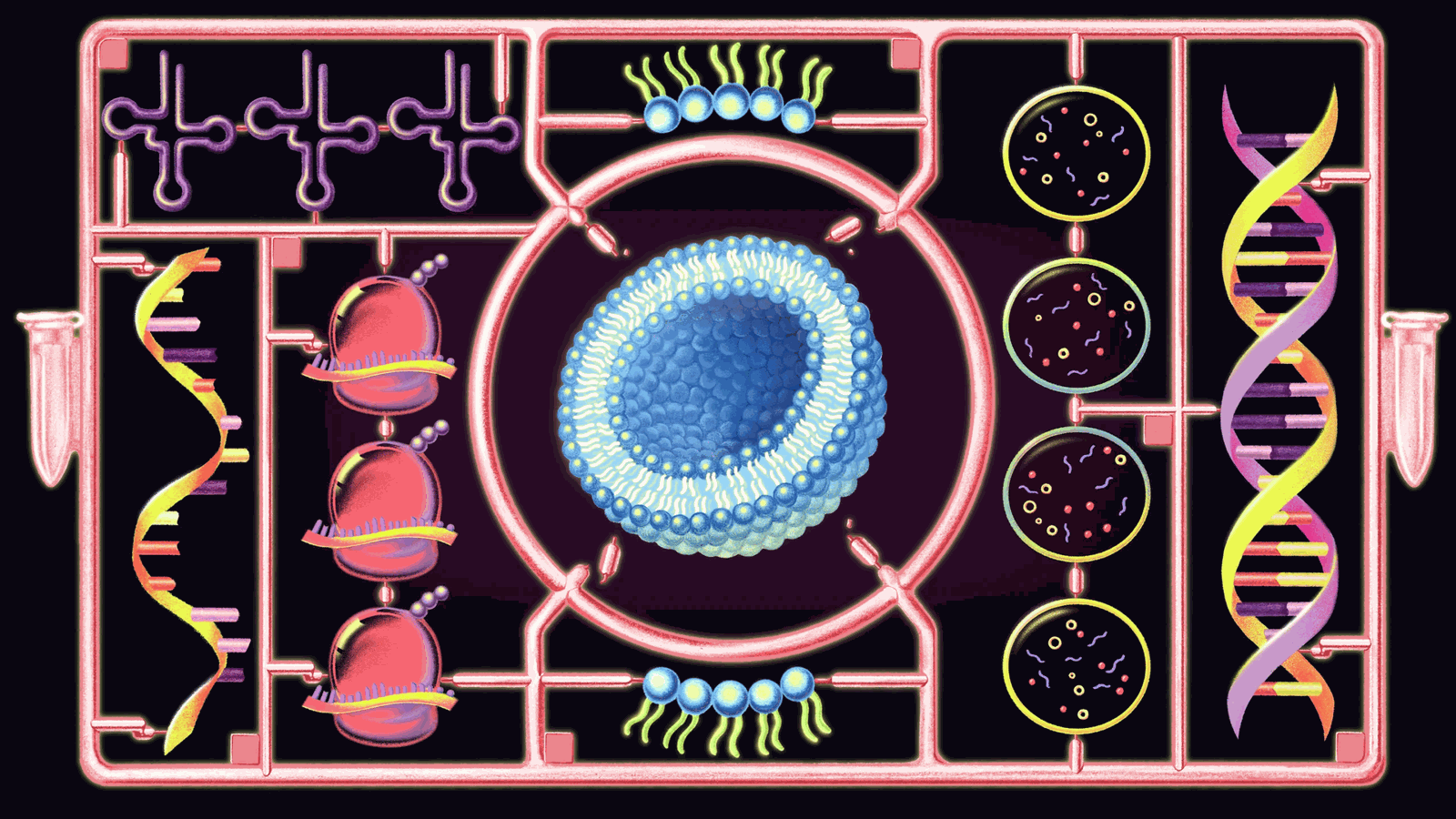
Imagine you have a bag of LEGO bricks. You follow the instructions to snap them into a little airplane. Then that airplane not only gets slightly bigger on its own, but also copies its instruction booklet and hands it to a nearby pile of bricks — and that pile assembles itself into another little airplane, with no further help from you. SpudCell is roughly that feeling.
Project lead Kate Adamala, a synthetic biologist at the University of Minnesota, said something revealing: 「I have the blueprint in my hand, the complete chemical parts list of every component.」 That matters enormously: because every part is synthetic and controllable, scientists can swap components in and out like mechanics working on a car — replace one gene with another, dial a molecule’s concentration up or down, and observe how the cell’s behavior changes.
How Did They Pull It Off?
I’ll try to explain this as plainly as possible.
Every living cell must accomplish four things: grow, copy its DNA, divide, and evolve. All four happen inside a tiny pouch made of a lipid membrane. The Adamala lab’s task was to solve each step separately, then stitch them together.
Step one: build the genome. The team designed a minimal synthetic genome with no metabolic genes (so the cell can’t process its own food), but containing the core instructions for DNA replication and protein production. The DNA replication system borrowed technology from two other labs; the protein-production system used a commercial 36-enzyme solution.
Step two: solve the feeding problem. Since the cell can’t 「cook,」 the team prepared 「takeout packs」 — small lipid vesicles packed with sugars, lipids, enzymes, and ribosomes. They installed protein 「docking ports」 on the cell membrane; when a takeout pack bumps into one, the two membranes fuse, and supplies flow in.
Step three: make the cell divide — the bottleneck that had stumped the entire field for years. Normal cell division requires a cytoskeleton — a network of protein filaments that partitions the DNA into two halves and cinches the membrane until the cell pinches apart. Synthetic biologists have never been able to engineer this complex process reliably. Adamala dug through the literature and found a clever workaround: attach a few protein 「tags」 to the cell membrane that attract other proteins to crowd around them, using sheer physical force to bend and snap the membrane. No cytoskeleton needed — just a 「crowd」 of proteins muscling the cell in two.
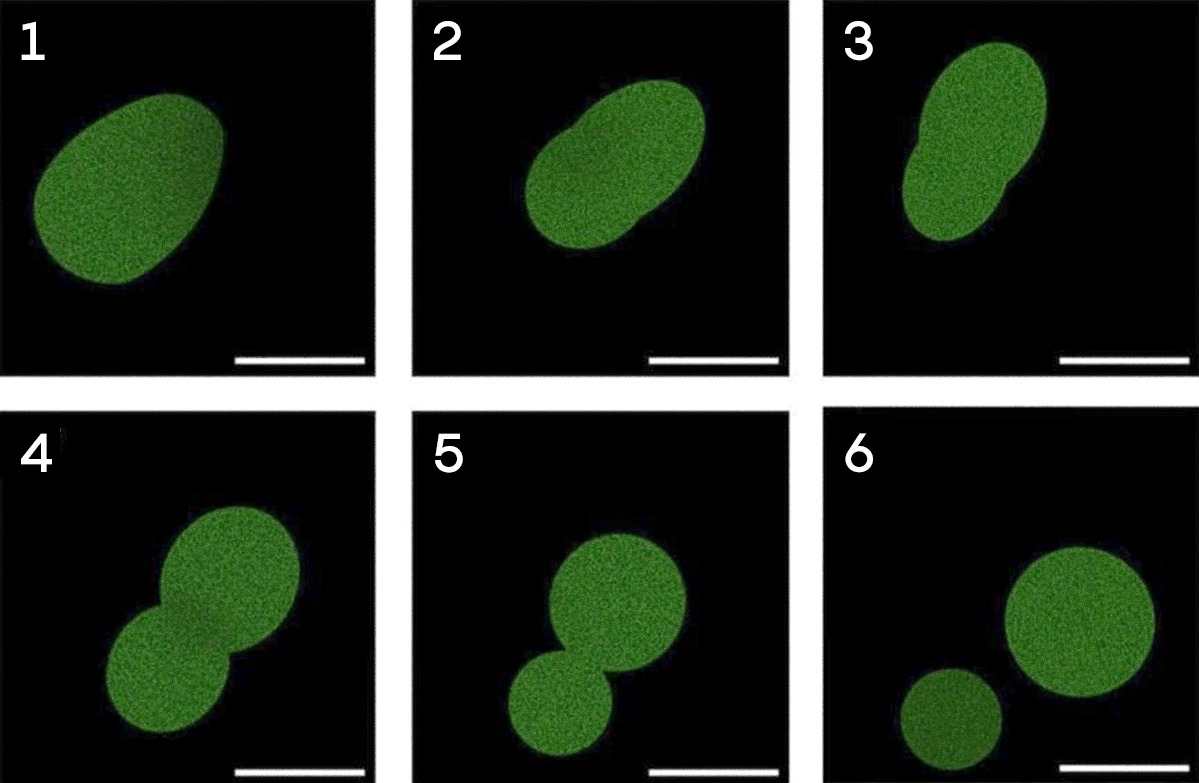
After several rounds of tweaking, it worked. 「For a while I couldn’t believe it,」 Adamala said. 「You just keep verifying, and verifying, until at some point you think — OK, this is real.」
One Step Forward, Ten More to Go
To be objective, SpudCell is still a long way from a practically useful synthetic cell. It depends on externally supplied ribosomes — a core component that every living cell manufactures on its own. It divides through that inefficient 「protein crowd」 mechanism, wasting huge amounts of time and energy. And the team hasn’t yet achieved genuine natural selection: they currently have to introduce genetic mutations manually because the DNA replication enzyme is too precise — it doesn’t make mistakes. Evolution requires a Goldilocks rate of random errors — too fast and the system collapses, too slow and nothing changes.
But the significance here isn’t 「we made life.」 It’s that it proves the path from inert molecules to a life-like system is actually walkable. It’s a bit like the Wright brothers’ first flight: they flew less than 40 meters, light-years from a Boeing 787, but they proved that a heavier-than-air machine can fly. Adamala used the same analogy herself: 「A modern cell is like a Dreamliner. What we built is a Wright Flyer — a bicycle frame with wings strapped on, flying thirty meters.」
After the Rejection
At this point I have to shift the lens from the lab to another battlefield.
According to Science magazine, the Adamala team first submitted their paper to the prestigious journal Cell. It was rejected. The reviewer’s rationale: SpudCell doesn’t count as 「real biology.」 Rejection itself is hardly unusual in academia — Cell’s rejection rate is sky-high, and subjective reviewer comments are a known hazard. The normal next step: revise the manuscript, submit to another journal, and in the meantime upload a preprint to bioRxiv so peers can read and critique it.
The team didn’t take that path. They sent the 190-page manuscript to journalists, and only after multiple global outlets ran coordinated coverage did they post it on bioRxiv.
And so a split occurred — not cell division, but a split in the scientific community.
Both Sides Have a Point
The critics’ logic is clear: peer review exists because science needs a filtration mechanism. History is littered with cautionary tales of breakthroughs that skipped review — cold fusion, the Korean stem cell fraud, various later-retracted blockbusters. Journalists aren’t domain experts; they can easily broadcast unvalidated results as settled fact. Kerstin Göpfrich, a synthetic biologist at Heidelberg University, put it diplomatically: 「This is an unusual way of operating.」 A HN commenter was more direct: 「Calling it ‘unusual’ is generous — this is an overreaction.」
But the supporters have an equally valid case. The peer review system itself has severe efficiency problems. One HN researcher shared their own experience: a paper got stuck in review for two years, was rejected; by the time it finally came out, the editor who’d rejected it came asking if the next paper could go to them — and the same journal even ran a news story praising the paper as 「groundbreaking.」 Darker scenarios exist too — a reviewer sits on your manuscript while their own lab races to replicate your results and publish first. After Cell shot them down with one reviewer’s 「not real biology,」 the Adamala team chose to route around the system and hand the results directly to the public to judge. In a sense, it was an act of protest against the existing review regime.
Both logics converge on the same contradiction: when a potentially paradigm-shifting breakthrough arrives, is academia’s gatekeeping mechanism protecting the public from misinformation — or slowing the spread of important discoveries?
What the Field Is Saying
Whatever one thinks of the release method, the scientific community’s assessment of the work itself isn’t low. Nobel laureate Jack Szostak, an origins-of-life researcher at the University of Chicago, said he doesn’t know of any other bottom-up synthetic cell attempt that has progressed this far. John Glass of the J. Craig Venter Institute used the phrase 「watershed event.」 Computational biologist Roseanna Zia at the University of Missouri said: 「We will remember this moment.」 Stanford synthetic biologist Drew Endy, after seeing SpudCell, decided to help Adamala found a nonprofit called Biotic, dedicated to making the toolkit available to researchers worldwide. His own words: 「I’m putting my life’s work into this.」
What I Think
This isn’t an article meant to pick a side. What I want to say is: the SpudCell story ultimately reflects a question bigger than 「can a cell divide?」 — when the pace of scientific breakthroughs starts outstripping the pace of institutional renewal, do the old rules need to change?
Peer review was born in the mid-20th century. Its design assumptions were: important discoveries arrive at a rate of maybe one per quarter, reviewers have ample time for careful evaluation, and the speed of information dissemination is the postal speed of a journal. In today’s synthetic biology, a single team might run dozens of experimental rounds in a week, and a news story can reach the entire planet in half a day. Which is costlier — having a paper stuck in review for two years, or having its conclusions misreported? There’s no universal answer, but the question genuinely deserves serious discussion.
As for SpudCell itself — whether it becomes a landmark or gets forgotten in the sea of preprints depends on follow-up validation. If other labs can reproduce the results using the Adamala team’s published methods, it may well be that 「Wright Flyer moment.」 If not, then this end-run around peer review will be written into the cautionary casebooks.
That’s science: no shortcuts. But sometimes, someone has to try walking a new path right at the edge of the rules.
References:
- https://www.quantamagazine.org/for-the-first-time-a-cell-built-from-scratch-grows-and-divides-20260701/
- https://news.ycombinator.com/item?id=48747304
- https://www.science.org/content/article/lab-created-spudcell (Science magazine coverage)
- https://biotic.org/research/spudcell/ (SpudCell official research page)