
How a 22-Year-Old Game Slipped Through Apple’s Walled Garden
On Saturday, July 4, an open-source project called “Generals-Mac-iOS-iPad” hit the top of Hacker News with 292 points. The project description was a single sentence: The 2003 classic real-time strategy game Command & Conquer: Generals now runs at native speed on Apple Mac, iPhone, and iPad. No VM. No emulator.
My first reaction: isn’t this just another old game port? What’s the big deal? But reading further, I realized this is far more than “porting.” The engine behind this project is a tool called Fable — a code translator that rewrites Windows program instructions directly into something Apple devices can execute, without emulating anything.
The implications stretch well beyond the resurrection of a 22-year-old game.
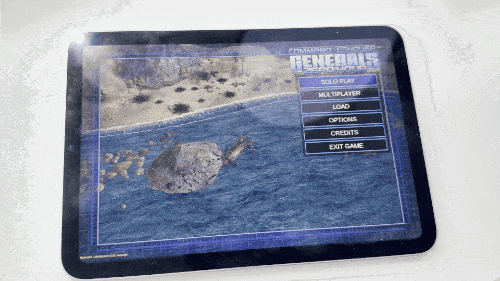 ▲ C&C Generals: Zero Hour running natively on an Apple Silicon Mac. Source: GitHub ammaarreshi/Generals-Mac-iOS-iPad
The Emulator’s Original Sin: Why Every Previous Approach Fell Short
If you’ve ever tried running Windows games on a Mac, you’ve likely used one of two approaches.
The first is a virtual machine — essentially installing a copy of Windows inside your Mac. It’s like building a second house inside your existing one and living in it. That second “house” consumes its own share of resources — RAM, CPU cycles, battery — and living inside it is never as comfortable as the main one. Games running in VMs typically suffer frame rate drops, input latency, and fans screaming at full throttle.
The second is an emulator — software that pretends to be a Windows PC, “fake-executing” Windows instructions one by one. This is like a person reading a foreign-language menu by looking up every single character in a dictionary: slow and error-prone. Emulator performance overhead typically ranges from 30% to 80%, which is nearly unacceptable for demanding games.
Apple’s transition from Intel to its own M-series chips starting in 2020 brought massive performance gains but also a side effect: Windows and Mac now speak fundamentally different “languages.” Before, they at least shared the same chip architecture. Now, even the underlying instruction set is completely different.
This means playing Windows games on an Apple Silicon Mac is harder than it’s ever been.
Fable Isn’t an Emulator. It’s a Translator.
Fable solves this problem in a fundamentally different way.
An emulator pretends: it continuously uses software to mimic a Windows hardware environment, step by step. That mimicry is itself an enormous performance cost.
Fable translates: it reads the game’s original code and rewrites it into a form Apple Silicon can understand. The finished product is a true, native Apple application — no intermediate layer pretending to be anything.
An analogy: an emulator is like hiring a simultaneous interpreter who translates every sentence in real time — slow and prone to mistakes. Fable is like having the entire book translated, typeset, and printed in advance. The reader gets a book in their native language, reading at full speed.
This difference shows directly in performance. On Apple M-series Macs, the Fable-ported Command & Conquer: Generals runs with “near-native fluidity” — the project author’s words. I haven’t tested it personally, but multiple developers on Hacker News report stable frame rates even on entry-level hardware like the M1 MacBook Air, with the fans barely spinning up.
Even more impressive is the graphics pipeline. This 2003 game uses Microsoft’s proprietary Windows graphics technology, which Apple devices simply don’t support. To get the visuals rendering on Apple hardware, the porter assembled a “translation chain” — converting the game’s graphics instructions through layer after layer of transformation until they become something Apple’s stack can understand.
Think of it as passing a message through a chain of interpreters: Chinese → English → French → Arabic. Each extra hop adds a chance for error. But in this project, all the “translations” are pre-compiled programs, so the runtime overhead is negligible.
One developer on HN wrote: “I’m surprised this even runs.” Another replied, sharply: “These low-level libraries are mature and stable enough — it shouldn’t be surprising. They were literally designed for this scenario.”
Apple’s Walled Garden, and the People Scaling the Walls
There’s an unavoidable topic here: Apple’s closed ecosystem.
Apple has never provided Mac support for Windows graphics APIs (DirectX), and it refuses to support Vulkan, the open-source cross-platform graphics standard. This means anyone who wants to bring a Windows game to Mac has to build their own “bridge” — like the five-layer translation chain in this project.
Apple’s logic isn’t hard to understand: they want you to develop games using Mac-exclusive technologies, so those games can only run on Apple devices — a “moat.” From a business standpoint, it’s defensible. But for gamers and developers, that wall means a vast library of classic titles is locked out of the Apple ecosystem.
Tools like Fable are, in essence, scaling that wall — using technical means to bypass platform barriers. The message: you don’t need Apple’s permission, and you don’t need to wait for a game publisher’s official port. One developer plus an AI code translator can turn a 22-year-old Windows game into a native Apple app today.
This raises a provocative question: when code translation becomes cheap and reliable enough, do platform walls still exist?
One HN commenter captured it memorably: “I was recently complaining about GTA VI being platform-locked, unable to pass it around like a favorite book. But maybe I just need to archive the whole install package, and in the not-too-distant future, an AI will resurrect it onto any platform at near-zero cost.”
Another replied even more directly: “Assuming DRM doesn’t get in the way, I’d bet that by the time GTA 6 is ‘old’ enough to need porting, this kind of thing will be so common it won’t be worth a HN post.”
The Subtext
Let’s be clear-eyed: Fable didn’t do this alone. According to multiple developers on HN, Fable (Anthropic’s Claude Fable model, accessed through Claude Code) contributed roughly 19 commits to a project with over 2000 total. The real heavy lifting came from GeneralsX — a team of developers who used EA’s GPL v3 open-source release of the Command & Conquer: Generals codebase to complete the core Windows-to-Mac-and-Linux port. What Fable added, on top of that foundation, was iPhone and iPad touchscreen support.
Some HN users called the narrative “a bit clickbaity” — giving Fable all the credit while ignoring the enormous prior work. That criticism is fair.
But I think focusing on “how much Fable contributed” misses the point. The real signal is this: AI-assisted cross-platform code translation is crossing the threshold from lab concept to practically usable tool. Today it helped bring a 2003 game to the iPad. Tomorrow, could it bring the Windows productivity software you bought a decade ago to your Mac? The day after, could it become part of the operating system itself, making all programs natively cross-platform?
Once this direction gains momentum, it doesn’t just change gaming. Office suites, design tools, professional software — the entire cross-platform logic of the software ecosystem could be rewritten.
Of course, it’s too early to celebrate. Fable’s current capabilities, reproducibility, and reliability with complex commercial software all remain unproven. But those 292 upvotes on HN represent a community of technologists seeing a door begin to open.
Reference links:
- Generals-Mac-iOS-iPad project page (GitHub)
- Hacker News discussion (292 points, 123 comments)
- Claude Fable model introduction (Anthropic)
- GeneralsX upstream project (original macOS/Linux port)
- EA open-sources C&C series under GPL v3
- Fable 4D Splat format (tangential topic)
Image note: Source materials (GitHub project README and HN discussion page) contain only 1 content image — the game screenshot above. All other img URLs on the page are decorative elements (favicon, fluidicon) with no additional content images available.