On July 6, 2026, Xbox CEO Asha Sharma sent an internal memo to employees worldwide. The first line read: “We are embarking on the most significant restructure in Xbox’s history.”
What followed made the entire gaming industry gasp — 3,200 people laid off (20% of the division), four game studios divested, management layers slashed from 14 to no more than 5.
And the line “our business is not healthy” may have been the politest sentence in her entire email.
Because flip open Xbox’s financial books, and the numbers look like this: roughly $5 billion in quarterly revenue, but only $150 million in profit — a 3% margin.
For context: Sony PlayStation and Nintendo typically run margins between 10% and 30%. Microsoft’s other core divisions expect margins around 30%. Yet Xbox — the division Microsoft poured over two decades of effort and nearly $70 billion into acquiring Activision Blizzard for — now keeps just three cents of every dollar it brings in.
As one HN commenter put it: if you took that operating capital (roughly $4.85 billion per quarter) and just bought Treasury bonds at 3.5% annual interest, you’d earn more lying on the couch than actually running Xbox.
In my view, that is the reality of Xbox in 2026.
Game Pass: A Sweet Poison
The story starts in 2017.
That year, then-Xbox chief Phil Spencer launched Game Pass — an “all-you-can-play” game subscription service. Think Netflix for gaming: pay a dozen-plus dollars a month, play from a library of hundreds of titles.
In 2018, Spencer made the decisive move: all Microsoft first-party new releases would launch on Game Pass on day one. That meant you didn’t need to spend $60–70 to buy Halo Infinite or Starfield separately — as long as you had a Game Pass subscription, you could play them the moment they launched.
The strategy sent shockwaves. Gamers were delighted — who wouldn’t love playing blockbusters at a fraction of the price? Gaming media praised the “business model innovation.” Spencer was hailed as a hero “fighting for the players.”
But what happened next thoroughly vindicated a basic economic principle: below-cost pricing is unsustainable.
Let’s look at some numbers. According to industry analyst Christopher Dring’s research, once a game enters the Game Pass Day One catalog, its premium retail sales on the Xbox platform drop by approximately 80%. Activision Blizzard (already acquired by Microsoft) itself admitted in FTC filings that subscription services “severely cannibalize buy-to-play game sales,” especially the Day One model.
In 2024, Call of Duty: Black Ops 6 became the first entry in the franchise to launch on Game Pass Day One. By Bloomberg’s estimate, that single decision cost the title roughly $300 million in lost revenue.
This isn’t a simple “thin margins, high volume” situation. Game development costs routinely run into the hundreds of millions. AAA titles take 4–6 years to produce. If every game has its retail value zeroed out on launch day — and when Game Pass subscriber growth stalls (growth visibly plateaued after 2024) — the model becomes: use limited subscription revenue to fill a bottomless pit of rising content costs.
Put bluntly, the Game Pass business model rests on a hidden, fatal assumption: subscriber numbers must keep growing fast. The moment growth stalls, a cost scissors opens — ballooning game production costs on one side (Activision Blizzard, Bethesda, and other studios burning billions annually), stagnant subscription revenue on the other.
Sharma wrote bluntly in her memo: “We made bets on Game Pass, a multiplatform strategy, and a broader content portfolio. Those businesses have created value, but they have not grown fast enough. Meanwhile, our core business has continued to weaken.”
A $69 Billion Lesson
If Game Pass was a failure at the economic-model level, the Activision Blizzard acquisition was a misjudgment at the strategic level.
In October 2023, Microsoft completed its $68.7 billion acquisition of Activision Blizzard — the largest deal in gaming history and the largest acquisition in Microsoft’s history. The logic was clear at the time: bring Call of Duty, World of Warcraft, Diablo, Candy Crush Saga and all these IPs under one roof, making the Game Pass content library irresistible.
But the post-acquisition reality was: these IPs are indeed powerful, but they were already highly profitable. Call of Duty reliably sells 20–30 million copies a year at $70 each — that alone is over a billion dollars in annual revenue. Stuffing it into a monthly Game Pass subscription essentially converts high-margin retail revenue into low-margin subscription revenue.
Sharma admitted a sobering figure in her memo: “In a typical year, we get back about 36 cents for every dollar we put in.” Meaning Microsoft’s return on investment in these studios is -64%.
The implication of that number is heavy. Microsoft knows how to make software — Windows, Office, Azure are all money-printing operations. But gaming’s economics are nothing like software’s. Software can be copied infinitely at near-zero marginal cost. Every AAA game production is a one-time, enormous bet. Cyberpunk 2077 cost over $300 million to develop. Grand Theft Auto VI reportedly cost over $1 billion.
Microsoft applied a platform mindset to content creation. The result: a collection of brilliant but loosely managed studios, an internal management structure ballooning to 14 layers, platform teams swelling 40% compared to the previous hardware generation — while player numbers and playtime actually declined.
The Console’s “Cyclical Curse”
If the first two problems were self-inflicted, the third is one the entire industry faces.
One highly upvoted HN comment cut to the heart of the console industry’s fundamental problem: the console business is deeply cyclical. Nintendo, because it only does gaming, makes the cycles obvious — after selling 140 million Switches, the next generation’s performance directly determines the company’s survival. Sony and Microsoft, cushioned by larger parent companies, have these cycles masked — but they have never gone away.
Typically, a console generation’s lifecycle goes like this:
- Launch phase: high marketing spend, hardware sold at a loss (Sony lost over $200 per PS3 at launch)
- Mid-cycle: manufacturing costs drop, game sales explode, margins peak
- Late-cycle: hardware sales decline, exclusive content dwindles, margins contract, all hands on deck for the next generation
But the ninth generation (Xbox Series X/S and PS5) completely broke this pattern. Historically, consoles launched in 2020 should have seen significant manufacturing cost reductions by around 2024. Reality: costs didn’t come down — they went up.
As global AI data center construction went on a buying frenzy for memory chips and storage, prices of key components kept climbing. Microsoft was forced to raise Xbox console prices three times in 13 months — the exact opposite of the historical pattern of “consoles get cheaper over time.”
Sharma called it “the worst hardware crisis in the history of the industry” in her memo. That sentence, coming from the CEO of one of the world’s three major console platforms, carries real weight.
Microsoft’s Ambition Crashed Into Gaming’s Reality
At this point, a clear storyline emerges. Microsoft’s ambition for Xbox was never just “build a good game console.” Since Satya Nadella took over as CEO in 2014, Microsoft’s strategy has been “cloud-first, subscription-first, platform-first.” Xbox was positioned as the consumer-facing beachhead for this strategy.
The plan went like this: build an unassailable content empire through mega-acquisitions → lock users into the subscription ecosystem with Game Pass → user growth drives economies of scale → scale drives down marginal costs → profits roll in.
This script played out beautifully for Office 365 and Azure.
In gaming, the script failed completely.
Three reasons:
First, content doesn’t have declining marginal costs. Every new game is a one-time, massive investment starting from zero. Second-party (independent but exclusive) and third-party studios certainly can’t supply games for free indefinitely. Netflix can replay the same episode of Friends ten thousand times, but player enthusiasm for the same game typically lasts weeks to months.
Second, console hardware is a loss leader. Microsoft doesn’t make money selling Xbox consoles (it even loses money on them). It relies on game sales and subscription services to subsidize the hardware. But when Game Pass cannibalizes game sales too, the entire ecosystem loses its profit pillar. This isn’t like the iPhone — Apple makes its fat margins on hardware; services are just icing on the cake.
Third, players’ time is more finite than their wallets. “Hundreds of games, play all you want” sounds amazing, but how many games can a typical player seriously play in a month? When subscription content explodes while each user’s actual playtime stays flat, the marginal utility of the subscription declines. In other words, for a user, the difference between paying $15 to play 2 games and paying $15 to play 200 games isn’t that big — because they only have 10 hours a week to game.
These structural problems, in my view, cannot be solved by appointing a new CEO or laying off a few thousand people. They are contradictions baked into the business model itself.
What This Restructuring Actually Means
Back to Sharma’s restructuring plan. Specific measures include:
- Divesting four studios: Compulsion Games and Double Fine Productions returning to independent operation, Ninja Theory and Undead Labs sold to new owners. French studio Arkane is evaluating “strategic options” — likely code for being sold too.
- Management layer slashing: from as many as 14 layers in some departments down to no more than 5, ideally 3. External vendor spending cut by 50%.
- Mojang (Minecraft) and King (Candy Crush) now report directly to the CEO: these are the most profitable, highest-MAU units in the Xbox portfolio. Giving them greater autonomy is essentially protecting the successful studios from being dragged down by a failing strategy.
- New COO role: filled by Helen Chiang, a nearly 20-year company veteran, overseeing end-to-end P&L across content, hardware, platform, and services.
Sharma was candid: “Our investment in Xbox will not decrease this year, but we will invest with a sharper focus, greater discipline, and clearer priorities.”
Translation: we’re not spending less, but we’re going to stop wasting it.
This Is Bigger Than Xbox
Looking back from mid-2026, the significance of Xbox’s crisis extends far beyond one gaming company.
It is a reckoning for the logic that has dominated the tech industry for a decade: “burn cash to grab users first, figure out how to make money later.” Uber subsidizing rides to capture markets. Bike-shares flooding every street corner. Community group-buying apps selling eggs for a dime. The logic behind all of them is the same as Game Pass Day One: buy growth with capital, trust that scale eventually brings profits.
But Xbox proved: not every industry works this way. When a business’s unit economics (does each unit sold make money or lose money?) is negative from day one, getting bigger just means losing more. That 3% margin is the result of this model failing systemically.
Another HN comment worth pondering: “Microsoft bought all these studios, all this IP, then managed them into the ground, and now they’re selling or shutting them at the bottom of the market. That’s not a strategic pivot. That’s value destruction.”
That line may be harsh, but it’s not necessarily wrong.
What’s the future of Xbox? Sharma says she aims to return to a growth trajectory in 2027. But Xbox needs to answer a fundamental question: in an industry where content costs only go up, hardware margins trend toward zero, and user attention keeps fragmenting — what is the sustainable model for a gaming platform?
Sony is asking. Nintendo is asking. Steam is asking. Even Netflix, just now entering the space, is asking.
And Xbox’s 3% margin is the most honest answer to that question so far.
References:
- Resetting XBOX — Xbox Wire official announcement
- Hacker News discussion
- CEO admits Xbox sees three to 10 times lower margins — GamesRadar+
- Xbox Will Lay Off 3,200, Part Ways With Four Studios — Kotaku
- Xbox Fires Thousands, Shuts Five Studios — Tech Times
- Game Pass Isn’t Sustainable — TweakTown
- Game Pass titles expected to lose 80% of sales — TrueAchievements
- Xbox’s Strategic Pivot — Sina Finance (Chinese)
- Xbox Launches Largest Restructuring in History — NetEase (Chinese)
Image credits:
 Image source: Xbox Wire original post — Xbox boot screen
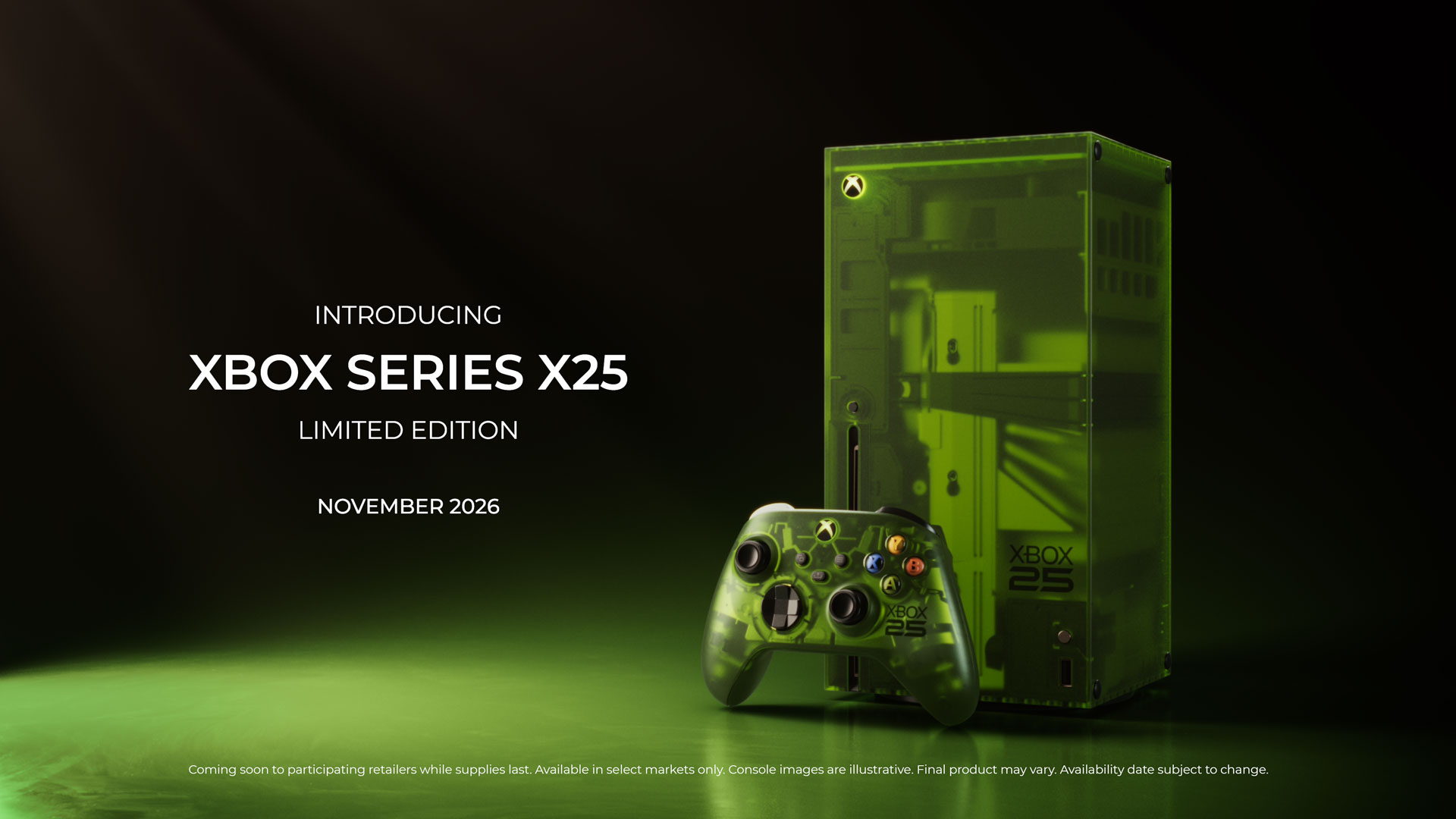 Image source: Xbox Wire original post — Xbox X25 game collection showcase
The original post contains only the two content images above (the rest are site logos and UI elements). Full image URLs:
https://xboxwire.thesourcemediaassets.com/sites/2/2026/05/Bootup_Wire-9c068aa206c9a72d2b1f-1900x1080.pnghttps://xboxwire.thesourcemediaassets.com/sites/2/2026/06/X25-Collection-44fa4f8521aeaf755181.jpg