A ¥79 T-shirt from Uniqlo — except the back isn’t printed with a pattern or a slogan, but with a wall of text that looks, to the untrained eye, like complete gibberish. In July 2026, this T-shirt hit 1,249 points on Hacker News, making it the top post of the day.
The story centers on tech blogger Tris Sherliker. His wife spotted the shirt while shopping — a Uniqlo × Akamai charity collaboration. The front features a heart wrapped in curly braces {}; the back is covered in dense rows of letters and numbers, the kind of thing you’d expect from a printer gone haywire.
Sherliker recognized it instantly: this wasn’t gibberish. It was a program in disguise.
Why Disguise the Code?
In the programming world, readability is a virtue — you write code so your colleagues can understand and modify it. But the code printed on this T-shirt did the exact opposite: it was wrapped in a layer of Base64 encoding, turning readable instructions into a meaningless string of characters.
Base64 isn’t sophisticated encryption. Think of it as a translator — it converts arbitrary content (text, images, programs) into a combination of 64 safe characters: upper and lowercase letters, digits, plus signs, and slashes. For example, “Hello” becomes “SGVsbG8=”, completely obscuring the original meaning. The real purpose of this encoding is safely ferrying data between different systems — not hiding things.
But on this T-shirt, it was absolutely used for hiding. The very first line on the back reads #!/bin/bash — the Linux convention for “execute what follows using the Bash interpreter.” The next instruction: decode the Base64 blob that follows, then run it.
To put it bluntly: if what was printed on the back of this T-shirt had been malicious code, and you typed it into your computer and ran it, your machine would be compromised. When Sherliker saw that line, he turned to his wife and said, “This is basically how viruses spread.” Then he bought the shirt.
Fortunately, it wasn’t a virus. It was an Easter egg — a hidden surprise message, waiting for someone curious enough to find it.
How Hard Is It to Pull Text Off a T-Shirt?
Back at his computer, Sherliker faced a deceptively simple problem: how do you extract text from a photo of a T-shirt, character for character, without introducing errors?
The problem is that Base64 encoding has a fragile property: zero error correction. Get a single character wrong — mistake an uppercase I for a lowercase l, or a digit 0 for the letter O — and the entire decoding fails. The constraint was unforgiving: transcribe several thousand characters from a photograph of wrinkled fabric, without a single mistake.
Sherliker used three methods with cross-validation. First, Android’s “circle to search” feature for text recognition. Then the open-source tool Tesseract, with a few parameter tweaks. Finally, he fed the image to the AI assistant Claude for a third pass. He laid the three results side by side, compared them character by character, and manually corrected every discrepancy.
This took an entire day.
One Lobsters user summed it up: “This is the true engineering spirit — tried three automated approaches, then accepted reality and fixed every remaining error by hand.”
In the end, Sherliker had the complete Base64 string. After decoding, a Bash script annotated with both English and Japanese comments emerged.
What Did the Script Actually Do?
The decoded script was surprisingly clear in its logic — even carrying a touch of old-school programmer romance.
It defines a string to display: ♥PEACE♥FOR♥ALL♥PEACE♥FOR♥ALL♥ — the core slogan of the Akamai × Uniqlo collaboration. Then the script detects the width and height of your terminal window and uses a mathematical sine function to calculate the horizontal position of each character on every line, making the text sway left and right like ripples on water. As each character prints, its color shifts from cyan through to orange and cycles back.
The runtime effect: on a black terminal window, the colorful “PEACE FOR ALL” characters slide down along a sine curve in an endless loop — until you press Ctrl+C to stop it.
No extra software to install. No internet connection required. Not even a graphical interface. It runs in the raw, monochrome terminal that programmers stare at every day — a purely command-line-era love note, hidden inside a mass-produced garment.
The first line of the comment reads: “Congratulations! You found the easter egg!” Immediately followed by Japanese: “おめでとうございます!隠されたサプライズを見つけました!” (Congratulations! You found the hidden surprise!)
The Second 「Code T-Shirt」
What many people don’t realize is that this is actually the second generation of Akamai × Uniqlo code T-shirts.
The first generation had a Go program printed on the back. But that shirt had a flaw: the code was truncated. Where the program should have ended with return, the print stopped at retu — incomplete code that could never run, no matter how hard you tried. One GitHub user quipped, “It’s like a shirt with only one sleeve.”
The second generation clearly learned its lesson. The Base64 payload is complete — braces match, quotation marks are paired, the trailing padding characters are correct. The designer made sure every single character could be accurately copied from the fabric and executed on a computer to produce exactly the intended effect.
An Internet Artifact You Can Wear
Look closer at the design philosophy, and this T-shirt does far more than just print some code on cotton.
Akamai’s official press release explains: the light beige base color is a tribute to the “beige box” computers of the 1990s — that standard-issue cheap plastic casing in a color younger people today might not even recognize. The heart on the front symbolizes the internet being used for goodwill across the globe. And the real Linux Bash script on the back? That’s a salute to the open-source operating system — the free, open platform that powers the vast majority of traffic distribution on the internet’s highways. Akamai itself is a company that deploys servers worldwide to accelerate webpage loading, and its infrastructure runs almost entirely on Linux.
So the T-shirt’s narrative layers go like this: 99% of people walking down the street in it have no idea the text on their back is executable. But the ones who do recognize it crack a smile, open a terminal, type a few commands, and watch colorful waves bloom across the screen — as if receiving a secret handshake that spans the gap between retail racks and command-line interfaces.
This “most people won’t get it, the few who do will love it” design creates a unique layered experience: to the average consumer, it’s a basic tee with an avant-garde character print; to a programmer, it’s an interactive Easter egg program printed on textiles.
One Decoding, and the Ripple Effect That Followed
Sherliker’s blog post earned 1,249 points on Hacker News. In the discussion thread, people debated the font used on the shirt (later corrected: it wasn’t Consolas), someone tracked down the Akamai designer’s original script repository on GitHub, and others recalled the moment they first saw the T-shirt at Uniqlo’s flagship store in Tokyo’s Ginza district and “pulled out their phone to take a picture on the spot.”
What does 1,249 points mean in context? Hacker News’s front-page algorithm imposes natural time decay on new posts — a submission needs to accumulate enough upvotes within the first two hours to stay on the front page. A score of 1,249 doesn’t just mean it hit #1; it means it stayed there for a long time. That’s the highest honor a tech Easter egg can receive.
From the designer’s GitHub repo to Japan’s Qiita forums, from Reddit’s r/golang to China’s V2EX community, a block of Base64-encoded text rippled outward through the programmer world like a stone thrown into a pond.
Maybe this is the most elegant form of “wearable tech” after all — no battery required, no Bluetooth, no screen. Just fabric, some ink, and a willingness to stop and ask, “Wait, what does this actually say?”
References:
- Original reverse-engineering writeup: https://tris.sherliker.net/blog/obfuscated-self-evaluating-bash-script-by-cdn-akamai-being-supplied-to-consumers-via-retail-stores/
- Hacker News discussion: https://news.ycombinator.com/item?id=48829312
- Lobsters discussion: https://lobste.rs/s/mp42ys/obfuscated_bash_script_by_akamai_being
- Wen Chuan Lee’s analysis: https://leewc.com/blog/uniqlo-akamai-peace-for-all/
- Akamai official press release (PRNewswire): https://www.prnewswire.com/news-releases/uniqlo-adds-new-akamai-t-shirt-to-peace-for-all-collection-302443861.html
- GitHub open-source repository: https://github.com/energelpen/UNIQLO_Akamai_T-Shirt_Bash
Cover image: Uniqlo × Akamai 「Peace for All」 T-shirt front. Source: Tris Sherliker’s blog.
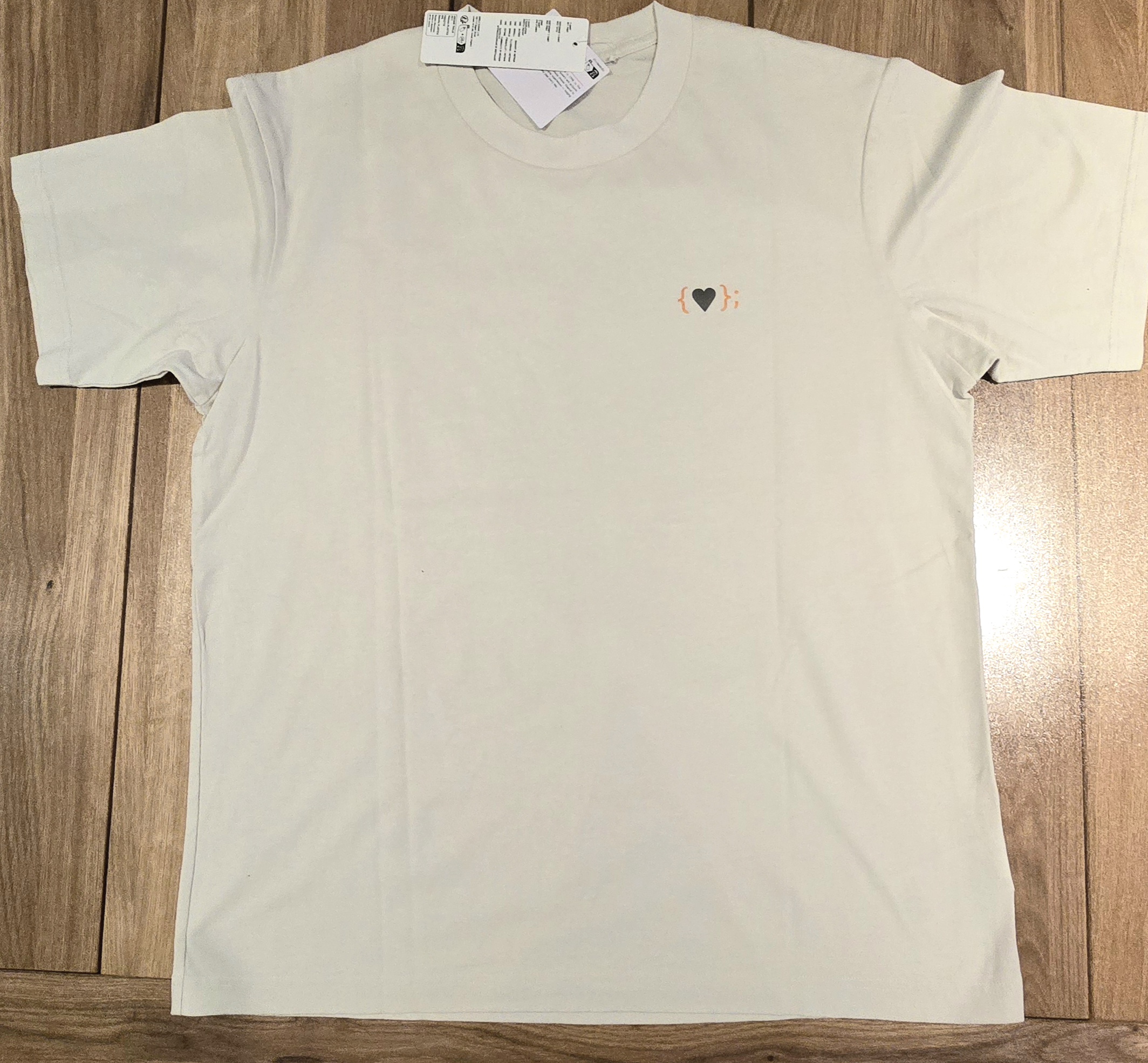 ▲ Front: A heart wrapped in curly braces — the signature syntax of code. Source: tris.sherliker.net
Image 1: T-shirt back printed with Base64-encoded string. Source: Tris Sherliker’s blog.
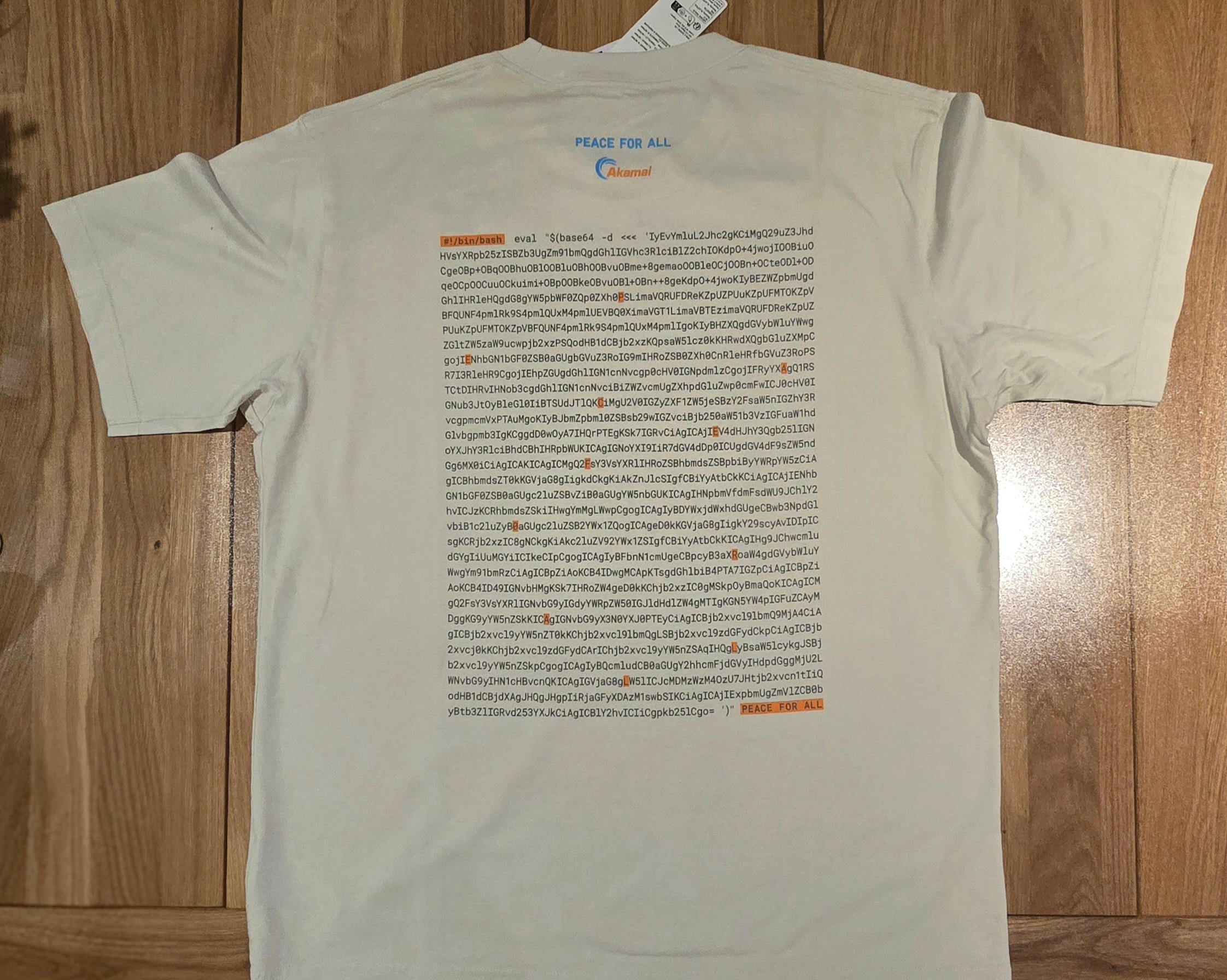 ▲ Back: What looks like garbled characters is actually a mysterious program that can be executed directly by a Linux system. Source: tris.sherliker.net
Image 2: Runtime output in a terminal after decoding. Source: Tris Sherliker’s blog.
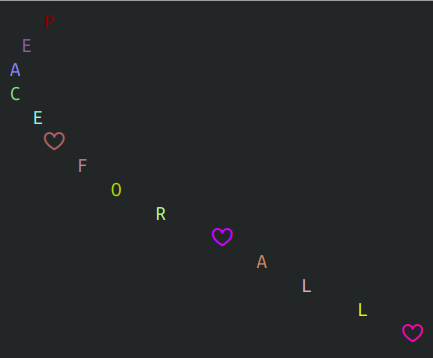 ▲ After decoding: ♥PEACE♥FOR♥ALL♥ characters scroll in color along a sine wave in the terminal. Source: tris.sherliker.net