📰 Tech Trends Daily — Thursday, November 12, 2026
Data Source: Hacker News Top 30 + Lobsters Top 25. The HN front page and discussion threads are read directly from rendered HTML; direct connections from this machine to lobste.rs continue to timeout (DNS resolves normally, TCP handshakes fail), so Lobsters front page and discussion threads were retrieved via r.jina.ai, fully preserving scores, comment counts, and
/s/XXXXXdiscussion links. Stories already covered on 11-11 are omitted today: .name domains grandfathered, DisplayLink drivers halted by patents, deleting all SSH keys, the hardest tarball, Astro+Typst OG images, Go turns 17, .NET 11, the Jane Street datacenter false alarm, and voltage glitching to unlock the A100. These stories remain on the front page today (with naturally increased scores) and are skipped in this issue.
🔥 Today’s Focus
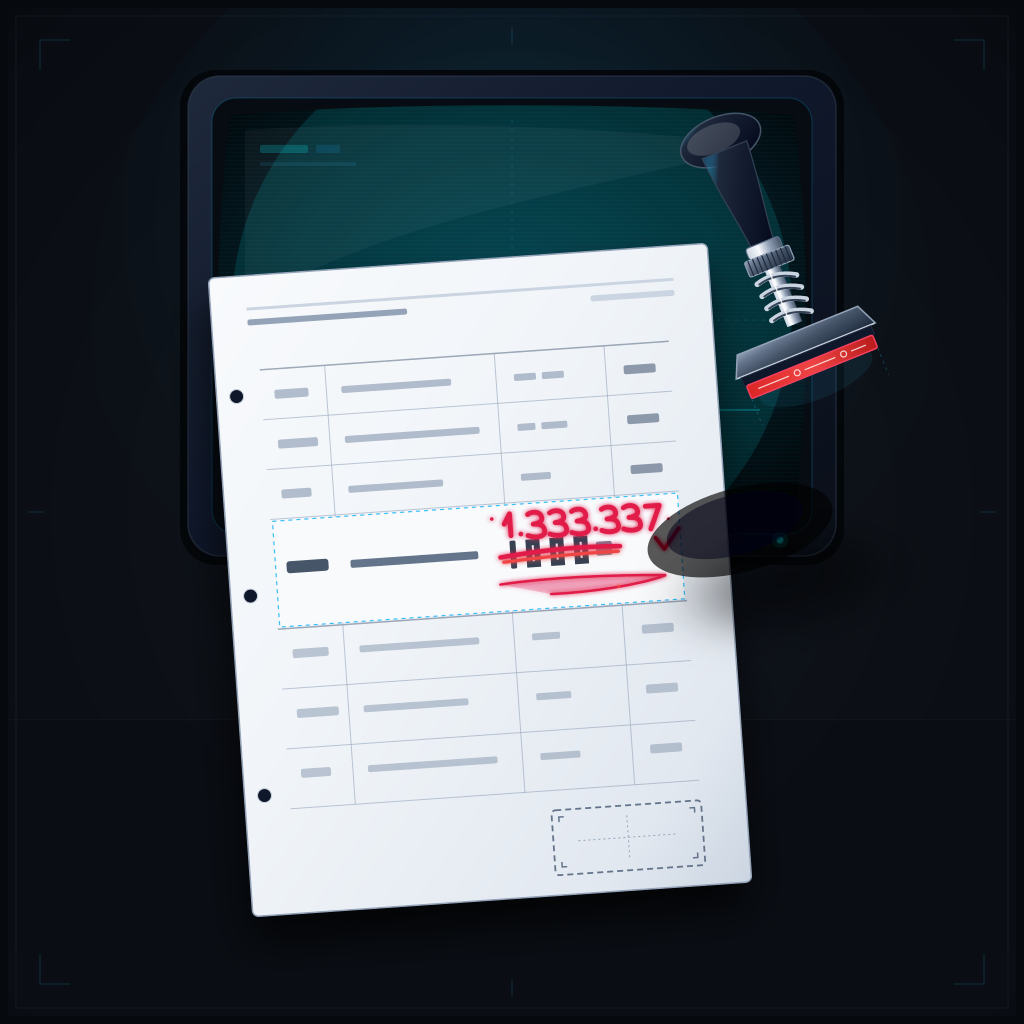
The most noteworthy development today is how “who has the authority to establish facts” broke down simultaneously across two independent systems. Google’s Vulnerability Reward Program (VRP) accidentally granted verifier privileges to an external reporter, who casually modified her own bounty field from $1,000 to $1,333,337—a self-deprecating prank where no money was ever paid out, yet Google Search’s AI Overview picked it up and synthesized it as real news, declaring that she had “become a millionaire.” On the other side, NVIDIA’s board launched an independent investigation on November 8 probing founder Jensen Huang’s relationship with a business executive suspected by US intelligence agencies of being a Chinese intelligence operative; on November 11, The Wall Street Journal reported that the board is preparing for leadership succession, sending shares down nearly 8% after hours. One system conflated field permissions with textual credibility; the other converted personal relationships directly into market repricing.
🏢 Companies, Security & Policy
- NVIDIA Board Reportedly Preparing to Oust Jensen Huang — Nvidia Is Preparing to Oust Nvidia CEO Jensen Huang. 120 points / 55 comments (HN). This follows the board’s November 8 statement: an independent probe was launched after learning Huang was targeted by foreign intelligence activities. Huang disclosed his relationship with a business executive suspected by US intelligence of supplying information to China. The New York Times, CNBC, and The Guardian published corroborating reports, and the original NVIDIA Newsroom statement is publicly available.
- 💬 Comments: The top upvoted concern centers on technical strategy—the founder has led for thirty years, and no one else commands comparable authority, meaning a leadership change would disrupt product cadences first. Another thread calculated the immediate financial fallout: NVDA fell nearly 8% after hours, with speculation that institutional funds holding both NVIDIA and Anthropic might dump shares at the opening bell. The most level-headed comment cautioned the board against jumping the gun: the investigation’s core mandate is whether the relationship constitutes a national security conflict of interest, not personal morality.
- United Airlines Bans AI Agents from Booking Flights — United Airlines bans AI agents from booking flights on behalf of travelers. 191 points / 195 comments (HN). A clause barring third-party agents from booking on travelers’ behalf was added to the contract of carriage. Enforcement mechanics remain unclear; the top comment immediately asked, “How exactly do you plan to stop me from using Claude in my browser?”
- 💬 Comments: The insightful half of the debate explained why airlines are defensive: agent errors driving refunds, customer service escalations, and fraud amplification impose real operational costs, while standards for agentic commerce (with competing proposals from Google, Shopify, and Cloudflare) remain unsettled. The other half pushed back citing California’s 24-hour full refund mandate, arguing friction stems from the airlines’ own cumbersome workflows rather than agents. Another comment boiled it down to fundamentals: “You have an inventory to sell, I have money to pay; why must this exchange be made more complicated than that?”
- Apple Support Community to Close Permanently on November 20 — The Apple Support Community will permanently close on November 20, 2026. 86 points / 194 comments (HN). 194 comments—more than double the points—reflecting strong emotional resonance: once the official forums disappear, where will eight-year-old troubleshooting answers and community debugging records for legacy hardware end up?
- eMudhra TLS Certificates Distrusted by Major Browser Root Programs — eMudhra Statement on Recent Certificate Security Incident. 6 points / 0 comments (Lobsters). Following an October 20 certificate security incident, the Indian CA halted issuance of emSign TLS certificates, and browser sunset schedules have arrived: Chrome and Firefox set SCTNotAfter to November 16, while Apple will remove the G1 root on November 30. Sites still relying on emSign intermediate chains must rotate certificates this month.
🤖 AI & Models
- My AI Agents Found an Unmapped Maya Site — My AI agents found an unmapped Maya site. 899 points / 328 comments (HN). The author tiled ~1,200 km² of LiDAR swaths into image tiles, running 48 agents to cross-examine shapes of pyramids, platforms, and plazas while filtering out natural knolls, sinkholes, and roadways. There were no specialized classifiers; agents simply analyzed images against visual guidebooks. Today’s highest-scoring and most commented post on HN.
- 💬 Comments: The first tier focused on archaeological attribution—commenters surfaced earlier Bluesky posts and cited pages 13–14 of an academic paper showing the structure had appeared in previous surveys. The second tier debated methodology, pointing out that genuine novel insights stemmed from Dr. Estrada-Belli’s broader population density survey, with this structure being a secondary artifact. The sharpest critique targeted tech media coverage: had an amateur discovered the site through conventional means, it would never have made the front page; it trended solely because AI was involved.
- Gemini Decisions API: Separating Classification from Generative Models — Gemini Decisions API. 182 points / 60 comments (HN). Google’s official decision and classification interface, marketed as saving substantial tokens compared to prompting a generative model for decisions, while providing calibrated probabilities.
- 💬 Comments: Commenters noted the concept isn’t fundamentally new—BERT-era Natural Language Inference (NLI) tackled identical problems; what has changed is that “classification is easier than generating heavy long-form text” is finally being treated as a dedicated product surface. On how probabilities are computed, the most thorough response explained that models predict token distributions trained via cross-entropy, but treating discrete labels as ground truth p=1 remains an inherently questionable assumption. Another shared personal testing showing OpenAI’s beta Decisions API trailed Jev’s stack in speed, cost, and accuracy—though purely anecdotal without public benchmarks.
- How I Accidentally Became a Millionaire — How I accidentally became a millionaire. 6 points / 1 comments (Lobsters). Lyra Rebane has reported 14 Chrome CVEs, including a 2022 logic vulnerability patched only this year. During the remediation workflow, Google mistakenly assigned her the
verifierrole, which grants write access to thevrp-rewardfield. She changed her bounty from $1,000 to $1,333,337 and posted a satirical tweet with admin screenshots and a screen recording. While humans weren’t fooled (she clarified hours later), Google’s AI Overview swallowed the bait whole—indexing it as fact: that on November 7, 2026, she was awarded $1.33M for finding a critical Chrome vulnerability. The funds were never paid, but the index was already cemented. - Emacs in the Age of Magic — Emacs in the Age of Magic. 94 points / 33 comments (HN). A long-form plaintext essay from an author using Claude Code for over a year, tracing the journey from “waking up pinching myself to confirm yesterday wasn’t a dream” to questioning where this trajectory leads. Cites Scott Aaronson’s concept of the “Mathocalypse,” where a model scanned 8,000 open problems in three hours, yielding 372 candidate solutions.
- Can a Linear Program Do Weight-Space Programming? — Can a Linear Program Do Weight-Space Programming?. 228 points / 33 comments (HN). Exploring the simplest formulation: treating model weights as decision variables and constraints as linear programs, then seeing what solutions can be optimized directly.
- Huawei Open-Sources MACaQ Quantizer — Huawei releases MACaQ, its internal quantizer for local inference. 37 points / 15 comments (HN). Huawei CSL released its internal quantization tool, claimed to be modality-agnostic: covering text, images, video, and audio, with compatibility for both llama.cpp and vLLM. Specific benchmarks provided: quantizing a 122B model to GGUF in 64 minutes on 32.5 GB device memory, while matching MR-GPTQ and DuQuant++ perplexity on Llama-3-8B in approximately one-tenth the quantization time.
- Apple’s RAG Retrieval Optimization — Faster Retrieval for Better, More Efficient RAG. 128 points / 22 comments (HN). Research from Apple ML focusing squarely on the retrieval phase rather than generation. For practitioners building self-hosted RAG pipelines, the primary value lies in how its cost objective functions are formulated.
- Tools for Exploring the Souls of LLMs — Tools for exploring the souls of large language models. 20 points / 7 comments (HN). A visualization tool designed around a tiny GPT model, accompanied by detailed educational breakdowns. Far more digestible than dense paper schematics.
- A Directory of “No AI” Apps and Communities — What are some “No AI” apps/companies/resources you know of?. 63 points / 26 comments (Lobsters). An Ask thread gathering 26 replies, most frequently pointing to the Codeberg curation of AI-free software alternatives.
- 💬 Comments: The disagreement centered on tone. A top comment criticized the list for obsessing over “Tainted Software,” arguing that an adversarial posture overshadows a positive vision; supporters countered with a pragmatic perspective—reading through the list shows the GNU/FSF philosophy already constitutes a coherent, comprehensive alternative framework.
- Writing a SIGGRAPH Paper from Scratch — Writing a SIGGRAPH paper from scratch. 7 points / 0 comments (Lobsters). A zero-to-one walkthrough documenting the entire lifecycle of authoring an accepted SIGGRAPH paper. Uncontested in comments, but exceptionally thorough in process.
🛠️ Tools & Infrastructure
- AWS Releases Official Local API Emulator — AWS emulator. 542 points / 187 comments (HN). AWS introduced its own first-party local emulator, allowing developers to test against AWS APIs without an account. It supports two modes: server mode (pointing SDK endpoints locally) and embedded mode within Rust tests (spawning isolated instances per test without setting environment variables). Documentation is hosted at docs.aws.amazon.com/emulator, with release assets including comprehensive compatibility scores.
- 💬 Comments: An AWS engineer confirmed in thread that this is intended as a long-term maintained product, not an experiment. The most practical comment explained how to map the massive compatibility JSON in releases to individual services. The primary concern is long-term maintenance overhead—with APIs evolving continuously, a single repository struggles to keep pace; some suggested upstreaming the official open-source
api-models-aws. Others compared its maturity directly against LocalStack and Floci.
- 💬 Comments: An AWS engineer confirmed in thread that this is intended as a long-term maintained product, not an experiment. The most practical comment explained how to map the massive compatibility JSON in releases to individual services. The primary concern is long-term maintenance overhead—with APIs evolving continuously, a single repository struggles to keep pace; some suggested upstreaming the official open-source
- How Do You Actually Self-Host Securely? — How do you actually self-host securely?. 89 points / 50 comments (Lobsters). An author with a Raspberry Pi wanting to host static sites rejected Cloudflare Tunnels outright—“that defeats the purpose of self-hosting.” 50 responses unpacked the challenge into three distinct layers: DNS and port forwarding, TLS certificates and termination points, and determining which layer of ownership you truly care about.
- 💬 Comments: The most comprehensive architecture proposed renting a $5 VPS, running reverse SSH port forwarding for port 443 from the Pi, and managing certificates via
acme.sh—securing a static IP, hiding the residential address, and letting the Pi serve traffic from any network. Objections followed immediately:acme.shexecutes external shell commands during issuance, which has historical attack surface. The Tailscale vs. vanilla WireGuard debate also flared: one cited Tailscale’s tvOS client as decisive, while another noted WireGuard now runs natively on tvOS, leading the original commenter to concede the error.
- 💬 Comments: The most comprehensive architecture proposed renting a $5 VPS, running reverse SSH port forwarding for port 443 from the Pi, and managing certificates via
- Atuin Threads: Consolidating Agent Sessions Across Every Machine — Atuin Threads: All your agent sessions on every machine. 177 points / 63 comments (HN). The author noted a profound shift: over the past year or two, most shell commands executed on her machine were no longer written by her. Atuin previously made shell history searchable and syncable; Threads extends that paradigm to AI agent sessions—start a task in Claude Code on one machine, switch machines, and continue seamlessly in Codex via
atuin resume. - Show HN: Yogurt, an Open-Source Local Alternative to Granola — Show HN: Yogurt – Free, private, open-source alternative to Granola. 143 points / 63 comments (HN). The meeting transcription tool category is bifurcating: one branch uploads audio and transcripts to the cloud, while another prioritizes local-only processing and self-hosting. Yogurt firmly chooses the latter.
- Launch HN: Pomerado Turns Any Website into an MCP Server for Agents — Launch HN: Pomerado (YC F26) – Turn any website into an MCP for agents. 40 points / 35 comments (HN). Provide a URL and generate a Model Context Protocol (MCP) server. The fundamental operational cost for such tools remains: who maintains the wrapper when target websites redesign their layout and APIs?
- Lock Your GitHub Actions — Lock Your GitHub Actions. 30 points / 6 comments (HN); 12 points / 2 comments (Lobsters). Pin GitHub Actions by commit SHA rather than mutable Git tags. Tags can be re-pointed maliciously, whereas SHAs are immutable—plugging the lowest-hanging vulnerability in CI/CD supply chain security.
- Optimizing Reference Deletions in Git — Optimizing Reference Deletions in Git. 9 points / discuss (HN). A deep-dive engineering log examining why deleting refs slows down in massive Git monorepos, and the specific kernel and Git patches applied to resolve it. No discussion thread, pure systems engineering.
- Andrew Kensler’s permute() — Andrew Kensler’s permute(). 6 points / 0 comments (Lobsters). A stateless, constant-time pseudorandom array permutation function: no shuffling passes, zero memory allocations. An elegant building block for chunked parallelism and deterministic sampling.
- 30 Years of Internet Transfers with curl — 30 years of Internet transfers with curl. 33 points / 5 comments (Lobsters). On November 11, 1996, Brazilian student Rafael Sagula published
httpget 0.1—just over 100 lines of C. Daniel Stenberg stumbled across the source code days later, at a time when he didn’t fully understand how HTTP worked. Thirty years later, curl has become the default data transfer engine across billions of devices.
💻 Languages & Runtimes
- Tim Peters Passes Away — In Memoriam: Tim Peters 1952–2026 / Tim Peters has died. 723 points / 73 comments (HN); 58 points / 1 comments (Lobsters). The author of the nineteen aphorisms in The Zen of Python, originally posted on comp.lang.python and immortalized in
import this; the creator of Timsort and the architect of Python’sdatetimemodule. Python developers worldwide will likely runpython -c "import this"today.- 💬 Comments: Threads opened with the original text and its ROT13 cipher (
this.sencodes the text directly), followed by the perennial question: the PEP promised twenty aphorisms, but only nineteen were ever written—was it a prank, an intentional omission, or both? The most poignant comment reflected on its second life: the text reads less like principles for human programmers and more like system prompts for autonomous coding agents. Others picked at semantics: in “Complex is better than complicated,” the two words are too synonymous in contemporary English, suggesting he might have chosen a sharper contrast.
- 💬 Comments: Threads opened with the original text and its ROT13 cipher (
- C++26 Fails National Body Ballot for the First Time — For the first time, a C++ standard failed to pass the national bodies. 9 points / 0 comments (Lobsters). The voting tally was explicit: 12 out of 20 P-members voted in favor (60%, falling short of the 66.66% approval threshold); 9 out of 22 National Bodies voted against; an additional 12 countries abstained, several explicitly citing an inability to reach consensus. Historically this ballot was a formality, with disputes resolved upstream in WG21. The author frames this not as a rejection of specific language features, but as a crisis in C++ standards governance.
- Pharo in the Browser via WebAssembly — Pharo in the Browser with WebAssembly. 116 points / 33 comments (HN). A complete Smalltalk image running natively inside the browser, enabling developers to open the class browser and inspect live objects directly.
- 💬 Comments: An actionable bug fix surfaced: canvas rendering in Firefox offsets up and to the left, which resolves once the CSS transform scaling rule is removed. Performance reviews were polarized: one noted it felt more responsive than native with lower CPU load, while another found it unacceptably sluggish, taking half a second to open a plaintext file. Veterans recalled prior art: Squeak had browser-based implementations two decades ago (squeak.js.org).
- Monads in Lean — Monads in Lean. 5 points / 3 comments (Lobsters). Eli Bendersky’s Lean 4 notes examining how monads are constructed and utilized in Lean. A concise, focused exploration.
- Rust GSoC 2026: All 13 Projects Pass — Google Summer of Code 2026 results. 14 points / 0 comments (Lobsters). Marking Rust’s third participation in Google Summer of Code, with all 13 student projects passing their final evaluations. With several projects wrapping up in November, the final results were published today.
⚙️ Hardware & Systems
- IBM Unveils Quantum Nighthawk r3: 520 Qubits, 10,000 Quantum Operations — IBM Quantum Nighthawk Demonstrates New Levels of Speed and Quality. 39 points / 20 comments (HN). Nighthawk r3 targets executing 10,000 quantum operations accurately across 520 qubits, with plans to couple two r3 chips to surpass 1,000 qubits by 2027. More compelling are commercial metrics: enterprise clients including E.ON, Algorithmiq, and Q-CTRL have executed over 34 billion circuits on the current r2, achieving up to 19x speedups over previous IBM quantum processors.
- Modding Linux to Handle SIGKILL Across Every Process — Modding Linux to use SIGKILL on every process. 17 points / 0 comments (Lobsters).
SIGKILLis uncatchable by design to preserve an escape hatch for the kernel. The author modified the kernel to strip away this guarantee, documenting what breaks when processes can intercept termination. - Hyper-Realistic Sand with WebGL2 — Hyper-Realistic Sand with WebGL2. 270 points / 59 comments (HN). An interactive in-browser sand simulator: sand varieties from different geographic regions differ in color, grain size, and acoustic properties; users can pour, smooth, and shake the substrate. On mobile devices, the correct interaction is laying the phone flat—tilting it causes the sand to spill off-screen.
- 💬 Comments: Audio volume warnings led the discussion, with users asking for sound to be muted by default. A technical deep-dive dissected the audio synthesis: procedural physics-based audio using lightweight parameter sets coupled with velocity response and randomized jitter. The source code was shared at
av/safe-sand. A classic usability pitfall was also logged: mobile users mistook it for a falling-sand game, wondering why tapping did nothing until learning that physical device orientation drives the physics.
- 💬 Comments: Audio volume warnings led the discussion, with users asking for sound to be muted by default. A technical deep-dive dissected the audio synthesis: procedural physics-based audio using lightweight parameter sets coupled with velocity response and randomized jitter. The source code was shared at
- The Utah Teapot Gets an Official Showcase — The Utah Teapot. 33 points / 9 comments (HN). Sculpted by Martin Newell in 1975 using Bézier patches, the teapot has served as the universal benchmark for computer graphics for over four decades. The University of Utah has now published an official interactive model page: toggle between six surviving historical iterations (1975 Newell, 1976 Blinn, 1987 Crow, 1992 Driskill, 2006 Fish, 2026 Yuksel), export triangle or quad meshes, and tweak tessellation resolution, UV coordinates, and normal calculations.
- 93% of Paint Splatters Are Valid Perl Programs — 93% of Paint Splatters Are Valid Perl Programs (2019). 13 points / 3 comments (HN). A classic SigBovik satire paper resurfaced; the title states the conclusion. The enduring value of such papers is demonstrating to language designers just how permissive lexical grammar can become.
- No Effect Before Its Cause: From Einstein to Lamport — No Effect Before Its Cause: From Einstein to Lamport. 2 points / 1 comments (Lobsters). Bridging the relativity of simultaneity in Special Relativity with the happens-before relationship in distributed systems. Modest readership, but rigorous conceptual grounding.
🎮 Light
- Show HN: Term Sheet Please – Papers, Please for YC Startups — Show HN: I recreated Papers Please but you’re deciding which YC startups to fund. 136 points / 62 comments (HN). The passport-checking, contradiction-hunting mechanics of Papers, Please adapted to reviewing pitch decks, vetting founding teams, and issuing term sheets.
- We Need More Goat Sacrifices — We need more goat sacrifices. 116 points / 33 comments (HN). Adam Mastroianni proposes that before implementing major public policies or philanthropic programs, institutions should conduct sacrificial rituals complete with blood, candles, and obsidian knives. The ritual isn’t meant to appease deities, but to remind decision-makers of their fundamental ignorance—a discipline he terms “procedural humility.”
- The Hardest Notes to Find on the Guitar Fretboard — The hardest notes to find on the guitar. 41 points / 53 comments (HN). Mapping every note across the fretboard to analyze which positions are most difficult to locate during performance and why.
- The Tiny Transmitter Tracking Monarch Butterflies — The tiny transmitter tracking monarch butterflies’ migration, Canada to Mexico. 29 points / 5 comments (HN). Engineering constraints for tracking monarch butterflies: the payload weight a butterfly can sustain defines the entire design space.
- Why Farmers Are Turning to Drones for Cover Crop Seeding — Flying on Green: Why Farmers Are Turning to Drones for Cover Crop Seeding. 23 points / 14 comments (HN). Cover crops require planting in narrow seasonal windows; this piece details why agile agricultural drones outcompete heavy tractors in those specific operational conditions.
📝 Summary
The overarching theme today is verification. The two most significant stories are not technical breakthroughs, but breakdowns in “who has the authority to establish facts”: Google’s vulnerability tracking infrastructure mistakenly granted edit access to an external reporter, leading AI Overview to parrot an obvious joke as verified fact; meanwhile, NVIDIA’s founder was drawn into a foreign intelligence inquiry, prompting a board investigation and reports that the board is preparing for leadership succession, driving down market valuation by 8% after hours. Across the board, skepticism toward authority surfaced along multiple axes—Lobsters saw 26 comments seeking software alternatives free of AI, underpinned by the sentiment “I simply do not want this”; the Utah Teapot showcase reminded the community that six diverging historical versions exist for a single foundational model; and among the nineteen aphorisms left by Tim Peters, one reads presciently: “In the face of ambiguity, refuse the temptation to guess.”
Three must-reads today: Lyra Rebane’s account of accidentally becoming a millionaire (a ten-minute read that pivots from humor into a masterclass on permission design), the postmortem on C++26 failing its National Body ballot (the first time a C++ standard has stalled at this governance stage, with full voting tallies), and the discussion thread memorializing Tim Peters (from import this to ROT13, the comment archive stands as an invaluable living document).