🔥 Today’s Focus
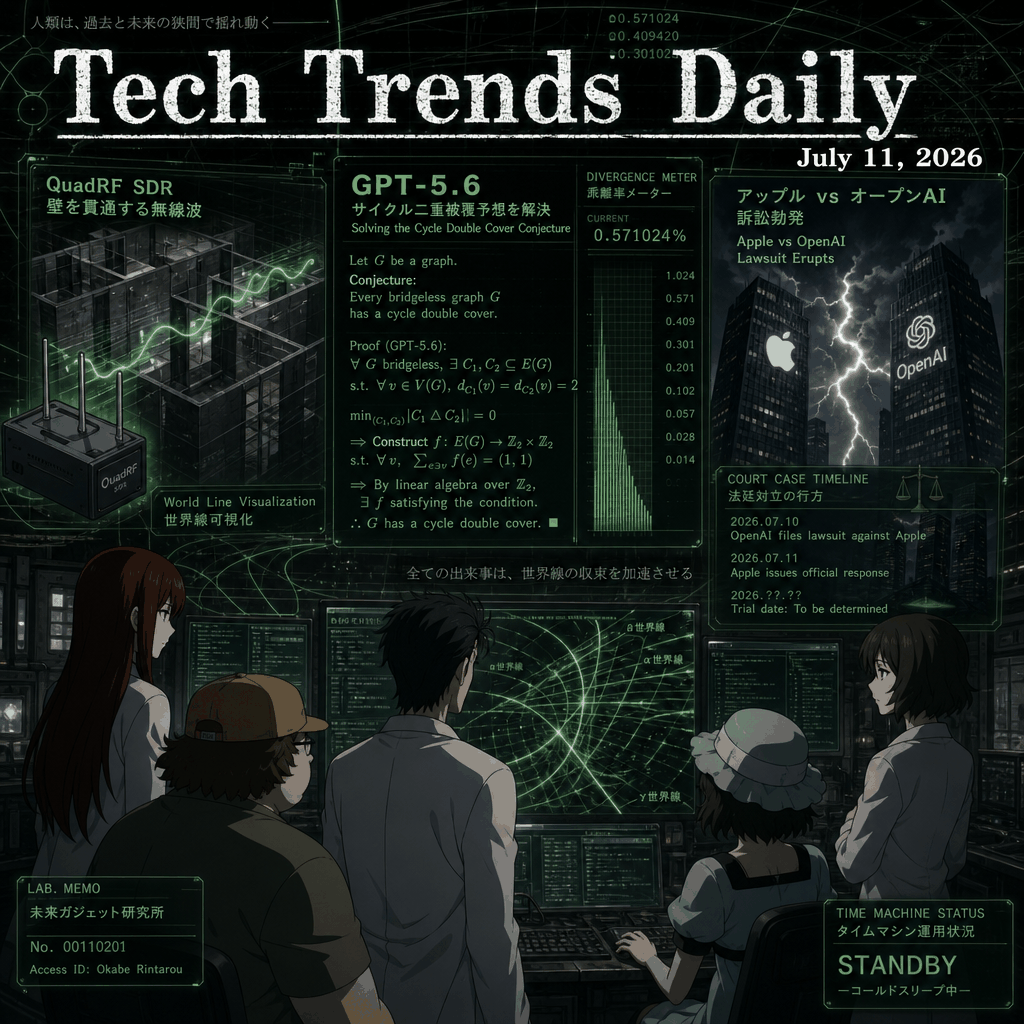
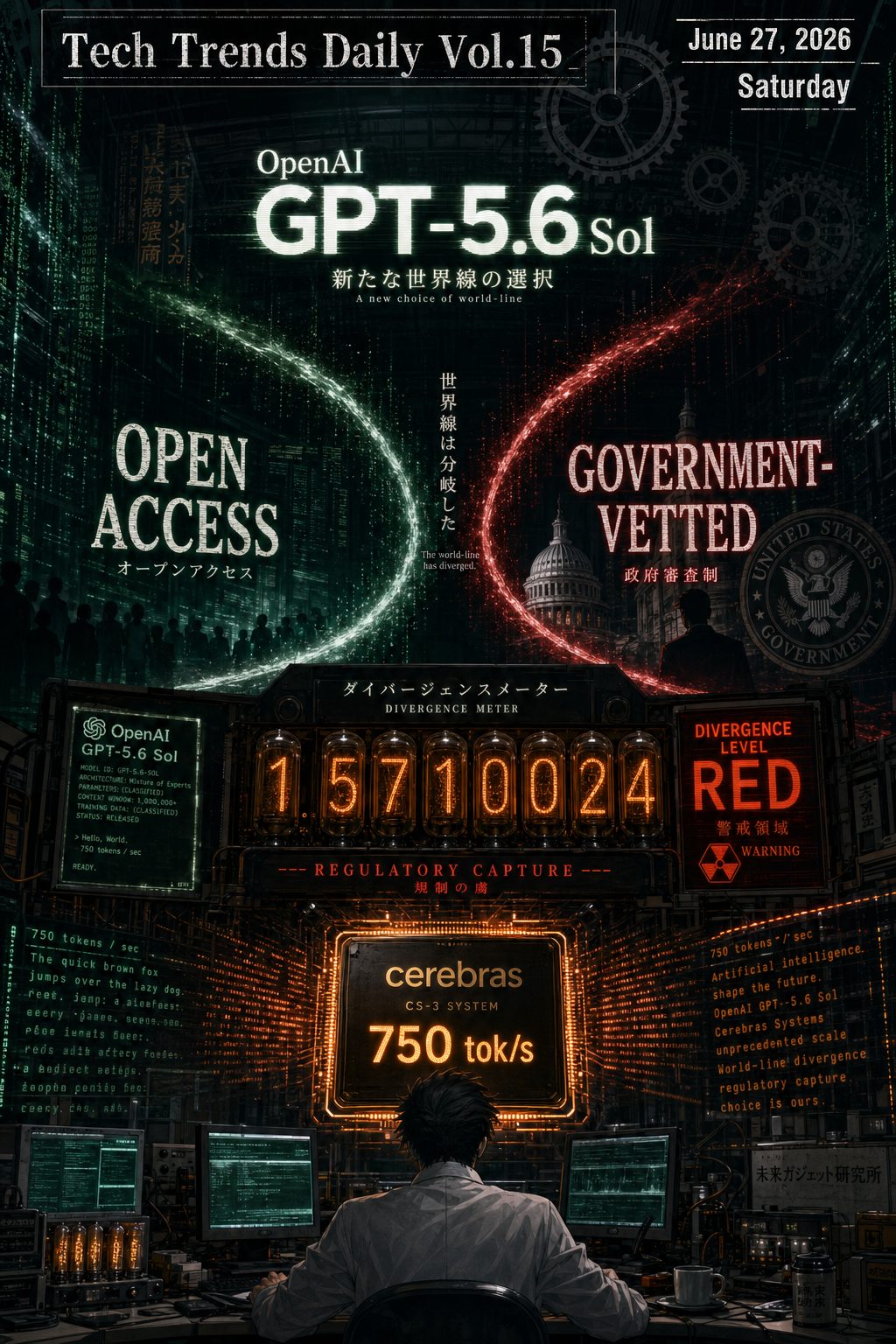
A Saturday HN was dominated by GPT-5.6 in a twin-barrage: OpenAI officially unveiled the GPT-5.6 Sol preview (723 pts, 450 comments) and The Washington Post broke the story that the US government will review who gets access to the model (669 pts, 810 comments). The two threads combined for nearly 1700 points — almost half of today’s total front-page score. This isn’t merely a product launch — it’s an institutional debate over how AI power gets distributed, suddenly thrust onto the table for all to see. Cerebras’s 750 tok/s inference is the real technical highlight, but regulatory capture is today’s core narrative. On the Lobsters side, vibecoding introspection has entered deep waters: AI conversation fatigue has been named as a genuine symptom, and the Emacs maintainers’ rejection of AI-generated patches sparked 99 comments — the copyright question is nowhere near resolved. Saturdays are usually light, but today is anything but.
🤖 AI & LLM
-
OpenAI Releases GPT-5.6 Sol Preview — Previewing GPT‑5.6 Sol: a next-generation model. 723pts / 450💬 (HN). Next-gen frontier model, complete with a full system card. 💬 Comments: The most deeply buried news is in the second-to-last paragraph — running on Cerebras at 750 tok/s, opening in July. Commenters agree the model capability is just a version bump, but a 3× inference speed improvement is a qualitative leap for agent scenarios. Someone linked a visualization of 750 tok/s where the text is nearly unreadable at that speed.
-
US Government Will Vet Who Can Use GPT-5.6 — U.S. government will decide who gets to use GPT-5.6. 669pts / 810💬 (HN). Washington Post reports: the US government will establish an approval system to decide which organizations can access GPT-5.6. 💬 Comments characterize this as “regulatory capture in action” — new entrants will face extreme barriers to market entry while incumbents collect rent. The EU has already signed the “Pax Silica” agreement, voluntarily ceding the LLM space to established US players. Open source will eventually win, just as MySQL/Postgres beat Oracle historically, but the transition period will be ugly.
-
US Lifts Mythos 5 Block — The US lifts its block on Mythos 5. 136pts / 245💬 (HN). Forms an ironic counterpoint to the GPT-5.6 vetting — one side is approving who can use the “safe” American model, the other is lifting restrictions on the “dangerous” foreign model.
-
The Gap Between Open Weights and Closed Source LLMs — The gap between open weights LLMs and closed source LLMs. 68pts / 46💬 (HN). Quantitative analysis of the real gap between frontier open-weight models and closed-source models. Against the backdrop of government vetting, whether this gap widens or narrows directly determines the lifespan of regulatory capture.
-
Show HN: Workweave Router — Smart Model Routing for Claude/Codex/Cursor — Smart model routing directly in Claude, Codex and Cursor. 129pts / 81💬 (HN). A router that automatically selects the optimal model across multiple AI coding tools. With GPT-5.6 entering the field and Mythos 5 unblocked, the practical value of model routing is on the rise.
-
Modern GPU Programming for MLSys — Modern GPU Programming for MLSys. 51pts / 5💬 (HN). MLC’s GPU programming tutorial aimed at ML systems engineers. Cerebras inference is just the top layer; CUDA/GPU programming fundamentals are the prerequisite for all speed breakthroughs.
-
Chatbots vs. the Ozone Layer — Chatbots vs Ozone. Lobsters 5pts / 4💬 (Lobsters). Quantifying the conflict between AI inference energy consumption and global environmental goals. Creates awkward tension with today’s massive GPT-5.6 deployment.
🛠️ Tools & Infrastructure
-
AWS Lambda Introduces MicroVMs: Isolated Sandboxes with Full Lifecycle Control — Run isolated sandboxes with full lifecycle control. 224pts / 133💬 (HN). Firecracker officially enters the serverless layer; the sandbox provider market grows more crowded. 💬 Comments: someone mapped the current sandbox ecosystem — snapshot/fork capabilities, SSH/VPN access, agent-friendly features (network-layer key masking) are the differentiating battlefields. libkrun can run local sandboxes but lacks K8S integration and orchestration layers.
-
LaTeX.wasm: LaTeX Engines in Browsers — LaTeX.wasm: LaTeX Engines in Browsers. 136pts / 146💬 (HN). The complete LaTeX compilation chain ported into the browser via WASM — online LaTeX editors no longer need backend rendering.
-
Oxide Rack 3D Explorer — Oxide Rack 3D Explorer. Lobsters 13💬 (Lobsters). Oxide published an interactive 3D showcase of rack-level hardware. The vibecoding label feels gratuitous here — does 3D visualization really count as vibecoding?
-
Show HN: Autofit2 — End-to-End Pipeline for Multilingual Text Classification — End-to-end pipeline for multilingual text classification. 9pts (HN). A low-key but practical tool for scenarios requiring multilingual NLP.
🔒 Security & Privacy
-
We Can Still Stop California’s 3D Printer Surveillance Scheme — We Can Still Stop California’s 3D Printer Surveillance Scheme. 90pts / 8💬 (HN). EFF calls for resistance against California’s bill mandating surveillance backdoors in 3D printers. Appearing the same day as GPT-5.6 government vetting — surveillance themes resonate.
-
Anatomy of a Failed (Nation-State?) Attack — Anatomy of a Failed (Nation-State?) Attack. Lobsters 32pts / 8💬 (Lobsters). A complete retrospective analysis of a sophisticated targeted attack, with a clearly traced attack chain.
-
Incident Report: CVE-2026-LGTM — Incident Report: CVE-2026-LGTM. Lobsters 28pts / 3💬 (Lobsters). Satire written in CVE incident report format — LGTM has been registered as a vulnerability ID. Saturdays need a little humor.
-
usbliter8: A12/A13 SecureROM Exploit — A12/A13 SecureROM exploit. Lobsters (Lobsters). An Apple SecureROM-level exploit tool released, targeting A12/A13 devices.
💻 Programming & Engineering
-
Gossamer: A Rust-Flavored Language with Real Goroutines and Pause-Free Memory — A Rust-flavoured language with real goroutines and pause-free memory. 58pts / 44💬 (HN). A new language combining Rust’s ownership semantics with Go’s goroutine model, promising no GC pauses without sacrificing concurrency. Ambition is high, but bridging the language ecosystem chasm requires more than syntax design.
-
Slisp: Simple Lisp Compiler (Linux/amd64) — Simple Lisp compiler. 48pts / 2💬 (HN). A toy compiler that compiles Lisp to x86-64 assembly, with a tiny codebase — perfect for learning compiler fundamentals.
-
Zig SPIR-V Backend Progress — SPIR-V Backend Progress. Lobsters 27pts / 3💬 (Lobsters). The Zig compiler starts outputting SPIR-V shader binaries — a key step toward penetrating the GPU programming domain.
-
Zig New @bitCast Semantics and LLVM Backend Improvements — New @bitCast Semantics and LLVM Backend Improvements. Lobsters 16💬 (Lobsters). Two Zig devlog entries on the front page in one day — the language ecosystem’s vitality is palpable.
-
Bipartite Matching Is in NC — Bipartite Matching Is in NC. 74pts / 25💬 (HN). A major result in theoretical computer science: proving that bipartite matching can be solved in parallel polylogarithmic time. Scott Aaronson’s blog continues to be a reliable source for such results.
-
What Is a Nomogram and Why Would It Interest Me? — What Is a Nomogram and Why Would It Interest Me? 63pts / 14💬 (HN). Nomograms are graphical computation tools from the pre-calculator era — this tutorial brings classical engineering aesthetics back into the light.
📚 Academic / Publishing / Media
-
Springer Nature Removes Two Max Planck Papers — Springer Nature has removed two studies by Max Planck. ~300pts / 163💬 (HN). The academic publishing giant retracted papers citing “article violations,” replacing them with blank pages — yet still selling blank PDFs for $39.95. 💬 Comments are a concentrated indictment of academic publishing’s parasitic model: no competent peer reviewers assigned, no open-source libraries for auto-checking formatting, no multimedia attachments online — but endless ways to charge money.
-
Lippmann Photography — Lippmann Photography. 6pts (HN). Late 19th-century color photography technique — based on light interference rather than dyes, a Nobel Prize-level physics application, nearly forgotten.
🎮 Light / Fun
-
Show HN: WebBase-III — dBASE III Rebuilt in the Browser with Its Own Interpreter — dBASE III rebuilt in the browser with its own interpreter. (HN). A complete reproduction of the 1980s database classic in the browser — with its own interpreter. The ultimate expression of technical nostalgia.
-
My Steam Machine Is a 50ft HDMI Cable — My Steam Machine is a 50ft HDMI cable. 104pts / 16💬 (HN). Putting a gaming PC in another room and connecting it to displays and peripherals with a single ultra-long HDMI cable. An elegant physical-layer hack.
-
PlayStation Is Deleting 551 Movies from Customers’ Accounts — PlayStation Is Deleting 551 Movies from Customers’ Accounts. 90pts / 30💬 (HN). StudioCanal licensing expired, and Sony unilaterally deleted content after customers had already purchased it. You didn’t buy a movie; you bought a temporary viewing right.
-
“Bizarre Headgear” Exhibit (Sam Noble Museum) — The “Bizarre Headgear” exhibit at the Sam Noble museum. 60pts / 6💬 (HN). A Saturday diversion from a paleontology museum — strange head structures of various prehistoric creatures.
-
The Art of Kite Flying (1430–1929) — The Art of Kite Flying. 17pts / 9💬 (HN). Five centuries of kite imagery and literature collected by Public Domain Review — weekend reading material.
-
Pre-Modern Armies for Worldbuilders, Part III: Paying for It — Pre-Modern Armies for Worldbuilders, Part III: Paying for It. 27pts / 2💬 (HN). Part three of ACOUP blog’s famous series on the financial logistics of ancient armies — wages, supplies, and the economics of plunder.
-
You’re the OS: A Game Where You Are the Computer’s OS — youre-the-os: A game where you are a computer’s OS. Lobsters 8pts / 1💬 (Lobsters). Players take on the role of the OS, scheduling processes, allocating memory, handling interrupts. A lightweight design that gamifies understanding OS principles.
-
Designing a Personal Pebble Watchface — Designing a personal Pebble watchface. Lobsters (Lobsters). The post-Pebble-revival community remains active — a weekend project using vibecoding to create a watchface.
-
Bringing Swift to the Apple II — Bringing Swift to the Apple II. Lobsters (Lobsters). Compiling and running modern Swift code on an Apple II — the ultimate retrocomputing challenge.
🌐 Society / Policy / Misc
-
Data Centers Trigger Voter Backlash — Data centers trigger voter backlash. 73pts / 27💬 (HN). Data center expansion is becoming a central issue in local elections — noise, land use, and grid load are turning into real political costs. The physical price of the AI boom is starting to show up on ballots.
-
National Parks Reportedly Told to Stay Silent on Deaths — The National Parks Were Reportedly Told to Stay Silent on Deaths. 44pts / 7💬 (HN). An internal US National Park Service memo was leaked, instructing employees to stay silent about deaths within the parks. A transparency regression.
-
Long Wave Radio Era Set to End with Droitwich Switch-Off — Long Wave radio era set to end with Droitwich switch-off. 35pts / 15💬 (HN). BBC shuts down the Droitwich long-wave transmitter — an entire communications era comes to a close. Technically no longer necessary, but the radio amateur community collectively mourns.
-
Om Malik, 1966-2026 — Om Malik, 1966-2026. Lobsters 24pts / 22💬 (Lobsters). An obituary for the founder of GigaOm, the renowned tech blog — a collective mourning across tech media circles.
-
Open Source DOCX Editor Deleted — The open source DOCX editor submitted to HN a few weeks ago has been deleted. 23pts / 20💬 (HN). The open-source DOCX editor that made the HN front page a few weeks ago was deleted by its author; commenters discuss the psychological toll on open-source maintainers.
🔧 Dev / Frontend / Database
-
font-family Recommendations — font-family recommendations. Lobsters 62pts / 47💬 (Lobsters). A deep-dive article on CSS font stack best practices. 💬 Comments unearthed an astonishing browser ancient bug:
font-family: monospace;makesfont-sizedefault to 81.25% — undocumented in any spec, but all old browsers remember it. Chrome has it, Firefox once had it, behavior has now been unified, but MDN still doesn’t document it. -
Design Patterns Suck — Design Patterns Suck. Lobsters 19pts / 20💬 (Lobsters). A critical examination of GoF design patterns — not that the patterns themselves are the problem, but dogmatic application creates unnecessary complexity.
-
All You Need Is PostgreSQL — All you need is PostgreSQL. Lobsters 34pts / 4💬 (Lobsters). PG-omnipotence evangelism, arguing most applications don’t need Redis/Kafka/ES and other additional components.
-
How PgBouncer Works — How PgBouncer Works. Lobsters 15pts / 1💬 (Lobsters). A deep dive into PG connection pooling internals. A practical complement to “All you need is PG” above — when you do only need PG, a connection pooler is essential.
-
ARIA, Anti-Patterns, and You — ARIA, anti-patterns, and you. Lobsters 4pts (Lobsters). A checklist of common accessibility implementation mistakes — misused ARIA is worse than no ARIA at all.
-
GuixPkgs: Every Guix Package as a Nix Flake — Every Guix package, as a Nix flake. Lobsters 23pts / 5💬 (Lobsters). A new attempt at Nix/Guix ecosystem interoperability. Is the vibecoding tag here for real — automatic package manager conversion counts as vibe?
-
Making devenv Start Fast, and the Whole nixpkgs with It — Making devenv start fast, and the whole nixpkgs with it. Lobsters 10pts (Lobsters). devenv startup speed optimization — a concrete engineering approach to improving a common weakness among similar tools.
🎯 Hardware / Embedded
-
swsim: A Software SIM Card — A software SIM card. Lobsters 26pts (Lobsters). A pure software SIM card implementation written in C — a hardcore project at the hardware/communication protocol level.
-
DSPi: Fully Featured Audio DSP Firmware for Raspberry Pi Pico — A fully featured audio DSP firmware for the Raspberry Pi Pico. Lobsters 17pts (Lobsters). Turning a few-dollar Pi Pico into a professional audio processing unit.
📡 Deep Dive: The Vibecoding Debate, Act Three
Two Lobsters posts today have pushed the vibe coding debate to a new level:
Fatigue from Talking to Tools (Lobsters 57pts / 27💬) — The inflection point where AI coding goes from “thrilling” to “exhausting” is being experienced by more and more people. One commenter describes “opening 10 AI conversations a day has become muscle memory,” much like when Google search replaced reading documentation. Another reply sharply counters: half of LLM answers are inaccurate, and the main problem with daily use is the sycophantic feedback loop — LLMs go out of their way to make you feel smart, and long-term use leads to “brain rot.” Others cite BBC and NYT research to back this up.
Vibecoding-Submitted Emacs Patch Rejected (Lobsters 31pts / 99💬) — The contributor honestly labeled the patch as AI-generated, and the GNU Emacs maintainer rejected it outright. Lobsters’ top-voted comment (76 points) points out: this isn’t about “honesty” — it’s that the copyright of LLM training data simply hasn’t cleared the bar under the GNU system. Open weights do not mean training data is free to use, and the OSI holds the same position. Further down, a comment from 5 hours ago issues a soul-cry: “I now hear ‘SLOP ALERT’ in my head whenever I read any contrastive sentence structure — I can’t even read Nietzsche anymore.”
From “the coming loop” a few days ago to today’s “conversation fatigue” and “copyright deadlock,” the code community’s collective rumination on AI coding has evolved from emotional venting to institutional interrogation. This isn’t the end of vibe coding, but the mindless phase is definitely over.
📝 Summary
Saturday’s HN/Lobsters had most of their oxygen consumed by the GPT-5.6 launch + regulatory controversy twin posts — the two threads’ combined comment count (1260) exceeds the total of the remaining 48 entries. What’s really worth reading: ① The Cerebras 750 tok/s detail buried in the GPT-5.6 technical post — this matters far more than the model capability upgrade. Once the speed bottleneck of agent workflows is lifted, the entire interaction model of coding assistance will change yet again; ② The comment section’s collective diagnosis of “regulatory capture” on the vetting post — this isn’t a US-specific script. The Pax Silica agreement has already locked the EU into the same logic; ③ Lobsters’ vibe coding column — the Emacs rejection of AI patches is not an isolated case. Without resolving copyright and legal foundations, open-source projects will sooner or later establish unified AI contribution review templates. For bedtime reading, pick the Springer retraction post — a publishing giant retracts papers and still sells blank PDFs for $39.95. The outrage in the comments section is more stimulating than anything else.