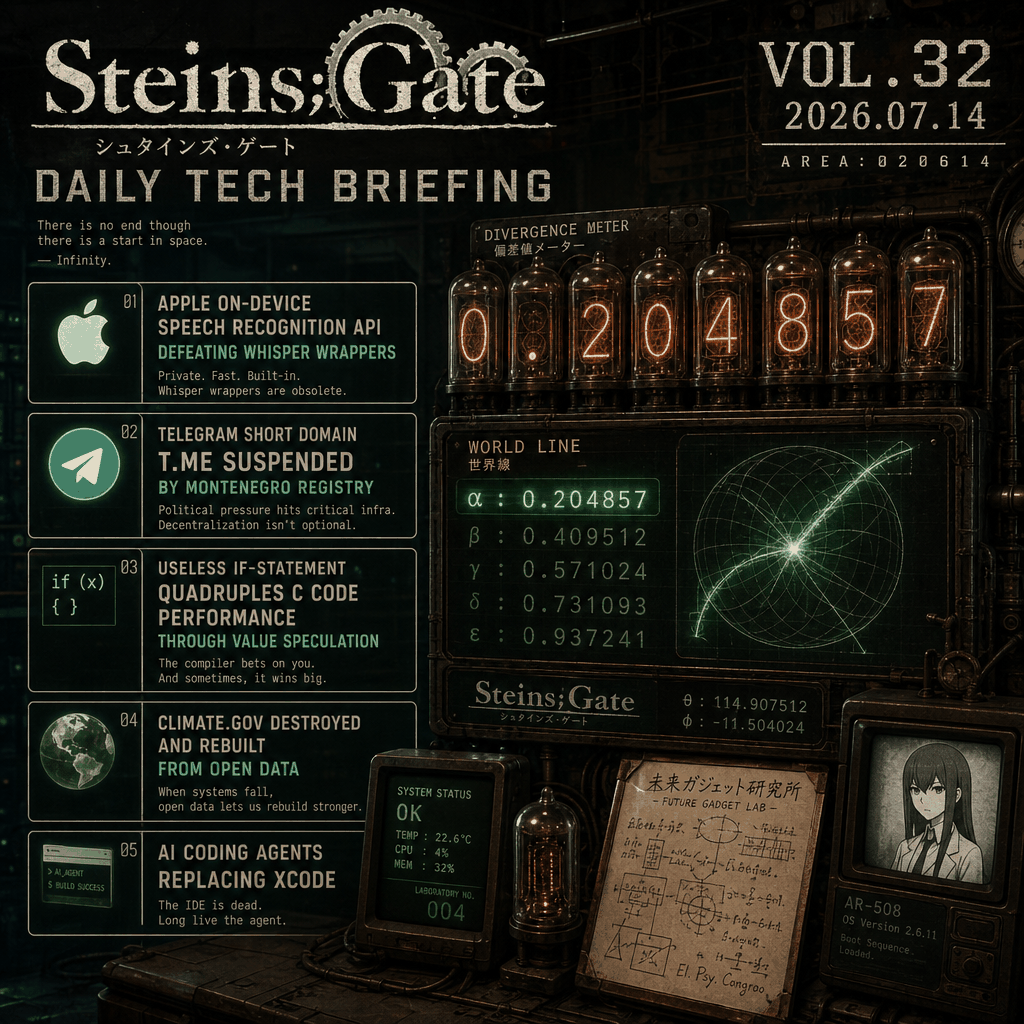
📰 Tech Trends Daily — Friday, November 20, 2026
🔥 Today’s Focus
Today, the financial markets and cutting-edge research converge on the very same company. Anthropic went public on Nasdaq, where the widely reported $2 trillion valuation reflects a fully diluted basis assuming every potential option and warrant is exercised; based on circulating shares on debut day, the actual market capitalization stands around $1.27 trillion, with the difference coming from unvested option pools—yet headlines uniformly favored the bigger headline number. Meanwhile, another story from the company announced that Claude solved two twenty-year-old open calculations in quantum gravity, with the preprint posted on Hexagon Math; one result was first derived by an internal research model and independently replicated by the public release of Opus 5.5. A single company is simultaneously selling the market a “future that won’t vest for years” alongside “intellectual breakthroughs already delivered,” and the market’s appetite for the former noticeably eclipses its scrutiny of the latter.
🤖 AI & Models
- Claude Solves Two Open Calculations in Quantum Gravity Lingering for Twenty Years — Claude solves two open problems in the physics of black holes. 323 points / 145 comments (HN). The first question settles whether the Hawking-Page phase transition in 3D gravity is truly first-order—the formulas were laid out back in 2003, but went unfinished for two decades; the second determines the lowest rigorous mass upper bound achievable via modular bootstrap, where Claude discovered a spectral curve proving $c/9.1266$ represents the absolute limit of this methodology.
- 💬 Comments: Readers pointed out the preprint is hosted on Hexagon Math without formal peer review, a platform issuing “lab accounts” by organization; the report itself clarifies that an internal research model obtained the results first, before the publicly available Opus 5.5 independently reproduced the exact same solution, with half the proof technique adapting OpenAI’s sphere-packing methodology. Another debate worth noting: the blog never once uses the word “prompt,” leading some readers to argue that anthropomorphic framing like “Claude solves” shares the same narrative bias as claiming “it escaped the sandbox”—the accurate description being that humans carefully set up the sandbox and provided targeted prompts.
- Pete Warden on Local AI: Running in Laptops and Browsers, More Capable Than Most Realize — Pete Warden on local AI, open models, voice interfaces, the future of hardware. 195 points / 179 comments (HN). From the creator of the Moonshine voice model, this episode argues that latency and unit economics dictate form factors: low-latency voice models turn speech into a natural interface, precisely where cloud round trips suffer the most severe penalty.
- Reverse-Engineering Kevin J. Lang’s Lost OCaml Code in Apache DataSketches Using AI — Reverse-Engineering Kevin J. Lang’s Lost OCaml Code in Apache DataSketches. 21 points (HN). While porting datasketches-rust, the author hit obscure implementations left behind after the original author’s departure that no one understood, using AI as an interactive code-reading partner to reconstruct the original design intent. For the first time, legacy code maintainability has an economically feasible path forward.
- Rebuilding My Local Voice Assistant Pipeline — Rebuilding my local voice assistant pipeline. 24 points / 2 comments (HN). The author of Platypush brings wake-word detection, transcription, and intent recognition entirely back on-device, documenting latency changes step by step as models were swapped out.
🏢 Companies & Policy
- Anthropic’s Nasdaq Debut: Circulating Market Cap of $1.27 Trillion — Anthropic hits $2T in Nasdaq debut. 768 points / 1438 comments (HN). The $2 trillion headline in Reuters uses a fully diluted calculation; multiplied across 13.09 billion circulating shares at $98, the actual market value sits around $1.28 trillion, touching an intraday peak of $1.46 trillion.
- 💬 Comments: One clarification unpacked the accounting discrepancy: you cannot price unvested options due years from now at today’s spot price and call it current market cap—a company does not magically gain 20% in real value just by creating a 20% future option pool. Another comment highlighted wealth distribution: 7 co-founders hold over $20 billion each, while 598 employees each hold over $100 million; San Francisco single-family home prices jumped 29% year-over-year in October to $2.39 million. Skeptics warned this wave resembles 1999 or 2007, noting Anthropic’s longstanding opposition to open-weight models means lobbying pressures will only intensify post-IPO.
- UK Government Forced to Admit Issuing Secret Encryption Order to Apple — UK government forced to admit it issued Apple a secret encryption order. 429 points / 187 comments (HN). A ruling by the Investigatory Powers Tribunal dragged the existence of a Technical Capability Notice (TCN) into public view, though its contents remain classified.
- 💬 Comments: A commenter tracking down the original judgment noted media learned of the notice via confidential security briefings rather than leaks—meaning the government notified authorized parties through formal channels. The sharpest observation targeted Apple’s phrasing shift: moving from “no one can access your data, not even Apple” to “Apple cannot access your data.” The difference lies in architectural reality: the user’s local key functions as a KEK, and a secondary copy decryptable by a third-party KEK is not architecturally precluded.
- How the European Commission Rolled Out Matrix to Over 40,000 Staff — How the European Commission rolled out Matrix to more than 40k staff. 635 points / 305 comments (HN). Practical operational details outshine the headline: online presence tracking was disabled across the board because its real-time sync overhead degraded system performance—a 40,000-user deployment ultimately cutting social features like “who is online” purely as an operational cost.
- 💬 Comments: The multi-device verification flow drew persistent complaints, with the friction of “verifying my device every time” multiplied across 40,000 users. More fundamental doubts surfaced over cryptography: Matrix’s E2EE remains short of nation-state security requirements, while migration toward MLS appears stalled (with commenters linking to arewemlsyet.com). Proponents countered that Europe is willing to shoulder these operational hurdles to break US tech dependence, making harsh scrutiny an inevitable part of adoption.
- Codeberg Domain Removed from Account by Registrar, Site Left Unreachable — Codeberg’s domain suddenly disappeared from their account, site is unreachable. 219/71 (Lobsters). An update from Codeberg’s Fediverse account confirmed the domain was suspended and handed over to the abuse team pending a final determination. The origin servers remained fully operational and accessible via local hosts file overrides—underscoring how a single action at the DNS registrar level can vanish a globally critical code hosting platform.
- 💬 Comments: One comment traced structural economic roots: domain registration operates on razor-thin margins, leading registrars to cut abuse department staffing, which makes “suspending domains first” the default low-cost closure playbook. The takeaway recommendation is using enterprise-tier registrars (citing MarkMonitor at thousands of dollars annually) whose legal teams talk before acting. Another comment addressed governance: some malicious sites legitimately warrant removal, but the unsolved dilemma remains who holds the authority to decide—turning a technical DNS issue into an unresolved governance debate.
- Nintendo Takes Picofly Firmware Down from GitHub — Nintendo takes Picofly firmware down from GitHub [video]. 240 points / 91 comments (HN). The DMCA takedown targeted the most visible repository entry point; in hardware modding ecosystems, forks and mirrors are already widely dispersed, meaning only the central URL path was removed.
- An Oregon Library Ditched Dewey Decimal and Got People Excited About Books Again — An Oregon library ditched Dewey Decimal and got people excited about books again. 173 points / 125 comments (HN). Classification systems are never neutral tools; they dictate whether finding a shelf requires mastering specialized domain knowledge beforehand.
- Should Governments Slow Frontier AI? Debate Between Jacob Coxon and Robin Hanson — Should governments slow frontier AI? [video]. 53 points / 92 comments (HN). With comment counts almost doubling point scores, the topic continues to polarize Hacker News into opposing ideological camps rather than consensus.
🔒 Security & Vulnerabilities
- Ruby2ßhell: Pre-Authentication RCE on Stock Rails — Ruby2ßhell: Pre-authentication RCE on stock Rails. 366 points / 155 comments (HN); 22/5 (Lobsters). The root cause is deceptively tiny: most single-byte encodings lack an uppercase German sharp s (ß), converting it into the two-byte sequence
SS. The conversion loop only performed a single-byte bounds check, allowing 21 ß characters to overwrite a buffer allocated with 20 spare bytes. The affected range stretches back to Ruby 2.4.0, reachable through default configurations of Rails and classic-style Sinatra.- 💬 Comments: The actionable urgency lies in the affected software matrix: GitLab, GitHub Enterprise Server, and Chatwoot bundle their own Ruby runtimes and had released no upstream patches as of yesterday, leaving users dependent on vendor updates; Mastodon, OpenProject, and Discourse have issued fixes. Public exploit code is expected around November 25. Commenters warned developers not to focus solely on web frameworks: any application code executing
upcaseorcasecmpon legacy encoded strings sits directly in the crosshairs.
- 💬 Comments: The actionable urgency lies in the affected software matrix: GitLab, GitHub Enterprise Server, and Chatwoot bundle their own Ruby runtimes and had released no upstream patches as of yesterday, leaving users dependent on vendor updates; Mastodon, OpenProject, and Discourse have issued fixes. Public exploit code is expected around November 25. Commenters warned developers not to focus solely on web frameworks: any application code executing
- Ruby Official Security Advisory: Multiple Vulnerabilities in Regexp and String Case Conversion — Security advisories: multiple vulnerabilities in Regexp and String case conversion. 21 (Lobsters). The official advisory covering the same batch of fixes across versions 3.3.14, 3.4.13, and 4.0.10. Comparing vendor advisories against third-party reports is essential: the former provides version compatibility matrices, while the latter details actual reachability paths.
- Someone Reported the Java4Shell Bug Back in September 2026 — Someone reported java4shell bug in September 2026. 327 points / 87 comments (HN). The critical insight here is the disclosure timeline: the patch sat openly in the public repository for two full months before formal CVE publication. This mirrors the pattern seen in the recent nginx vulnerability wave—the window between committing a patch to a public repository and publishing an advisory remains the most perilous period for defenders.
- Windows 11 Collects Data on Which Coding Agents and Dev Tools You Use — Windows 11 collects data on which coding agents and dev tools you use. 46/32 (Lobsters). An engineer uncovered hardcoded binary matching tables inside
MissionControlAggregator.dll: four CLI agent slots (copilot, claude, codex, agy), five desktop agent slots (github, claude, codex, cursor, antigravity), alongside core developer tooling including node, python, dotnet, gcc, clang, javac, code, and devenv—some even verifying digital signature publishers. Telemetry is written locally before uploading via Windows Diagnostics unless optional diagnostic data is disabled.- 💬 Comments: The top comment quipped, “Windows is great spyware, it just lacks a decent operating system.” More technically revealing is how the telemetry is collected: it taps into existing Windows kernel process summary pipes (
KernelProcess.AppStateChangeSummary) rather than actively scanning process lists, feeding existing instrumentation into the analysis pipeline.
- 💬 Comments: The top comment quipped, “Windows is great spyware, it just lacks a decent operating system.” More technically revealing is how the telemetry is collected: it taps into existing Windows kernel process summary pipes (
- Synology Security Advisory SA_26_21: OAuth Service Vulnerable to Arbitrary File Read/Write — Synology Security Advisory. 38 points / 9 comments (HN). CVE-2026-120382 is rated Critical, allowing remote attackers to read and write arbitrary files and trigger denial of service; interim mitigation requires disabling the OAuth Service package. Patches for DSM 7.4/7.3 are slated for release on November 20—meaning at advisory publication time, the patch was not yet available.
🛠️ Tools & Infrastructure
- Distributed, High-Performance Blob Storage on SQLite — Distributed, high-performance blob storage on SQLite. 244 points / 66 comments (HN); 24/2 (Lobsters). Zerodha rewrote preference storage for Kite’s 20 million users: a single Rust binary speaking the Redis protocol, utilizing multi-probe consistent hashing to shard data across multiple SQLite databases and bypass single-writer locks, achieving sub-millisecond latencies under thousands to tens of thousands of QPS. The post also offers an honest evaluation of alternatives, documenting why ScyllaDB, RocksDB, S3/MinIO, and one-file-per-blob architectures were rejected.
- Do Not Buy RAM, Compress — Do not buy RAM, compress. 223 points / 188 comments (HN). The author uses
zramto compress 5.7 GB of data into 1.7 GB of physical RAM (a 1:3.35 ratio), trading minor CPU cycles and negligible latency. The punchline reflects on SaaS operations: early startups routinely doubled fleet sizes as feature sets grew, whereas enabling in-memory compression could have halved cloud bills. Ubuntu still does not enable it by default. - 15 Million Web Servers on One VM: smoltcp, DPDK, AF_XDP — 15 million web servers on one VM - smoltcp, DPDK, AF_XDP. 32/1 (Lobsters). Starting from five standard syscalls, the author systematically replaces the kernel networking stack: the standard Linux network stack exhausts memory and drops throughput at roughly 2.5 million servers, whereas
smoltcpshrinks idle connection overhead to 620 bytes, benchmarked up to 16 million servers with DPDK leading and AF_XDP close behind. The takeaway: shifting networking to user space is the only way to gain deterministic control over memory and throughput. - Launch HN: Onlook (YC W25) — Open-Source Developer Tool for Designers — Launch HN: Onlook (YC W25). 73 points / 66 comments (HN). Enables designers to edit live code components directly in place. While visual editing is an established category, Onlook’s differentiating factor is operating directly inside existing codebases rather than within a sanitized clean canvas.
- Validating a High-Performance Cloud Object Store with Lightweight Formal Methods — Validating a High-Performance Cloud Object Store with Lightweight Formal Methods. 9 (Lobsters). “Lightweight” is the keyword: rather than pursuing exhaustive full-system proofs, the team modeled specifically error-prone protocol state machines. The paper’s real engineering value lies in demonstrating exactly where to apply formal methods for maximum ROI.
💻 Languages & Programming
- What’s New in PHP 8.6 — What’s New in PHP 8.6. 261 points / 125 comments (HN). Four standout features: partial function application (pre-binding arguments to return a closure accepting remaining parameters), a new
Time\Durationclass, a dedicated Polling API for event loops like ReactPHP and AMPHP backed by epoll/kqueue, plusclamp()and aSortDirectionenum. Exposing lower-level I/O multiplexing natively represents a rare architectural leap for the language. - PostgreSQL 19 Released — PostgreSQL 19 Released. 50/2 (Lobsters).
REPACK (CONCURRENTLY)eliminates downtime maintenance windows for online table defragmentation, whilepg_plan_adviceprovides actionable stability controls over query planners. For application engineering, read-your-own-writes on read replicas is natively unlocked viaWAIT FOR LSN—storing the commit LSN in the session and awaiting replica catch-up before querying.- 💬 Comments: Readers recalled Wikipedia hand-rolling the same pattern on MySQL (tracking binlog coordinates in user sessions and awaiting replica synchronization), applauding core engine support for patterns previously cobbled together at the application layer. Others cautioned that
WAIT FOR LSNsemantics must be carefully re-evaluated during primary failover scenarios.
- 💬 Comments: Readers recalled Wikipedia hand-rolling the same pattern on MySQL (tracking binlog coordinates in user sessions and awaiting replica synchronization), applauding core engine support for patterns previously cobbled together at the application layer. Others cautioned that
- Mutex Poisoning Is Not for Everyone — Mutex poisoning is not for everyone. 19/5 (Lobsters). Rust’s poisoning mechanism correctly presumes state cannot be trusted after a thread panic, but exacts a tax by forcing every lock acquisition into a
Result. The article examines when unpoisoned locks are the appropriate choice without asserting that Rust’s core design is flawed. - Type Inference and Narrowing with Reverse Arrows in Elixir — Type inference and narrowing with reverse arrows. 11 (Lobsters). Chronicles the design rationale behind gradual typing syntax, demonstrating how type narrowing can integrate seamlessly into existing dynamic codebases without imposing full annotation overhead.
- Adding Fortran Support to LLDB (GSoC 2026) — Adding Fortran Support to LLDB (GSoC 2026). 24 points / 5 comments (HN). Scientific computing has long suffered from a shortage of modern debuggers: plenty of toolchains compile Fortran, but very few support setting breakpoints cleanly at the Fortran source level.
- Supporting FOSS Projects to Transition to Memory-Safe Tech — Supporting FOSS projects to transition to memory safe tech. 6 (Lobsters). Tweede Golf contributes engineering hours and funding directly to code migrations rather than issuing generic advice to “rewrite in Rust.” Unmaintained foundational C libraries lack engineering bandwidth above all else.
- Design for Understandability — Design for Understandability. 29/17 (Lobsters). Treats understandability as an upfront architectural requirement rather than a post-facto documentation chore: if an interface requires inline comments and tribal lore to be used correctly, the flaw resides in the interface design itself.
- The Magic of Partial Evaluation — The Magic of Partial Evaluation. 36/5 (Lobsters). Bridges compiler optimization theory with everyday mental models—collapsing known inputs early to expose the program’s true underlying structure.
🧑💻 Careers & Community Culture
- We Need Smart People Who Give a Shit — We Need Smart People Who Give a Shit. 120/50 (Lobsters). A former Stripe engineer uses the ACH payment network as an example: antiquated settlement infrastructure functions reliably only because a dedicated minority deeply understands its quirks and refuses to let it break. The delta between a system’s technical reality and its actual reliability is filled entirely by these individuals.
- 💬 Comments: The discussion split between resonance and fatigue—caring deeply in corporate tech often leads to burnout, with one commenter recounting how 16 years of dedication earned only indifference, prompting a switch to university IT support with autonomous pacing and genuine gratitude. Another extended the metaphor: the author’s claim that “a child learns by touching a hot stove” fails in corporate environments, because legacy systems are run by children who were warned the stove was hot and subsequently tricked their younger siblings into touching it instead.
- AI Came for the Coders: Understanding Why Tells Us Who’s Next — AI Came for the Coders. 31 points / 29 comments (HN). The author identifies “ease of verification” as the pivotal variable: software engineering was targeted first because code correctness can be tested almost immediately. By this metric, disciplines with multi-year verification loops will remain insulated far longer.
🔬 Science & Hardware
- Pancreatic Cancer Halted by Virus Injection in Three Patients — Pancreatic cancer halted by virus injection in three patients. 388 points / 53 comments (HN). Early positive clinical signals for oncolytic virotherapy using localized adenovirus injections against pancreatic cancer.
- 💬 Comments: Readers immediately went searching for clinical trial registry identifiers—the reporting highlighted three successful outcomes without disclosing total cohort size, prompting commenters to link search results across dozens of active oncolytic trials. Technologists noted that synthesizing adenoviruses is straightforward, whereas achieving tissue selectivity and managing immune responses remain the core hurdles; others pointed out that phrases like “the latest report provides follow-up data rather than definitive conclusions” bear the structural hallmarks of automated journalism.
- Unblockable Communication with Gravity — Unblockable communication with gravity. 132 points / 42 comments (HN). Gravitational waves interact vanishingly weakly with matter—a property that makes detection extraordinarily difficult, yet provides theoretical grounds for signals that cannot be intercepted or shielded mid-transit.
- Cooling Buildings Is Overtaking Heating Them as an Energy Need, IEA Says — Cooling buildings is overtaking heating them as an energy need, IEA says. 143 points / 97 comments (HN). Data from the International Energy Agency shifts air conditioning from discretionary comfort spending into foundational energy planning, requiring grid operators to overhaul peak-load modeling assumptions.
- How to Make the Ink Used to Write Hamlet and the Declaration of Independence — How to Make the Ink Used to Write Hamlet and the Declaration of Independence. 61 points / 28 comments (HN). A materials breakdown of iron gall ink: because the formulation bonds directly within paper fibers rather than resting on the surface, historical manuscripts remain readable today while modern surface inks prove far more brittle over centuries.
- How to CAD Almost Anything (MIT OCW) — How to CAD Almost Anything. 24 points / 2 comments (HN). Full course materials from MIT’s Independent Activities Period made publicly available, covering everything from core parametric design workflows to fillet placement strategies.
- Mercurius — A Zero-Trust Network-Native Window System — Mercurius — A Zero-Trust Network-Native Window System. 4/1 (Lobsters). Redraws window system security boundaries natively across the network—firmly in the “valuable design architecture to study” category rather than daily production readiness.
🎮 Light & Fun
- Garage Door Spam — Garage Door Spam. 701 points / 291 comments (HN). A consumer garage door companion app degraded from functional push notifications into an advertising billboard; after Chamberlain blocked third-party API integrations in late 2023, the author spent $62 on two ratgdo32 boards to bypass cloud services entirely in favor of local HomeKit, even reconstructing his father’s automation (“turn on hallway light if door remains open”) using Slack and cron.
- 💬 Comments: Dozens of responses shared identical frustrations over devices turning into ad surfaces, swapping bypass hardware options like Meross and EcoBee. The most practical tip noted that custom PCB designs flashed with ESP32 cost only a few dollars for those with soldering skills. Others analyzed regulatory hurdles, reminding builders that pre-certified modules do not automatically bypass FCC certification.
- Lastbook: Everything You Need to Survive and Rebuild Society — Everything you need to survive and rebuild society. 330 points / 179 comments (HN). A fully self-contained offline survival archive: runs a local Gemma 4 26B model to answer water purification and trauma care queries, 258,000 searchable geographic locations, and 2,324 instructional videos—all free of cloud dependencies. Available exclusively on desktop, actively detecting mobile devices and prompting visitors to switch to a computer.
- Making 8-Page Foldable Zines from a Single A4 Sheet in the Browser — Making 8-page foldable zines from a single A4 sheet in the browser. 218 points / 48 comments (HN). Solves the classic imposition problem of reordering digital page sequences to match paper folds directly in an interactive web utility, while sharing updates on niche indie publishing tools.
- The 98% Slot Machine: How Paid Advertising Became an Extraction Tax — The 98% Slot Machine: How Paid Advertising Became an Extraction Tax. 144 points / 75 comments (HN). Opens with a startup founder’s morning routine: spending $420 yesterday to recoup $410—a net loss of $10, yet greeted by dashboard metrics framed as “almost winning” (+14% impressions, +0.2% CTR, CPC down 4 cents). The only difference between ad management consoles and modern slot machines is charting the near-miss as a growth metric.
- Show HN: Cornhole News — A Midwest Edition of Hacker News — Show HN: Cornhole News. 168 points / 84 comments (HN). Adapts HN’s text-dense design and upvoting model to Midwestern local community news; comments split evenly between amused reactions to the name and substantive discussions on why local journalism needs modern community aggregation.
📌 Unchanged Rankings: Updates Only
Lobsters’ front page continues to feature nginx2root (wj2svg), originally covered in our November 19 issue. Discussion around the thread progressed further today: multiple engineers observed that when five independent channels report the same cluster of vulnerabilities, the “committed to the public repository but unannounced” window becomes indefensible—once commits land publicly, anyone reading commit messages can pinpoint the flaw. Skeptics countered that mitigation friction is negligible, since turning off HTTP/2 before patches deploy neutralizes the vector, making an early repository commit an acceptable trade-off. Codeberg’s domain outage also held high placement on Lobsters today and is covered separately above.
🧭 Summary
Today’s overarching theme is the gap between headline metrics and operational realities. Anthropic’s “$2 trillion” figure relies on calculating every unvested future option at current market pricing, whereas actual circulating equity values the debut at $1.27 trillion—revealing how headlines and corporate balance sheets diverge by nearly double. The same dynamic echoes across Windows 11’s coding agent telemetry, the Ruby2ßhell vulnerability matrix, and Synology’s pending advisory: the operational truths teams need most are consistently tucked into the least visible corners. Three essential reads: the breakdown of registrar economics in the Codeberg thread (clarifying why registrars jump straight to suspension), the comment correcting Anthropic’s capitalization math, and the affected dependency matrix for Ruby2ßhell (where GitLab, GitHub Enterprise, and Chatwoot still await patches). Two horizontal trends stand out: first, the treacherous window between committing fixes to public source trees and formal security advisories is being systematically probed, seen across both Java4Shell’s September commit trail and the nginx disclosures; second, local-first computing is advancing from two opposite poles—consumer-grade offline packages like Lastbook bundling models and survival media, alongside systems engineering efforts like smoltcp and DPDK stripping networking out of the kernel to slash memory footprints.