🔥 Today’s Focus
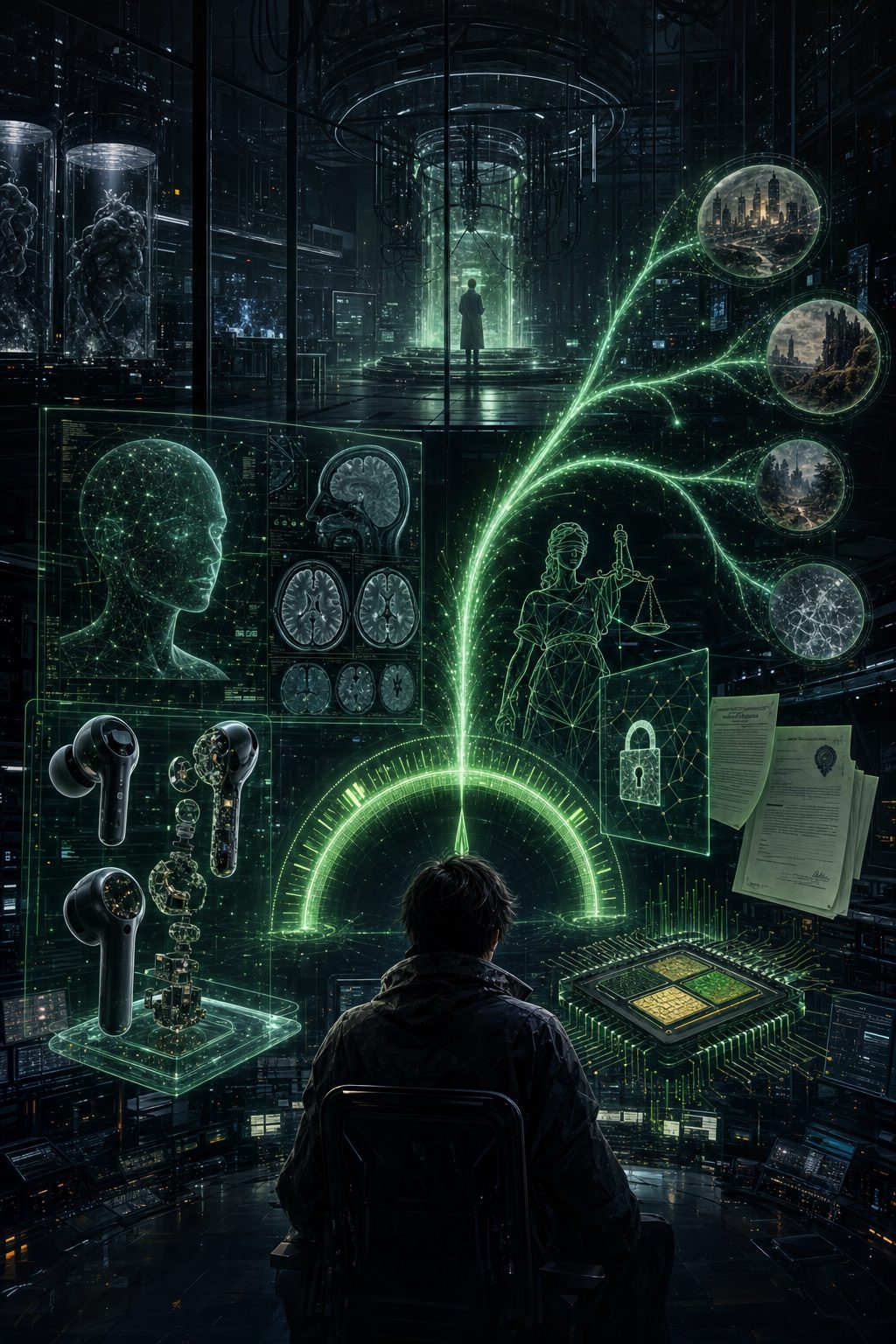
Monday’s community was dominated by three threads: GLM 5.2 beating Claude on Semgrep’s security benchmarks—but this wasn’t just a scoreboard frenzy; one commenter spent $20 over two days building a full encrypted Matrix bot + Rust agent, making the cost-performance narrative real. On another front, someone fed an MRI to Claude Code, and a radiologist jumped in to correct a modality-level misunderstanding between ultrasound and X-ray for calcification detection—precisely the kind of pitfall easy to miss when LLMs enter medicine. Meanwhile, the KIDS Act hit the HN front page at 247 points, proposing mandatory age verification to get online, and commenters immediately surfaced the lobbying donors behind both bipartisan sponsors. The common thread across all three: AI tools are simultaneously colliding with upstream benchmarks, downstream high-stakes scenarios, and regulation.
🤖 AI & LLM
-
GLM 5.2 beats Claude on Semgrep security benchmarks — GLM 5.2 beats Claude in our benchmarks. 277 分 / 113 comments (HN). Semgrep ran the models against their own security scanning scenarios, with GLM 5.2 leading Claude in both vulnerability detection and code remediation. 💬 One developer spent $20 over two days using GLM 5.2 to build an encrypted Matrix bot + Rust agent, calling it an order of magnitude cheaper than GPT/Opus with no obvious shortcomings.
-
I used Claude Code to get a second opinion on my MRI — I used Claude Code to get a second opinion on my MRI. 286 分 / 391 comments (HN). The author fed a shoulder MRI report to Claude Code, and the model returned exercise advice that diverged from the doctor’s diagnosis. 💬 A radiologist in the comments flagged a critical blind spot: ultrasound has far lower detection rates for calcification than plain X-ray films, so both modalities reporting “no calcification” isn’t contradictory—it’s a modality-level difference that patients and AI alike easily misinterpret.
-
Tokenmaxxing is dead, long live tokenmaxxing — Tokenmaxxing is dead, long live tokenmaxxing. 94 分 / 114 comments (HN). A look at token optimization strategies through an agentic engineering lens—when context windows grow large enough to make compression unnecessary, the old “token economics” collapse, but the new problem becomes managing attention decay across ultra-long contexts.
-
Brown University professor denounces mass AI fraud on an exam — Professor denounces mass AI fraud on an exam at Brown. 125 分 / 159 comments (HN). Roughly half the students in a Brown University course were caught using AI on an exam. 💬 htmx author recursivedoubts commented: “In the AI era, exams must return to in-person, handwritten format”—he argues universities may actually see the signaling value of their degrees rise, precisely because they still have pre-digital infrastructure like lecture halls and photocopiers.
-
Do LLMs pass the mirror test? — Do LLMs pass the mirror test? 35 分 / 22 comments (HN). Applying the cognitive science “mirror test” (self-recognition) framework to probe whether LLMs possess a self-model—unsurprisingly, current models perform poorly on this benchmark.
-
MAX models can now run on Apple Silicon GPUs — MAX models can now run on Apple silicon GPUs. 5 分 / 4 comments (Lobsters). Modular’s MAX engine can finally run inference on M-series chips’ GPUs, adding another option for local AI—though community enthusiasm is muted, and ecosystem remains the Achilles’ heel.
🔒 Security / Privacy / Policy
-
KIDS Act would require age checks to get online — The KIDS Act would require age checks to get online. 247 分 / 227 comments (HN). The EFF speaks out against the bill, arguing mandatory age verification in practice requires every American to prove their identity to websites. 💬 Commenters dug up sponsor Guthrie’s (R-KY) top donor: Alphabet. Co-sponsor Pallone’s (D-NJ) donors include Anthropic and Comcast—an intriguing web of interests.
-
A peek into Reddit’s anti-spam internals — A peek into Reddit’s anti-spam internals. 101 分 / 20 comments (Lobsters). The author reverse-engineered Reddit’s spam filtering pipeline, including shadowban determination, rate limiting, and content fingerprint matching. 💬 The highlight: the author rebuilt Reddit’s moderation UI in pure CSS—the interactive mockup was so realistic readers thought it was a screenshot.
-
It’s dead, Jim! (UEFI CA expiry) — It’s dead, Jim! (UEFI CA expiry). 20 分 / 12 comments (Lobsters). The root certificate for UEFI Secure Boot is approaching expiration, and a large number of older devices may become unable to boot updated operating systems. A Debian developer sounds the alarm.
-
The US Used to Demand the Best Tech. Now We Ban It — The US Used to Demand the Best Tech. Now We Ban It. 109 分 / 72 comments (HN). A PCMag opinion piece: from DeepSeek to TikTok to drones, the US is swapping competition for bans—the old ethos of “build the best” has become “ban the rest.”
💻 Programming Languages / Development
-
The feature in OxCaml that more languages should steal — The feature in OxCaml that more languages should steal. 43 分 / 26 comments (Lobsters). Discusses OxCaml’s
[@zero_alloc]—a type-level prohibition on heap allocations within a function. 💬 Zig relies on convention (just don’t pass an allocator), D hasnogcbut it can be bypassed; OxCaml enforces it at the compiler level—that’s a qualitative difference. -
Prism: An Impure Functional Language With Typed Effects — Prism: An Impure Functional Language With Typed Effects. 55 分 / 22 comments (Lobsters). Stephen Diehl’s new language project, using a “side effects as an alternative to monads” philosophy, treating lenses as syntactic control structures rather than values. 💬 The biggest head-scratcher in the comments: what exactly is the relationship between lenses and side effects? Diehl’s gloss: “lenses are to optical paths what monads are to side effects”—many found the analogy a stretch.
-
Excessive nil pointer checks in Go — Excessive nil pointer checks in Go. 47 分 / 41 comments (Lobsters). How much Go
if err != nilboilerplate is too much? 💬 The discussion pivoted to error-wrapping idioms—the top comment, earning 30 upvotes: “Please wrap errors withfmt.Errorf(\"%w\", err)”, followed by a correction that function names should be used rather than natural-language descriptions. -
POSIX Is Not a Shell — POSIX Is Not a Shell. 11 分 / 3 comments (HN). Clarifying the common conflation between the POSIX standard and shells—POSIX defines operating system interfaces, not a shell language specification.
-
Guards! Guards — Guards! Guards. 32 分 / 19 comments (Lobsters). A deep dive into Elixir’s pattern-matching guard clause mechanism, exploring edge cases and best practices.
🛠️ Tools / Open Source
-
Librepods: AirPods liberated — Librepods: AirPods liberated. 212 分 / 64 comments (HN). Reverse-engineered Apple AirPods’ proprietary protocol, enabling non-Apple devices to use exclusive features like battery display and ANC controls. 💬 A necessary clarification in the comments: AirPods already work as regular Bluetooth earbuds; this project unlocks the advanced features locked to the Apple ecosystem.
-
Show HN: NanoEuler – GPT-2 scale model in pure C/CUDA from scratch — Show HN: NanoEuler – GPT-2 scale model in pure C/CUDA from scratch. 30 分 / 7 comments (HN). Built entirely by hand with zero deep learning framework dependencies—aimed at teaching-level demonstration of transformer internals.
-
Show HN: Bash4LLM+ – A lightweight, dependency-free Bash wrapper for LLM APIs — Show HN: Bash4LLM+ – A lightweight, dependency-free Bash wrapper for LLM APIs. 21 分 / 11 comments (HN). Call LLM APIs on servers without any Python/Node environment—a pure bash + curl solution.
-
Nourish: a Wayland compositor with infinite zoom and pan — Nourish - a wayland compositor with infinite zoom and pan. 6 分 / 3 comments (Lobsters). A whimsical project—a desktop with infinite zoom and pan, conceptually like Prezi but built as a window manager.
🔧 Hardware / Systems
-
TOP500 at ISC’26: We have a New Number 1 Supercomputer — TOP500 at ISC’26: We have a New Number 1 Supercomputer. 48 分 / 28 comments (HN). Chips and Cheese’s deep-dive analysis goes beyond rankings to examine the new system’s architectural choices—including interconnect topology and memory bandwidth design.
-
Data Access Patterns That Makes Your CPU Really Angry — Data Access Patterns That Makes Your CPU Really Angry. 87 分 / 14 comments (Lobsters). A humorous tour through the performance disasters caused by cache lines, prefetch failures, and false sharing. 💬 Someone shared their experience using Claude to help clean up documentation—the core code was handwritten in 2009, and AI only helped tidy up the README.
-
Examining circuit boards from the Space Shuttle’s I/O Processor — Examining circuit boards from the Space Shuttle’s I/O Processor. 75 分 / 14 comments (HN). Ken Shirriff once again tears down aerospace-grade hardware—this time the Space Shuttle I/O processor’s multi-layer PCB, with detailed signal trace analysis for every layer.
-
Working around dragons with the Lemote Yeeloong laptop and OpenBSD — Working around dragons with the Lemote Yeeloong laptop and OpenBSD. 83 分 / 17 comments (HN). A chronicle of running OpenBSD on a Loongson MIPS laptop—a complete driver adaptation journey and a log of every pitfall along the way.
📊 Data / History
-
5k menus from the New York Public Library’s Buttolph Collection — 5k menus from the New York Public Library’s Buttolph Collection. 303 分 / 80 comments (HN). The Pudding presents an interactive visualization spanning 40 years of American dining evolution—from menu prices and dish naming to printing styles.
-
Historical memory prices 1960-2026 — Historical memory prices 1960-2026. 99 分 / 31 comments (HN). Stanford’s DAM project compiled 66 years of memory price data, from magnetic core storage to HBM, laying bare the exponential decline in cost per GB.
-
The curious case of the disappearing Polish S — The curious case of the disappearing Polish S. 196 分 / 65 comments (HN). A font rendering bug caused the Polish character Ś to get swallowed on specific systems—a technical detective story tracing the trail from Unicode standards to font fallback to shaping engines.
🎮 Light / Fun
-
Show HN: Zanagrams — Show HN: Zanagrams. 139 分 / 45 comments (HN). A beautifully designed web-based anagram game with smooth animations and delightful interactions.
-
Daisugi, the Japanese technique of growing trees out of other trees — Daisugi, the Japanese technique of growing trees out of other trees. 92 分 / 32 comments (HN). A sustainable forestry technique for Japanese cedar—grafting new trees onto living ones, producing timber continuously without cutting the main trunk. HN surprisingly embraced this “ancient DevOps” practice.
-
The Old Computer Challenge — The Old Computer Challenge. 18 分 / 14 comments (Lobsters). An annual event: complete a week of daily computing tasks using old hardware—this year saw many entries with ThinkPad X60s and iBook G4s.
📝 Summary
Monday isn’t an explosive news day, but the information density is high. GLM 5.2’s cost-performance narrative is shifting from benchmark tables to real-world dev experience—this is the most worth-watching signal in the coming weeks. If the community keeps producing “built a full agent for $20” stories, open-source models’ coding-tool positioning won’t be an empty slogan. The KIDS Act lobbying donor exposure moves the privacy debate beyond abstraction; 247 HN points show developers have a strong gut-level aversion to “prove your identity before going online.” Must-read recommendations: GLM 5.2 benchmarks + dev experience, Claude Code reading MRI (especially the radiologist’s modality correction), and Librepods reverse engineering. Cross-resonance: multiple posts are exploring the boundaries of trust in the AI era—from exam cheating to medical diagnosis to age verification—re-anchoring trust is today’s implicit throughline.