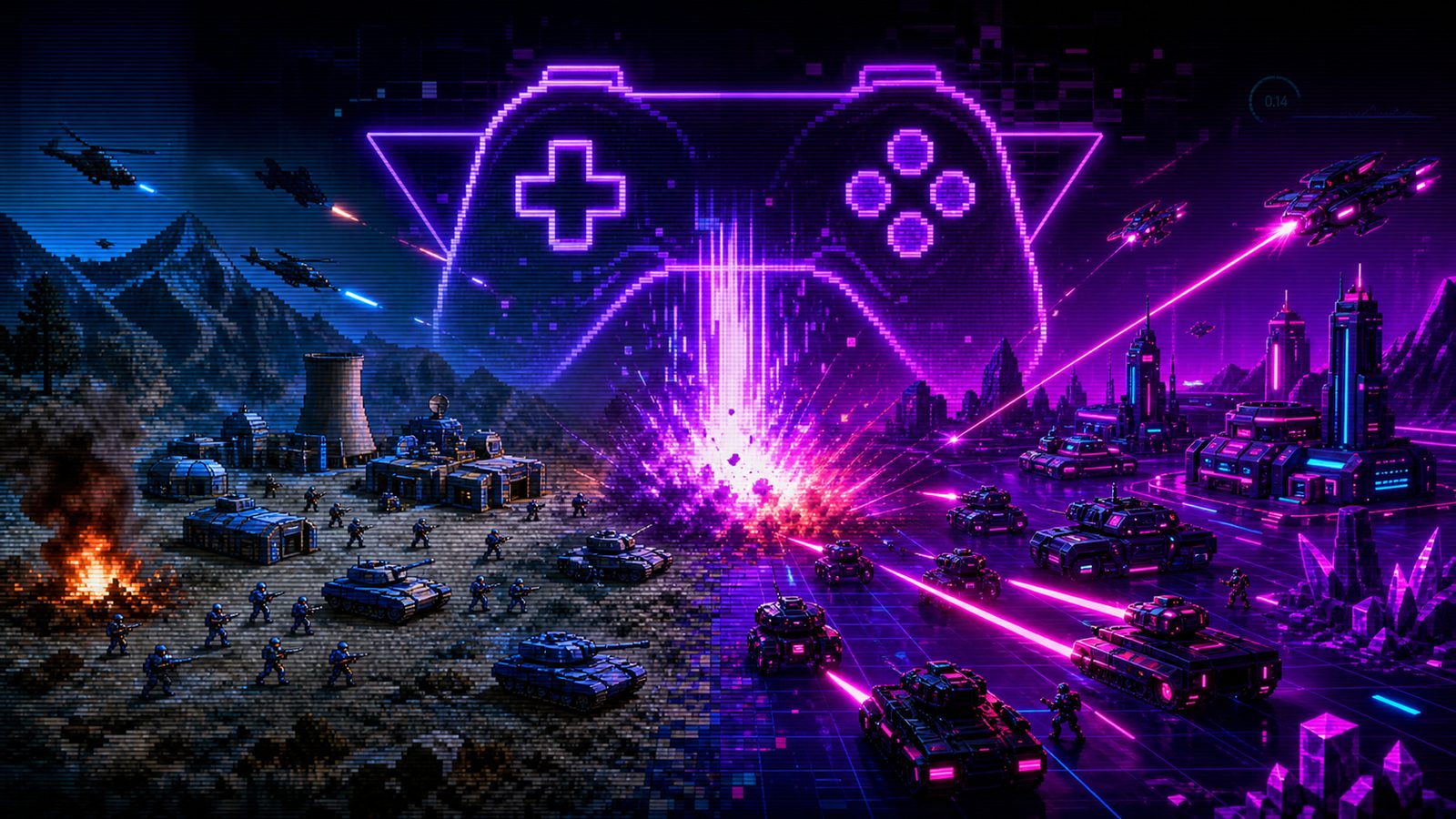
It’s 1996. You’re sitting in front of a CRT monitor. The speakers crackle with that iconic voice: “Construction Complete.” You’ve built your ore refinery, saved up enough credits, and you’re rolling tanks toward the other side of the map. You don’t know what “balance” means. You just know the Soviet Tesla Coil looks impossibly cool, and that Allied Tanya shreds through infantry like butter. The game is Red Alert, made by a studio called Westwood.
That was twenty-eight years ago.
In those twenty-eight years, the RTS genre went from national pastime to niche obsession. The studio that made Red Alert was bought by EA and then shut down. The Command & Conquer series went silent after 2010. Red Alert 4 became a punchline — the sequel that would never come. But one project, started in 2007, spent a full nineteen years pulling Red Alert out of the code heap that could only run on ancient Windows and rebuilding it as a modern game that runs natively on Windows 10, macOS, and Linux.
That project is OpenRA. In June 2026, it hit the front page of Hacker News with 538 points and nearly a hundred comments. For a site where the regulars spend their days debating AI, blockchains, and database optimizers, that’s not a viral explosion. But the comments all said the same thing: this is better than the original.
How they pulled it off
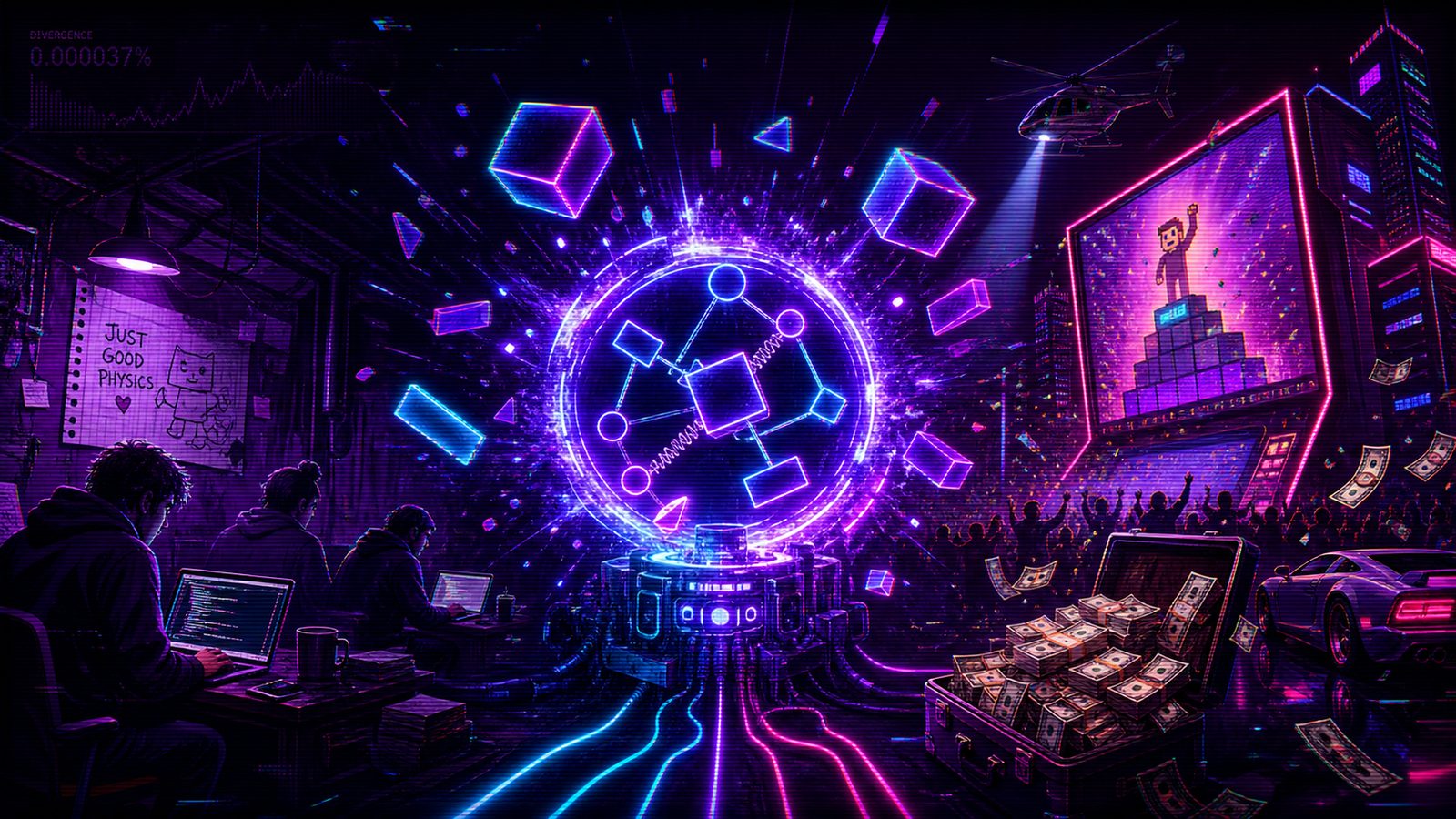
OpenRA’s story starts with a programmer named Chris Forbes. In June 2007 — probably late at night, probably seized by a Red Alert craving — he dug out his old game discs and discovered his current computer couldn’t run them at all. So he did something slightly unhinged: he started writing a brand-new game engine from scratch.
This engine doesn’t use a single line of the original code. Forbes rewrote the entire core architecture in C# — the rendering pipeline, the pathfinding algorithms, unit behavior, network synchronization. The original Red Alert’s packet formats, map files, and unit/building property definitions were all reverse-engineered and placed into a new architecture.
For the first two years, almost nobody contributed. Forbes carried the project alone; it sat in a semi-dormant state. The turning point came in October 2009, when a wave of new contributors suddenly appeared. By 2015, 159 people had contributed over 15,000 commits to the project.
The pace hasn’t stopped. The latest playtest, released in February 2026, includes a feature you probably wouldn’t expect: a random map generator. Pick a terrain, pick a player count, pick a symmetry mode, and the system generates a brand-new map. In the original Red Alert, this was unthinkable. You got the hundred-some maps the developers drew by hand. When you’d played them all, that was it.
Why it’s better than the original
If you only ever played the 1996 version, you might not know what the RTS genre evolved into over the next three decades. OpenRA crammed all of it into a 1996 game:
Attack-Move. In the original Red Alert, when your units marched somewhere and encountered enemies along the way, they’d just stop and stand there — you had to manually click every single unit to engage. Attack-Move makes your forces fight as they travel, engaging enemies automatically. This was a StarCraft innovation. The original Red Alert never had it.
Fog of War. The original Red Alert’s map was fully lit — you always knew where the enemy was, even if you couldn’t currently see them. OpenRA implements true fog of war: beyond your units’ vision radius, the map goes black. If you don’t scout, you know nothing. This fundamentally changes the game from “out-produce the other guy” to “scout, interpret, and make strategic decisions under uncertainty.”
Unit veterancy. Units that survive combat get stronger. Standard in every modern RTS. Not in the original Red Alert.
Balance overhaul. One HN comment captured this perfectly: in the original game, sending Allied artillery against Soviet Tesla Coils was suicide — the coil outranged the artillery, so the artillery died before it ever got a shot off. OpenRA pushed artillery range beyond Tesla Coil range. Suddenly the defender can’t just turtle — you have to send units out to destroy those artillery pieces. The attacker-defender interaction is alive again.
And that’s not one or two tweaks. It’s a systematic, data-driven balance engineering project sustained over more than a decade, driven by competitive community match data. Commercial game studios balance through internal testing and limited player feedback. OpenRA balances from hundreds of obsessive players grinding out matches night after night. The sample size and iteration speed of the latter approach is something the original could never have matched.
Naturally, there’s controversy. Some HN commenters feel the OpenRA AI is too aggressive — it exploits out-of-vision-range artillery to harass you endlessly, forcing constant forward pressure. Others argue the original’s imbalance was part of the fun: “I just like zapping everything with Tesla Coils.” The disagreement itself proves something: balance is a subjective aesthetic among players. What OpenRA provides is a new starting point for that argument, built on a more complex system.
The IP you paid for, then got abandoned
In 1998, EA acquired Westwood. In 2003, Westwood was shut down. Over the next twenty-some years, EA’s treatment of the Command & Conquer franchise can be summarized as follows: Command & Conquer 4 (2010) cratered critically, after which the mainline series was abandoned; Command & Conquer: Generals 2 was canceled in 2013 while already in development; a Red Alert mobile game released in 2018 was so reviled by fans it was pulled; the 2020 C&C Remastered Collection was one of the rare good-faith efforts — but it was purely a graphical remaster. The underlying game mechanics were untouched.
EA, as a commercial entity, is entirely within its rights to decide whether an IP is worth further investment. But the consequence of that decision is unambiguous: a game series that accompanied an entire generation growing up was left to gather dust in a warehouse for over fifteen years.
Then a bunch of people who weren’t getting paid picked it up.
The interesting thing here isn’t just that fans love a product more than the company that owns it. It’s that the fans possess something EA doesn’t: time, patience, and an obsession with how every individual unit-stat tweak affects the overall competitive experience. EA has to report returns to shareholders every quarter. OpenRA’s contributors only have to answer to the opponent who beat them last night and whether that artillery felt too strong again.
A telling fact: EA has not only not sued OpenRA — in 2025, they open-sourced some of the older C&C titles. One HN commenter noted: “Whatever you may say about EA, they have at least tolerated OpenRA and even open-sourced old games. More publishers should learn from this.” The subtlety of the relationship: when a commercial entity abandons an IP, community stewardship can become the only form of continued life for that IP. EA doesn’t need to spend money, and every so often, the community’s heat gives the brand a small existence-refresh.
It’s not just the gameplay that got better
OpenRA does things the original could never have done, because they required infrastructure-level rebuilds:
Cross-platform. The original Red Alert only runs on Windows. OpenRA has native support for Windows, macOS, and Linux — no virtual machines, no compatibility patches, just install and play.
Online multiplayer. The original Red Alert’s multiplayer relied on the IPX protocol — a 1990s LAN protocol essentially unusable on modern operating systems. OpenRA ships with a complete internet multiplayer system: server lobby, matchmaking, replays, and spectator mode. You can now play a match of Red Alert against a stranger on the other side of the planet with lower latency than your LAN parties ever had.
Mod SDK. OpenRA built an engine. Anyone can use that engine to create their own RTS game — units, buildings, rules, all fully customizable. The community has already produced dozens of new games with it.
Updates still shipping. The February 2026 playtest added autosave, AI that attempts to build expansion bases, new single-player missions, and even the beginnings of multi-language localization. A project started in 2007, still updating in 2026. That lifespan exceeds most commercial games by a wide margin.
Where does a project’s staying power come from?
Let’s go back to the beginning. When Forbes started this project in 2007, he almost certainly didn’t imagine that nineteen years later it would still be updating and thousands of people would still be playing it. He just wanted to play a round of Red Alert one night, discovered his computer couldn’t run it, and started writing code.
That impulse is simple. But looking back, that impulse sustained itself for nineteen years. The technical challenges were mostly digested in the first three years. What kept it alive is that Red Alert is genuinely fun. Fun enough that people would pour over a decade of their lives into making it more fun. Fun enough that someone would argue until 3 a.m. with their teammate about whether artillery range needs another tweak. Fun enough that Hacker News readers — people who spend their days talking about AI models, distributed systems, and database query planners — would see the letters “OpenRA” and stop to leave a comment: “I play this with my dad every weekend.”
This isn’t a story about technology. It’s a story about a game that, after being forgotten by the people who owned it, was remembered by the people who played it — and rebuilt, inch by inch, year by year, into something better than it ever was.
Reference links
- OpenRA official site: https://www.openra.net/
- OpenRA GitHub repository: https://github.com/OpenRA/OpenRA
- Hacker News discussion (538 points / 98 comments): https://news.ycombinator.com/item?id=48697560
- OpenRA architecture analysis (TU Delft): https://delftswa.github.io/chapters/openra/
- C&C open-source HN discussion (January 2025): https://news.ycombinator.com/item?id=43197131
- Chrono Divide (browser-based Red Alert 2): https://chronodivide.com/
- C&C fan wiki: https://cnc.fandom.com/wiki/Command_%26_Conquer:_Red_Alert