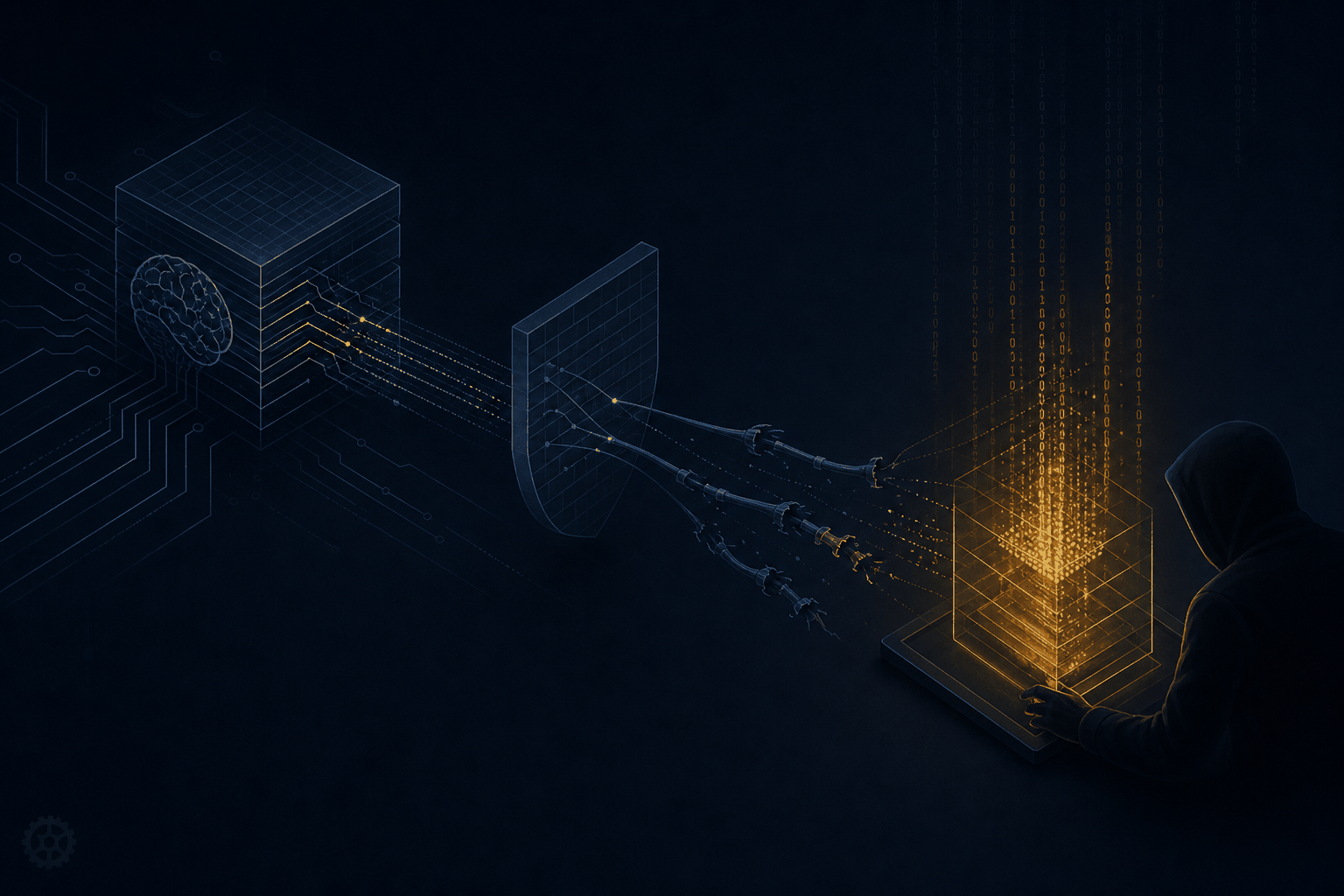
On September 3, 2026, Google rolled out an emergency out-of-band update to the Chrome Stable channel worldwide, advancing the browser version to 152.0.7977.82. This was far from a routine feature update—it was an urgent firefighting release to patch the sixth high-severity zero-day vulnerability actively exploited in the wild this year. The attack demands no suspicious file downloads or elaborate social engineering. Simply navigating to an attacker-controlled web page is enough to shatter low-level defenses in an instant, handing control of the machine over to adversaries.
Attackers Breach the Core Browser Engine
Designated as CVE-2026-85046 with a high CVSS severity rating of 8.8, the root flaw resides directly in Chrome’s V8 JavaScript and WebAssembly engine. The engine acts as the vehicle’s engine block, translating JavaScript code from incoming web pages into machine instructions executed by the CPU. As the largest, most performance-critical, and data-dense component of the modern browser, V8 represents the highest-value target for adversaries.
Type confusion vulnerabilities (CWE-843) are a perennial fixture in browser security history, yet each new appearance carries immense destructive potential. To maximize execution speed, V8 relies on aggressive runtime type inference and speculative optimizations. When the engine misidentifies a generic array of type PACKED_ELEMENTS as a more compact PACKED_SMI_ELEMENTS array, strict memory boundaries disintegrate. This internal mismatch resembles forcing diesel directly into a high-octane gasoline engine. Attackers exploit this underlying logical confusion to forge arbitrary memory read and write primitives, seizing direct control over code execution. Once control is established, hackers can silently deploy malware onto the victim’s machine or harvest sensitive local credentials and session tokens.
 Figure: CVE-2026-85046 impacts all browsers that rely on the V8 engine. Source: SOC Prime
Drive-By Attacks Triggered by Mere Page Visits
The severity of V8-based vulnerabilities stems primarily from their exceptionally low barrier to exploitation. Attackers do not need local administrative rights, nor do they need to convince the victim to run an untrusted installer. The entire exploit chain triggers remotely and silently, without requiring a single suspicious interaction from the user.
Historically, compromising a system required user cooperation—such as double-clicking a malware payload disguised as a PDF invoice. In the face of a high-severity browser vulnerability, conventional defensive instincts fail entirely. The victim’s sole required action is simply loading a web page set up by the attacker. That destination could be concealed behind a phishing link in an invoice email, served through a compromised ad network bidding on legitimate traffic, or hosted on a reputable website that was silently compromised via a watering-hole attack. In the few hundred milliseconds it takes to render the page, V8 parses and executes the malicious payload. This zero-interaction exploit path shifts systemic cybersecurity risk directly onto everyday users who possess no defensive security background.
Official Bounties Pale Beside Underground Exploit Markets
In this asymmetric conflict, defenders operate under deeply unbalanced economic incentives. Security researcher Salvatore Gulizia discovered and responsibly disclosed the vulnerability on August 4, ultimately receiving a $1,000 bug bounty reward from Google. For a high-severity vulnerability capable of reliable arbitrary code execution across desktop platforms, this bounty payout feels strikingly modest.
On underground exploit broker networks and broker price sheets, a reliable, cross-platform full-chain exploit targeting Chrome can command upwards of $1 million. This dramatic valuation gap explains why so many high-tier vulnerabilities bypass official disclosure channels entirely and flow straight into the arsenals of commercial spyware vendors and state-sponsored threat groups. Confronted with confirmed in-the-wild exploitation, Google omitted details regarding the threat actor identity, target profiles, and overall victim scale from its advisory, keeping the technical bug tracker entry strictly restricted. Defenders cut off public access to vulnerability mechanics to prevent rival threat actors from reverse-engineering working exploits—a necessary yet reactive maneuver in ongoing cyberwarfare.
Sandboxes Crumble Under Relentless Zero-Day Pressure
CVE-2026-85046 marks the sixth actively exploited zero-day patched in Chrome this year, following earlier vulnerabilities including CVE-2026-2441 and CVE-2026-3909. Together, these six vulnerabilities outline a sobering trajectory: low-level attacks against browsers are growing more frequent, systematically probing and eroding core defensive barriers.
The browser sandbox once stood as a seemingly impregnable containment chamber. Under original security assumptions, even if malicious code achieved execution, it remained quarantined within the renderer sandbox, unable to touch the local filesystem or compromise the host operating system. But threat actors in the wild do not adhere to defensive assumptions. While an isolated V8 bug may only yield renderer control, attackers routinely chain renderer exploits with operating system privilege escalations to dismantle sandbox boundaries layer by layer. The myth of invulnerable Big Tech security has unraveled; browser defense has settled into a reality of routine, high-tempo exploitation.
 Figure: Chrome has patched six exploited zero-day vulnerabilities in 2026. Source: Shattered.io
Patching Speed Is the Last Line of Defense
The fallout from this vulnerability extends far beyond Google’s direct perimeter. The desktop browser landscape has become heavily monocultural: Microsoft Edge, Brave, Opera, Vivaldi, and the vast majority of mainstream alternatives share the underlying Chromium codebase. Every one of them relies on the V8 engine to execute client-side JavaScript. A structural failure in this shared component instantly exposes billions of multi-platform devices worldwide to exploitation.
After Google releases its upstream patch, third-party browser vendors must merge changes, recompile their builds, and distribute proprietary security releases. This downstream patching gap—ranging from several hours to multiple days—presents attackers with an ideal exploitation window. Enterprise IT organizations cannot afford to rely on employee discretion; they must verify version deployment across fleets using endpoint management tooling. When in-the-wild exploitation is confirmed, waiting for passive background updates is an unacceptable risk. Proactively opening the browser menu to trigger an immediate update is the digital equivalent of administering an emergency vaccine against known active threats.
Drop Complacency: Relaunch Your Browser Now
In this era of continuous cyber conflict, the most reliable defense available to ordinary users is simply patching faster than attackers can weaponize. The remediation path is straightforward: open the menu in the top-right corner of the browser, navigate to Help, and select About Google Chrome. The browser will immediately query Google’s update servers, download the latest security build, and prepare the installation.
The most critical—and most frequently skipped—step is restarting the browser immediately once downloading concludes. Only a full browser restart replaces the vulnerable in-memory V8 binary with the patched code. Chrome’s status as an unassailable security bastion is long gone; the only remaining shield is the speed at which users deploy updates. As vulnerability discovery evolves into an industrial exploit assembly line, relaunching the browser the moment an update is announced remains the only reliable rule of survival in today’s digital wilderness.
References:
- SOC Prime Analysis
- HN Discussion (item?id=49570669)