A Million-Dollar Millennium Prize Confronts the Black Box
In 2000, the Clay Mathematics Institute established seven Millennium Prize Problems, offering a $1 million bounty for the resolution of each. Twenty-six years later, with the sole exception of the Poincaré Conjecture, six remain stubbornly unresolved. Among them stands the Navier-Stokes global regularity problem. Governing the fundamental motion of fluids and gases, these nonlinear partial differential equations model everything from cloud dynamics and oceanic currents to the flow of blood through human arteries.
The global regularity question poses a deceptively straightforward yet profoundly difficult query: given smooth initial conditions in three-dimensional space, can the fluid’s velocity field blow up to infinity in finite time? In everyday language, can fluid motion experience a catastrophic breakdown or “explosion” at a specific moment, spawning a physically intractable singularity?
On September 3, 2026, Fields Medalist Terence Tao published a six-post thread on Mathstodon, propelling this pure mathematics problem directly into the crosshairs of AI algorithms and engineering scale. His concern: what happens if a deep learning system brute-forces a solution to this historic problem before human mathematicians have even grasped the underlying conceptual mechanics? The warning strikes at academia’s deepest anxiety: commercial labs unleashing gargantuan compute clusters to generate an answer, while refusing to disclose the underlying derivation.
 Figure: Terence Tao at the 2026 IPAM Fireside Chat. Source: Wikimedia Commons
How Theoretical Proof Strategies Became Targets for Brute-Force Compute
In recent years, the academic consensus around the Navier-Stokes singularity problem has shifted. An increasing number of leading researchers now suspect that the equations do indeed blow up, developing singularities in finite time. To construct such a counterexample, mathematicians have developed a rigorous, four-step constructive framework:
- Design a nearly-self-similar ansatz for a finite-time blowup solution.
- Locate an approximate solution numerically satisfying this ansatz up to an exceptionally small, computable residual.
- Conduct a rigorous stability analysis in renormalized coordinates, proving that the ansatz can be perturbed into an exact solution if the residual is sufficiently small.
- Verify that the residual actually falls within the stability basin.
This strategy is exceptionally demanding. It entails navigating an astronomical parameter space where tedious boundary condition checks push human pen-and-paper derivation to its absolute limit.
Crucially, where human hand-calculation hits a wall, machine learning algorithms and raw compute find their ideal opening. AI excels at exploring high-dimensional parameter spaces for viable ansätze and optimizing combinatorial combinations to drive residuals below target thresholds. Casting complex mathematical verification as the optimization of a reinforcement learning reward function is entirely sound from an engineering perspective.
Why a “Dead Answer” Blocks Theoretical Expansion
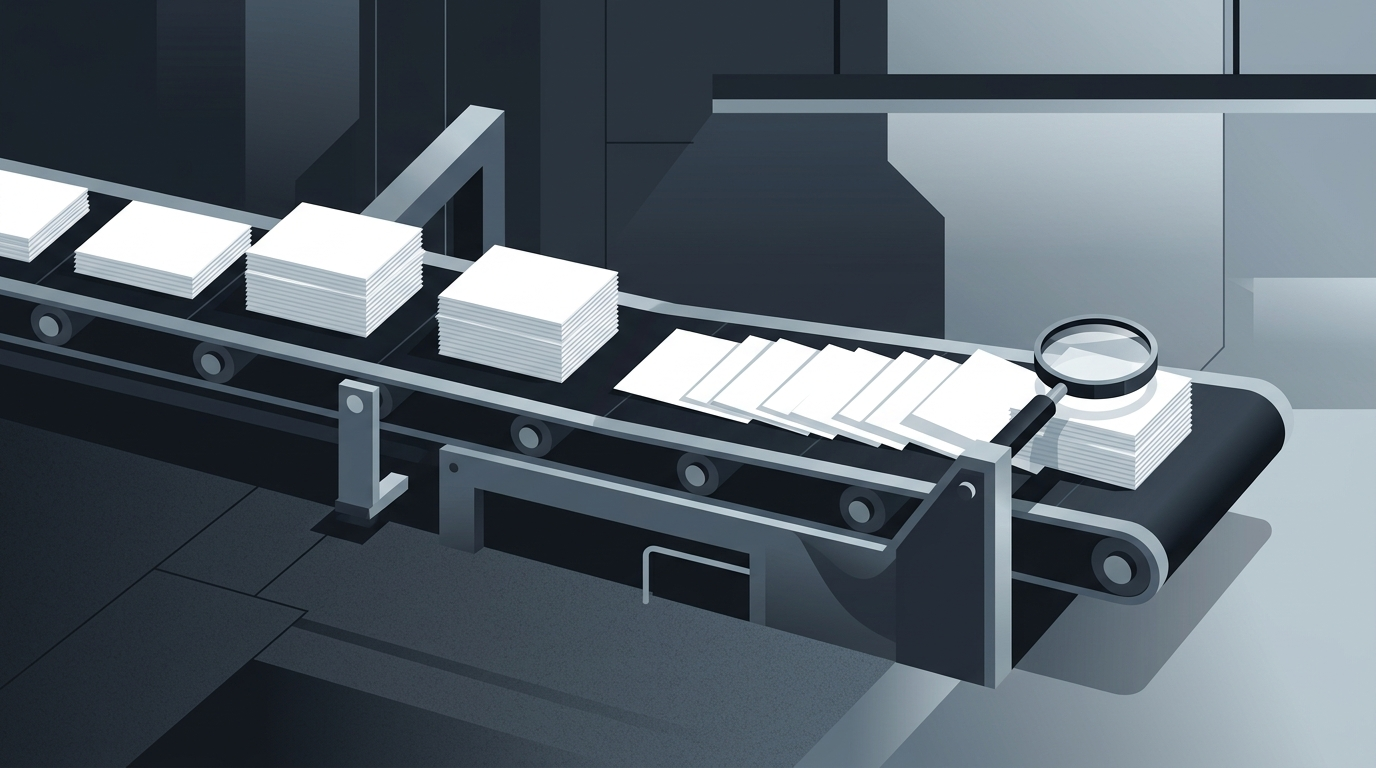
In his fifth post, Tao outlined a troubling scenario: an autonomous AI harness, powered by an enormous GPU cluster, executes this entire iterative loop internally. It completes all verification steps and outputs a highly intricate ansatz and a valid certificate of blowup. Yet, citing commercial secrecy, the AI lab keeps the entire iterative process out of public view.
Human mathematicians would be handed a black box declaring that the problem has been solved, accompanied by vast parameter matrices that no human mind can parse. Faced with this uninterpretable artifact, mathematicians could neither reproduce the discovery nor distill any generalizable theoretical insights from it.
From a narrow engineering perspective, the problem has been checked off. But for human knowledge, the field gains virtually no incremental understanding. By relying on brute-force compute to bypass theoretical deduction, the model closes the chapter on the mystery—and slams the door on further intellectual exploration.
 Figure: Aircraft wake vortices—turbulence described by the Navier-Stokes equations. Source: NASA Public Domain (Wikimedia)
The Byproducts of the Search Are the True Main Course
The $1 million prize in pure mathematics was never offered because the physical world urgently demanded a binary answer. Rather, the Millennium Problems serve as deliberate intellectual bait, challenging the finest minds to invent unprecedented mathematical machinery in pursuit of the solution.
Over nearly a century of grappling with Navier-Stokes, mathematicians have produced foundational theories as collateral benefits. Jean Leray’s framework of weak solutions redefined the very notion of solvability in partial differential equations. The Gagliardo-Nirenberg-Sobolev inequalities became structural pillars of modern mathematical analysis. The Beale-Kato-Majda blowup criterion established an elegant quantitative threshold for determining whether fluid vorticity has spiraled out of control.
Tao’s own work on the problem introduced the conceptual bridge of fluid computation and Turing universality, forging unexpected connections between fluid mechanics and symplectic topology. These byproducts have become vital load-bearing pillars of the modern mathematical edifice.
As Tao cautioned in his sixth post: prematurely solving the problem through purely AI-powered methods—particularly without full transparency into the solution process—can contaminate the problem to the point where it becomes a net negative for the progress of mathematics as a whole. A mathematical breakthrough stripped of its intermediate reasoning is nothing more than a lifeless specimen.
An Inoculation Against Compute Fever
In response to the ensuing discussion across the research community, Tao published a clarifying note two days later. He emphasized that there is no imminent breakthrough on Navier-Stokes; the scenario remains a hypothetical thought experiment. However, given the present trajectory of AI capabilities, it is no longer science fiction.
Mathematicians are not mourning an already fallen fortress. Instead, they are deploying their collective authority to inoculate foundational research against an impending wave of black-box problem solving.
Tech giants wielding supercomputing clusters have immense public relations incentives to claim the halo of a Millennium Prize solution as definitive proof of artificial general intelligence. By speaking out early, academic researchers are reclaiming the right to define what scientific progress actually means, demanding that commercial capital disclose its chain of thought rather than just its compute benchmarks.
Redefining What It Means to “Solve” a Problem
The aggressive entry of AI forces society to confront a fundamental question: what does it truly mean to solve a problem? For centuries, the gold standard of mathematical proof has rested on airtight logical deduction and communal peer review. When machines arrive bearing billions of parameters and quintillions of floating-point operations, absolute verification alone is no longer enough.
Future solutions to grand scientific challenges must remain open deductive architectures that humans can deconstruct, comprehend, and cultivate into new theories. If an algorithm cannot present its reasoning in human-interpretable form, it fails the standard of genuine inquiry. If a solution cannot yield transferable methodologies for adjacent fields, it is nothing more than an internal fireworks display of electrical signals.
Let the machines keep their black-box outputs. Keep the derivations that foster new conceptual tools inside humanity’s open repository of knowledge. When raw compute attempts to drown theoretical understanding, the mathematical community must firmly refuse to accept a perfect scorecard that conceals its work.
References:
- Mathstodon @tao 6-post thread
- Mathstodon @tao clarification post