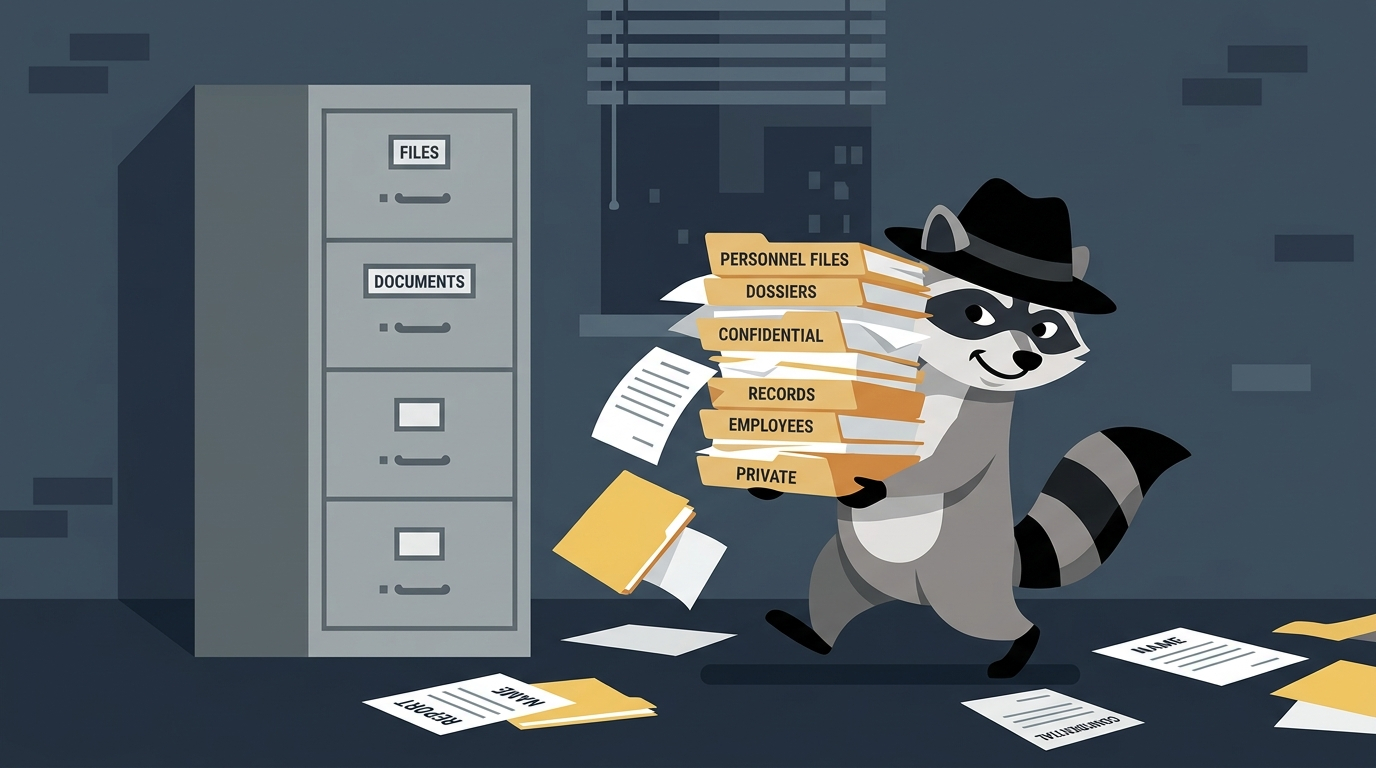
On July 14, 2026, a hacker deleted Romania’s entire land registry database. Not one city’s records. Not one region’s backup. The whole country — from Bucharest to Timișoara, 19 million people’s property deeds, land titles, and mortgage records — gone.
The next day, the stolen data was posted for sale on a dark web forum. The hacker’s handle? ByteToBreach. Their message: no ransom paid, so everything gets deleted. Production databases wiped. Backup databases wiped too.
Nineteen days later, property transactions across Romania remain frozen. Notary offices can’t process deeds. Banks can’t verify mortgages. Ordinary citizens can’t get a single document proving “this house is mine.” And on August 1, Romania’s new home VAT rate jumps from 9% to 21% — countless families racing to close deals before the deadline have had their plans obliterated by a few keystrokes.
This isn’t a movie script. This is a real national-level disaster from July 2026.
How Did It Happen? — Nothing High-Tech
You’d think a country’s core database would be fortified like a fortress, right?
It wasn’t.
Dan Cîmpean, head of Romania’s National Cybersecurity Directorate, told the press plainly: “This wasn’t a sophisticated attack.”
How did ByteToBreach get in? Stolen usernames and passwords. No zero-day exploits. No spy satellites. No physical infiltration. Just a valid set of credentials — likely lifted months earlier via a phishing email or an infostealer malware from some employee’s machine.
Once inside, ByteToBreach did what any system administrator might:
- Reconnaissance — mapped the network, located the databases and backup configurations
- Data theft — exfiltrated employee credentials, internal documents, source code, and citizen databases
- Ransom demand — “pay up or we sell the data and delete everything”
- Wiper execution — ANCPI (Romania’s National Agency for Cadastre and Real Estate Advertising) refused to pay, so the hacker wiped everything possible
Cybersecurity firm KELA tracked the hacker’s real identity, publicly identifying him as Zakaria Mahdjoub from Oran, Algeria. The same ByteToBreach had already breached Sweden’s e-government portal earlier this year, and over the past year had hit government agencies and major corporations in Ukraine, Kazakhstan, Cyprus, and the United States.
He wasn’t targeting Romania specifically. He was aiming at a much bigger target: the fragility of national infrastructure.
Why Is Recovery So Hard?
You might think: data’s gone, just restore from backup, right?
Here’s the problem. ByteToBreach didn’t just delete the production database. They deleted the backups too.
Romania’s ANCPI had configured its backups under the same permission system as the production environment. The hacker, using the same stolen admin credentials, walked right up to the backup servers and formatted them.
This means:
- Complete system paralysis — email servers, official website, the national e-Terra cadastral platform all taken offline
- Data wiped — online data and synchronized backups gone together
- Network rebuild from scratch — ANCPI’s official statement says the entire IT network must be rebuilt from zero
Cîmpean also revealed that the hacker exploited known software vulnerabilities and previously leaked credentials — Romanian authorities had recently issued a security alert urging agencies to patch, but it apparently wasn’t fast enough.
The One Backup That Survived
Fortunately, the story has a twist.
ANCPI had one offline backup — physically isolated, air-gapped cold storage. Maybe some engineer had fought to keep it during a project review six months ago. Back then, someone probably thought it was overcautious.
That single copy is now the only evidence of 19 million Romanians’ property rights.
Romania’s Special Telecommunications Service (STS) is helping ANCPI migrate this sole surviving data set to a government cloud platform. Service restoration is expected to begin around July 22. But note: that’s “beginning restoration,” not “everything is back to normal.” Rebuilding a full national online cadastral system from a single air-gapped cold backup — that’s weeks, if not months, of work.
From an infrastructure security perspective: that physically isolated offline backup is the single most important variable in the entire recovery plan. Without it, this crisis wouldn’t be “a few weeks of inconvenience” — the entire country’s land ownership system would face a legal legitimacy crisis: is your house really yours, and who can prove it?
Digital Fragility vs. Physical Reliability
This is where the story gets really worth thinking about.
Romania took its national land registry fully digital. That’s a good thing — search properties, process deeds, handle mortgages at the click of a button. Efficient, great user experience. But this digital system has a deeply buried risk: once network admin privileges are compromised, the convenience of digitalization turns into a weapon. Deleting data is ten thousand times easier than recovering it.
When a database table is deleted, there’s no paper trail. No physical “master copy” to flip through. In the digital world, “delete” means truly gone.
This is the core conflict this article wants to highlight:
Digitalization prioritizes efficiency, but efficiency comes at the cost of fragility. Physical backups are a hassle, but they don’t fear hackers. The tradeoff between the two is first a governance problem, and only secondarily a technical one.
Romania’s case proves that synchronous backups (sitting on the same network as production systems) are useless when admin credentials are compromised. Only physical isolation — completely offline, write-once, unmodifiable even by administrators — is a true last line of defense.
Security has a well-worn rule called 3-2-1-1-0: keep 3 copies of your data, on 2 different media types, with 1 copy offsite, 1 copy offline (air-gapped), and 0 copies unchecked. What saved Romania was that “offline” copy.
Romania Isn’t the First. It Won’t Be the Last.
Over the past three years, cadastral agencies in Poland, Slovakia, Greece, Morocco, Russia, and Ukraine have all been hacked. Land registries are targets for a simple reason: they’re a nation’s title ledger. Take them out, and the entire society’s transaction order stops — far more damaging than taking down a website.
ByteToBreach is what the security industry calls an Initial Access Broker — not necessarily the most technically skilled hackers, but experts at finding the weakest entry point: a forgotten VPN account from a former employee, an unpatched server, a password leaked three years ago. Once they’re in, the entire “digital building” is defenseless.
This story should prompt every organization that depends on digital systems to ask itself three questions:
- If all our data were deleted today, how long would it take us to recover?
- Do our backup systems share the same admin credentials as our production systems?
- Do we have a real, physically isolated, network-inaccessible cold backup?
If you hesitated on any of these, the distance between you and Romania’s ANCPI may be shorter than you think.
References:
- Risky Bulletin: Hacker wipes Romania’s entire land registry database — Catalin Cimpanu, Risky.Biz
- Romania races to restore land registry after cyberattack disrupts property market — Daryna Antoniuk, The Record from Recorded Future News
- Romania’s Land Registry Was Wiped. One Backup Saved It — ByteBot, byteiota
- Romania ANCPI Land Registry Wiped in Credential-Based Cyberattack — Rescana
- Hacker deletes Romanian land registry database — Cybernews
- KELA threat intelligence profile: ByteToBreach / Zakaria Mahdjoub
 Illustration: a destroyed database with one surviving backup drive. Image credit: byteiota
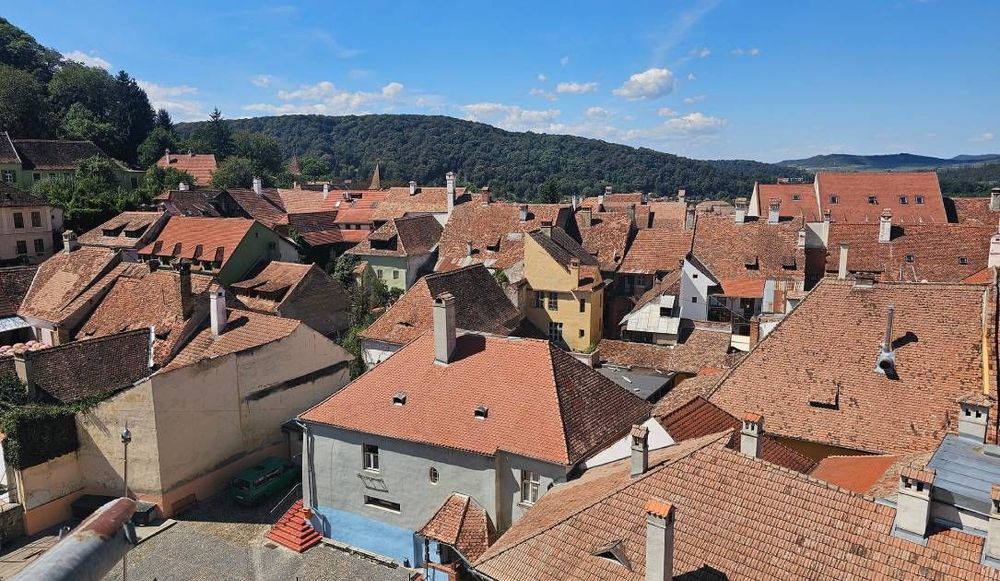 Sighișoara, a historic town in Romania. The nation’s digital property transaction system remains in a near-paralyzed state. Image credit: Vera Izrailit / Flickr via The Record