LED lights are 80% more efficient than old streetlights. They’re directional. They can adjust color temperature to reduce atmospheric scattering. They were supposed to be the technology that saves our night skies. But the reality is: global light pollution is accelerating, and LED adoption is part of the problem.
In July 2026, IEEE Spectrum published a deep-dive feature, “We’re Squandering LEDs’ Potential to Save Our Night Skies,” which sparked nearly 200 points and 150+ comments on Hacker News. After reading it, one thing is clear: this article reveals a brutal truth most people overlook — a better technology doesn’t automatically solve a problem. Sometimes it makes things worse.
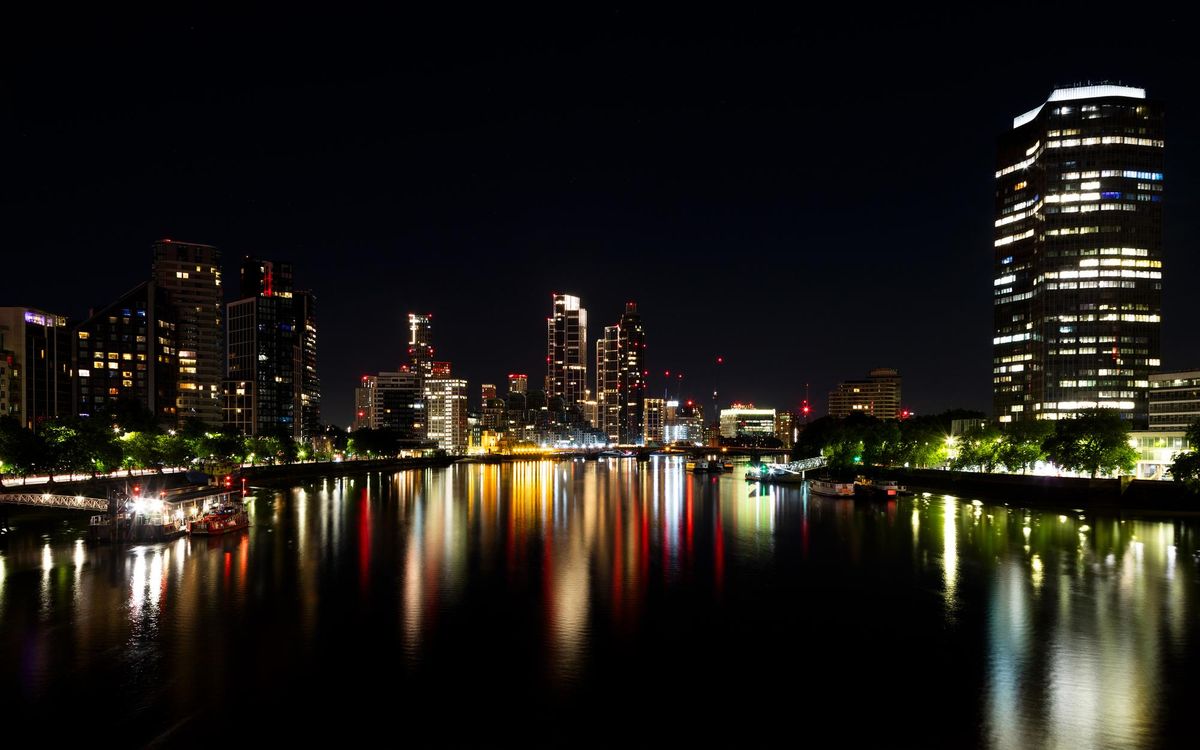 London’s Thames River, where LED lights from riverside skyscrapers cast a massive glow across the water. Photo: Luigi Avantaggiato / IEEE Spectrum
Why Were LEDs Seen as the Savior?
Let’s start with what makes LEDs so impressive.
Traditional incandescent bulbs are essentially miniature heaters — they convert over 90% of electrical energy into heat, with less than 10% becoming light. In other words, nine-tenths of your electricity bill is going toward heating the bulb. Gas discharge lamps (like high-pressure sodium) are better, but still only achieve about 30% efficiency.
LEDs (light-emitting diodes) work on an entirely different principle. They use semiconductor materials to directly convert electricity into light through a process called electroluminescence. A single LED can convert over 90% of electrical energy into light — more than 10x the efficiency of incandescent bulbs and 2-3x better than high-pressure sodium lamps.
LEDs also have several inherent advantages:
- Directional light: traditional bulbs emit light in all directions, much of it wasted; LEDs can aim light precisely where it’s needed
- Extremely long life: a single LED streetlight can run continuously for 10 to 20 years, dramatically reducing maintenance costs
- Precise color and dimming control: by changing semiconductor materials, engineers can produce any color temperature from warm yellow to cool white
These advantages triggered a global LED retrofit wave. In 2014, fewer than 10% of US streetlights were LED; by 2019, over half had been converted, with projections exceeding 90% by 2030. China, India, and Southeast Asia are pushing ahead just as fast. On the surface, it looks like a technology-environment win-win.
But the Night Sky Isn’t Getting Darker
So here’s the riddle.
If LEDs are so efficient and energy-saving, why are we seeing fewer and fewer stars?
Scientists report that global light pollution is growing at nearly 10% per year. This isn’t an abstract number — it means more of the night sky is being lost to artificial light each year. Observatories are forced to relocate, migratory bird routes are disrupted, insect populations are plummeting. A 2023 study in Science found that the area of the globe where stars are visible has shrunk by more than half over the past decade.
You might ask: doesn’t swapping old bulbs for LEDs fix this? Why is it getting worse?
The answer lies in an economic concept called the Jevons paradox.
The Jevons Paradox: More Efficient, More Consumption
In 1865, British economist William Stanley Jevons observed a counterintuitive phenomenon: when steam engines became dramatically more efficient, Britain’s coal consumption didn’t fall — it skyrocketed. The reason was simple — efficiency made coal more economical, so people built more steam engines, set up more factories, and total consumption rose instead of falling.
This is the Jevons paradox: technological progress that improves resource efficiency and lowers usage costs ends up stimulating such explosive demand growth that total resource consumption rises.
This isn’t limited to Victorian steam engines. Look around you:
- Car engines are more fuel-efficient than ever, but total vehicle numbers and miles driven keep rising
- Computers and phones are increasingly efficient, yet global data center energy consumption is soaring
- Refrigerators and air conditioners use less power per unit, but households now own more appliances than ever
LED lighting is the latest case study of the Jevons paradox.
Cheaper Lights, More Lights Installed
LED adoption has triggered the Jevons paradox through two pathways.
Pathway one: municipal lighting.
When a city replaces its old high-pressure sodium streetlights with LEDs, electricity bills drop by 50-70%. That sounds like a win. But where does the saved money go?
In most cities, the answer is: use those savings to install more lights, or switch to higher-wattage ones.
This is a natural rebound effect: since LEDs are so efficient, installing more lights — making every street and alley as bright as day — becomes an economically “rational” choice under the same budget. Streetlight density increases, per-unit brightness goes up, illumination hours extend — and total electricity consumption and light output end up higher than before.
The IEEE Spectrum article quotes London lighting designer Simon Thorp, who observes that illumination levels in many parts of London have reached “excessive” levels. And because LED light doesn’t naturally dim, areas that could be seen perfectly well with modest lighting become less safe due to the glare-and-shadow contrast created by overly bright sources.
Pathway two: personal consumption.
A single LED bulb has dropped in price from tens of dollars a decade ago to just a few dollars today. It uses one-tenth the electricity of an equivalent incandescent bulb and lasts ten times as long. This “so cheap it’s negligible” feeling drives consumers and businesses to behave counterintuitively:
- Homes start installing decorative spotlights that would never have existed before
- Shop windows stay lit all night (the electricity cost is trivial)
- Yards, garages, and hallways get always-on LED fixtures
- Office buildings leave every floor lit around the clock
This is the technology rebound in action — LEDs’ problem is precisely that they’re too good and too cheap, leading us to use them without restraint.
The Extra Damage of Blue Light
It’s not just about more lights.
To produce “white” light, manufacturers typically coat a blue LED chip with yellow phosphor; the blue and yellow light mix to appear white. The problem is that this “white” light contains a high proportion of blue wavelengths.
Blue light has the second-highest energy in the visible spectrum (after violet). Its harms include:
- Scatters more readily in the atmosphere: this is why urban “skyglow” is so much more pronounced in the LED era. Blue light scatters 5 to 10 times more efficiently than red light
- More strongly suppresses melatonin: nighttime blue light exposure disrupts human circadian rhythms, linked to increased risks of obesity, diabetes, and certain cancers
- Greater impact on wildlife: migratory birds navigate by starlight, insects are fatally attracted to blue light — whole ecosystems are disrupted
From an engineering standpoint, the blue light problem is solvable — by adjusting phosphor formulations, LEDs can produce warm light around 2700K with significantly reduced blue content. Phoenix, Arizona, converted 100,000 streetlights to 2700K warm LEDs in 2020.
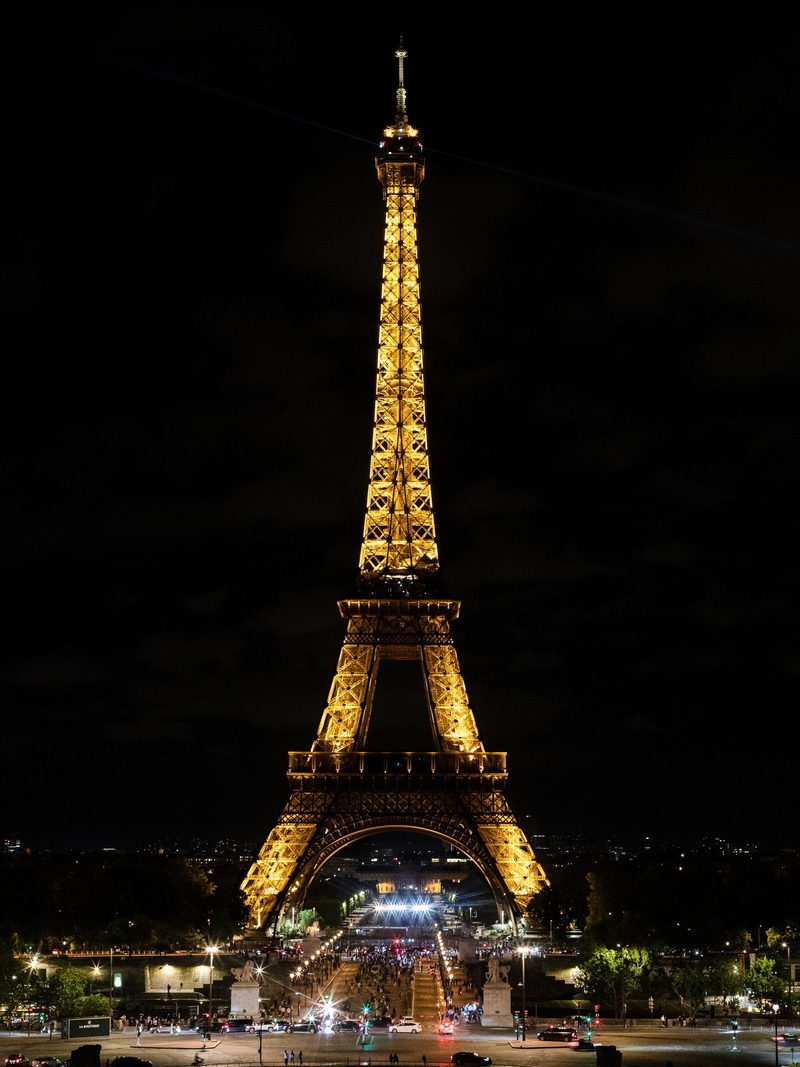 Paris’s Eiffel Tower retains warm high-pressure sodium lamps, while the cold-white LED lights from market stalls below create a stark contrast. Photo: Luigi Avantaggiato / IEEE Spectrum
But the problem circles back to the Jevons paradox: cool-color LEDs (4000K-6500K) have the lowest per-watt cost and highest brightness, so most cities prioritize “cool white” over “warm white.” They saved money and added more light, but the astronomical and health impacts of light pollution are worse than ever.
What Technology Can Do vs. What Humans Choose to Do
At this point, it’s worth separating two levels of the problem.
Technically, LEDs aren’t the villain. They’re more efficient than any traditional light source and offer unprecedented controllability. Through the DALI (Digital Addressable Lighting Interface) protocol, every LED streetlight can be networked, with brightness, color temperature, and on/off schedules set remotely. In theory, a city could automatically dim lights by 60% after midnight, reduce blue light during migratory bird seasons, and maintain warm tones in residential areas — all practically impossible in the analog era.
But in reality, most cities simply did a one-for-one swap — new bulb in old socket, without changing direction, height, count, or dimming capability. And in many cases, the decision-makers actually increased pole counts and wattage during the retrofit.
This is the gap between engineering thinking and policy thinking. A perfect technical solution means nothing if the people deploying it lack the awareness and intention to use it properly.
Who’s Winning?
The real conflict behind the Jevons paradox is between two opposing logics:
| Technological Optimism | Economic Reality |
|---|---|
| More efficient = less consumption | More efficient = lower usage cost = demand expansion |
| LEDs save energy = less light pollution | LEDs are cheap = install more = total light output increases |
| Better controllability = fine-grained management | Controllability costs extra; doing nothing saves money |
So far, economics is winning.
Paris offers an interesting counterpoint. As the “City of Light,” it pioneered a national light pollution law in 2019, banning upward-pointing public lighting and requiring commercial window lights off after 1 AM. France is one of the few countries where light pollution growth has slowed. But even so, cool-white LEDs are still proliferating on Paris streets — because warm LEDs cost more.
The data makes it clear: without policy intervention and a shift in awareness, technology upgrades tend to be canceled out by the Jevons paradox.
It’s Not That LEDs Can’t Work — It’s That We Haven’t Learned to Use Them
Back to the opening question: can LEDs save our night skies?
The answer is yes — but conditions apply.
London’s Simon Thorp puts it well: people think “dark places are unsafe,” so they keep adding lights. But in reality, poorly designed bright light creates harsh glare and deep shadows, actually making visibility worse. CCTV cameras work perfectly well in low light; bright light is often a hindrance.
Lighting experts offer five principles that are refreshingly simple:
- Useful light — every light should have a clear purpose
- Targeted light — illuminate only what needs illuminating, not the sky
- Low light levels — enough is enough; brighter isn’t better
- Controllable — adaptable by time, occasion, and season
- Warm color — minimize blue light emissions
None of this is new. The hard part is getting every city, every property owner, and every consumer to pause before installing a light and ask: Am I lighting a place that needs it, or am I just fighting a primal fear of the dark?
I don’t want to overstate the negative or dismiss LEDs’ enormous energy-saving contributions. But the Jevons paradox reminds us that technology is never the whole answer. When something becomes both better and cheaper, the human instinct is to use more of it. If we follow that instinct without thinking, “efficiency gains” become an accelerator for the very problem we were trying to solve.
Next time you see a city’s midnight skyline blazing with light, a whole office building lit up at 2 AM, or an LED streetlight so bright it’s painful to look at, remember: they may be a monument to the “cheapness trap” — not just a triumph of light.
References
- Reference 1: We’re Squandering LEDs’ Potential to Save Our Night Skies — IEEE Spectrum, Paul Bogard, July 2026
- Reference 2: Hacker News discussion — LEDs’ Potential to Save Our Night Skies (151 comments, 200 points)
- Reference 3: The Jevons Paradox — William Stanley Jevons, The Coal Question (1865)
- Reference 4: Artificial light at night: a global disruptor of the natural environment — Science, 2023
- Reference 5: DarkSky International Five Principles for Responsible Outdoor Lighting — darksky.org
- Reference 6: Light pollution is getting worse, and Earth is paying the price — National Geographic
- Reference 7: France national light pollution law (2019) — French Ministry of Ecological Transition
Image credits: IEEE Spectrum / Luigi Avantaggiato