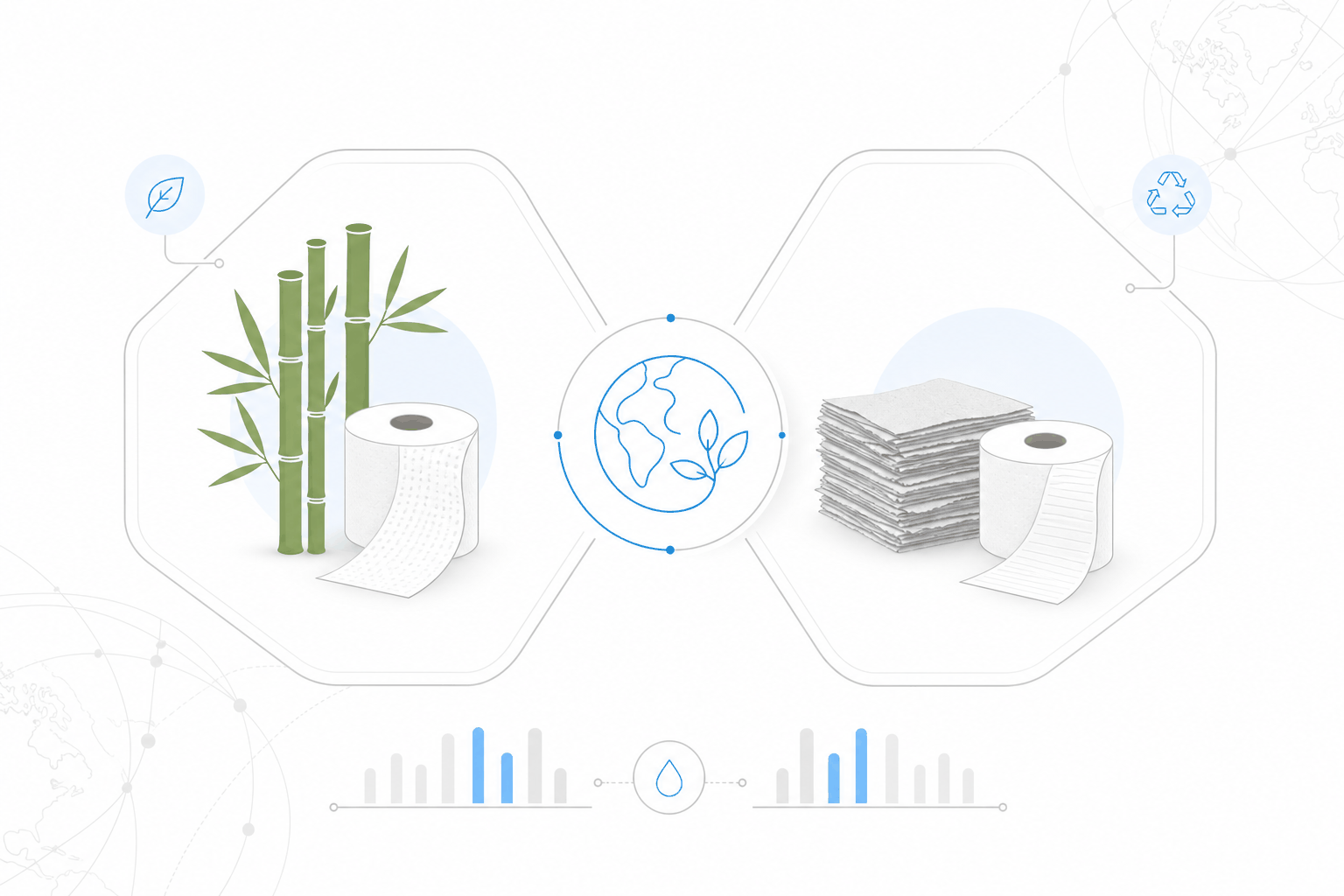
When strolling down supermarket aisles or shopping online for household essentials, many eco-conscious consumers deliberately pay extra for bamboo toilet paper featuring green bamboo graphics and “tree-free” labels. The widespread assumption is that harvesting trees harms forest ecosystems, while fast-growing bamboo offers a low-carbon, sustainable alternative. However, scientific research pours cold water on this green aura: across its entire production and transportation lifecycle, bamboo toilet paper holds no significant carbon advantage over traditional options.
Full Lifecycle Assessment: Bamboo vs. Wood Pulp Footprints Are Neck and Neck
To evaluate the environmental impact of everyday goods, environmental scientists rely on Life Cycle Assessment (LCA)—a systematic method tracking product impacts from raw material extraction and manufacturing to shipping and disposal. A 2025 study published in Cleaner Environmental Systems conducted a detailed LCA comparing bamboo pulp toilet paper with traditional virgin wood pulp paper. Experimental data revealed that the average carbon footprint of bamboo toilet paper is virtually on par with traditional wood pulp paper.
The primary reason for this parity lies in the offsetting effects of raw material cultivation locations and transoceanic shipping. Currently, the vast majority of commercial bamboo for paper is grown in Asia, requiring finished products to travel over 10,000 kilometers via ocean freight to reach consumer markets in North America and Europe. The carbon emissions generated during long-distance maritime and overland transit easily neutralize the carbon reduction benefits gained from bamboo’s rapid growth.
A 2019 study published in the Journal of Advanced Manufacturing and Processing arrived at a similar conclusion. The research highlighted that environmental impact differences between traditional and alternative raw materials during pulping and papermaking steps are minimal. Rather than shifting entirely to bamboo pulp, continuously upgrading existing wood pulp mills with clean energy power and emissions recovery technologies yields far greater reductions in the industry’s environmental footprint.
 Image: The environmental performance of commercial toilet paper depends on the full lifecycle manufacturing and shipping balance sheet. Source: BENJAMIN ROBINSON/ISTOCK/GETTY IMAGES PLUS, via Science News
The Real Sustainability Champion: An Unexpected Answer from Advocacy Groups
If bamboo toilet paper fails to significantly cut carbon emissions, how should shoppers navigate store shelves? The Natural Resources Defense Council (NRDC), a leading American non-profit environmental advocacy organization, publishes an annual toilet paper sustainability scorecard. In its rankings, recycled paper (produced by repulping urban waste paper) consistently claims the top tier, followed by bamboo paper, while 100% virgin wood pulp paper trails at the bottom.
Recycled paper takes top honors on the sustainability ledger because it completely eliminates the resource-intensive phases of plant cultivation and timber harvesting. Manufacturing recycled paper relies primarily on urban paper waste collected and processed domestically within consumer countries, drastically shrinking energy consumption during raw material acquisition.
In contrast, while bamboo paper avoids felling virgin trees, heavy transoceanic transit costs severely lower its overall eco-score. By the standards of authoritative environmental groups, recycled paper made from post-consumer waste remains the greenest choice available.
Bringing Bamboo to the Doorstep: The Looming Risk of Ecological Invasion
Since shipping Asian bamboo across oceans creates an additional carbon footprint, could domestic, large-scale bamboo farming in consumer countries solve the dilemma? Ecological scientists urge extreme caution. Botanically classified as grass, bamboo comprises over 1,400 species, broadly divided into running bamboo (which spreads rapidly via aggressive horizontal underground rhizomes and is notoriously difficult to eradicate) and clumping bamboo.
Industrial papermaking demands exceptionally high yields, leading commercial growers to rely almost exclusively on fast-growing running bamboo. However, the underground root system of running bamboo functions like a massive subterranean network, expanding horizontally at astonishing speeds to swallow adjacent lands. David Coyle, an invasive species specialist at Clemson University, notes that once running bamboo establishes a colony, short of deep soil excavation with heavy machinery or metaphorically drenching the land in massive chemical treatments, it is practically impossible to eradicate.
Coyle warns that introducing running bamboo for large-scale commercial cultivation in suitable growing regions represents a disastrous ecological decision. The aggressive competitive ability of running bamboo quickly smothers native plant species, disrupting local biodiversity and ecological balance.
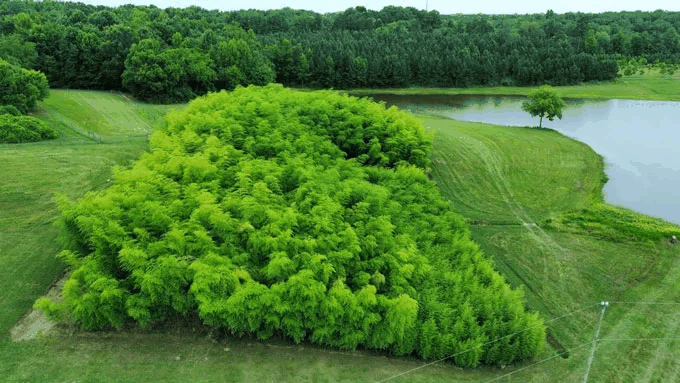 Image: Henon variant of black bamboo cultivated in a demonstration garden at North Carolina A&T State University. Source: JAMIE LELIEVER, via Science News
Ecologists’ Concerns: Commercial Ambitions and Abandonment Disasters
Beyond the intrinsic botanical traits of bamboo, ecologists harbor deeper concerns regarding potential commercial management failures. Luke Flory, an invasion ecologist at the University of Florida, emphasizes that the greatest risk of domestic bamboo farming stems from the long-term viability of growers. If a paper enterprise plants thousands of acres of bamboo and subsequently faces bankruptcy, the abandoned running bamboo will rapidly invade surrounding natural forests and agricultural lands without management.
Deah Lieurance, a researcher at Pennsylvania State University, questions the eco-friendly marketing narratives of bamboo paper brands. She highlights that while many companies claim bamboo possesses superior carbon sequestration capabilities (the process where plants absorb atmospheric carbon dioxide through photosynthesis and store it long-term in biomass or soil), empirical data supporting these claims remains limited. Many bamboo toilet paper companies heavily promote fast growth as a selling point while side-stepping the reality of sparse carbon sequestration measurement data.
In response to academic ecological concerns, commercial cultivation advocates propose controlled management protocols. Jamie LeLiever, founder of National Bamboo, chose to cultivate a specific Henon black bamboo variant whose seeds are non-viable, with boundary spread limited to roughly 2 meters per year. His farm maintains a 6-meter-wide buffer zone around bamboo fields and regularly executes mechanical mowing to restrain root propagation. Currently managing over 300 hectares (equivalent to roughly 420 standard soccer fields), the enterprise aims to prove the controllability of domestic bamboo agriculture.
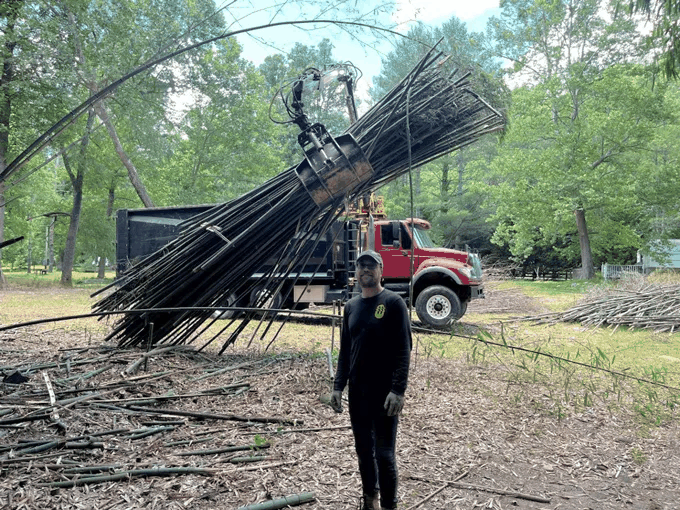 Image: Jamie LeLiever, founder of National Bamboo, observing growth inside a Henon bamboo grove. Source: JAMIE LELIEVER, via Science News
Consumer Takeaway: Don’t Let Green Graphics Obscure Genuine Choices
Looking across the entire carbon ledger of the paper industry, bamboo toilet paper is not without merit, but it is by no means an flawless green miracle. Under current supply chain dynamics, transoceanic shipping emissions neutralize the ecological edge of rapid plant growth, while large-scale domestic introduction brings irreversible bio-invasion risks.
For everyday individuals striving to make low-carbon consumer decisions, the choice can be far clearer and simpler. Toilet paper packaged with green bamboo logos delivers environmental performance barely different from standard wood pulp options. If you want to purchase truly eco-friendly toilet paper, looking for the “recycled paper” certification on the label remains the smarter choice.
Reference Links:
- Science News Report
- Cleaner Environmental Systems Research Paper
- NRDC Toilet Paper Sustainability Scorecard