
In August 2026, England released data that caught the global medical community’s attention: it is poised to become one of the first countries in the world to eliminate hepatitis C (hep C). Over the past decade, deaths linked to hepatitis C in England have fallen by 36%, and more than 100,000 people have been diagnosed and treated since 2015. For most people, infectious diseases are either kept at bay by vaccines or managed long-term with daily medication, much like hypertension. Completely “eliminating” an infectious disease seems counterintuitive—yet hep C is turning out to be the first infectious disease in human history wiped out primarily through pharmaceutical cures.
A “Silent” Infectious Disease
Hepatitis C is a blood-borne virus that attacks the liver. It spreads through shared needles, unsterilized tattooing equipment, or blood transfusions administered before 1991 prior to screening. England carries a heavy history here: between 1970 and 1991, more than 30,000 people contracted hep C or HIV through contaminated blood products, resulting in roughly 3,000 deaths. It has been described as the worst treatment disaster in NHS history—patients were infected inside the very hospitals that were trying to save them.
The insidious nature of hep C lies in its “silence.” Infected individuals can remain completely asymptomatic for decades while the virus quietly damages the liver until cirrhosis or liver cancer eventually develops. Globally, there are currently about 47 million chronic infections, with approximately 239,000 deaths in 2024 alone. Because the ultimate toll manifests decades after initial exposure, many people never suspect they carry the virus—making it exceptionally dangerous.
In England, the infected population is concentrated in specific groups: people who inject drugs account for the majority of cases, followed by victims of contaminated blood products, and immigrants from regions with higher hep C prevalence, such as Eastern Europe and Central Asia. A concentrated population offers one distinct advantage: screening can be targeted precisely rather than searching blindly.
Medication: From “Chemotherapy” to Daily Oral Pills
Previous treatments for hep C were grueling, resembling chemotherapy: interferon injections causing severe flu-like side effects over six to twelve months, with cure rates hovering around 50%. Many patients quit halfway through.
The turning point arrived around 2014 with the emergence of direct-acting antivirals (DAAs). These oral medications work by inserting precision keys into the virus’s replication machinery, blocking key components so the virus can no longer replicate. Within weeks, the virus inside the body is naturally cleared. The first wave of these drugs appeared around 2011, but still required combination with interferon, retaining harsh side effects while pushing cure rates to roughly 70%. The true game-changer was the next generation of all-oral regimens: no injections, no interferon, treatment shortened to 8 to 12 weeks, cure rates exceeding 95%, and drastically reduced side effects. For a disease once regarded as incurable, these figures represent a landmark achievement.
Crucially, the hepatitis C virus has a fundamental vulnerability: it does not write its genetic code into human cell DNA. HIV does this, while hepatitis B leaves behind a resilient backup copy in liver cell nuclei—which is why both remain treatable but hard to eradicate. Once hep C is cleared from the body, it is truly gone and will not return. This biological reality serves as the foundational bedrock for eliminating hepatitis C.
Screening: Inserting Tests Where People Already Go
No matter how effective a drug is, it is useless if infected individuals remain unidentified. England’s strategy was to integrate testing seamlessly into routine medical encounters:
- Adding hep C screening to routine blood draws in Emergency Departments (A&E);
- Conducting tests during new patient registration at GP practices;
- Shipping free self-testing kits directly to homes, requiring no doctor visits;
- Proactively offering testing in high-risk environments such as prisons and addiction treatment facilities;
- Conducting targeted outreach to middle-aged and older adults born in Eastern Europe or the Balkans, who may have been exposed through medical or dental procedures prior to 1991.
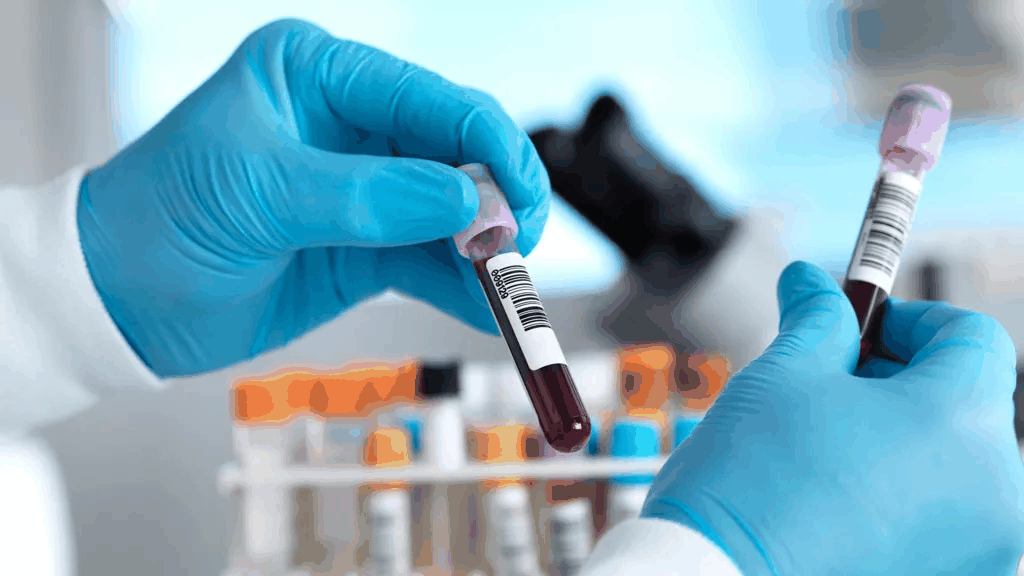
Image: Barcoded blood sample tubes—England’s elimination plan began with “one extra blood test.” Source: Getty Images (via BBC)
65-year-old Paul Eatwell was identified through routine screening. When a routine blood test picked up hepatitis C, his initial reaction was, “It must be a mistake; I feel completely fine.” Asymptomatic individuals like Paul represent the hardest to locate—and most critical—group in this elimination effort. Currently, 84.6% of the estimated 50,000 ongoing infections in England have been diagnosed, just shy of the 90% target. This indicates the hardest phase of the work is complete; the remaining challenge is locating the final 15% hidden within the population.
There is also a key mechanism worth noting: although there is no vaccine for hepatitis C, curing an infected person effectively shuts down a source of transmission. Because the virus exists exclusively in infected blood, curing each patient shortens the transmission chain until it breaks entirely. This explains why “elimination” and “control” reflect fundamentally different strategies—control manages disease continuously, whereas elimination clears it point by point.

Image: 65-year-old Paul Eatwell, diagnosed during routine blood testing and fully cured after treatment. Source: NHS England (via BBC)
System: Drug Pricing, Negotiation, and Universal Healthcare
Medical technology and screening networks require financial backing to succeed. When DAAs first hit the market, a single course carried a US list price of around $84,000, putting it out of reach for most patients. As a centralized single-payer system, the NHS negotiated substantial confidential discounts early on, enabling free treatment for patients. In contrast, US statistics indicate that only about one-third of diagnosed patients access treatment within a year.
Beyond pricing, public strategy plays a decisive role. While the World Health Organization set a global target to eliminate viral hepatitis by 2030, England announced in 2018 that it would move its target forward to 2025. Furthermore, as patents expired and generic formulations from countries like India became available, treatment costs in some regions fell to tens of dollars—without affordable generics, a global elimination strategy would remain unviable.
This contrast explains why certain nations can eliminate hep C while others struggle. Egypt, once burdened with the world’s highest hep C infection rate, achieved dramatic reductions through free nationwide screening and low-cost generics. Conversely, in many low-income nations, drug costs, diagnostic capabilities, and primary care infrastructure each present formidable obstacles. Eliminating hepatitis C is ultimately the result of a triad: effective drugs, a widespread diagnostic network, and a public healthcare system willing to organize and fund the effort.
The Last Mile Ahead
England has not yet achieved absolute victory: hep C deaths have dropped 36% since 2015, still short of the final 65% reduction goal, while roughly 15% of infected individuals remain undiagnosed. On a global scale, with 47 million chronic infections and roughly 900,000 new cases annually, complete eradication remains a distant goal.
Nevertheless, England’s effort provides proof-of-concept: an infectious disease once considered incurable can be systematically driven toward extinction within a country. It relies on three concrete pillars—an 8-to-12-week oral pill regimen, an opportunistic blood test, and a healthcare system committed to paying for universal access. The next time an extra tube of blood is drawn during a hospital visit, it might just mark another step forward in humanity’s race against viral disease.
Smallpox remains the only human infectious disease ever fully eradicated, achieved through vaccination. Hepatitis C is following a different trajectory: no vaccine, but a pill capable of completely clearing the virus. Two different paths leading to the exact same outcome—if England completes this final mile, it will prove not only that hep C is treatable, but that eradicating an infectious disease is far closer to reality than we imagined.
Reference links:
- BBC News: England set to be one of the first countries to eliminate hepatitis C (Primary source)
- Hacker News discussion: England set to be one of the first countries to eliminate hepatitis C (item 49257377)
- NHS England: Ending Hepatitis C in England (Official NHS elimination program portal)
- World Health Organization (WHO): Hepatitis C Fact Sheet (Global infection and mortality data)
- British Liver Trust: England poised to eliminate deadly virus