On July 21, 2026, Stephen Wolfram published a lengthy essay titled Towards a Theory of Bugs: The Ruliology of the Unexpected. The piece attempts to construct a formal theory of software bugs, centered around a single core thesis: bugs are an inevitable consequence of computational irreducibility.
The article generated immense traction on Hacker News, garnering 1,294 points and 508 comments, making it the top post of the day. Yet, a subtle sentiment pervaded the comment section: “What on earth are you actually talking about?”
A Mathematician’s Grand Narrative
Who is Wolfram? If you don’t write code, you might know him in another context: founder of Mathematica, creator of the Wolfram Alpha answer engine, and champion of A New Kind of Science. He has a deeply ingrained habit: fitting every phenomenon into his overarching framework of the Principle of Computational Equivalence.
This time, he turned his sights toward software bugs.
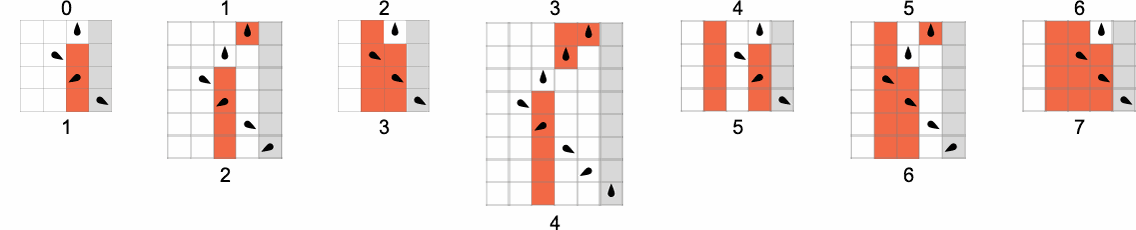
Wolfram’s core chain of reasoning goes like this: even extremely simple programs—such as a Turing machine with just 3 states and 2 colors—can produce “unexpected behavior” under specific inputs. He provides a concrete example in his essay: a Turing machine designed to compute n+1 yields correct outputs for inputs 0 through 6, but inexplicably outputs 9 when given 7.
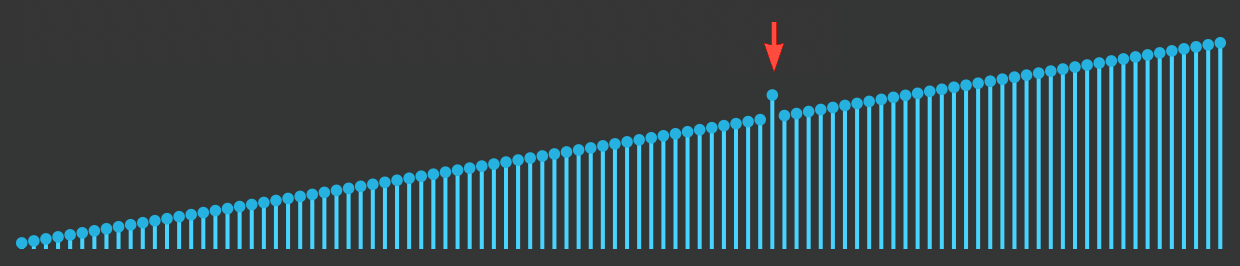
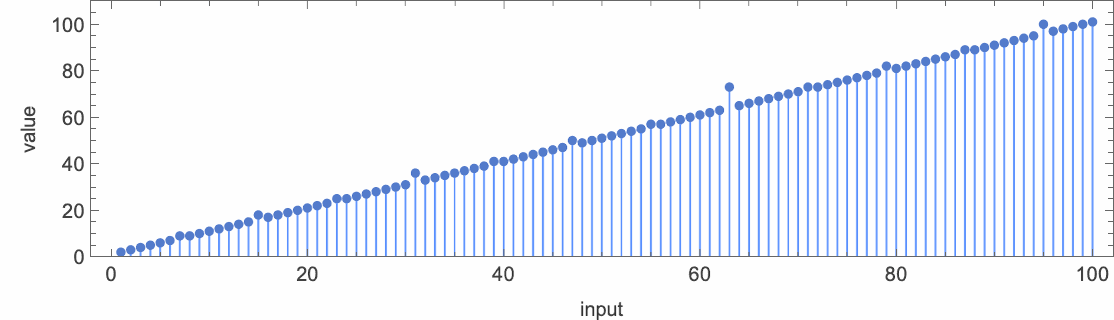
He goes on to demonstrate an even more extreme case: a 4-state Turing machine that functions correctly for inputs 0 through 62, but somehow outputs 72 when given 63.
To Wolfram, these “unexpected anomalies” are bugs in embryonic form. And their root cause is what he calls “computational irreducibility.”
Computational Irreducibility: A Go Metaphor
Here we must pause to unpack this crucial concept, as it lies at the very heart of the entire debate.
“Computational irreducibility” is a concept Wolfram introduced in his 2002 book A New Kind of Science. Its core intuition can be summarized by a simple question: Can you determine the final outcome of a game of Go without playing out every single move?
You cannot. Every move in Go depends on your opponent’s response, which in turn depends on your next move. Short of playing the game through to the end, there is no shortcut to accurately predict the endgame.
This is what “irreducible” means—when you run a program, its behavior cannot be predicted by any “faster computational method.” The only way to know what it will do is to execute it step by step until it finishes.
Wolfram’s logic is therefore straightforward: if a bug is fundamentally an “unexpected behavior,” and computational irreducibility implies that any sufficiently complex program will inevitably generate behaviors you cannot predict in advance—then bugs are not merely the result of programmers making mistakes; they are a mathematical necessity.
He even posits that as long as a program is worth running (meaning it performs meaningful computation), it must contain parts that cannot be predicted in advance, thus inherently harboring potential bugs. It sounds like an existential dilemma: either write a program so trivial that it has no bugs, or accept that bugs are the price of computation itself.
The Engineer’s Response: “This Doesn’t Match My Daily Experience”
Had the story ended here, it would remain a mathematician’s philosophical musing. But the real drama unfolded in the comments section.
HN user gjm11 posted a comment that quickly voted its way to the top. He pointed out a sharp disconnect: the “bugs” Wolfram discusses bear little resemblance to what frontline developers encounter every day.
gjm11 distinguished between two fundamentally different scenarios:
Scenario 1: You want to write a program that performs action X. You carefully think through the logic required for X, then write a program you believe produces result X—but you make some mistakes along the way. This is how the vast majority of real-world bugs are born: developers messing up logic, mishandling edge cases, or misinterpreting API documentation.
Scenario 2: You write a massive batch of random programs, test them one by one, find a program that appears to compute X on a small sample of inputs, and deploy it—only for it to fail under specific edge cases.
Wolfram’s essay focuses entirely on Scenario 2. He uses randomly generated Turing machines as examples—machines that happen to act correctly “most of the time” before breaking on specific inputs. But this has nothing to do with Scenario 1, where programmers intentionally design a system and accidentally make an error.
gjm11 bluntly called Wolfram’s argument “silly,” pointing out that Wolfram was shoehorning his beloved concept of computational irreducibility into a context where it simply doesn’t apply.
Deeper Disagreements
Another HN user, seanhunter, highlighted another flaw: Wolfram never rigorously defined his core concepts.
The “Principle of Computational Equivalence” and “Computational Irreducibility” serve as catch-all explanatory tools in Wolfram’s framework, yet they lack formal, rigorous definitions. In scientific inquiry, an undefinable concept cannot be tested or falsified. A theory that cannot be tested is less like science and more like a declaration of faith.
User PaulHoule offered an even more poignant observation, noting Wolfram’s recurring pattern: whenever he discovers a new family of rules, he inevitably spots an interesting phenomenon (like “Rule 30”) and excitedly proclaims he has uncovered a new “theory”—yet beyond stating “this too is computationally irreducible,” he has little else to offer.
This is perhaps the ultimate irony: a movement styling itself as “A New Kind of Science” has produced, over two to three decades, essentially a single central insight: many things are unpredictable.
Echoes of an Older Debate
Stepping back, this debate is not entirely new.
Wolfram’s assertion that “bugs are inevitable” is essentially an attempt to provide mathematical scaffolding for an age-old engineering reality: software defects cannot be completely eliminated. On this point, he is hardly alone—Turing’s Halting Problem proved long ago that no general algorithm can determine whether an arbitrary program will halt. In practice, most engineers accept that large software systems will always contain bugs.
The problem is that the leap from “bugs are inevitable” to “computational irreducibility is the theory of bugs” misses too many intermediate steps.
Wolfram’s reasoning jumps across distinct abstractions. Starting from the mathematical properties of Turing machines, he leaps directly to bugs in everyday software development. This jump ignores a crucial fact: the vast majority of production bugs stem from human cognitive limitations—overlooked edge cases, miscommunicated requirements—rather than deep computational irreducibility.
While these “human bugs” might share some indirect connection to computational irreducibility (given that human cognition is itself a form of computation), Wolfram’s essay fails to establish that bridge. He merely wrapped a profound-sounding mathematical term around a phenomenon that could be described in far simpler, more pragmatic terms.
To Be Fair, Wolfram Has a Point
As a thought experiment, the narrative that “computational irreducibility causes bugs” is not entirely without merit.
On one hand, it touches upon a counter-intuitive truth: even simple rule-based systems can exhibit unpredictable behavior. This is especially relevant in the era of artificial intelligence—when machine learning models generate code and even the prompt engineers don’t fully understand what happens inside the model’s latent space, the traditional “programmer error” framework becomes insufficient.
On the other hand, the limitations of formal verification that Wolfram highlights are real. No formal verification system can cover every possible input space, a limitation grounded in foundational computation theory. For safety-critical software—such as autonomous driving systems or medical device controllers—recognizing the “inevitability” of edge-case bugs holds practical significance.
However, as multiple commenters noted, this feels like repackaging well-established knowledge: the undecidability of the halting problem and the high cost of formal verification have long been standard consensus in software engineering. Wolfram’s contribution mostly adds a new brand name to existing wisdom.
Mathematician’s Hubris vs. Engineer’s Pragmatism
Behind this debate lies a fundamental clash of developer cultures.
Wolfram approaches the problem as a mathematician and theorist. His mindset is to build a grand framework from first principles and use it to explain everything. He doesn’t gather empirical bug data or analyze real-world software defect reports; instead, he “simulates” bug phenomena by generating random Turing machines.
Engineers think in reverse. They deal with the messiness of the real world: null pointer exceptions, race conditions, or payment gateway failures caused by incorrect timezone handling. The root causes of these bugs are concrete and separated from “computational irreducibility” by layers of abstraction. To a working engineer, Wolfram’s theory feels less like an explanation and more like noise.
This is the killer blow in gjm11’s critique—Wolfram conflates two distinct debugging paradigms. Engineers follow the first path: understand the code, identify the logic flaw, fix the bug. The second path Wolfram describes—finding a piece of random code that happens to work on small inputs and praying it works everywhere—is not a debugging methodology; it’s an anti-pattern.
Conclusion: The Limits of Theory
Wolfram’s attempt to use computational irreducibility as an “ultimate explanation” for bugs at least demonstrates his acknowledgment of an uncomfortable truth in software engineering: we will never write entirely bug-free software.
But elevating the practical experience of “bugs are inevitable” to a formal “Theory of Bugs” requires more than just attractive concepts. It demands empirical data, actionable predictive power, and a deep understanding of software engineering practices—all of which are missing from Wolfram’s paper.
This does not mean Wolfram’s perspective is entirely worthless. Computational irreducibility accurately describes a genuine phenomenon in computer science. However, when applied to the daily bugs software engineers tackle—bugs caused by human oversight, poor communication, changing requirements, or a missed edge case in code review—the concept is simply too coarse-grained.
As one comment eloquently summarized: perhaps Wolfram “just found another place where Rule 30 shows up and excitedly thought he discovered a new theory.” On the scale of the computational universe, that might be true. But for an engineer debugging a production outage, being told that “bugs exist because of computational irreducibility” is about as helpful as being told that “all humans eventually die” when looking for a cold remedy.
Reference Links:
- Stephen Wolfram: Towards a Theory of Bugs: The Ruliology of the Unexpected
- Hacker News Discussion (item?id=49033114)
- Computational Irreducibility - Wikipedia
- Wolfram: Principle of Computational Equivalence
All images in this article are sourced from Stephen Wolfram’s original essay.