On August 1, 2026, OpenAI posted an announcement on its official blog with no slick demo video or flashy graphics: an internal version of Astra—their next-generation flagship model—had solved ten open problems in mathematics and theoretical computer science in one go. Some of these problems had been open for decades, tackled by generations of mathematicians, with a few having defeated even Turing Award laureates. Within 24 hours, over 600 comments flooded Hacker News. But the single most surprising detail was a number: OpenAI reported that the combined inference cost for solving all ten problems was roughly $2,000.
What does $2,000 mean in context? That is less than a month’s stipend for a PhD student. It signals a fundamental shift: the cost of trial-and-error in mathematical research is moving from “person-years” to “dollars.” To be clear, this figure represents inference costs computed at public API rates. It excludes the astronomical cost of pre-training the model, nor does anyone know how many attempts failed before Astra succeeded. We will return to both points later.
 Figure: Official cover image published on OpenAI’s website for the ten mathematical advances. Source: openai.com
Why These Math Problems Are So Hard
Consider the weight of these problems. The ten topics span high-dimensional geometry, coding theory, group theory, quantum computing, cryptography, and graph theory. Here are three examples:
“Do non-sofic groups exist?”—a core open question in group theory. While most mathematicians believe they do exist, no one has managed to construct one for over twenty years. The approximate hardness of the “Shortest Vector Problem” (SVP)—cryptographers have scrutinized this for three to four decades, as it directly underpins post-quantum encryption standards. The lower bound of “Multicolor Ramsey Numbers,” stemming from Problem No. 183 on the list of legendary mathematician Paul Erdős, who offered cash bounties for over a thousand open problems during his lifetime.
Why are such problems extraordinarily difficult? Mathematical proof is like navigating a maze: every single step requires rigorous logical justification; one wrong step invalidates the entire path. Standard exams at least provide answer keys, but open math problems do not—no one knows where the exit is, or if an exit exists at all. Human mathematicians rely on intuition, experience, and luck, exploring just one path at a time.
There is another hurdle: these problems get stuck at finding the “first direction.” If the starting point of an argument is wrong, all subsequent technical brilliance is wasted. Generations of mathematicians have spent decades eliminating dead ends. No one has counted how many wrong directions were pursued, but behind each lay real person-years of effort.
How AI Did It
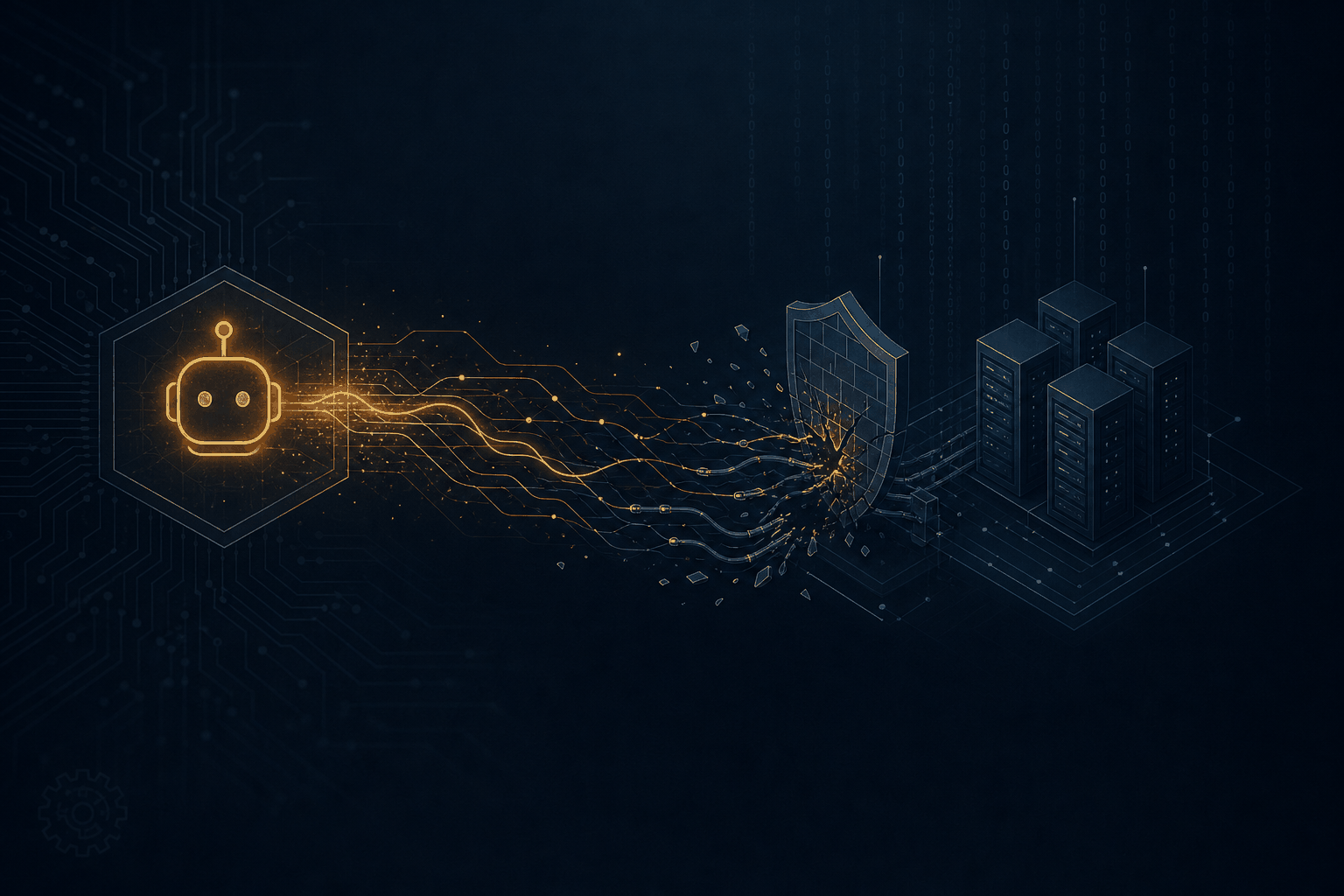
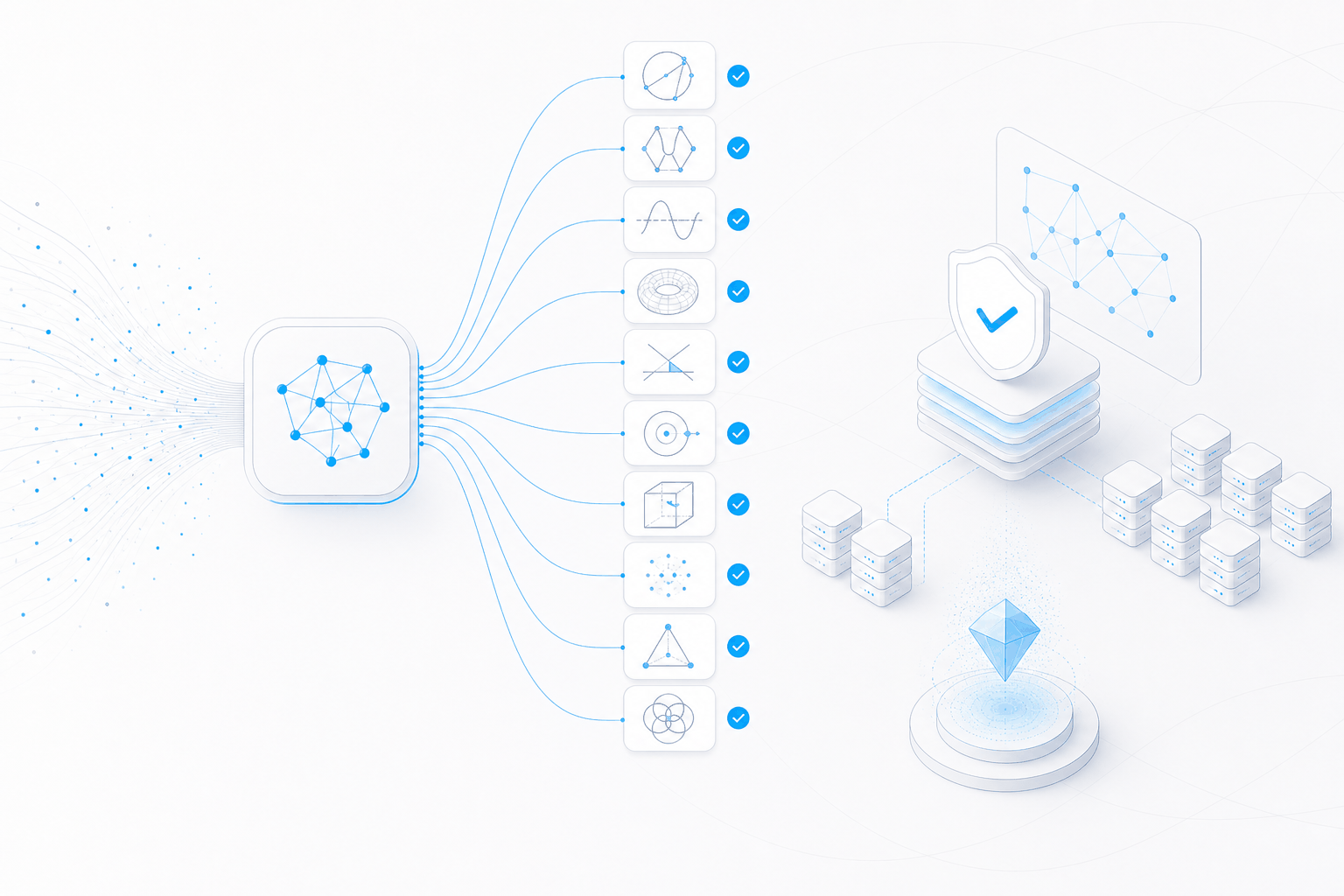
OpenAI’s methodology can be summarized in one sentence: let the model generate thousands of candidate “draft proofs,” and then have a machine verify each one line by line.
The critical player here is Lean. Lean is a formal proof verification tool that acts as an unyielding exam proctor: format a proof into syntax it understands, and it checks the logic line by line. If it is correct, it passes; if not, it fails—no partial credit, no human sentiment. During training, argument steps that pass Lean verification receive reinforcement rewards, teaching the model to “write arguments that can be proven correct.” The surge in AI’s mathematical capabilities over the past two years relies heavily on this automated grader. Mathematics is one of the few disciplines where correctness can be judged completely objectively: essay writing cannot, code generation is messy, but math fits perfectly.
Imagine a hundred thousand avatars venturing into the maze simultaneously: most crash into dead ends, while a tiny fraction reach the exit. The proctor only accepts the paths that reach the end. Humans can only walk one path at a time, whereas AI can test ten thousand paths in parallel—a shift in scale by orders of magnitude.
Specifically for this breakthrough: the internal version of Astra generated a vast pool of candidate proofs, Lean filtered out the valid ones, human researchers organized the validated arguments into papers, and the model subsequently formalized every step for machine re-verification. OpenAI also released records of the model narrating its own step-by-step thinking process. All ten problems were solved, consuming roughly $2,000 worth of tokens in total.
Why This Matters Beyond Academia
First, AI has delivered “brand-new answers never written by humans.” According to OpenAI, the core results for these problems had seen no substantial progress for at least a decade. In the past, AI demonstrations in math mostly involved solving competition problems, benchmark tests, or re-proving known theorems. This time, it solved genuine, multi-decade open questions.
Second, mathematics is upstream of technology. The Shortest Vector Problem directly impacts post-quantum cryptography; sphere packing and coding theory govern telecommunications and storage systems. Whenever the mathematical foundation moves forward, downstream engineering technology follows sooner or later.
Third, the cost curve has shifted. Earlier this year, mathematician Terence Tao proposed the concept of “Big Math”: humans provide creative direction while AI handles the heavy computational lifting. A $2,000 price tag means that massive trial-and-error exploration, once restricted to top-tier institutional teams, is now accessible to individual researchers. After OpenAI used AI to disprove the Erdős unit distance conjecture in May 2026, at least five human papers followed up on that trajectory—showing that AI output is becoming the starting point for human research.
For everyday observers, the clearest signal is this: AI’s ability to produce “new theorems unwritten by humans” means it is moving further away from being a mere “stochastic parrot.” This capability will not remain confined to pure mathematics; it will inevitably spill over into software and hardware engineering—and ultimately land in the devices we use every day.
Optimists vs. Skeptics: Who Has the Stronger Case?
Discussions on Hacker News broke into fierce debate between two camps.
| Perspective | Core Arguments |
|---|---|
| Optimists | Results are authentic and fully verifiable; Lean formalization leaves virtually no room for hallucination or forgery. Some commented that if a human student solved even a few of these, they would be considered a Fields Medal contender. This is the mathematical equivalent of Deep Blue defeating Kasparov in 1997. |
| Skeptics | This may be brute force via “massive search space + automated verification” rather than genuine conceptual breakthrough. OpenAI did not publish the exact prompts or disclose the failure rate. Is progress an S-curve or an exponential curve? Breakthroughs may resemble climbing a mountain rather than riding a rocket. Corporate announcements carry marketing incentives, leaving a gap between claims and unreleased implementation details. Computer verification of the Four Color Theorem in 1976 made mathematicians uncomfortable at first, but it did not dismantle the discipline. |
Both sides make valid points. The sharpest critique from skeptics was highlighted by a Hacker News user: Lean can only verify “propositions that are written correctly”; whether the proposition itself addresses the underlying question accurately still requires human validation. Machines verify logical deduction steps, not whether the problem was holistically understood. The optimist rebuttal is straightforward: after the Four Color Theorem was machine-verified, it remained a theorem—no one has overturned it in fifty years.
Final Thoughts
The mathematical community reacted with sharp division: some wrote essays calling it a “dark night for mathematics,” while others viewed it as the dawn of democratized math. OpenAI took the unusual step of citing the mathematical community’s Leiden Declaration, acknowledging the surrounding debate, and choosing to open-source the proofs, formal code, and model thought logs—a degree of transparency rarely seen among major AI labs.
Predicting whether AI will replace mathematicians is beside the point. Three facts are established: ten problems were solved, Lean verified them, and the inference cost was on the scale of $2,000. The debate is just beginning. The most grounded stance is to entrust “proof validity” to machine verifiers and peer review, while leaving “whether AI truly understands math” to time. Whether AI “truly understands” math is ultimately a philosophical question, and time will provide the answer.
Reference Links:
- OpenAI: Ten advances in mathematics
- HN Discussion (item?id=49157930)