On March 13, 2013, Google announced on its official blog that it would shut down Google Reader on July 1. The explanation was the famous corporate boilerplate: “while the product has a loyal following, over the years usage has declined.”
Thirteen years later, today on August 2, 2026, a 2023 essay titled “How Google helped destroy adoption of RSS feeds” unexpectedly resurfaced at the top of Hacker News, amassing over 300 points and hundreds of comments. Beneath an article detailing how Google dismantled RSS step by step, people were actually discussing something deeper: how every piece of content on your phone screen today became governed by algorithmic recommendations.
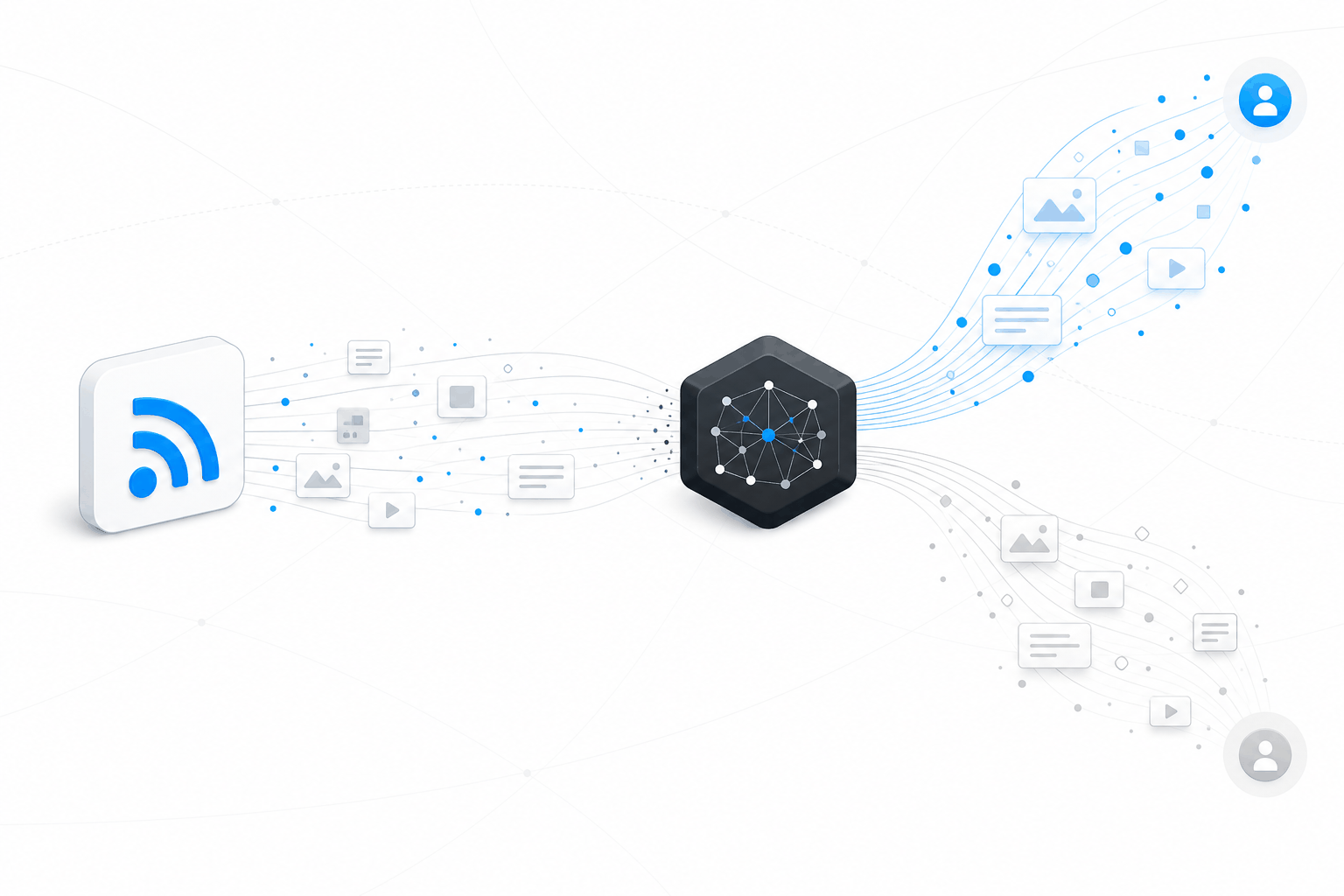
To understand RSS in simple terms: think of it as a digital newspaper subscription.
Instead of visiting ten different websites or blogs every day to check for new posts—what you might call “browsing”—RSS solves the other half of the problem. You tell the system, “I want to subscribe to these ten feeds.” Whenever any of them updates, the new content is automatically delivered straight to your reader. This mechanism has existed since 1999. It belongs to no single company: any website can publish its own RSS feed, and any reader app can ingest it. What you subscribe to, what you skip, and what you read first is entirely up to you—with no editors and no ranking algorithms in between.

Figure: The orange RSS icon in Chrome’s address bar—an era when subscribing to websites was open to everyone. Source: openrss.org
Google Reader was the largest inbox of that era. Launched in 2005, it brought RSS out of niche developer circles and into the mainstream. Opening Reader first thing in the morning on your computer was what checking social media feeds is today. For a generation of internet users, it was the default way to read the web.
How big was Google Reader? Google never disclosed official user figures. But the scale can be inferred from migration data: within 48 hours of the shutdown announcement, competing reader Feedly gained 500,000 new users; within a few weeks, 3 million; and by the end of the year, 15 million. When a small alternative app could absorb 15 million users in a single year, it implies Reader’s active base numbered in the tens of millions—a scale that any tech platform today would consider a flagship product.
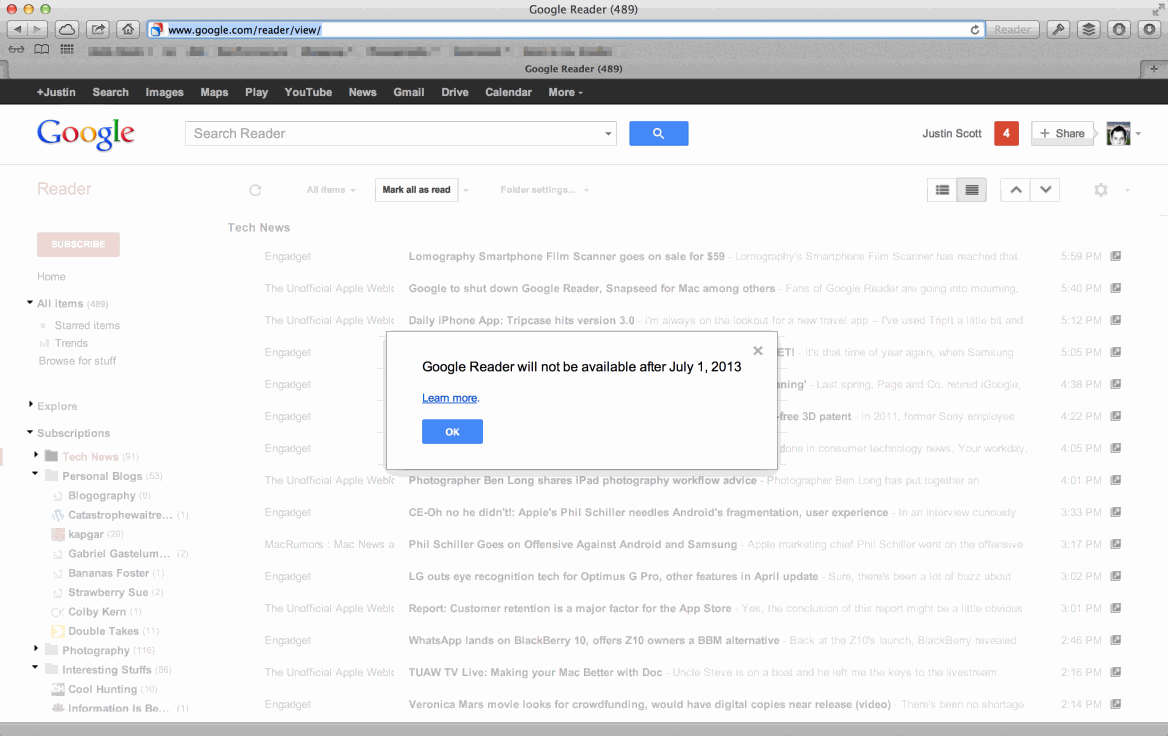
Figure: The shutdown dialog displayed to Google Reader users in 2013, announcing service termination after July 1, 2013. Source: openrss.org
Why did Google shut it down? The official reason was declining usage, but in today’s discussion, a former Google engineer recalled: “I felt like the entire time I was on the project, someone was trying to kill it.” A widely held consensus is that 2013 was the year Google went all-in on Google+, its own social network. A non-monetized product that directed users off-platform (readers left to visit original sites rather than staying inside Google’s ecosystem) was an obvious candidate for the chopping block. One comment summed it up succinctly: “They killed a tool everyone loved to push a tool nobody wanted, and ended up with neither.”
There was also a colder commercial reality: RSS feeds are notoriously difficult to monetize with ads. When users pull raw content directly into their own readers, there are no web pages, no ad impressions, and no click tracking. A user captured the sentiment bluntly: “RSS was against the interests of big platforms—it was decentralized, and there was no good way to serve ads in it. Simple as that.”
The ripple effects of the shutdown proved far more profound than the deprecation itself.
First wave: Most users simply disappeared. Many had used Reader casually out of convenience. When it closed, no clear migration path was offered, and Google provided no alternative. Rather than switching to another reader, millions stopped subscribing to feeds altogether.
Second wave: The ecosystem lost its center. While Google Reader was free, reliable, and backed by Google, competing reader apps struggled to build sustainable businesses. Once Reader vanished, remaining players couldn’t sustain the broader ecosystem. Over the following years, websites quietly dropped RSS support—without subscriber volume, maintaining feeds lacked traffic value. Browser RSS integrations were stripped away one by one: Chrome’s orange icon quietly vanished; Google Alerts replaced feed notifications with email-only alerts under a yellow banner; and Google News retired feed subscriptions in late 2017. Even when Google announced in 2021 that Chrome would test built-in RSS support again, nothing materialized.
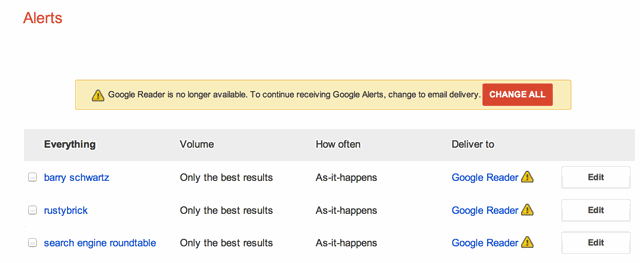
Figure: The yellow banner on Google Alerts notifying users that RSS feed delivery was deprecated in favor of email. Source: openrss.org
Third wave, and the most consequential: Algorithmic feeds became the default. Once user-curated feeds were dismantled, user timelines were taken over by platform algorithms—determining what you see to maximize screen time and ad revenue. The modern mobile content feed was born in the vacuum left by Reader in 2013.
Why does this still resonate in 2026? In the Hacker News thread, a participant who previously worked at the Committee to Protect Journalists shared a revealing memory: around 2013, when hosting dissident bloggers from Syria and Egypt for meetings with Silicon Valley tech giants, the very first complaint raised during agenda setting was Google Reader’s shutdown—“We laughed, but it was dead serious.” In censorship-heavy environments, RSS was one of the few channels capable of bypassing central platforms to deliver content directly to readers.
To be sure, there are counter-perspectives. Commenters noted that web content in the 2000s was a tiny fraction of today’s volume (“the web back then was microscopic”), RSS was inherently tailored for tech enthusiasts rather than mainstream audiences, and most feeds only provided titles and snippets anyway, requiring users to click through to original sites regardless. Both perspectives hold truth, and neither contradicts the reality that Google Reader’s termination dealt the decisive blow to RSS adoption.
This event marked a fundamental fork in the road: before 2013, “you choose your content” was mainstream; after 2013, “content chooses you” became the default. Every recommendation pushing to your phone today traces back to an algorithmic system deciding what is worth your attention. That power didn’t appear out of thin air—it stemmed from a specific corporate decision thirteen years ago. Notably, RSS itself is not dead: podcasts still rely on RSS feeds for distribution to this day. It simply slipped out of public view, like an abandoned highway—still intact, but no longer maintained, and rarely traveled.
Reference Links:
- openrss.org: How Google helped destroy adoption of RSS feeds
- Hacker News Discussion (item?id=49136821): How Google helped destroy adoption of RSS feeds
- The Verge: More than 500,000 Google Reader users claimed by Feedly in two days
- TechCrunch: Now With 3 Million New Users, Google Reader’s Heir Apparent Feedly Relaunches
- Wikipedia: Google Reader
- Wikipedia (Chinese): Google Reader