On August 4 in Dallas, Texas, anyone can download the Waymo app and hail a driverless taxi without waiting. Since opening waitlist registration in February, nearly 150,000 riders have experienced the service. Now, the waitlist is gone, allowing visitors and locals alike to hail rides on demand. On Hacker News, the announcement garnered 229 points and 280 comments.
The Dallas-Fort Worth metroplex is the fourth-largest metropolitan area in the United States and one of the most car-dependent big cities in the nation. With sparse public transit, cars are essential for almost everyone. Opening driverless taxi service citywide here essentially turns the final page on the “pilot program” phase.
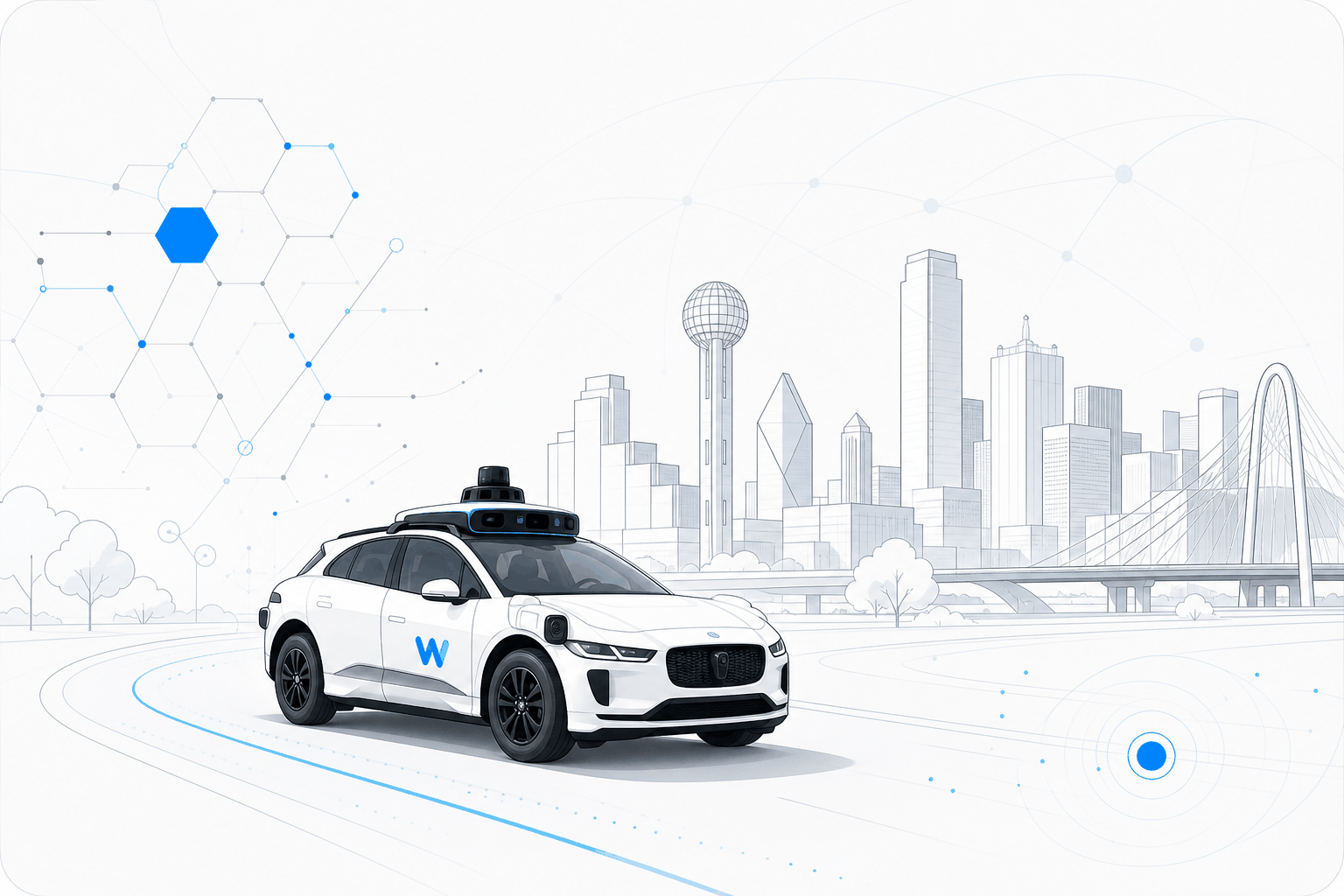
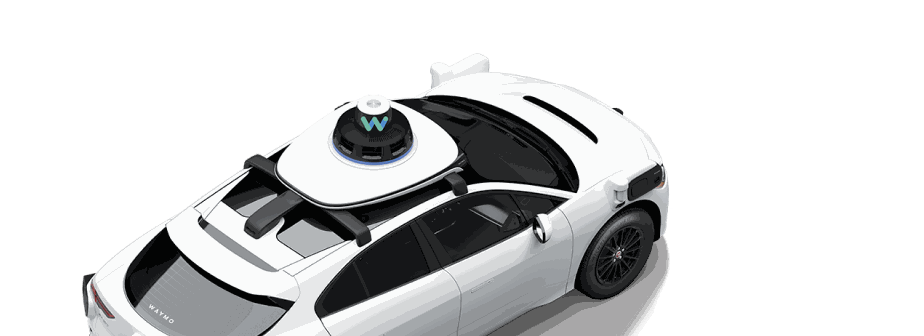 Image: Waymo official blog announcement header. Source: waymo.com
From Waitlist Pilots to Citywide Rides
Waymo’s rollout in Dallas follows its proven blueprint: public road testing last year, waitlist registration in February to let early adopters help map out real-world dynamics, and opening to all riders on August 4. Airport testing is currently underway with passenger drop-offs expected soon, while freeway testing represents the final piece of the puzzle and is slated to begin shortly. The waitlist acts as a cooling period—validating operations with a controlled group before flipping the switch for the general public.
This expansion playbook has been six years in the making: Phoenix in 2020, San Francisco in 2023, Los Angeles and Austin in 2024, Atlanta and Miami in 2025, and Dallas in 2026. After expanding at a pace of roughly one city per year, the pace accelerated sharply. In a single week in July, services went live simultaneously in Las Vegas, San Diego, Tampa, and Denver. Future launches in Detroit, Nashville, Washington D.C., and even international cities like Tokyo and London are already on the roadmap.
Public data indicates that the bottleneck for robotaxi expansion lies in spatial mapping and local navigation. Before entering a new market, Waymo dispatches mapping vehicles to scan streets into centimeter-accurate high-definition 3D maps. Uncrewed vehicles then complete extensive test loops, followed by a phased waitlist rollout before reaching full citywide availability. Operating strictly within pre-mapped operational design domains (ODDs) underpins Waymo’s conservative safety record, though it also explains the deliberate timeline.
How a Robotaxi Sees the Road
In plain terms: a roof-mounted LiDAR pod fires millions of laser pulses per second, continuously generating and refreshing a 3D point-cloud map of the vehicle’s surroundings. Cameras identify traffic lights, street signs, and pedestrians. Millimeter-wave radar penetrates rain and fog, filling sensor blind spots. All three sensor modalities cross-validate one another so no single component makes isolated decisions.
The industry remains split between two distinct technical philosophies. Waymo bets on LiDAR combined with HD mapping—a highly stable but capital-intensive approach. Tesla bets on a pure-vision architecture using cameras and neural networks, banking on manufacturing scale and lower unit costs. Community debates suggest this architectural debate will not be settled anytime soon, though Waymo’s cautious, map-first strategy has yielded a demonstrably safer operational record to date.
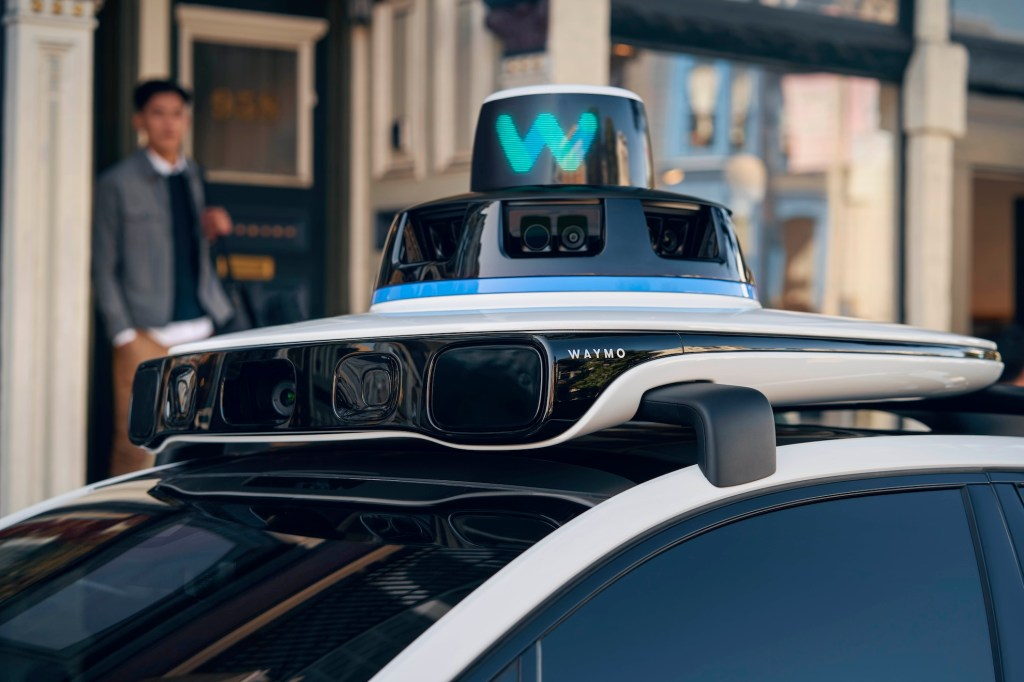 Image: LiDAR and camera sensors mounted on top of a Waymo vehicle. Source: techcrunch.com (Original photo courtesy of Waymo)
Pricing: Premium Fares, Loyal Demand
On Hacker News, community members frequently ask: “Isn’t Waymo more expensive than Uber? That’s what I observed in San Francisco.” Public pricing data supports this observation. In Bay Area sampling from late 2025 to early 2026, average trip fares registered at $19.69 for Waymo, compared to $17.47 for Uber and $15.47 for Lyft—a 10% to 20% premium.
However, commentators note key nuances: higher prices often reflect fleet capacity constraints and peak demand dynamics. Many passengers willingly pay a premium for a driverless experience—no tipping, no forced small talk, no indirect routes, and consistently clean vehicle cabins. At this stage, robotaxis compete on predictability and novelty rather than price discount. Price wars will likely only begin once fleet scale expands significantly and operational costs amortize.
Safety: Strong Data vs. Skeptical Headlines
On paper, autonomous fleets have accumulated impressive performance metrics. By February 2026, Waymo logged over 200 million driverless miles. A July 2026 study by the Insurance Institute for Highway Safety (IIHS) revealed that Waymo vehicles recorded a 68% lower crash rate and an 81% reduction in injury-causing crashes compared to human drivers. Waymo’s own safety benchmark in March reported a 92% reduction in serious crashes compared to human baselines.
Yet public skepticism remains persistent. A widely upvoted HN comment highlighted a key media dynamic: a robotaxi blocking traffic makes national news, while human traffic jams happen daily without coverage. Heavy rain and localized flooding in May temporarily halted services in Dallas and three other cities. Earlier incidents involving pedestrians or children running into roadways generated intense scrutiny, even when vehicle speeds dropped rapidly from 27 km/h to below 10 km/h, resulting in minor injuries. Data alone struggles to offset emotional reactions, and public trust remains heavily tied to headline events.
Rideshare Drivers: The Direct Impact
With every new city launch, anxiety among rideshare drivers deepens. HN contributors calculated the economic shift: traditional fares pay local drivers who reinvest earnings locally, whereas robotaxi revenue flows back into Silicon Valley corporate accounts. Over the past two years, driver protests against autonomous vehicles have surfaced repeatedly in San Francisco, Los Angeles, and other metro areas.
Most community discussions acknowledge that widespread driver displacement will not happen overnight—robotaxis currently cover designated urban zones, making the transition gradual. Nevertheless, the trajectory is clear: technological automation is incrementally replacing traditional driving roles, while policy and social frameworks have yet to fully address workforce transition challenges.
Regulatory Landscape: Texas Welcomes, California Regulates
The pace of robotaxi expansion depends as much on local regulation as on software capabilities. Texas stands among the most favorable states for autonomous deployment, featuring no mandatory safety driver requirements and strong municipal backing. In contrast, California maintains strict regulatory friction: following San Francisco’s 24/7 commercial approval in 2023, regulatory disputes have persisted, with Santa Monica filing legal challenges just yesterday over robotaxi charging depot noise. Meanwhile, New York State legislation continues to block Waymo operations entirely.
Dallas presents a unique urban context: it historically ranks among the highest in traffic fatality rates among America’s top ten largest cities. Waymo explicitly highlighted its goal to improve road safety metrics here, turning a pressing municipal challenge into a core selling point for autonomous mobility.
When Will It Reach My Neighborhood?
Among the 280 comments on Hacker News, the most common inquiry was: “When is it coming to my city?” Dallas residents questioned whether full citywide access covers outer suburbs, Los Angeles residents noted mapping vehicles active in their neighborhoods while commercial rides remain unavailable, and New York residents expressed envy. Robotaxis are moving past the early novelty phase, but coverage remains a patchwork of localized deployment areas that will take time to unify.
Autonomous rides remain relatively expensive, occasionally encounter edge-case stalls, and spark ongoing debate. Yet with every new city launched, uncrewed rides become an unremarkable reality for thousands of ordinary commuters. The true inflection point will arrive when robotaxis become as routine as elevators—a technology so integrated into daily life that people stop discussing it altogether.
Reference Links:
- Waymo: Dallas is open to all
- HN Discussion (item?id=49172836)
- TechCrunch: Waymo opens up robotaxi service in Dallas to everyone
- Mashable: Waymo to launch autonomous taxis in Dallas in 2026
- Waymo: Safety Impact Official Safety Data Page
- Carscoops: IIHS Study Shows Waymo Crash Rate 68% Lower Than Human Drivers