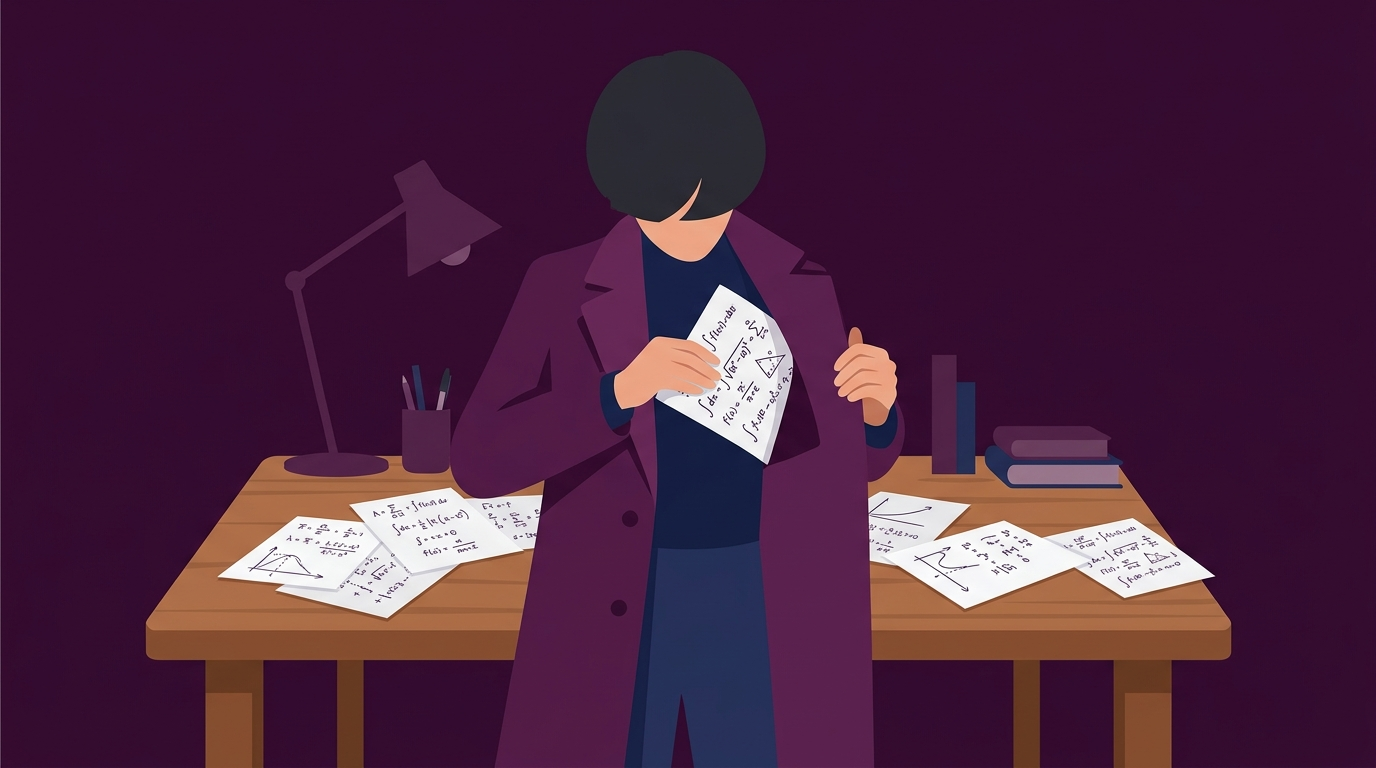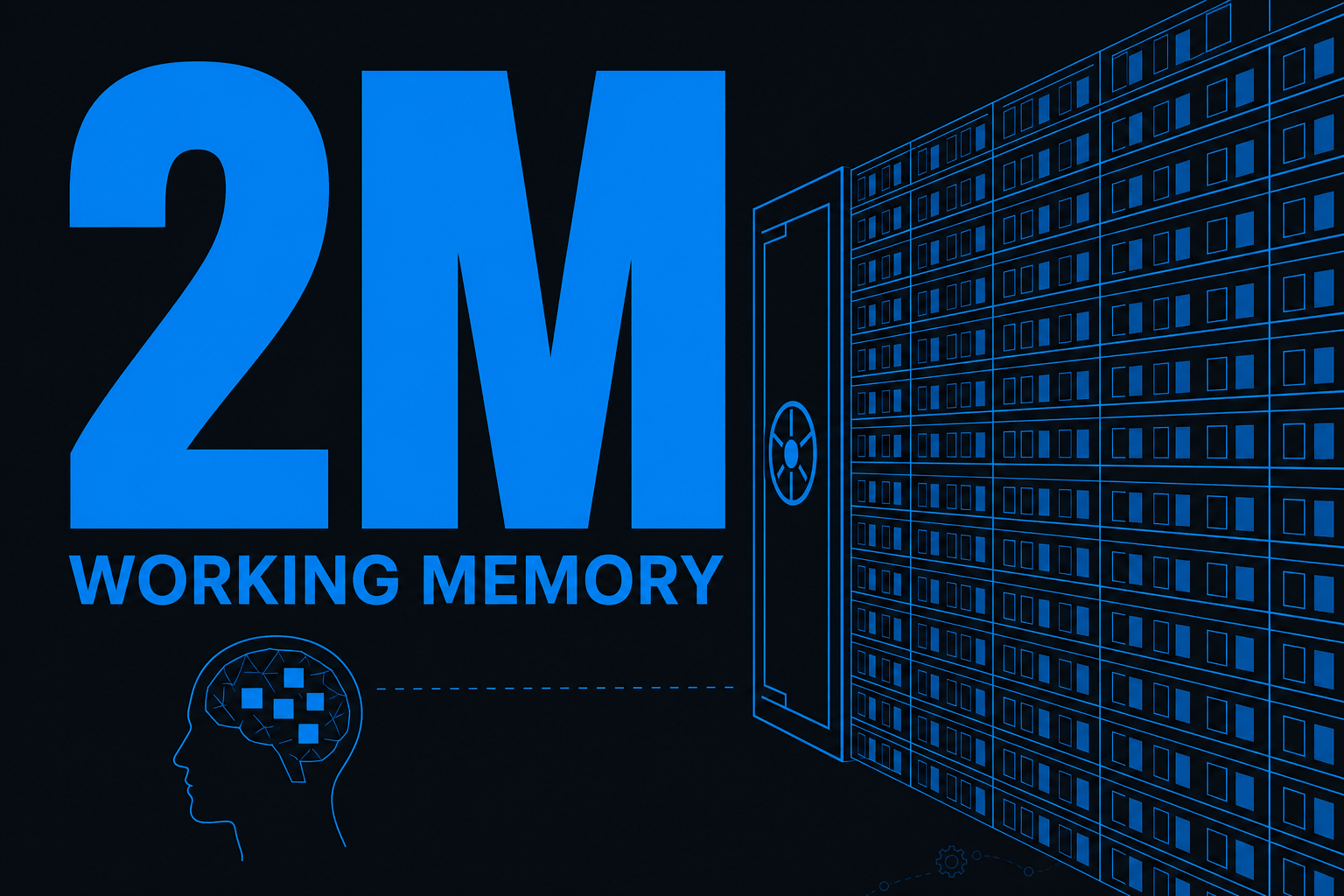
In August 2026, cognitive scientist Davide Piffer published a counter-intuitive observational study: AI’s exceptional performance in top-tier mathematics competitions is driven not by any superhuman depth of thought, but by an extraordinary memory capacity. While conventional wisdom attributes mathematical aptitude to raw IQ or abstract reasoning, it overlooks the reality that memory is often the first point of failure in mental calculation. As large language models expand their context windows to millions of tokens, AI effectively operates with an endlessly extending sheet of external scratch paper.
4 Chunks vs. 2 Million Tokens: The Mental Calculator’s Bottleneck
When humans struggle to multiply two three-digit numbers mentally, the fundamental obstacle is not ignorance of multiplication rules, but the brain’s inability to retain multiple intermediate products simultaneously. Cognitive psychology demonstrates that human short-term working memory holds only 4 to 9 information chunks. Without pen and paper, the brain must expend immense cognitive effort maintaining temporary intermediate figures while simultaneously processing next steps—a major physiological bottleneck of human intelligence.
In contrast, mainstream LLM context windows have expanded to anywhere between 128K and 2M+ tokens, allowing models to hold hundreds of thousands of words in active memory at once. Within this vast symbolic space, a model can simultaneously retain the original problem statement, intermediate equations across hundreds of steps, multiple discarded derivation branches, and complete formal definitions. This order-of-magnitude disparity places human mental calculators in a fundamentally asymmetric arena.
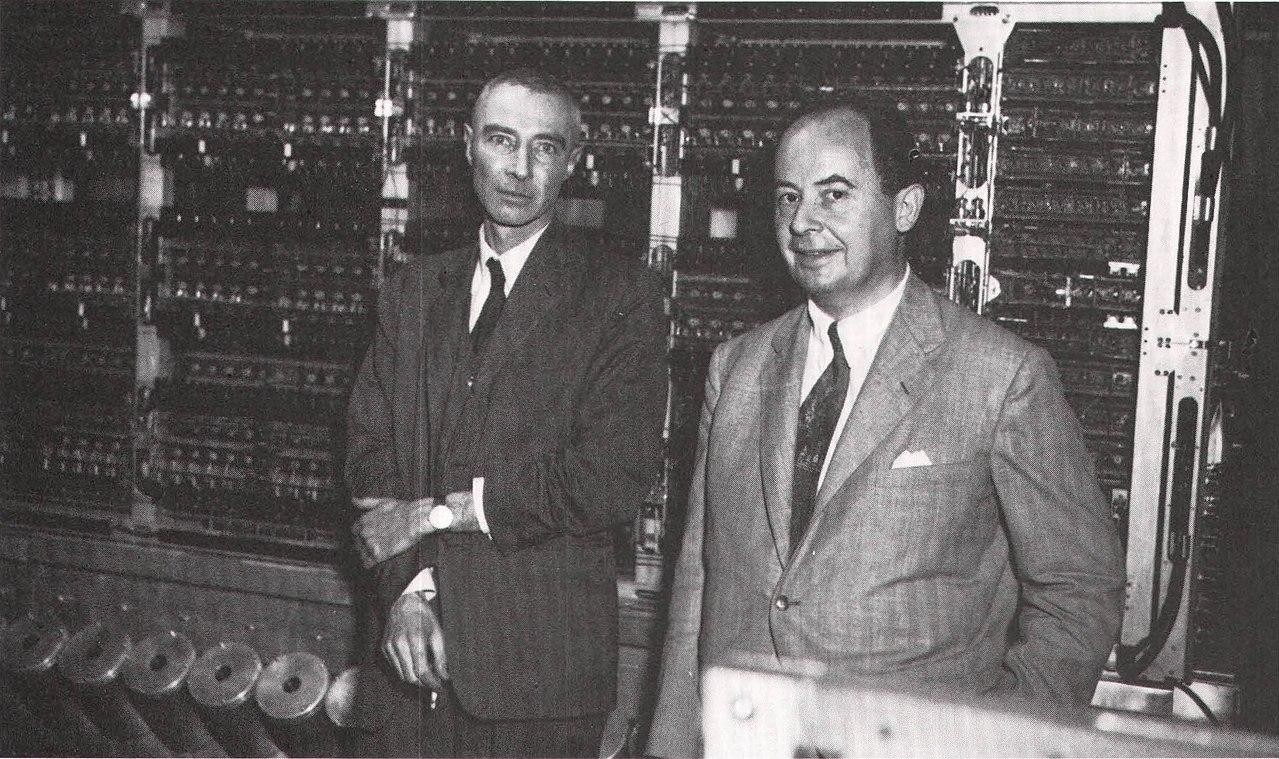 Figure: Comparison between AI and human working memory mechanisms. Source: Davide Piffer Substack
A piece of paper does not make a human suddenly smarter, but it dramatically expands their effective working memory. An LLM’s context window is essentially a massive scratchpad coupled with a high-speed retrieval system. From an engineering perspective, an AI’s stability in complex derivations relies heavily on the simple fact that it never forgets a coefficient derived three minutes earlier.
Symbolic Ledger: Why Mathematics Became AI’s Playfield
Competitive mathematics represents the ideal domain for converting working memory capacity into benchmark wins. In formal mathematical systems, foundational axioms are explicit, and every transformation step can be substituted and validated through rigorous symbolic rules. This allows AI to reduce lengthy proofs into high-precision symbolic bookkeeping.
While human competitors must brainstorm strategic directions while constantly guarding against minor numerical oversights, an AI can explore dozens of derivation branches in parallel, instantly verifying each step via code interpreters or formal proof assistants. Even if 99 of those paths lead to dead ends, the context window retains full records of these failed attempts, ensuring the model never repeats the same error. This relentless state tracking directly hits the vulnerable spot of decaying human short-term memory.
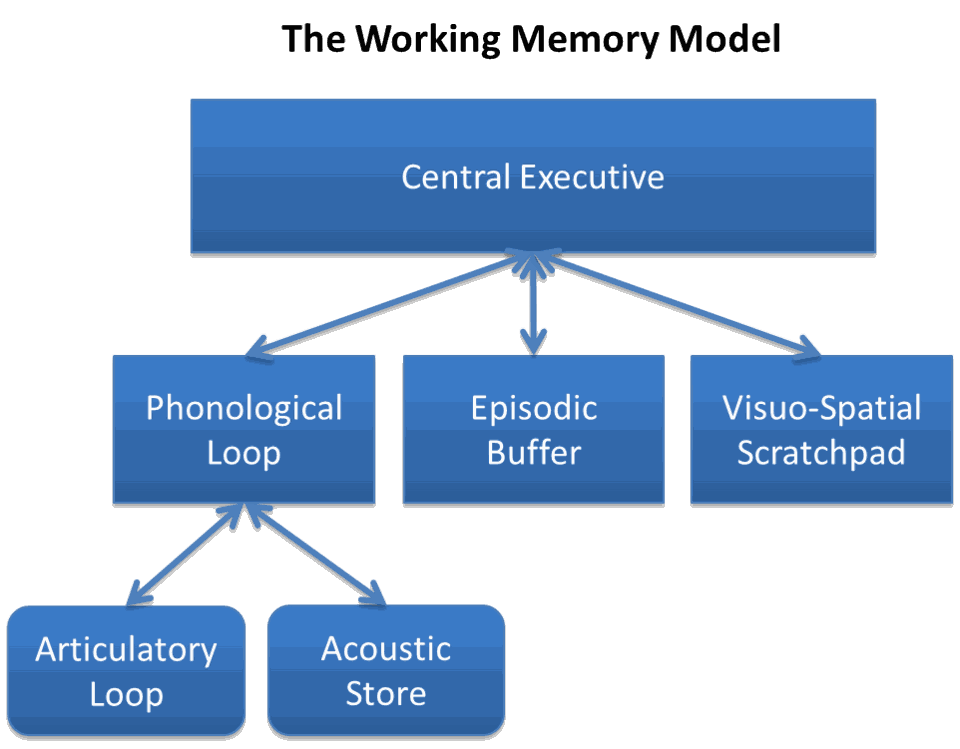 Figure: Classic Baddeley & Hitch multi-component model of human working memory. Source: Wikimedia Commons
Academic literature in cognitive psychology strongly corroborates this framing. A six-year prospective study by Alloway et al. (2010) demonstrated that a 5-year-old’s working memory capacity predicts subsequent academic achievement more accurately than IQ scores. Furthermore, a 2013 meta-analysis by Friso-van den Bos highlighted a powerful positive correlation between symbolic working memory and mathematical ability. This demonstrates that in mathematics, extraordinary memory capacity is itself a vastly underrated core competency.
An Amplified von Neumann or an Unborn Einstein?
Physicist Eugene Wigner once contrasted two mathematical giants: John von Neumann possessed lightning computation, astonishing memory, and rapid cross-domain synthesis, whereas Albert Einstein relied on deep penetration, conceptual intuition, and the ability to reframe problems from first principles. If we place modern LLMs on this coordinate system, current AI clearly resembles an machine-amplified von Neumann.
LLMs excel at exhaustive search, pattern association, and rapid verification across known symbolic spaces. As developer hibikir noted during a Hacker News discussion, much of what passes for “high IQ” behavior in problem-solving is simply remembering more combinations of rules than those around you. However, when faced with problems that demand fundamental shifts in assumptions or entirely new conceptual frameworks, a massive context window does not automatically ignite conceptual breakthroughs.
Consider a thought experiment: two individuals tackle the same difficult math problem—one relies entirely on mental arithmetic, while the other possesses infinite paper, flawless notes, parallel derivation pipelines, and automated verification tools. When the latter wins, we attribute victory to an augmented cognitive architecture rather than superior underlying intelligence. The high competition scores achieved by AI today are the direct byproduct of this engineered cognitive architecture.
Redefining AI Frontiers Across Symbolic Paper
Evaluating AI through the lens of working memory provides a clear blueprint for engineering capabilities. In tasks involving multi-constraint interactions, extended step-by-step calculations, exhaustive case classifications, and frequent cross-referencing of early derivations, AI holds an overwhelming efficiency advantage. Wherever success depends on precise symbolic record-keeping and rule verification, massive context windows allow AI to outperform human experts.
Conversely, in tasks characterized by minimal context, conceptual leaps, or the need to dismantle established frameworks, AI’s advantage diminishes rapidly. This distinction warns against misinterpreting outputs driven by superior memory as evidence of genuine, self-evolving deep intuition.
Cognitive science demystifies popular narratives surrounding AI while re-anchoring the uniqueness of human thought. While AI takes over the tedious labor of tracking symbols across millions of tokens, deciding where to explore and how to reframe questions remains grounded in human intuition. When vast external memory ceases to be a scarce resource, the frontier of innovation shifts back to conceptual leaps that no scratchpad can compute on its own.
References:
- Davide Piffer Report: “AI Isn’t Outthinking Mathematicians. It’s Out-Remembering Them.”
- Hacker News Community Discussion (item?id=49312845)
- Alloway & Alloway Longitudinal Study on Academic Performance & Working Memory (2010)
- Friso-van den Bos Meta-Analysis on Symbolic Working Memory & Mathematical Ability (2013)