5x Valuation Jump in 3 Months: Tollbooths Outvalue Models
On August 16, 2026, Bloomberg confirmed a blockbuster acquisition reshaping the AI landscape: global payments giant Stripe finalized an agreement to acquire AI model routing platform OpenRouter for over $7 billion. This transaction comes just three months after OpenRouter closed a $113 million Series B round at a $1.3 billion valuation. In a matter of weeks, capital granted a nearly 5x premium, forcing the tech industry to reassess where the true economic rent lies in the AI value chain.
What Stripe is acquiring for $7 billion is the central traffic switchboard for over a hundred AI models. OpenRouter’s core proposition is deceptively simple: developers integrate a single API endpoint to access over 500 models—including the GPT family, Claude series, Gemini, and DeepSeek—and pay strictly based on real-time token consumption. This neutral middleware positioning allowed OpenRouter to compound massive network effects in record time.
According to official metrics disclosed by OpenRouter, the platform’s monthly token volume has crossed 200 trillion (200T+), serving over 10 million registered users globally and powering more than 250,000 integrated applications. Handling 200T+ tokens monthly across 250,000 apps demonstrates that developers are no longer betting on a single model vendor; multi-model hybrid routing has become the standard production architecture.
The narrative in venture capital is undergoing a fundamental shift. Brutal competition between open-weights and proprietary models has burned through billions in funding while driving down price per token. Yet regardless of which model claims the top spot on leaderboards, all inference requests must ultimately be routed, scheduled, and billed. Selling pickaxes in a gold rush offers a far more predictable path to durable cash flow than digging for gold.
Failover and Smart Routing: Why Developers Depend on the Routing Layer
In production environments, engineering teams face a dual dilemma: model provider outages and volatile API pricing. OpenRouter addresses this bottleneck through multi-provider intelligent routing. A single model (such as claude-opus-5) can be routed across multiple backends, including Anthropic directly, Google Cloud, and Amazon Bedrock. When one cloud provider experiences elevated latency or downtime, the routing layer automatically and seamlessly fails over to healthy backup nodes.
Beyond core dispatching, OpenRouter deploys edge compute nodes to minimize network latency and provides custom data privacy controls, letting enterprises manage prompt retention policies precisely. Developers no longer need to manage distinct API keys, authentication flows, or prepaid balances across dozens of vendors; a single unified invoice grants access to global algorithmic capacity.
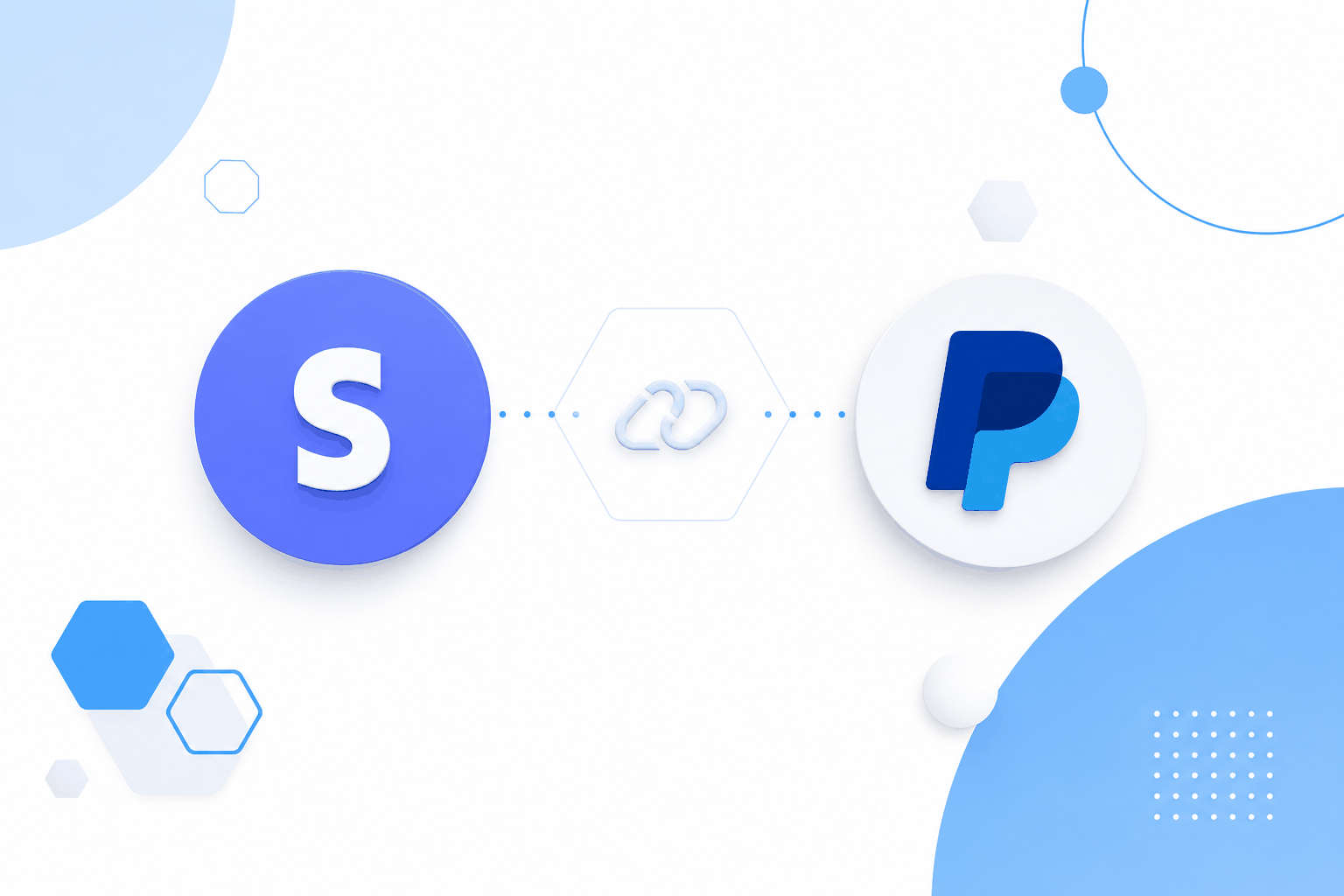
 Figure: Stripe and OpenRouter architectural integration. Source: TechCrunch
The platform currently integrates 80+ compute providers and over 500 frontier models. Real-time price bidding and automated failover across 80+ providers reduce single-vendor availability risks by an order of magnitude, providing the core value proposition enterprise customers readily pay a premium for.
This architecture cleverly insulates OpenRouter from the crushing capital expenditure of training foundation models. OpenRouter CEO Alex Atallah previously described the company as the “Stripe for AI”—abstracting heterogeneous underlying systems behind a unified developer interface. Now, Stripe has directly acquired this AI equivalent of itself, completing a deep integration between payment rails and model traffic pipelines.
Cooling Compute Hype: The Capital Reckoning Begins
The $7 billion deal comes at a pivotal turning point for the broader AI sector. Concurrent with the acquisition news, AI infrastructure is experiencing a wave of financial consolidation. Reuters reported that NVIDIA has significantly scaled back its backstop guarantees for OpenAI’s proposed $250 billion datacenter financing package. Meanwhile, Anthropic is accelerating IPO preparations, anchoring its valuation narrative on projected 2028 revenues of $190 billion to $200 billion.
Investor appetite for endless, unconstrained burn rates on foundation model pre-training is waning rapidly. While thousands of startups funneled venture capital into GPU clusters over the past two years, the middleware vendors handling billing, rate-limiting, and dispatch captured the healthiest cash flows. Coming on the heels of rumors that Stripe is evaluating a $53 billion acquisition of PayPal, securing OpenRouter underscores the payment giant’s determination to dominate the financial settlement layer of AI.
 Figure: M&A consolidation across the AI infrastructure stack. Source: Getty Images / TechCrunch
Hacker News discussions highlight investor sentiment that this transaction signals the formal launch of an AI infrastructure M&A cycle. Commentators noted that strategic consolidation during a market transition allows Stripe to lock in traffic gateways before antitrust scrutiny tightens further.
The retreat in hardware credit guarantees and the record acquisition of routing infrastructure occurred on the exact same day. The sharp contrast between shrinking compute guarantees and high-premium M&A for billing gateways signals that capital is accelerating its migration from model R&D to commercial monetization. Controlling traffic dispatch and billing delivers the highest certainty of survival in the next phase of tech infrastructure.
Platform Neutrality vs. Corporate Ownership: Ecosystem Debate
Entrusting an independent router connected to 500+ models to a single financial conglomerate has sparked intense debate. Proponents argue that combining Stripe’s global settlement network and millions of merchant accounts eliminates the final friction point in deploying AI software. Developers can now connect user billing directly to real-time API token consumption with a few lines of code, lowering the barrier to building profitable AI SaaS products.
Conversely, developer communities express legitimate concern. OpenRouter’s platform neutrality was the bedrock of its growth to 10 million users. Once integrated under Stripe, will its routing algorithms remain strictly meritocratic? If commercial incentives skew traffic toward preferred cloud partners or strategic model vendors, smaller independent model providers risk getting squeezed out.
Public platform metrics indicate that over 250,000 applications depend deeply on OpenRouter for API execution. With 250,000 applications delegating routing logic to a single gateway, even subtle algorithmic shifts will trigger compounding ripple effects across the downstream model ecosystem. Platform neutrality governs algorithmic fairness, directly impacting value distribution across the market.
Whether Stripe can successfully balance revenue maximization with ecosystem neutrality remains an open question. Maintaining an independent operational firewall for OpenRouter will be critical to sustaining developer trust.
Traffic Pipelines Converge on Payments: The New Rules of AI Infrastructure
Stripe’s $7 billion acquisition of OpenRouter places a definitive semicolon after the first phase of the AI compute arms race. Capital logic in AI has evolved from “who trains the largest model” to “who controls traffic dispatch and billing.”
As foundation model performance converges and price wars erode single-token margins, the entities controlling entry points and billing taps hold ultimate leverage. This acquisition proves that amid architectural shifts, tollbooth business models remain the most defensible engine of tech value capture.
Reference Links:
- Bloomberg Report
- TechCrunch Report
- HN Discussion (item?id=49323381)