Unexpected Shutdown at 100% Power
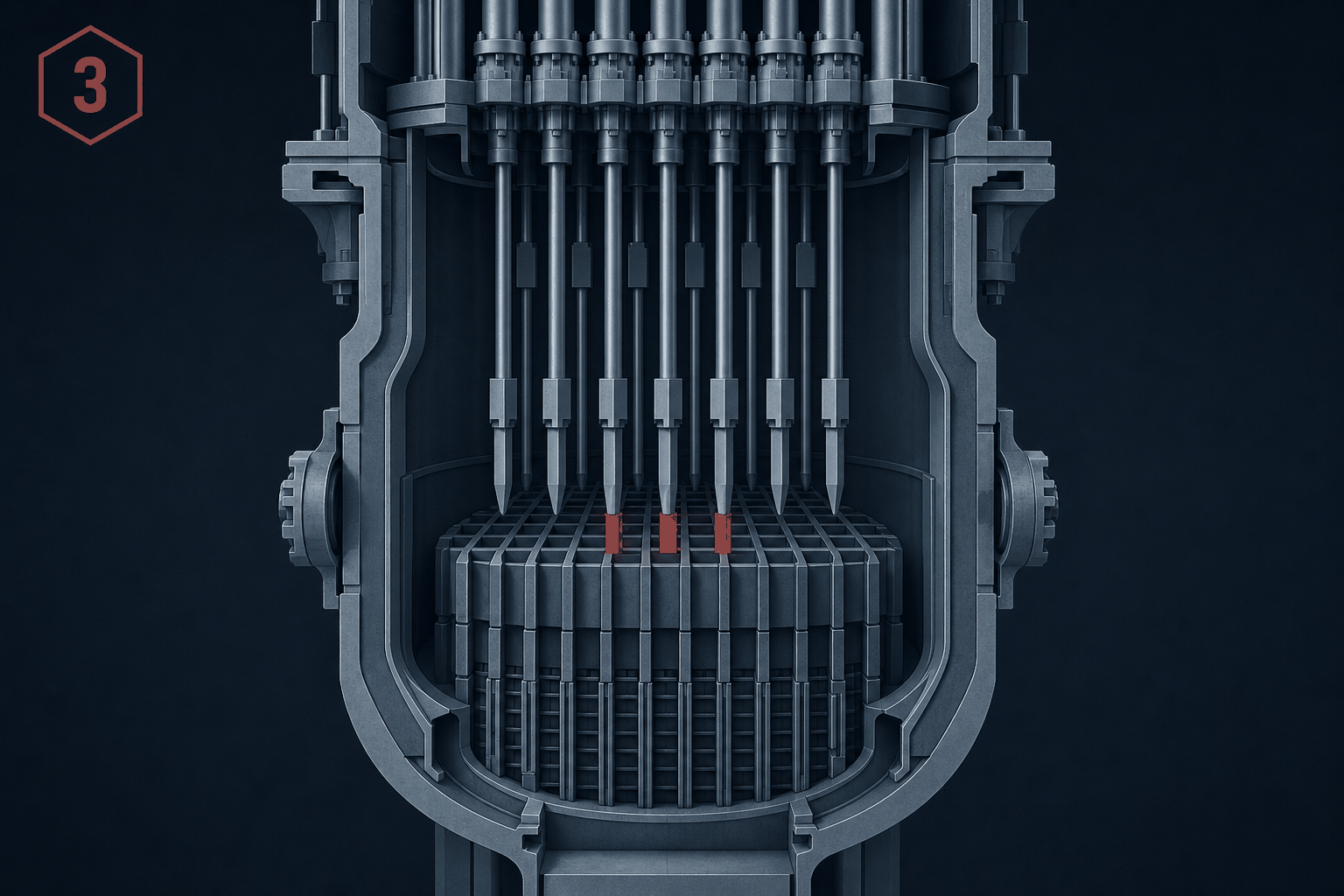
On August 13, 2026, at 09:47 EDT, Unit 1 of the St. Lucie Nuclear Power Plant in Florida was operating at 100% full power in Mode 1 when three control rods unexpectedly dropped into the reactor core. On-site operators immediately initiated a manual reactor trip, safely bringing the 940 MWe reactor to a Mode 3 hot standby condition.
Following the shutdown, decay heat generated in the core was smoothly routed to the main condenser via turbine bypass valves, while neighboring Unit 2 continued normal operation unaffected. The complete protection system responded within seconds, proving that aging pressurized water reactors (PWRs) maintain a high standard of reliability when faced with sudden control rod drops.
In large-capacity PWRs operating at full power, the primary coolant system is under high pressure and temperature. Upon receiving abnormal control rod position signals, operators swiftly executed shutdown procedures to suppress core thermal power within seconds, eliminating the risk of localized heat flux anomalies.
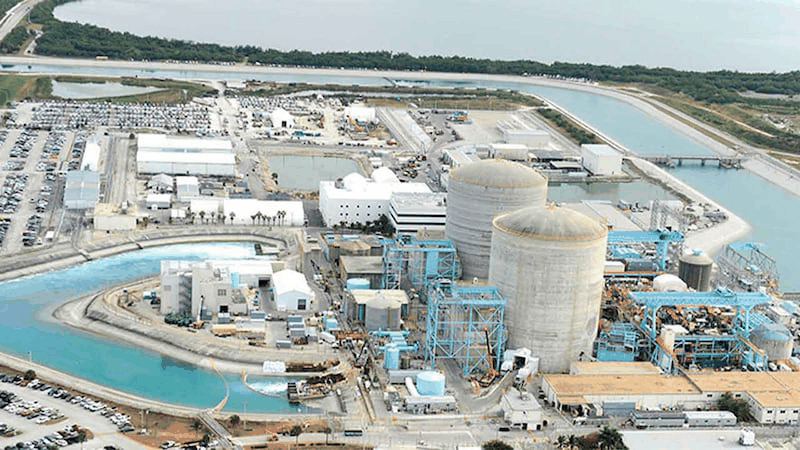 Exterior view of Unit 1 at the St. Lucie Nuclear Power Plant on Hutchinson Island, Florida. Source: WFLX / Florida Power and Light.
Gravity Braking: Physics-Based Fail-Safe Design
When the public hears of “control rods dropping into a reactor,” it often triggers anxiety about runaway accidents. In nuclear engineering, however, this is a fundamental fail-safe mechanism designed to protect the reactor. Pressurized Water Reactors use control rods containing strong neutron absorbers like boron carbide to slow down or terminate the chain reaction. During normal operation, control rods are held suspended above the core by electromagnetic latches to sustain criticality.
If control power is interrupted or a mechanical coil anomaly occurs, the magnetic holding force vanishes, allowing the control rods to drop into the core driven purely by gravity. This mechanism is conceptually similar to pneumatic train brakes, where a drop in line pressure automatically locks the brake shoes against the wheels. Even during a total station blackout or control system failure, gravity-driven rod drop guarantees a physical shutdown of the nuclear chain reaction within seconds.
The drop of three control rods created localized power distribution fluctuations, prompting operators to manually trip the reactor for inspection—a standard conservative operational decision. This conservative approach prioritizes equipment and material integrity, preventing localized power peaking from damaging fuel cladding. Over half a century of commercial nuclear operations has validated gravity as a primary barrier of safety.
Engineering Resilience: 50-Year-Old Reactor Restores Full Power in 3 Days
Unit 1 of the St. Lucie plant entered commercial service in December 1976 and has been operating for nearly 50 years as of 2026. Equipped with two Combustion Engineering PWRs, the station has a total capacity of 1,880 MWe and draws cooling water from the Atlantic Ocean. In 2017, St. Lucie achieved a capacity factor of 95.29%, with a lifetime average of 84.05%, placing it among the top-performing reactors in the United States.
High capacity factors reflect meticulous daily maintenance and inspection protocols. Following the shutdown, operator NextEra Energy rapidly diagnosed the electrical components and suspension hardware associated with the rod drop, initiated restart procedures, and achieved re-criticality to return Unit 1 to 100% full power by August 16. From emergency trip to 100% output, the total downtime for St. Lucie Unit 1 was approximately 72 hours.
The U.S. Nuclear Regulatory Commission (NRC) classified the event as a non-emergency. This designation confirms that safety systems functioned exactly as intended by design, and the event remained well within established emergency response protocols. For a decades-old baseload facility, resolving the fault and completing restart protocols in three days demonstrates impressive operational maturity.
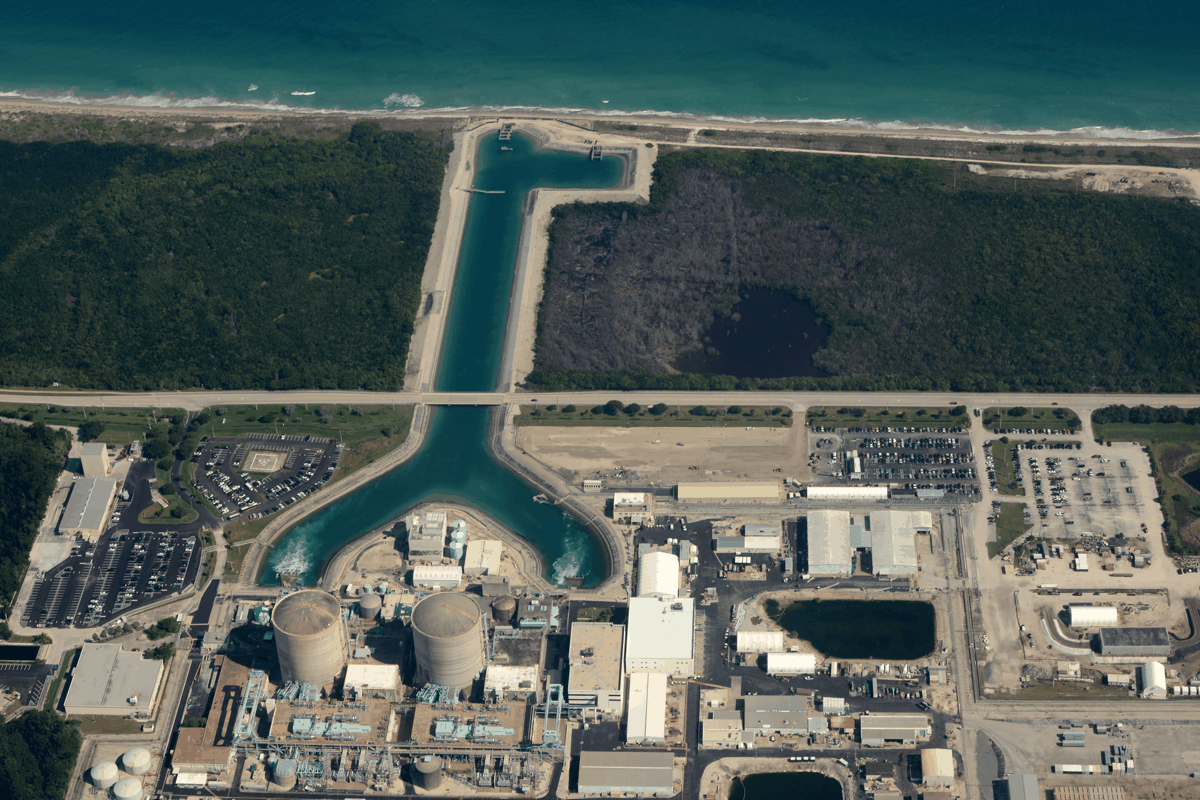 Aerial view of the St. Lucie Nuclear Power Plant and its surrounding ocean cooling system. Source: Wikimedia Commons, Don Ramey Logan.
Perceptual Gap: Public Alarm vs. Engineering Routine
Discussions across technical communities such as Hacker News (HN item?id=49320856) revealed a sharp contrast in how the event was perceived. Sensational headlines on social media focused on terms like “unintended control rod drop” and “emergency shutdown,” fueling public concerns about safety hazards in aging nuclear plants.
Conversely, nuclear engineers and field operators pointed out that a control rod drop and reactor scram are the explicit proof of protective trip logic functioning as intended. In routine nuclear plant safety drills and protection loop testing, simulated rapid rod drops are standard test procedures. Engineering teams view the successful execution of a trip signal as evidence of system reliability rather than a harbinger of safety failure.
In May 2026, the NRC formally approved a second 20-year license renewal for St. Lucie, extending its operational lifespan into the 2050s and potentially 2060s. As demand for low-carbon baseload electricity continues to grow, maintaining efficient and safe operation of existing nuclear fleets has become a vital pillar of regional energy strategies. Nuclear safety relies on rigorous fail-safe execution and maintenance quality, not merely the construction date of the plant.
Summary & Disclosure
The St. Lucie control rod drop event demonstrates the pivotal role of basic physical laws in nuclear safety architecture. Gravity-driven control rod insertion immediately checked reactor power output during an anomaly, showcasing modern nuclear engineering’s efficacy in managing known fault modes.
Debates continue regarding whether plants approaching 50 years of operation should receive extended licenses. Supporters highlight their exceptionally high capacity factor and carbon-free baseload value, while critics maintain vigilance over component aging in long-operating facilities. This analysis is based on publicly released NRC notifications and operator statements. Specific component diagnostic reports remain subject to further regulatory disclosures, and long-term operational stability will continue to be validated over time.
Reference Links:
- WFLX Report
- Official NRC Event Notification
- HN Discussion (item?id=49320856)