In July 2026, former Toyota CEO Akio Toyoda sat down for an exclusive interview with Japan’s NHK. Facing the cameras, he issued an uncompromising verdict: in the face of an entirely new technological landscape, the Corolla will not survive in the market without radical change. The automaker that long questioned the rush toward an all-electric future is finally confronting cold reality. Since its debut in 1966, the Corolla has spanned 12 generations and surpassed 57 million cumulative sales worldwide. Its next generation will introduce plug-in hybrid (PHEV) and battery-electric (BEV) variants for the first time in history. By pushing its most conservative, mass-market bedrock vehicle into the pure electric camp, Toyota has exhausted the buffer zone its hybrid technology once afforded.
57 Million Sales Force Toyota to Abandon Technological Dogma
A year ago at the Japan Mobility Show, current Toyota CEO Koji Sato previewed the concept for the next-generation Corolla. At the time, he posed an open question to the industry: how should the Corolla evolve? Less than a year later, NHK’s cameras were granted rare access to what was described as a “top secret” development facility. The executive leadership’s stance toward the car had undergone a substantive shift. Battery-electric and plug-in hybrid powertrains were formally placed at the center of the roadmap.
Within Toyota’s portfolio, no vehicle serves as a truer foundation than the Corolla. Since the launch of the original model, it has stood as the undisputed best-selling nameplate in automotive history. A user base of that scale dictates extreme caution with any overhaul; a single misstep could shake the brand’s financial bedrock. Akio Toyoda’s sense of crisis stems directly from genuine market feedback. Automakers do not casually gamble with their bread-and-butter models unless the external pressure from EV market penetration becomes irresistible.
On Hacker News, the discussion quickly garnered 152 upvotes and 219 comments. Community developers cut right to Toyota’s underlying strategy: the company was never incapable of building EVs, but was simply waiting for battery cost curves to bend downward. In affordable compact sedans, the financial model previously did not pencil out. Launching an electric Corolla program signifies that battery production costs have finally dropped to a level that satisfies Toyota’s stringent margin requirements.
TNGA-C Architecture Takes on Four Distinct Powertrains
Rather than building a dedicated clean-sheet platform from scratch, the engineering team opted to retain the existing TNGA-C architecture, subjecting it to extensive modifications. A single underlying platform must now accommodate four distinct powertrains: internal combustion (ICE), conventional hybrid (HEV), plug-in hybrid (PHEV), and battery electric (BEV). In automotive packaging engineering, this represents an exceptionally demanding juggling act.
The chassis was originally designed primarily for combustion engines and compact hybrid systems. Integrating a large-capacity traction battery pack, electric drive motors, and a complex thermal management system tests the development team’s packaging efficiency to the limit. Unlike Volkswagen with MEB or Hyundai with E-GMP, Toyota did not spin off a dedicated skateboard architecture for affordable EVs. Instead, it tasked the Corolla with covering all powertrain bases simultaneously. This architectural choice directly mirrors global market disparities: Toyota can sell gasoline and hybrid models in regions with lagging charging infrastructure, while pushing PHEVs and BEVs in markets with aggressive emission mandates.
Background footage of the concept car indicates that the next-generation Corolla will offer multiple body styles. Plans include the traditional sedan, a hatchback tailored for European markets, a crossover variant, and a high-performance GR edition aimed at driving enthusiasts. Such broad portfolio coverage demands immense modular flexibility from TNGA-C. Engineers must make calculated compromises in suspension geometry and weight distribution to manage the massive curb weight disparity between an entry-level ICE model and a fully loaded dual-motor EV.
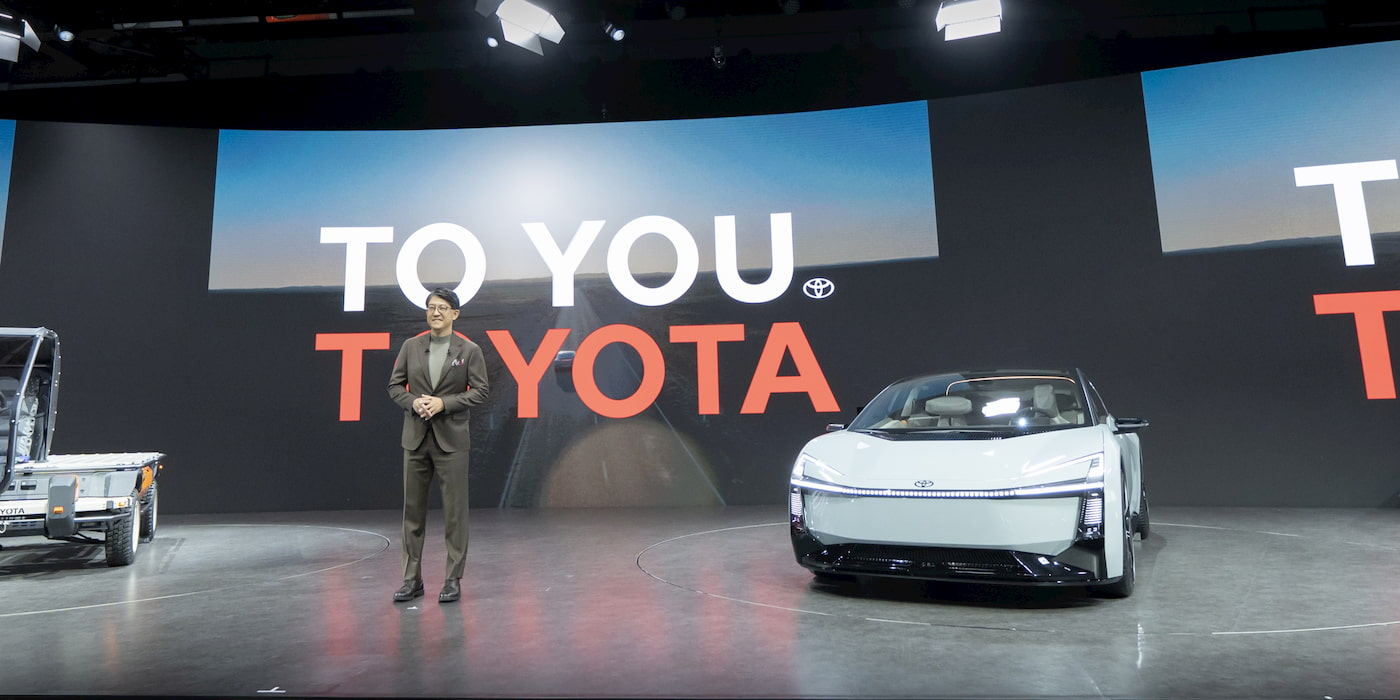 Figure: Official concept of the next-generation Toyota Corolla. Source: Toyota / Electrek
A 134-HP Hybrid and 250-Mile EV Range Reveal the True Cost Floor
In terms of powertrain specifications, the new hybrid Corolla will feature an all-new setup. According to Car and Driver, it pairs a 1.5-liter four-cylinder engine with an electric motor to produce a combined output of around 134 horsepower, with all-wheel drive likely available as an option. Compared to current models, overall efficiency is expected to improve by 10% to 20%. For everyday family commuters, that efficiency gain directly translates into lower operating costs at the pump.
The spotlight BEV variant is expected to offer both single-motor front-wheel drive and dual-motor all-wheel drive configurations. Its nominal driving range is targeted at a minimum of 250 miles (roughly 400 kilometers). This marks the first time in Corolla history that plug-in hybrid and pure electric powertrains have been introduced. In a market where premium competitors routinely tout 600 kilometers or more, a 400 km range may not seem groundbreaking on paper. But for an affordable daily commuter, it represents a calculated baseline that hits the viability sweet spot.
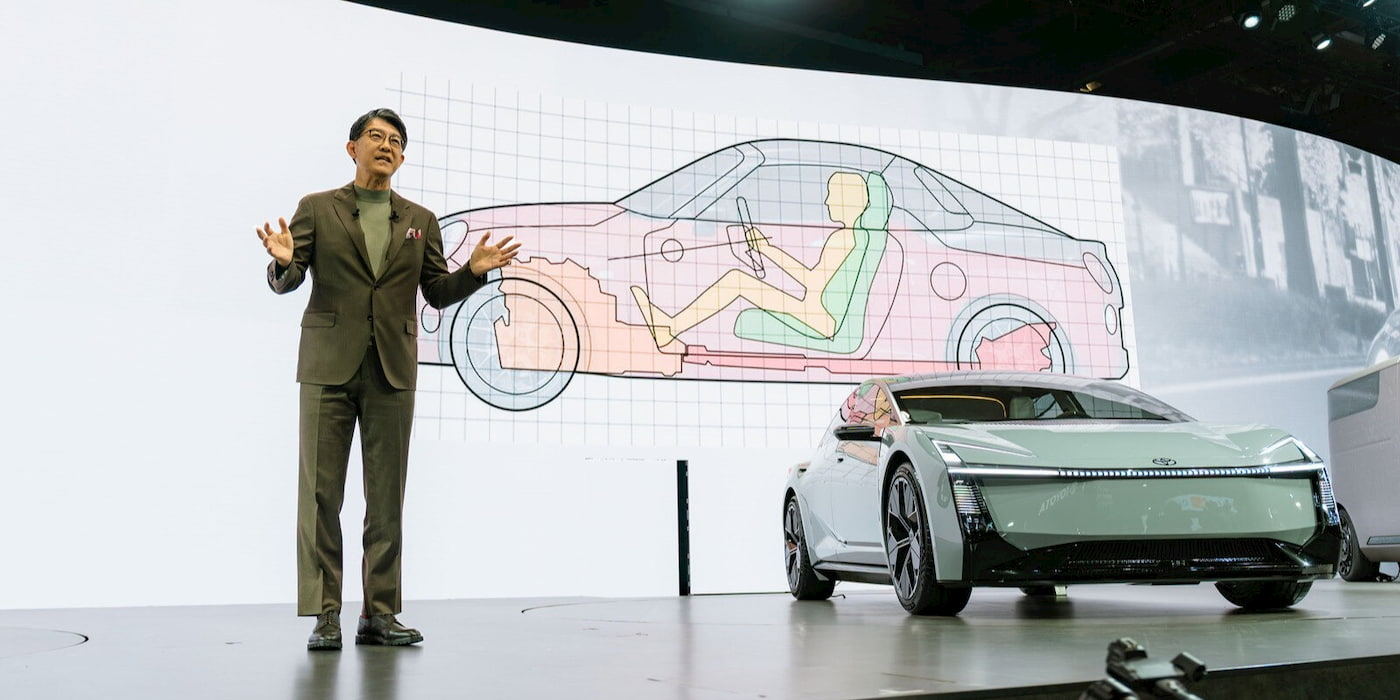 Figure: Schematic diagram of the next-generation Corolla chassis and platform architecture. Source: Toyota / Electrek
Traction battery capacity is intimately tied to bill-of-materials costs and is the single decisive factor in vehicle profitability. Adding every additional 100 kilometers of range requires packing substantial cell volume, which directly eats into TNGA-C’s passenger cabin space and inflates the vehicle’s retail price. A 400 km range is more than sufficient for the vast majority of urban commuting while keeping battery costs strictly below corporate financial thresholds. Incumbent industrial giants do not pursue spec-sheet vanity; they engineer solutions that are just good enough and genuinely affordable for the average consumer.
2027 Debut Targets the Crucial $30,000 Psychological Barrier
Current timelines indicate that the next-generation Corolla will debut in 2027 and enter the market as a 2028 model year vehicle. The timing reveals a deeply defensive posture. Many industry analysts regard 2027 as the tipping point where electric vehicle penetration crosses the chasm into mass adoption, representing the final transition window for legacy automakers to pivot. By deploying an electric version of its multi-million-unit best-seller at this specific juncture, Toyota is signaling confidence that battery supply chains will finally support high-volume, profitable delivery.
On the critical front of retail pricing, a tiered pricing ladder is already coming into focus. Gasoline versions are expected to start around $25,000, with hybrids hovering near $27,000. The newly added pure electric and plug-in hybrid variants will be held tightly around the $30,000 threshold. In key passenger car markets like North America, $30,000 has long been seen as the psychological ceiling for mass-market affordable electric sedans. Keeping the entry price around this figure explains why Toyota previously hesitated to rush into entry-level EV production lines.
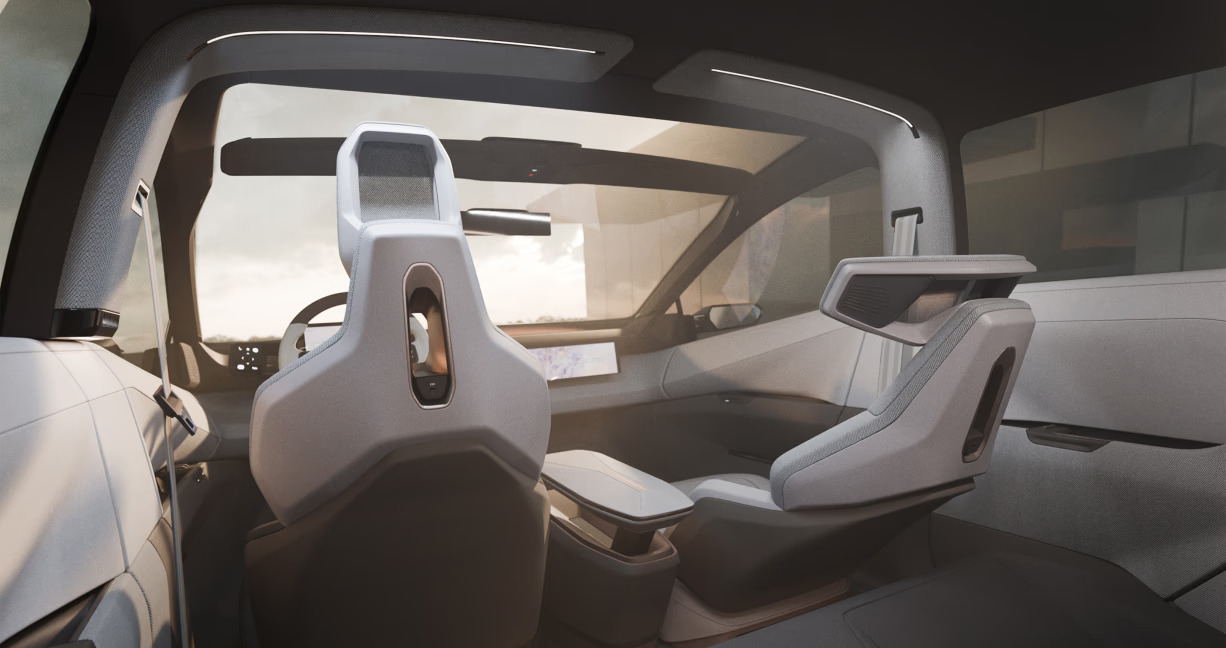 Figure: Interior styling of the next-generation Corolla concept. Source: Toyota / Electrek
Whether the entire lineup will make its way to the North American market remains unconfirmed, but the mere existence of an electric Corolla serves as an unmistakable bellwether for the entire automotive sector. A complete powertrain spread spanning $25,000 to $30,000 demonstrates what Toyota was truly waiting for: a unit economics model that everyday consumers can actually afford. When battery pack costs drop low enough to generate positive unit margins on a Corolla, the legacy manufacturing giant’s counterattack — backed by massive economies of scale — officially begins.
The Electric Corolla Drains Toyota’s Hybrid Buffer Zone
Tracing the roots of the powertrain debate, Toyota long maintained that hybrid technology was the most pragmatic intermediate bridge. The proprietary hybrid moat built since the early days of the Prius earned the company immense profits and valuable time. But as pure EV adoption rates approach 50% in key global markets and regional emission regulations tighten relentlessly, the ground has shifted. Relying exclusively on hybrids no longer provides an adequate safety margin to defend global market share.
Toyota’s push toward comprehensive electrification was forced by hard commercial realities. The company meticulously tracked the cost-per-kilowatt-hour decline curve, and now it has placed its electric bet squarely on the shoulders of its highest-volume vehicle worldwide. This decision sends an unambiguous signal to the entire industry: in the mainstream family car segment, the hybrid buffer zone has evaporated.
The countdown for the next Corolla is now underway. Toyota does not need to build a halo vehicle to out-spec Tesla in raw technology. It simply needs to build a car with the Toyota badge that compresses costs under $30,000. As the weight of 57 million historical sales embraces an all-electric architecture, the rules of automotive engagement have irrevocably changed.
Reference Links:
- HN Discussion (item?id=49823568)
- Electrek Report
- Car and Driver Report