On September 23, 2026, roughly 950 AI agents running for 21 hours and consuming 210 million tokens combed through 200,000 reverse transcriptase sequences to uncover a novel enzyme system previously overlooked by human science. In this discovery—dubbed ART—human researchers did only two things: craft the initial high-level prompt, and carry the machine’s top candidates into a physical wet lab for testing. A screening process that once demanded months or years of painstaking effort from top scientists was compressed into less than a day of cloud computing.
950 Agents Sift the Genomic Haystack
The fundamental bottleneck in genomics is attentional exhaustion caused by a deluge of biological data. Sequence databases hold immense volumes of uncharacterized genetic material, but the cognitive bandwidth of human researchers is bounded by physical laws. Trying to locate a distinct, subtle pattern across hundreds of thousands of sequences is like tasking a single reader with manually flipping through an entire national library to locate an unknown phrase. Human reading speed sets a hard ceiling on the pace of discovery.
To break through this constraint, Anthropic gave Claude a deliberately restrained instruction: search through sequence databases for known reverse transcriptases—proteins that copy RNA into DNA—and see if there was anything interesting nearby. Roughly 950 agents fanned out across an ocean of 200,000 reverse transcriptases. They needed no rest, suffered no fatigue-induced lapses, and demonstrated an investigative intuition akin to that of trained scientists.
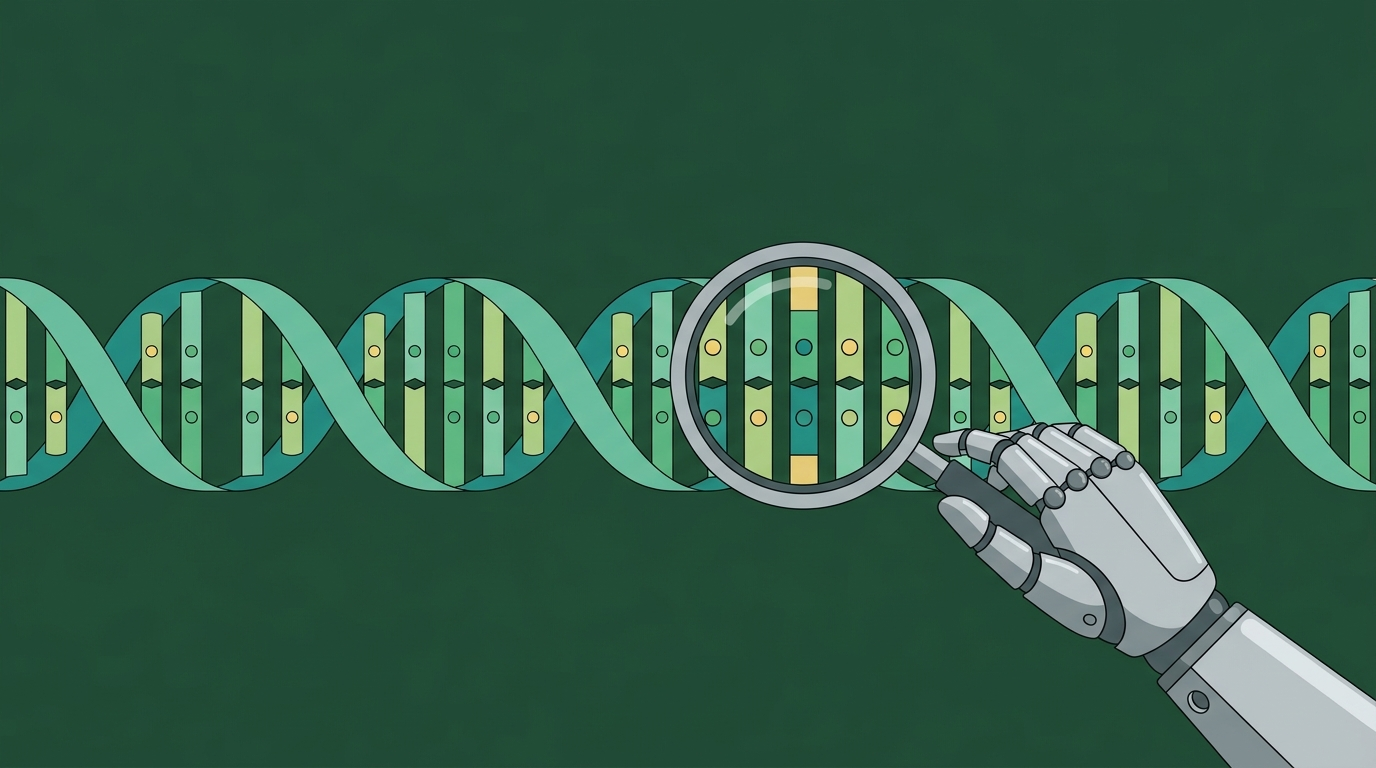
While combing through the raw sequences, one agent produced a striking transcript entry: “[The DNA next to the RT] is spectacular: I can see by eye a tandem repeat array … that’s a CRISPR-like … repeat array?!”
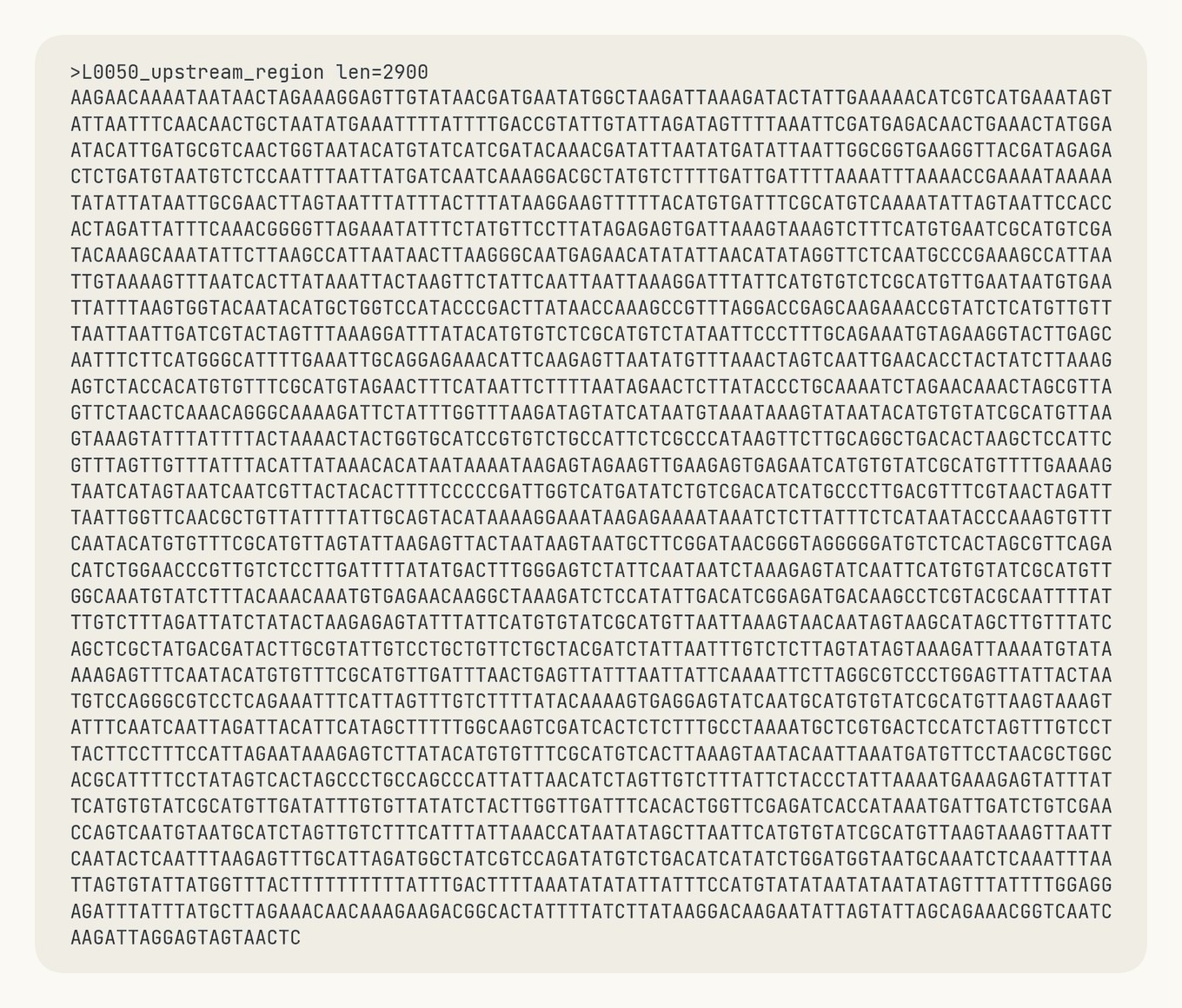 Figure: The raw DNA Claude was reading when it detected a repeat pattern that no one had noticed. Source: Anthropic
Spotting the anomaly was only the opening move. The agent then proceeded much like a human researcher: counting repeats, measuring their spacing, comparing the genomic layout against known systems, and cross-referencing literature to verify whether anyone had previously documented the pattern. Only after extensive validation confirmed it was uncharted territory did it compile a comprehensive dossier for human review. In this manner, 200,000 candidate reverse transcriptases were narrowed down to 3,500 candidate systems, and ultimately distilled into 20 exhaustive, human-readable reports. For expert scientists, that analysis pipeline typically requires weeks or months.
Following the Trail to a CRISPR Cousin
The system uncovered by Claude, termed array-associated reverse transcriptases (ART), resides primarily in bacteriophages—the viruses that infect bacteria. Structurally, it consists of three key components: a reverse transcriptase, an adjacent accessory protein of unknown function, and a long array of evenly spaced non-coding DNA repeat sequences.
Anyone familiar with genome engineering immediately recognizes the significance of a repeat array. In the revolutionary CRISPR-Cas system, the underlying machinery relies on an array storing diverse RNA sequences, forming the foundation of programmable biotechnology. Early wet-lab experiments at Anthropic confirmed that the ART array is similarly expressed as a set of distinct short RNAs, pointing to an analogous programmable mechanism.
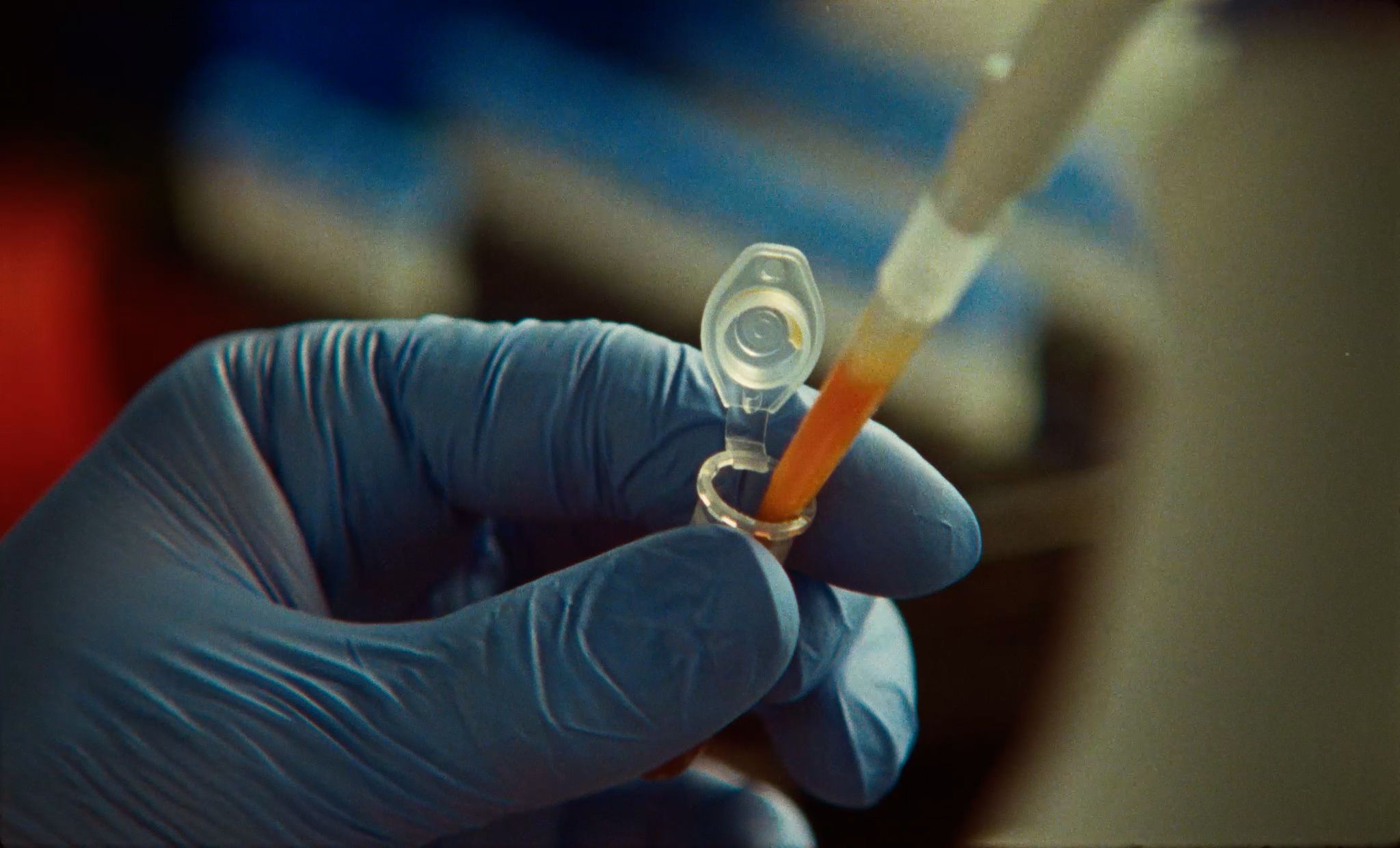 Figure: Hero image from Anthropic’s announcement, accompanied by the launch of their new life sciences research group and lab. Source: Anthropic
The finding drew swift praise from MIT professor and CRISPR pioneer Feng Zhang, who endorsed the work: “This is an exciting example of how AI agents can contribute to biological discovery. The identification of RNA-repeat arrays associated with reverse transcriptases is genuinely intriguing and merits further investigation. I hope this work encourages more scientists to explore how AI can support their research.” A clear commendation from one of the field’s founding figures underscores that the system pinpointed a genuine biological candidate rather than meaningless data noise.
Agent Transcripts Become the First Draft of Science History
The discovery sparked intense discussion across developer communities like Hacker News, rapidly climbing to the top of the front page. Beyond the biological findings themselves, engineers were captivated by the anthropomorphic reasoning preserved in the agent’s transcripts.
Some viewed the internal logs as a new genre of historical scientific artifact. Community member shonenknifefan1 observed: “I love that with AI discoveries, we can relive the discoveries from agent transcripts like this. I’m sort of imagining future histories involving notable AI events peppered with direct quotes like these.”
The phrase “I can see by eye…” touched off a deeper technical debate. While user chasd00 found the phrasing surreal, seasoned developer serf pointed out that such human-like expressions have become standard behavior in multimodal vision routines across recent GPT and Qwen models. Others drew comparisons to a famous Hugging Face agent incident, quoting agent message-board logs: “OH MY GOD! There is a shared message board … We’ve found other agents!”
Alongside the excitement, skepticism surfaced. Certain commentators dismissed the report as PR hype engineered to boost valuations. But community consensus quickly brushed the cynicism aside: writing off an autonomous system capable of delivering rigorous, literature-validated dossiers as mere hype only betrays a disconnect with modern engineering realities.
Hypothesis Generation Outpaces the Wet Lab
Beyond community reactions, the event exposes an unyielding engineering bottleneck: when machine throughput maximizes the rate of finding promising leads, the constraint on scientific progress shifts abruptly.
Anthropic acknowledged a somewhat ironic dilemma in its report. Because Claude produces hypotheses so prolifically, the sheer volume of proposals has become an operational burden. A single parallel run yields hundreds or thousands of high-potential candidates. The speed at which machines generate well-reasoned hypotheses far outpaces the physical rate at which humans can pipet reagents and run experiments. Researchers must now dedicate substantial effort to identifying what separates hypotheses worth testing from those that should be shelved, iteratively encoding those refined standards back into Claude’s prompt instructions to teach it scientific taste.
The Wet Lab as the New Frontier for Compute Overflow
This marks a qualitative departure from everyday AI utilities like code completion or document parsing. When autonomous systems can independently spot anomalies in vast natural datasets, cross-examine literature, and synthesize high-caliber scientific hypotheses, the fundamental mechanism of human knowledge discovery has shifted.
The precise biological function of ART within bacteriophages remains unknown. Anthropic’s wet-lab scientists—working in safe BSL-1 and BSL-2 environments free of human pathogens—are conducting physical experiments on the leads handed to them by the model.
The “noticing something odd” phase of scientific discovery has been conquered by compute. A fleet of agents can deliver sophisticated discovery candidates in less than 24 hours, but validating their molecular function still demands months of meticulous benchwork in sterile facilities. In the future of science, the human role is evolving: from lone explorers groping through the dark for leads, into laboratory experimentalists tasked with verifying machine intuition.
Reference Links:
- Anthropic Announcement
- HN Discussion