“In about one in 12 patients, the tumor disappeared completely. Following patients for this long, we have never seen anything like this.” On November 20, 2026, at the opening of the European Cancer Congress in Barcelona, Dr. Venkat Park of Memorial Sloan Kettering Cancer Center in New York presented landmark clinical findings from 61 patients with metastatic, advanced pancreatic cancer.
Patients received a once-daily oral dose of daraxonrasib alongside standard chemotherapy. After a median follow-up of 18 months, 8.2% of patients showed no detectable tumor on CT scans—representing complete radiologic clearance in one out of every 12 individuals. For a malignancy where five-year survival rates linger below 10%, such outcomes have historically been almost unheard of.
Yet the broader clinical significance extends well beyond this 1-in-12 milestone. The trial enrolled heavily pretreated patients whose previous chemotherapy had failed, leaving them with life expectancies measured in months. The true cornerstone of this advance is the doubling of median overall survival from 6.6 months to 13.2 months.
Cracking a 40-Year ‘Undruggable’ Target: Locking the Growth Switch
The pancreas sits deep within the retroperitoneum, enveloped by critical major blood vessels. In most cases, tumors have already metastasized by the time symptoms appear, ruling out surgical resection. For the past half-century, advanced patients have relied on systemic intravenous chemotherapy—a blunt approach with limited efficacy that typically affords a median survival of only six months.
Standard therapies struggle because pancreatic tumors are driven by a hyperactive internal signaling switch. More than 90% of pancreatic cancers harbor mutations in the KRAS gene. Under normal conditions, the KRAS protein acts like a precise power switch: it initiates cell division only upon receiving physiological signals, resetting to an inactive state once the task is finished.
When mutated, the switch becomes locked in the “on” position, continually issuing uncontrolled growth commands. Making matters worse, the spherical surface of the KRAS protein is notoriously smooth—resembling a polished marble—lacking the deep pockets needed for small-molecule drugs to bind. For four decades, pharmaceutical efforts repeatedly faltered, cementing KRAS’s reputation as a quintessential “undruggable” phantom target.
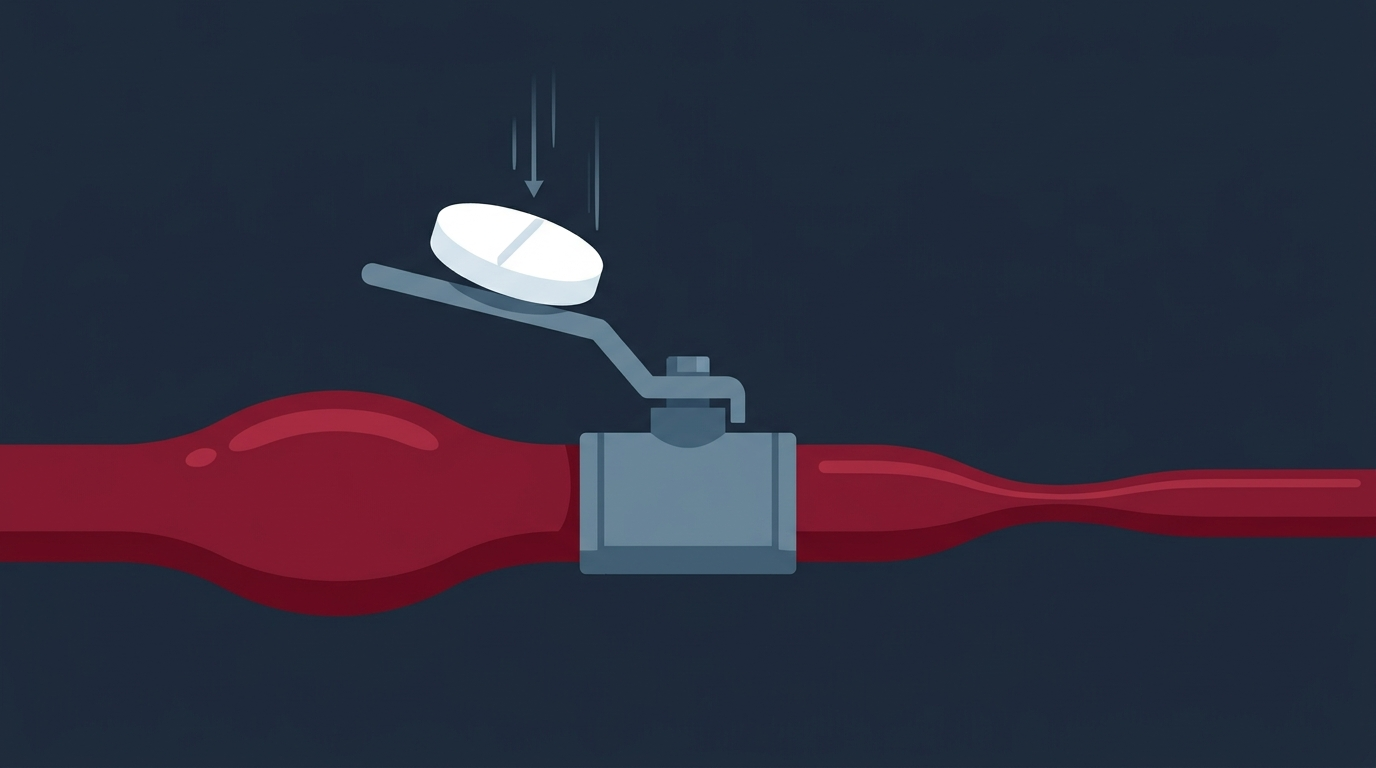
Daraxonrasib breaks this deadlock. Researchers pinpointed a fleeting, microscopic pocket exposed during the protein’s structural transitions and engineered an exact molecular fit. This chemical wedge acts as a lock, forcing the switch into the “off” state. By severing the runaway signaling cascade, cancer cells lose their proliferative drive, halting tumor progression.
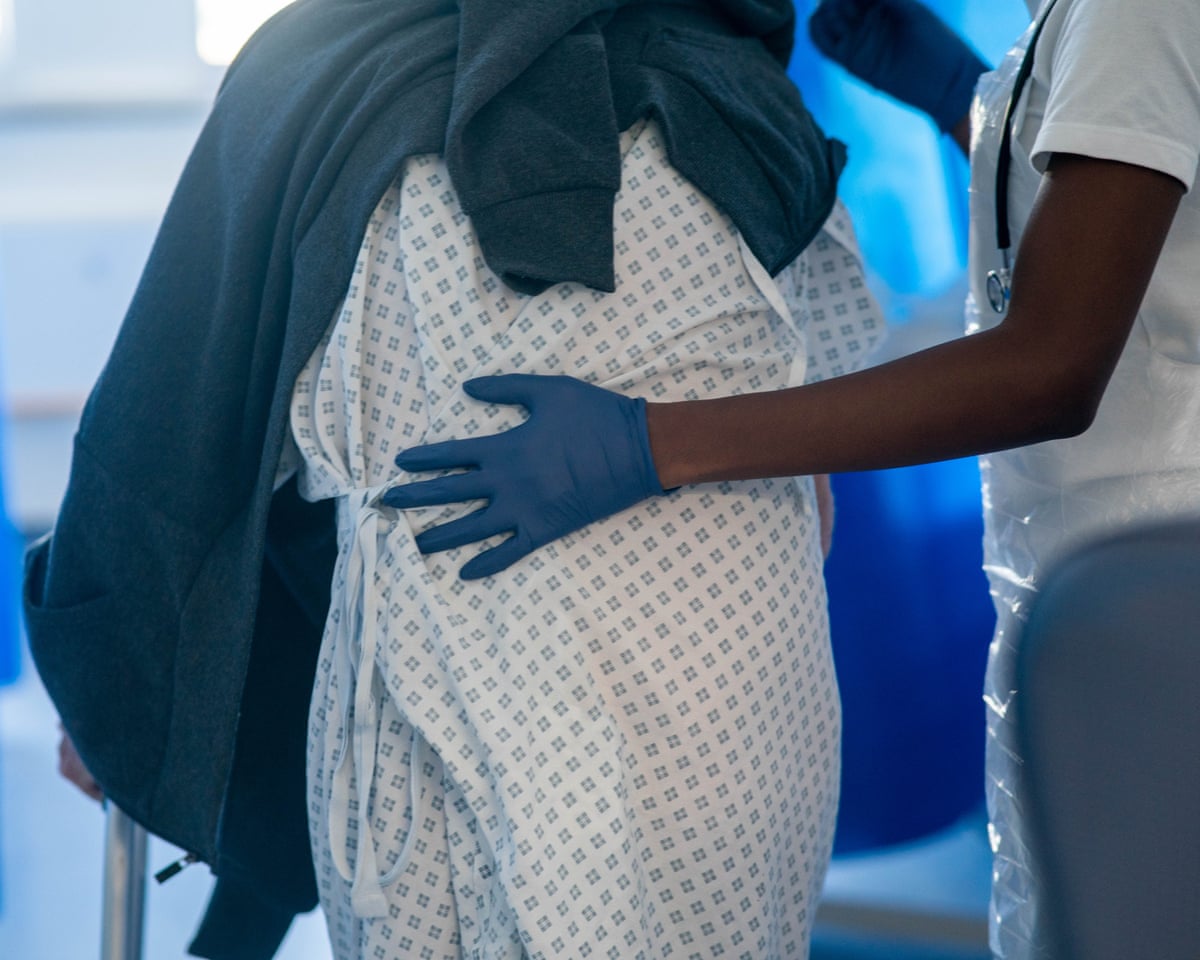 Figure: Patients with advanced pancreatic cancer often reach the limits of chemotherapy tolerance. Source: The Guardian / Alamy
An 8.2% Clearance Rate, but the 13-Month Median Survival Is the Real Breakthrough
In the reported phase 1/2 trial of 61 severe patients treated with the combination regimen, 90.2% achieved disease control and 60.7% experienced substantial tumor shrinkage. At one year, the overall survival rate reached 76.6%—far outperforming the 40% to 45% historical benchmark seen with chemotherapy alone.
The 8.2% radiological clearance rate drew headline attention. In one in twelve participants, follow-up CT scans could no longer detect any tumor mass. Dr. Park noted that this was the first time in his clinical career seeing complete radiological remissions in this cohort. While radiographic clearance does not guarantee total cellular eradication, it reflects a profound reduction in overall tumor burden.
Reinforcing these early observations, a large randomized phase 3 trial published in The New England Journal of Medicine in May 2026 evaluated 500 patients. The combination therapy doubled median overall survival from 6.6 months to 13.2 months, while lifting the objective response rate from 11.8% to 33.2%.
In advanced pancreatic oncology, doubling median survival represents an extraordinary clinical leap. Gaining nearly seven additional months allows patients to experience an entire additional cycle of seasons. These findings demonstrate that precision blockade of oncogenic drivers can fundamentally reshape the trajectory of aggressive disease.
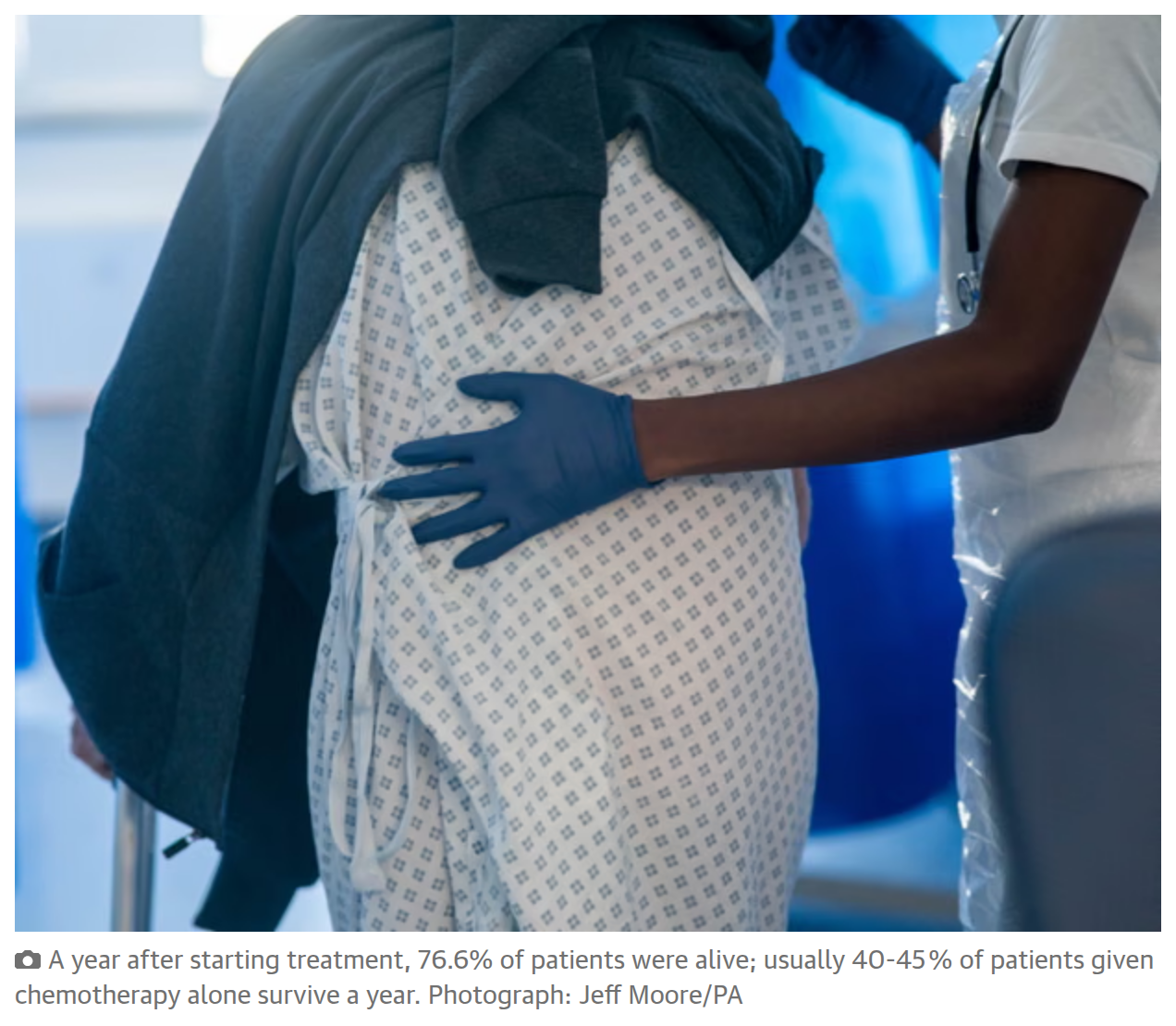 Figure: One-year survival rate rose to 76.6% under combination therapy, surpassing historical chemotherapy baselines. Source: The Guardian
Once-Daily Oral Dosing: Under 5% Discontinuation Due to Toxicity
The real-world efficacy of any cancer therapy relies on tolerability. Advanced pancreatic cancer patients are typically frail, frequently struggling with severe cachexia and multiorgan decline. High toxicity from intravenous regimens frequently forces clinicians to reduce doses or stop treatment altogether.
Daraxonrasib is formulated as a convenient once-daily tablet, eliminating the burden of prolonged hospital infusions. In the 61-patient trial, fewer than 5% of participants discontinued treatment due to adverse events. In the 500-patient phase 3 study, drug discontinuation due to toxicity in the targeted arm was only 1.2%, compared to 11.2% in the chemotherapy control group.
This low discontinuation rate ensures uninterrupted therapeutic pressure. By sparing patients frequent venipunctures and lengthy infusions, oral administration allows them to maintain daily routines at home. By sparing healthy tissue from excessive damage, the regimen preserves vital functional reserves over the long haul.
The Resistance Clock Keeps Ticking: Pushing Back the Recurrence Frontier
Despite these encouraging findings, clinicians caution against declaring a definitive cure. Dr. Park emphasized that it remains uncertain how long these remissions will endure. Across the initial 61 patients, the median time to progression was 12.8 months, underscoring that acquired resistance remains a major biological hurdle.
Cancer cells are adept at mutating and adapting under selective pressure. Over extended treatment, sub-clones inevitably seek alternative pathways to bypass targeted inhibition. The immediate objective of this therapy is to delay disease progression, converting explosive deterioration into a manageable, prolonged standoff.
Buying survival time is the critical gateway to successive lines of treatment. Extending median survival from 6.6 to 13.2 months provides an invaluable window for patients to access next-generation therapies. By dismantling a 40-year undruggable target, medicine has established a firm precision foothold against one of cancer’s deadliest foes.
Reference Links:
- European Organisation for Research and Treatment of Cancer (EORTC) 2026 Annual Meeting Report
- The New England Journal of Medicine (NEJM) Phase 3 Trial Publication
- Memorial Sloan Kettering Cancer Center Research Briefing
- The Guardian Science Coverage