In late March 2025, a 6-year-old girl walked hand-in-hand with her mother through the doors of Xinhua Hospital in Shanghai. Behind them, her father pushed a large suitcase — everything she’d need for a week-long hospital stay. She told her parents it felt like going on vacation.
In reality, they were there for an experimental gene therapy.
Seven days later, the girl died from a catastrophic immune reaction triggered by the treatment. Her death was never publicly disclosed — until now.
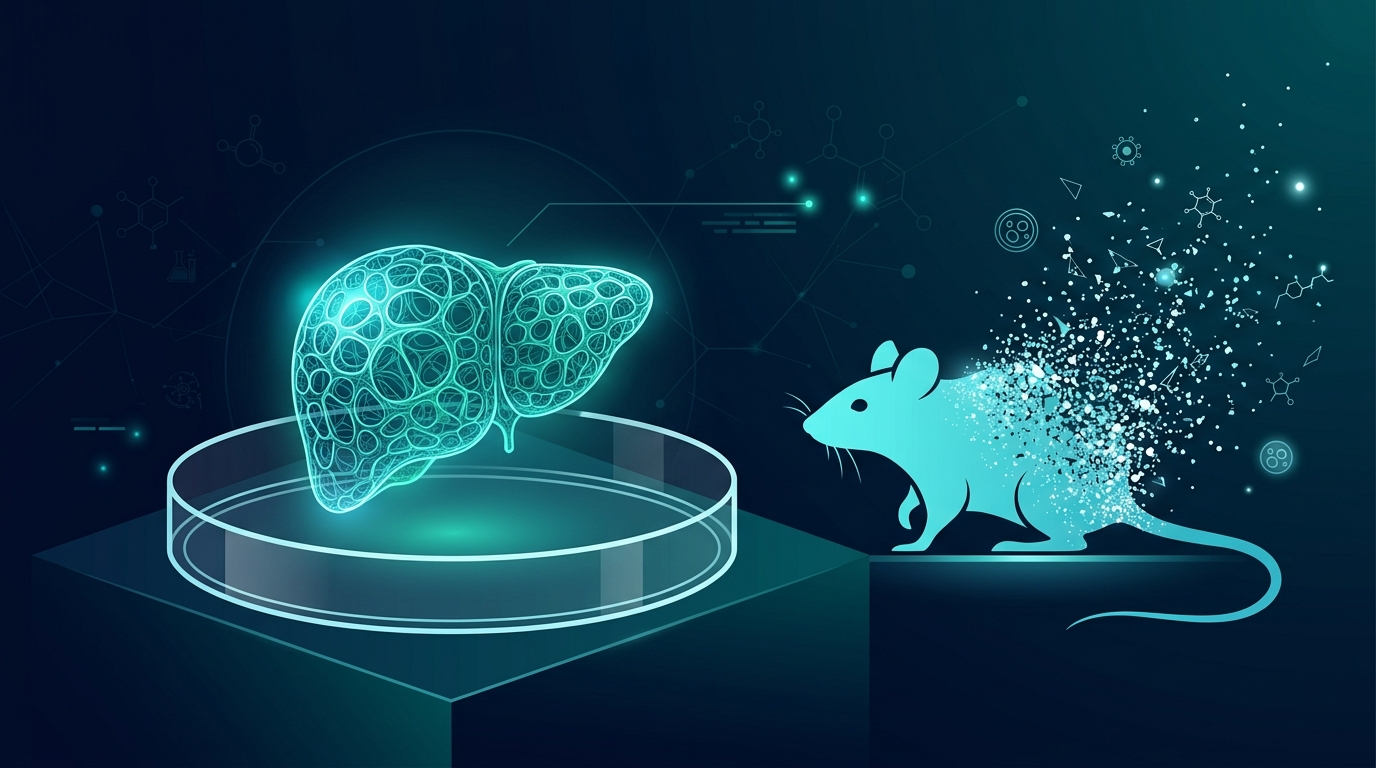
 Base editing — a precision gene-editing technique that rewrites individual DNA letters without cutting the double helix. Source: Retraction Watch / Science joint investigation.
This is the story uncovered by a joint investigation from Science magazine and Retraction Watch. It is also the world’s first known death from in vivo base editing therapy.
A Single Wrong Letter
The girl suffered from an exceptionally rare genetic disease: in her genome, a single base pair that should have been C had mutated to T. This microscopic error prevented her body from producing a protein essential for normal brain development.
At kindergarten, she was falling behind her peers. She could only speak in simple sentences. She still used training chopsticks to eat. Her cognitive development was visibly delayed.
The hospital’s consent form, written in language a child could understand, put it this way: “There is a small mistake in your ‘book’ that has caused a disease affecting your growth. Over time, it will get worse.”
Doctors told her parents that her brain was still developing — this was their best window to fix the error.
The Price Tag: $860,000
This treatment was not free.
The girl’s parents — her father is a software engineer — scraped together $860,000 (roughly 5.6 million yuan) from their savings and family loans to fund the therapy’s development and delivery.
This wasn’t just a “treatment fee.” They were essentially bankrolling an entire experimental gene-editing pipeline: designing the base editor, manufacturing the viral vector, and ultimately infusing it into their daughter’s spinal fluid.
The lead researcher was Zilong Qiu, a neuroscientist at Shanghai Jiao Tong University’s Songjiang Research Institute. At the time, Qiu was one of several scientists around the world racing to bring base editing technology into clinical use.
Just one month before the girl received her treatment, an infant with a fatal metabolic disorder — “Baby KJ” at Children’s Hospital of Philadelphia — had received an intravenous base editing infusion. That treatment was successful and was named runner-up for Science’s 2025 Breakthrough of the Year.
Shanghai’s story ended very differently.
What Is Base Editing?
Let me briefly explain the technology.
Traditional CRISPR gene editing is like a pair of “molecular scissors” — it cuts both strands of the DNA double helix and lets the cell repair the damage. But cutting DNA can have unpredictable consequences: wrong insertions, deletions, even chromosomal rearrangements.
Base editing is a more precise tool. Instead of cutting the DNA, it directly “rewrites” one base letter into another. Imagine finding a typo in a book — base editing corrects that single letter without tearing the page.
The technique was invented in 2016 by David Liu’s team at Harvard University and was hailed as a major breakthrough in gene editing. In theory, it could more safely correct point mutations that cause genetic diseases.
But theory is one thing. Practice is another.
The Fatal Immune Response
The problem was in the delivery.
Qiu’s team used adeno-associated virus (AAV) as their delivery vehicle. AAV is a modified virus that doesn’t cause disease in humans, and it’s widely used in gene therapy as a “cargo truck” — packing therapeutic genes into a viral shell and injecting it into the body to reach target cells.
But AAV has a well-known problem: immunogenicity.
The human immune system recognizes the AAV shell as a foreign invader and can mount a powerful immune response. Every approved AAV gene therapy drug on the market carries a black box warning about the risk of liver failure and other severe immune reactions.
So what happens when you inject AAV directly into the brain?
On March 24, 2025, the medical team injected trillions of AAV particles — each carrying the base editor “recipe” — into the girl’s cerebrospinal fluid via lumbar puncture. In theory, the viruses would travel to her brain neurons and begin rewriting the faulty base.
In reality, her immune system launched a catastrophic response to the invasion.
Seven days later, she was dead from severe immune reaction.
It’s worth emphasizing that injecting AAV into the cerebrospinal fluid isn’t unheard of in research — but using it for brain-targeted base editing globally lacks sufficient safety data. Several gene therapy experts who reviewed the case told Science they were shocked by the team’s choice of AAV for brain-targeted gene editing. With AAV’s well-known immunogenicity, injecting it directly into the brain and expecting no severe reaction shows, in their view, deeply questionable judgment given current scientific understanding.
Vanished Oversight, Silent Reports
Why was this death never made public?
The answer lies in a regulatory gray zone.
According to the investigation, Xinhua Hospital allowed Qiu’s experimental treatment under a regulatory provision that “does not require approval from national regulatory authorities.” In other words, this novel in vivo gene-editing treatment bypassed the official review process of the National Medical Products Administration.
Later, the research team published a related animal study in the journal Nature earlier this year — but the paper completely omitted any mention of the girl or the family’s funding. It only vaguely noted that “bridging the gap between preclinical research and clinical translation remains a major challenge.”
The girl’s parents have asked the authors to retract the paper.
The trial’s registration on ClinicalTrials.gov has not been updated in over a year.
When Science and Retraction Watch contacted Qiu and his institution for comment, they did not respond.
Nature stated that it was not informed about the clinical trial death before publishing the team’s paper.
What Experts Say
Seven independent experts — in genetics, virology, and bioethics — reviewed the details of the case and expressed serious concerns:
 HN community response to this case. One user commented: “I’m shocked the doctors/scientists chose AAV for brain-targeted gene therapy — AAV has black-box warnings about immune reactions causing liver failure.”
- The research team downplayed the risks when describing the trial to the parents
- Safety signals from animal studies were available but ignored
- The trial proceeded even when the chances of success were extremely low
Steven Gray, a gene therapy specialist at UT Southwestern Medical Center, was blunt: “This trial should never have been done in a human.”
Experts are calling for a full review of the images and data in the Nature paper, as well as complete disclosure of the study’s funding sources. Some believe the problems with the paper could meet the threshold for retraction.
The Tragedy’s Darker Implications
This isn’t the first time Chinese science has found itself in the spotlight over gene editing.
In 2018, He Jiankui, an associate professor at Southern University of Science and Technology, announced the creation of the world’s first gene-edited babies, shocking the world. He was sentenced to three years in prison. That scandal exposed gaping holes in China’s gene-editing regulatory framework.
Now, nearly eight years later, another tragedy has unfolded.
Joy Zhang, a sociologist at the University of Kent who studies China’s scientific secrecy culture, said the lax oversight of this latest trial — and the failure to publicly report the death — “illustrates the gap between institutional design and practical implementation.”
In some ways, this case is even more complex than He Jiankui’s. He’s embryo editing was universally condemned as an ethical line-crossing — altering the genome of unborn children, creating irreversible inherited changes. Qiu’s team, by contrast, was trying to treat an already-ill child. The intention was to help, not to experiment.
And that’s what makes this case so heartbreaking. A scientist who wanted to save a child, and a family willing to spend their entire savings to save their daughter — they met in a regulatory vacuum, and the result was a tragedy.
The girl’s father said they are now telling their story publicly because they are angry about the lack of accountability from the research team and institution. “Learning the truth about these missing safeguards has completely changed how we view the entire project,” he said. “We had no idea how unusual and dangerous many of the arrangements were.”
The core issue here isn’t about the scientist’s motives — Qiu has a track record in primate models and neurodevelopmental disorders, and his TEDx talk was titled “Using Gene Therapy to Reverse Genetically Determined Fate.” His desire to help children with rare diseases appears genuine. The problem is what happens when scientific enthusiasm meets regulatory vacuum. When there’s nobody to hit the brakes for families who have no other options.
The controversy surrounding this clinical trial and the related paper continues. The girl’s death is the first known fatality from in vivo base editing, and it could have far-reaching implications for gene-editing clinical translation worldwide.
References:
- Science Exclusive: Death of girl in Chinese gene-editing trial was never made public
- Retraction Watch investigation: A couple paid more than $800,000 for a gene-editing therapy for their daughter. She died, and it wasn’t made public
- HN Discussion (item?id=49027892)
The author is not a biomedical professional. This article is based on the public investigative reporting by Science magazine and Retraction Watch, and every effort has been made to faithfully represent the facts. Interpretations may be incomplete. For any discrepancies, please refer to the original reports. This is a real tragedy, recorded here so it is not forgotten.