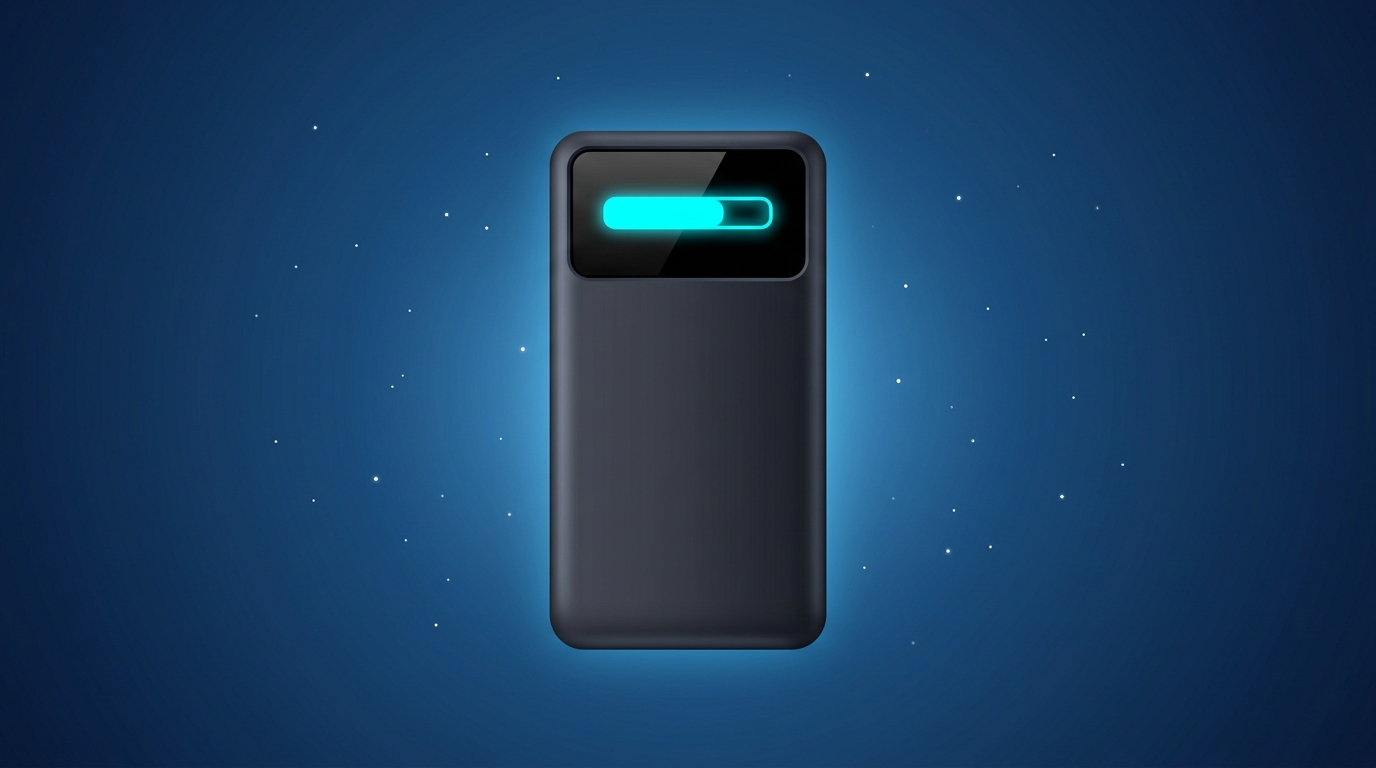
In October 2026, while building momentum for its upcoming flagship smartphone lineup, OnePlus officially unveiled a new 10,000mAh SUPERVOOC 67W Pocket Super Flash Charge Power Bank. Setting it apart from traditional portable chargers is a smart display embedded squarely on the front panel. The screen goes beyond showing remaining percentage; it delivers real-time telemetry on output wattage and overall battery health. Granular metrics that once required a separate USB inline power meter have now become an out-of-the-box standard.
Vague LED Dots Step Aside as Power Telemetry Goes Mainstream
By adding an interactive screen to a 10,000mAh unit, OnePlus has pulled back the curtain on the charging black box. For years, portable power banks relied on four generic LED dots to approximate battery levels. That compromise was tolerable back in the 10W slow-charging era. But in an era where mobile fast charging routinely hits 60W or well over 100W, a vague four-segment bar no longer satisfies the user’s psychological need to verify rapid energy delivery.
Real-time wattage readouts were long the exclusive domain of hardware enthusiasts diagnosing charging cables and power negotiations. When that display appears on a mass-market accessory, the design paradigm of the entire accessory industry shifts. Users no longer need to guess whether their device successfully triggered the highest fast-charging handshake profile. The changing numbers on the display provide immediate, unambiguous confirmation. Vague battery anxiety is replaced by precise data monitoring.
Beyond instant wattage, the display tracks battery health status. Like all electrochemical cells, lithium-ion packs inevitably experience usable capacity degradation after hundreds of full cycles. Previously, consumers only discovered their battery bank had deteriorated after noticing sudden, severe runtime drops in the field. Surfacing battery health directly on the device reduces the risk of unexpected shutdowns caused by degraded capacity estimates, making hardware lifecycle management predictable.
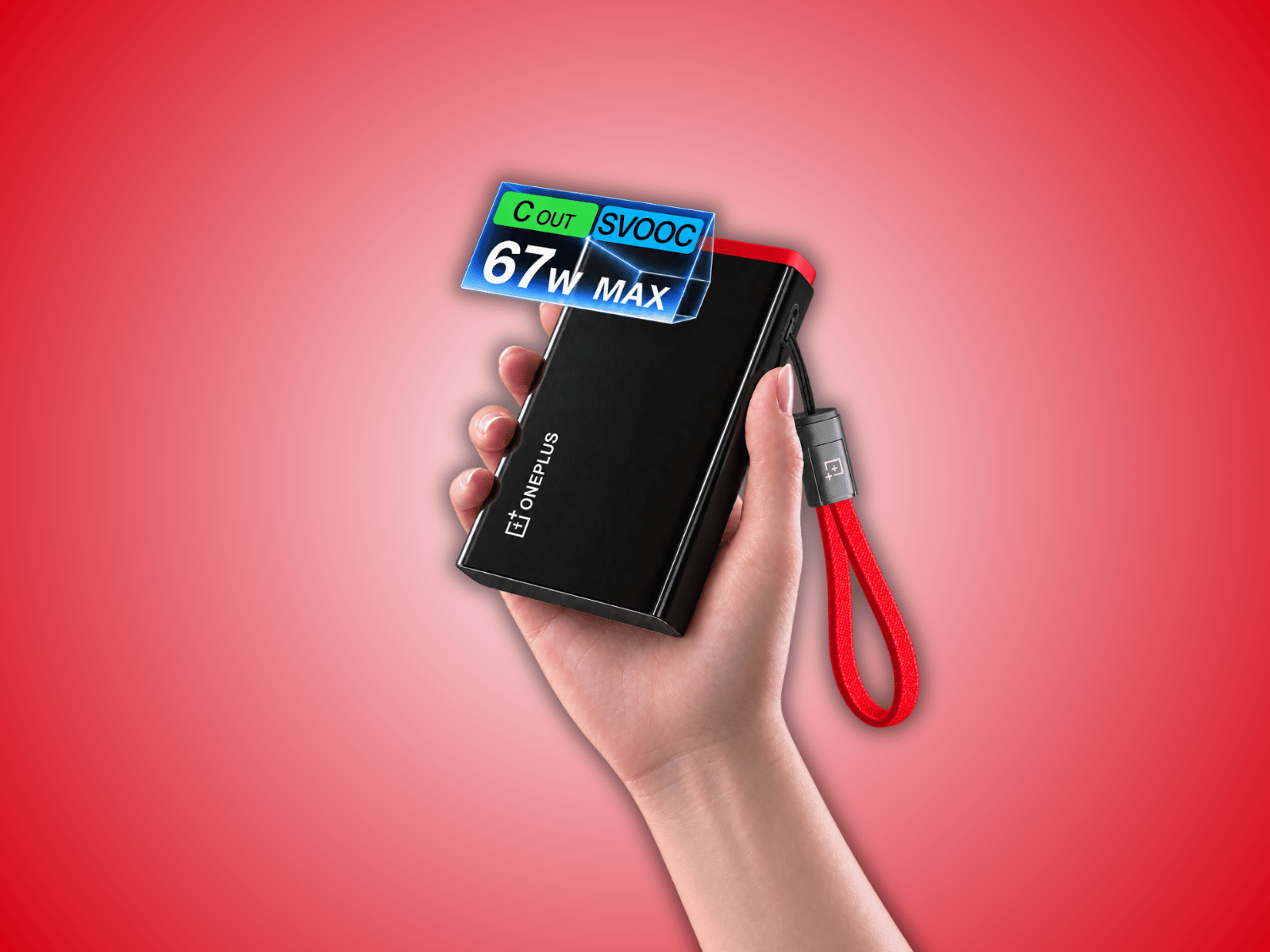 Figure: The OnePlus 10,000mAh 67W power bank showing live charging status on its integrated display. Source: OnePlus (Weibo)
Supply Chain Maturity Normalizes Manufacturing Costs
Adding a digital display and dedicated monitoring silicon inherently increases hardware complexity and bill-of-materials (BOM) costs. Just a few years ago, dedicated IC solutions capable of accurately measuring and reporting real-time voltage, current, and wattage were expensive—largely confined to specialized test benches or hefty outdoor power stations. Today, those capabilities integrate effortlessly into an everyday 10,000mAh battery pack. The catalyst is the rapid maturity of battery fuel-gauge and controller IC supply chains, which has driven unit costs down dramatically.
Power metering silicon has become affordable enough to be incorporated into consumer accessories without inflating retail price points. Once technological premiums erode, interactive features previously reserved for niche prosumer equipment quickly become mandatory baselines in competitive markets. Consumers now receive diagnostic transparency that once required costly standalone equipment, all within a standard accessory budget. The democratization of hardware features remains a direct byproduct of manufacturing efficiency across the supply chain.
45W Universal PD Support Bridges Ecosystem Divides
In addition to its proprietary 67W SUPERVOOC protocol, the power bank delivers backward compatibility with universal 45W USB Power Delivery (PD). Smartphone manufacturers frequently lock top speeds behind proprietary charging protocols. In such a fragmented landscape, backing a 45W open standard represents a deliberate and welcome engineering decision.
Proprietary protocols maximize charging velocity for first-party brand devices, while universal USB PD defines the baseline utility across all other gear. Handheld gaming console users are particularly sensitive to a 45W threshold. Running demanding AAA titles under heavy GPU loads with insufficient power input causes battery drain even while plugged in. A reliable 45W PD handshake keeps handheld batteries topped up during intense play and charges thin-and-light ultrabooks at speeds approaching their bundled wall adapters. This dual-protocol design transcends brand exclusivity: the battery pack is not bound to a single smartphone, but serves an entire backpack of modern electronics.
Integrated Braided Lanyard Cable Eliminates Packing Clutter
From a mechanical standpoint, OnePlus opted for an integrated braided cable that doubles as a carry lanyard. While not an industry first, the design highlights an ongoing convergence toward high integration in mobile power banks. Traditional modular setups with separate cables mean rummaging through bags and constantly remembering to bring cords.
By integrating the charging cable into the chassis as a lanyard, the design eliminates loose cable clutter while preventing fast-charging failures caused by low-spec third-party wires. Manufacturers maintain end-to-end quality control across the charging link, from the internal cell to the device plug. Although high integration limits third-party cable choices, it rewards users with superior day-to-day convenience and consistent charging reliability.
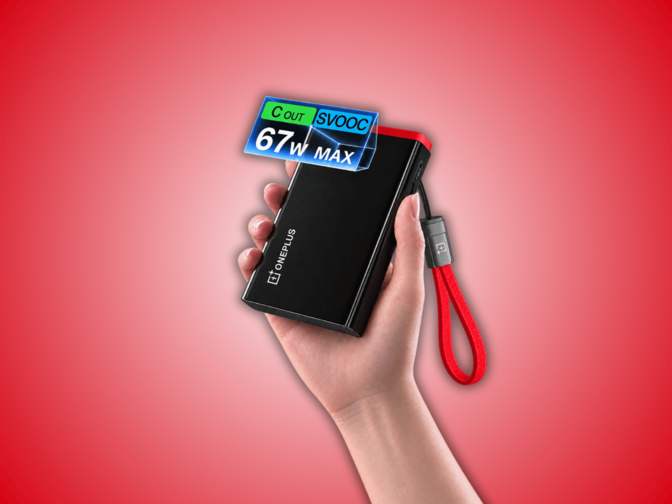 Figure: Detail view of the built-in braided charging cable doubling as a carry lanyard. Source: OnePlus (Weibo)
Strict Safety Mandates Squeeze Generic Competitors
This model is among the first wave of portable chargers certified under China’s new GB 47372-2026 safety standards. The updated mandate establishes strict compliance benchmarks across nail penetration, mechanical integrity, and thermal cycle aging. In the absence of radical breakthroughs in base lithium chemistry, raising regulatory test standards remains the most effective engineering path to mitigating fire and thermal runaway risks.
Rising compliance costs erect a formidable barrier to entry, boxing out generic white-label and uncertified power banks from mainstream distribution. As established smartphone brands fill market demand with rigorously certified 10,000mAh products, inferior units plagued by overstated capacities and missing overcharge protections will be driven out of circulation faster. Higher safety margins ultimately translate into long-term user trust during demanding daily use.
Embedding a screen onto a portable battery fundamentally alters how people interact with daily accessories. OnePlus’s release shows that competition has evolved beyond simply stacking milliampere-hours toward delivering full transparency during every charging cycle. Real-time power metrics, once reserved for hardware hobbyists, are now a mainstream expectation. The remedy for battery anxiety has changed: rather than waiting blindly for a progress bar, users now have precise control over every single watt.
Reference Links:
- OnePlus officially reveals new 10,000mAh power bank with display
- OnePlus SUPERVOOC 67W Power Bank with Display Announcement