Commissioned in 1943, the U.S. Navy aircraft carrier USS Hornet (CV-12) now sits quietly moored at the pier in Alameda, California. Measuring 872 feet from bow to stern, this steel leviathan is more than 200 feet shorter than the Navy’s modern supercarriers. On July 24, 1969, its flight deck recovered the Apollo 11 command module after humanity’s first lunar landing. More than 80 years after its launch, the warship still floats. A naval FJ-2 Fury rests on its flight deck, while the hangar bay houses the Apollo CM-011 test capsule alongside a retired F-4 Phantom II.
In mid-October 2026, iFixit teardown engineer Shahram Mokhtari stepped aboard this octogenarian floating hangar. He was invited to attend the Build Better Summit, an annual manufacturing conference hosted by production-line inspection company Instrumental. The room was packed with manufacturing engineers whose daily decisions dictate how modern consumer electronics are built. Inside the belly of a warship that survived eight decades of turbulent seas through compartmentalization and relentless repairs, assembly-line and teardown engineers sat down at the same table. Durable hardware is never built on the fantasy of invulnerability. Enabling faults to be located and scars to be mended is the true engineering path against physical entropy.
 Figure: Moored in Alameda, California, the 872-foot hull of the USS Hornet remains structurally sound after more than 80 years. Source: iFixit.
Line AI Catches 2 Bent Pins Missed by Human Inspection
Beneath the wings of a retired F-4 Phantom, Instrumental—founded by former Apple engineers—demonstrated its factory-floor AI visual inspection platform. A decade before the current hype around “superintelligence,” machine vision was already doing heavy lifting on assembly lines. High-resolution cameras capture every single component the moment it is assembled. Software instantly flags anomalies that deviate from standard parameters, catching unknown defects that engineers never anticipated.
The most striking demonstration at the summit featured a row of high-density connectors destined for server motherboards. Hidden deep inside one connector were two slightly bent metal pins. Mokhtari tears down high-precision devices for a living. Even with the Instrumental team pointing directly at the connector, he stared with the naked eye for minutes without spotting the deformation. A seasoned QA inspector might spot it on a good day, but over an eight-hour shift, visual fatigue inevitably lets subtle flaws slip past.
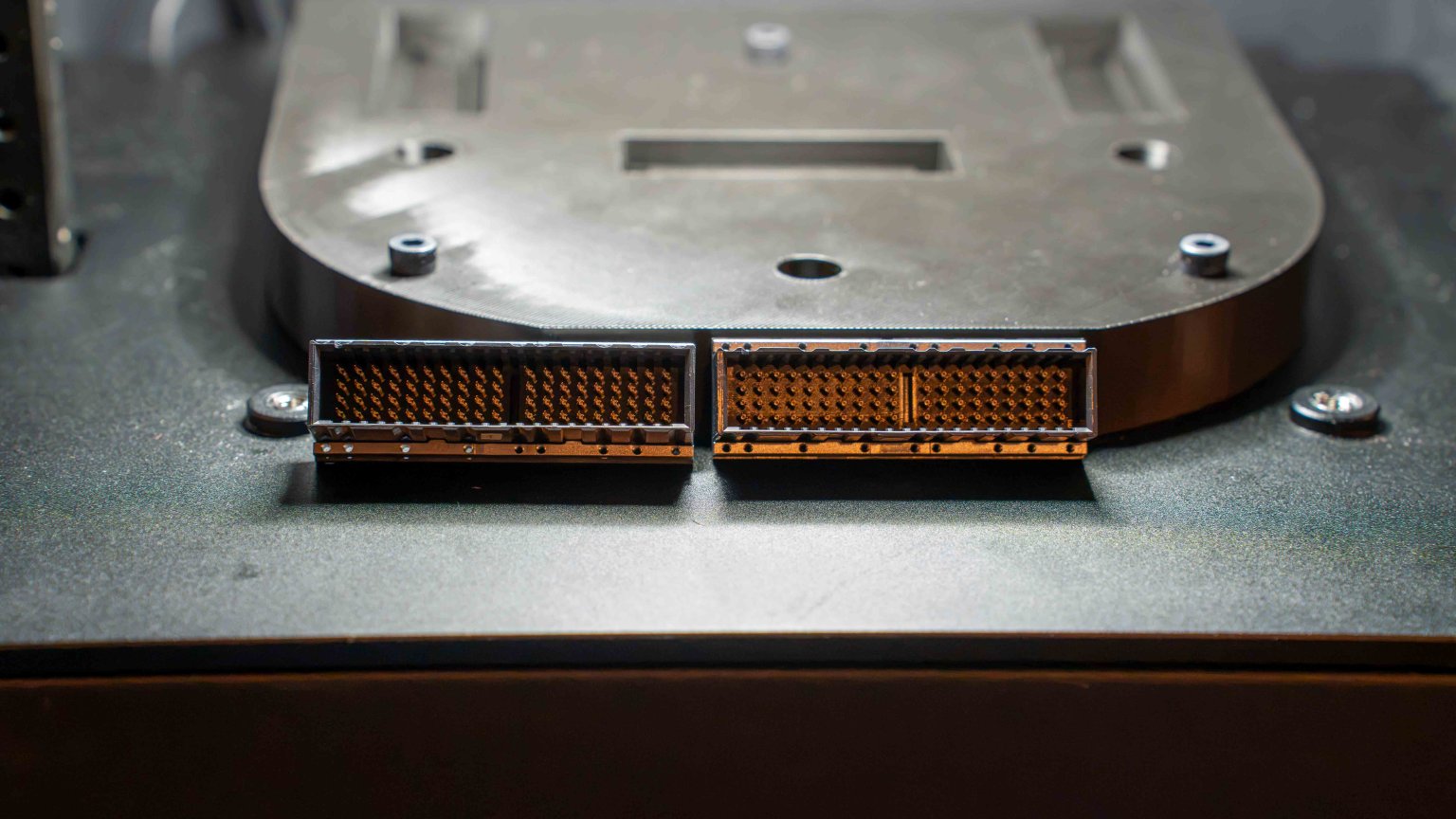 Figure: The high-density connector showcased at the summit; two bent pins are practically invisible to the naked eye. Source: iFixit.
When the connector was placed into a demonstration station powered by Instrumental’s software, the industrial camera completed its analysis in a fraction of a second. The two bent pins lit up in bright red on the display. According to a telecom case study shared by Instrumental, before deploying automated interception, 4.6% of defective units slipped past manual inspection. A 4.6% manual escape rate explains why so many consumer devices fail mysteriously under warranty. Micron-level assembly tolerances are the hidden origin of chronic repair-bench headaches.
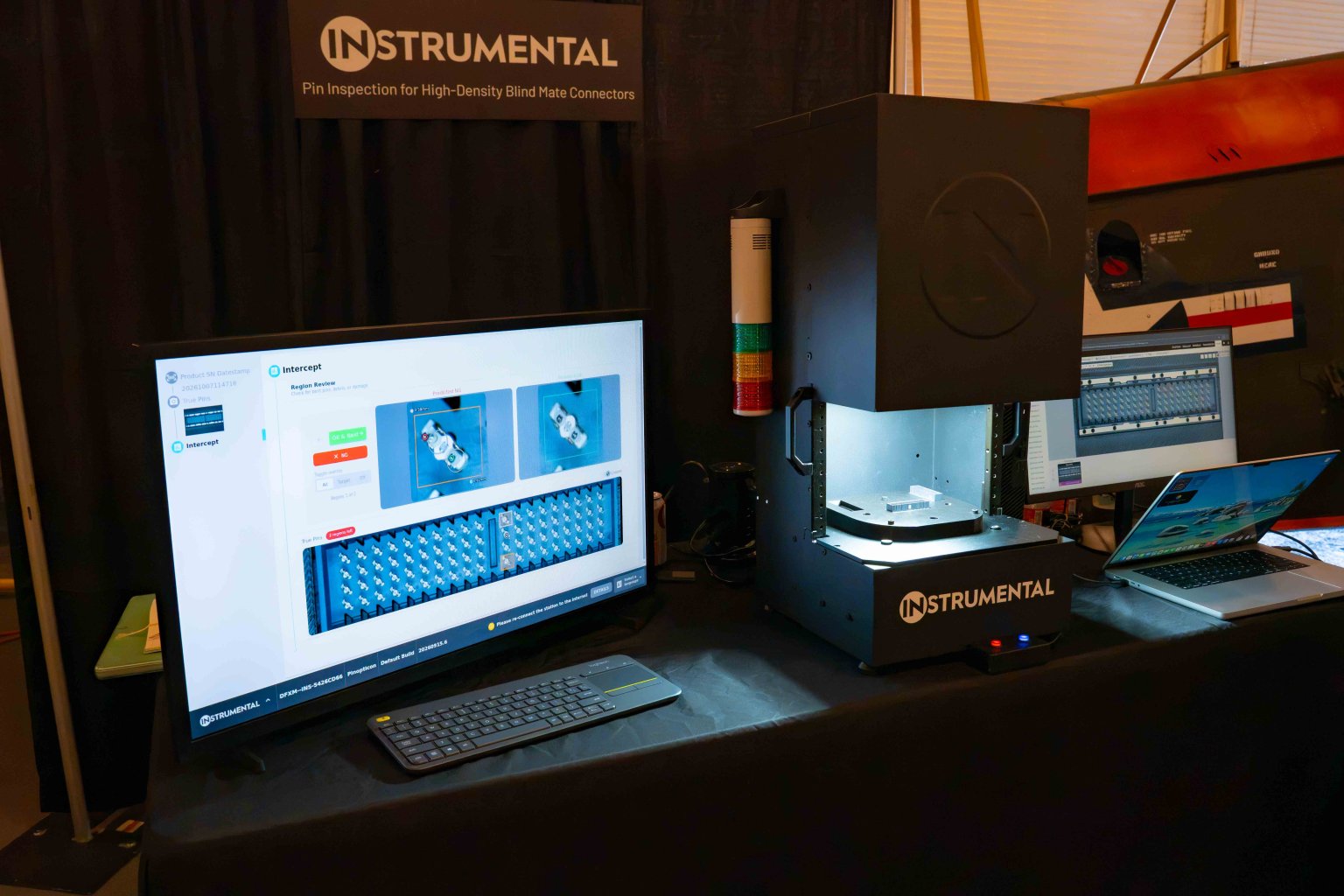 Figure: The Instrumental visual inspection demo station accurately highlighting two bent pins in green bounding boxes. Source: iFixit.
Saving Seconds at Scale: How Adhesive Speed Pushes Repairability into a Corner
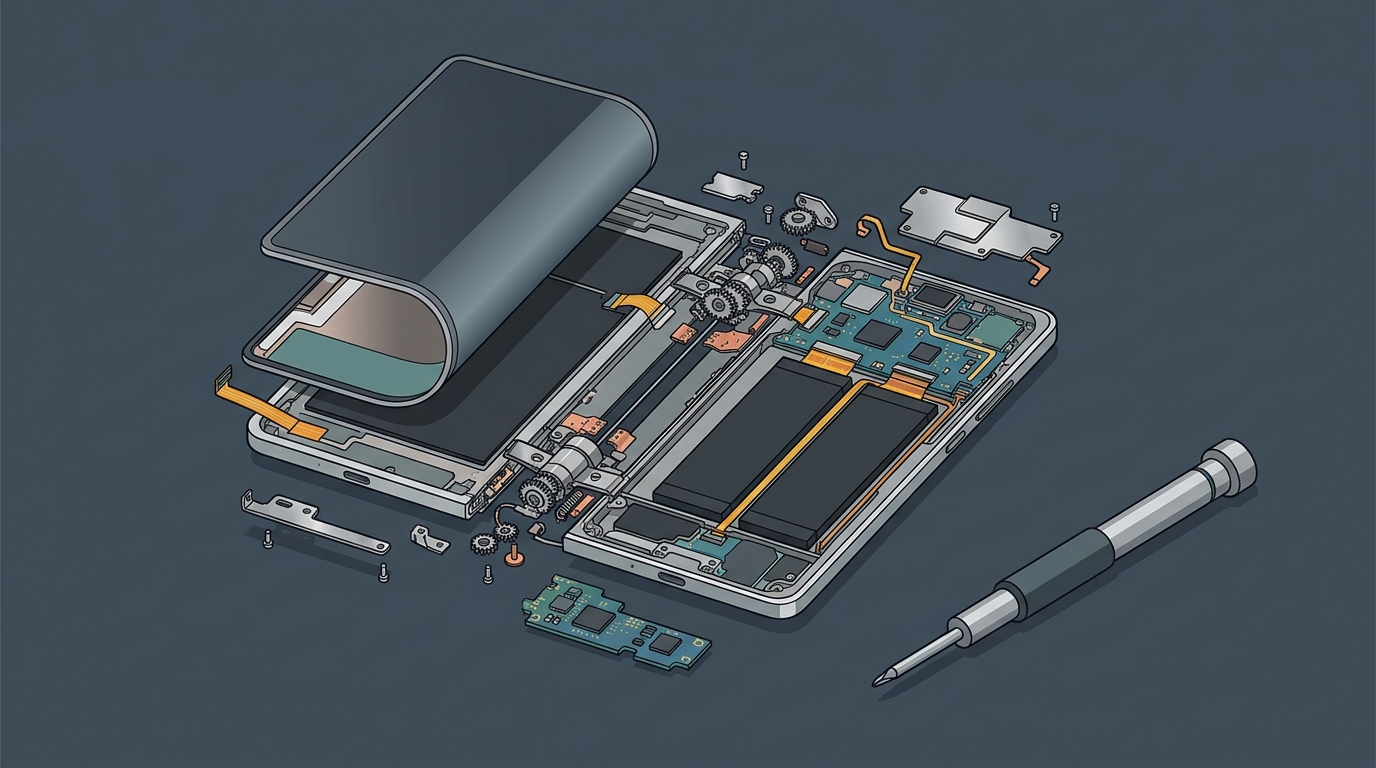
Manufacturing inspection and aftermarket repair sit at opposite ends of the consumer electronics lifecycle. By the time a smartphone or smartwatch lands on an iFixit teardown mat, the structural compromises made on the factory floor are already cast in stone. Industrial structural adhesive replaces threaded screws. Components are stacked like Russian nesting dolls, forcing technicians to remove three or four fragile modules just to reach a degraded battery. Ribbon cables are routed strictly for robotic pick-and-place arms, with zero regard for human tweezers.
From a pure manufacturing standpoint, these decisions are not careless mistakes. On an automated assembly line, a dispensing nozzle laying down a bead of glue is exponentially faster than robotic screwdrivers driving miniature fasteners. Saving just a few seconds per device across millions of production units yields massive cost advantages. Production engineers are solving immediate scaling problems with maximum efficiency. Yet that single-minded focus on assembly speed multiplies repair and maintenance costs exponentially downstream.
In reality, factory lines and repair benches face the exact same problem. A pin bent on the line that escapes detection becomes a dead port in a customer’s hands—and ultimately a repair ticket in a service center. According to industry estimates cited by Instrumental and iFixit, global manufacturing wastes roughly $8 trillion each year on trial-and-error, rework, and premature field failures. The vulnerability map created by factory inspection overlaps almost entirely with teardown pain points. When designers see this map early, manufacturing yield and repairability both win.
| Engineering Dimension | Traditional Speed-First Assembly | Lifecycle-Oriented Repairable Design |
|---|---|---|
| Fastening Method | Structural adhesive seals the chassis; requires high heat and solvents to soften. | Miniature Torx screws paired with independent O-rings; mechanical hinges compress the gasket. |
| Internal Interconnects | Fragile flex cables woven between modules; easily torn during prying. | Spring-loaded Pogo pins provide direct surface contact; disconnects instantly upon opening. |
| Service Entry | Screen-first entry; battery swaps risk cracking expensive display panels. | Rear quick-release entry; battery can be replaced while glass remains intact. |
| Defect Control | Relies on manual sampling (~4.6% escape rate); shifts failure burdens to warranty. | AI visual inspection photographs 100% of units; feeds defect data back into CAD design. |
3 Screwdriver Bits Open the Pixel Watch 4: O-Rings Break Wearable Glued Fate
In debates over consumer electronics repairability, manufacturers routinely hide behind the trade-off between compact dimensions and ingress protection. Proponents of adhesive argue that wearables operate in extreme spatial constraints while demanding 50-meter water resistance and IP6X dust ratings. Flooding the perimeter with glue is treated as the only viable path to weatherproofing. When Apple eliminated the physical diagnostic port in the Apple Watch Series 7 band slot in favor of a 60 GHz wireless transfer module, the signal was clear. As a result, smartwatch repairability scores on iFixit have hovered around a dismal 3 or 4 out of 10 for years.
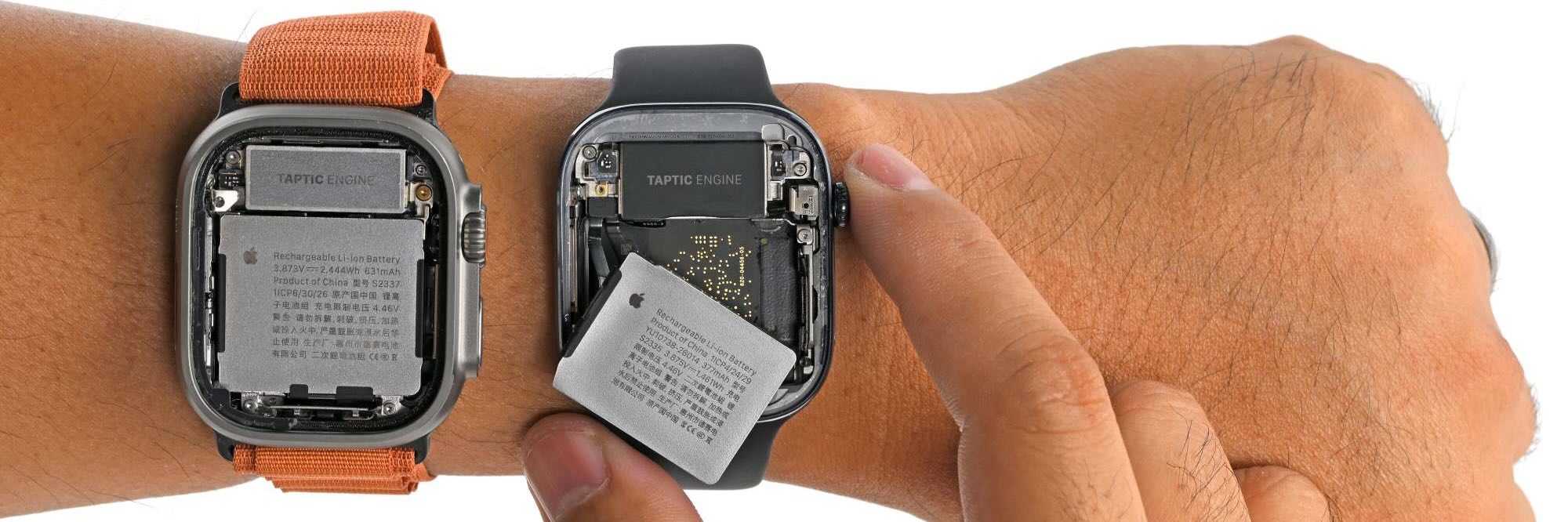
Google’s Pixel Watch 4 and Pixel Watch 5 shattered the myth that water resistance requires irreversible glue. During iFixit’s teardown, the Pixel Watch 4 earned a standout 9 out of 10 repairability score. While its exterior mirrors previous generations, the interior underwent an engineering overhaul. Technicians required no heat guns or chemical solvents. Armed with just three Torx Plus bits (1IP, 2IP, and 5IP), a pry tool, and tweezers, the chassis can be opened cleanly from the back in minutes.
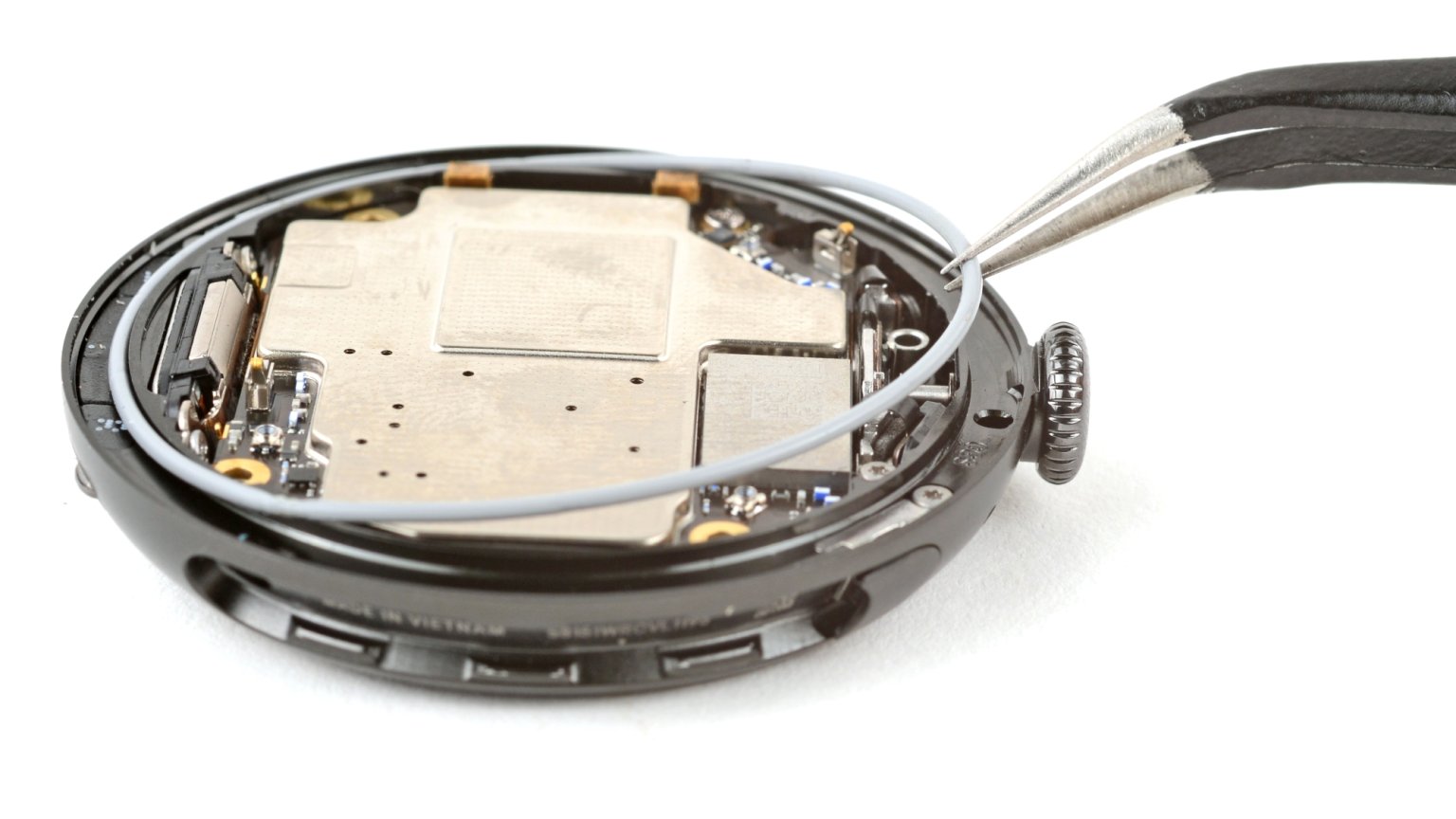 Figure: Teardown workbench comparison: opening an Apple Watch requires heating plates, while the Pixel Watch 4 needs only three driver bits. Source: iFixit.
How did Google maintain strict water resistance without a single drop of structural adhesive sealing the case? The secret lies in deliberate mechanical ingenuity. Each 2IP miniature screw securing the back cover is fitted with an independent rubber O-ring. Two outer screws double as hinges, compressing the main rear gasket evenly when torqued down. Beneath the cover, the haptic motor receives power through spring-loaded Pogo pins rather than delicate ribbon cables, and its two securing screws simultaneously clamp the battery bracket in place. O-ring screws and Pogo pins replace glue, proving that repair-friendly architecture fits squarely within mass-production constraints.
Surviving 80 Years by Leaving Conduits Exposed: Designing for Mended Scars
As the summit concluded, Mokhtari walked back down the gangway of the USS Hornet, re-examining the exposed conduit runs and steel patches welded across the bulkheads. When he first boarded, he had mistaken the exposed piping and weld scars for neglect. Walking through the belly of the ship, he realized that exposed runs and layered patches were badges of honor earned in combat and decades of saltwater survival.
The Hornet has resisted maritime corrosion and entropy for over 80 years because generations of sailors and shipyard technicians could open every hatch. They unbolted failed valves, replaced rusted pipes, and rewired burned circuits piece by piece. Early on, this meant surviving naval combat; later, it meant preserving a floating monument to naval aviation and space exploration. As Mokhtari reflected: “Nobody builds an aircraft carrier expecting her to return unscarred. They build her so the scars can be mended.”
Contrast that with today’s consumer electronics industry. Marketing campaigns celebrate titanium frames and toughened glass, yet inside, layers of adhesive and serialized parts locks shut out any chance of repair. Fortunately, Right to Repair legislation across North America and Europe is forcing change, and devices like the Pixel Watch 4 prove that glue-free modularity is achievable at scale. Consumer devices do not need to sail the Pacific for 80 years. But they should share the Hornet’s founding engineering premise: acknowledge that hardware will inevitably take damage, and leave a clear, accessible path to mend the scars when the factory closes the case.
References:
- iFixit Column: Scars Can Be Mended: Repair Lessons from the USS Hornet
- iFixit Teardown: The Pixel Watch 4 Is the Most Repairable Smartwatch on the Market
- iFixit & Instrumental Teardown Report: Three Former Apple Engineers Helped Us Tear Down Apple Watch Series 7