You ask an AI agent to write code. It modifies seventeen files, fixes a bug, refactors a module. Now it’s time to git commit.
What does the commit message say? “fix bug” is too vague. “refactor user service to decouple authentication logic from session management” reads like something a human writes for another human — but the agent will never look back at what it committed last time. It reads the code. The commit message, that vital artery of human collaboration, is a metadata line the agent will never need to read. The same problem ripples through branch naming conventions, PR description templates, code review workflows — every mechanism designed for “human reading and communication” — when a non-human entity becomes the committing主体, how much value remains?
In June 2026, a project called Oak reached the HN front page with 125 points. Its answer: basically zero. Oak never intended for humans to write commit messages in the first place — its oak commit command doesn’t even have a -m flag. Writing this off as a product gimmick would be a mistake: when agents become the primary producers of code, version control abstractions need to shift from human communication habits to agent working patterns.
Every Layer of Git’s Abstraction Is Human-Friendly, and Therefore Agent-Unfriendly
Git’s design philosophy is deeply optimized for human collaboration scenarios. commit is a narrative unit — it asks the author to explain in natural language “what was done” and “why.” branch is a collaboration boundary — its name carries functional semantics (feature/xxx, fix/yyy), and merge strategies encode team integration policies. diff is a review tool — line-level changes presented in human-readable patch format, convenient for reviewers to examine line by line.
For agents, all three layers are noise.
Commit messages are dead information. Agents don’t read git log to understand code intent like humans do. They read the code itself — function signatures, variable names, module dependencies. When an agent needs to understand why code looks a certain way, it traces the call chain, not six-month-old commit messages. A commit message written for humans is blank to an agent. More problematically, agents need frequent checkpointing — a snapshot after each subtask, for easy rollback on error. Forcing every checkpoint to generate a semantically accurate commit message is a waste of the agent’s token budget. Git’s design assumes commits are costly and worth deliberating over; an agent’s working pattern demands that commits be cheap and disposable.
Branch naming and PR workflows are protocol layers designed for human communication. A typical human workflow: open a feature/add-oauth branch from an issue, write code, submit a PR, wait for a colleague’s review, merge to main, delete the branch. The core driver is “help another person understand what you did.” Agents don’t need this. What agents need is task-level temporary isolation — this task modifies these files, that task modifies those files, no interference. What the branch is named doesn’t matter, because nobody needs to understand its purpose from the name. PRs are even less necessary — if two agents modify the same module, they need a diff engine that can automatically detect semantic conflicts and suggest merges, not a sit-down to read each other’s PR descriptions.
Line-level diffs are low-resolution for agents. Git’s diff operates at the line level — one line added, one line deleted, one line modified. Humans do review code line by line. But agents understand code changes at the AST level — they see a function going from three parameters to four, a class’s inheritance changing, a module’s export interface shrinking. Line-level diffs “flatten” semantic changes into text edits, losing structural information. When an agent needs to determine whether two parallel branch modifications conflict, using line-level diff vs. semantic diff produces false positive rates that are orders of magnitude apart.
The common premise of all three layers: the primary user of version control tools is a human reading code changes. When agents become the committing主体, every part of this premise starts to crumble.
What Agents Actually Need From Version Control
If you strip away all human collaboration requirements, an agent’s version control needs collapse to a few precise functional points.
First, checkpoint-style snapshots. Agent execution is step-by-step — read a file, modify a file, read an error, modify the file again. Any step can go wrong. The granularity of rollback should be “go back one step” — human-defined meaningful commit points are too sparse. This demands a version control system that supports high-frequency, low-cost snapshots, without human-readable metadata between them — just machine-readable summaries sufficient for the agent to understand “what this snapshot did.”
Second, semantic diff. When an agent merges two branches, it needs structural information — “UserService.authenticate()’s signature changed,” “SessionManager was split into two traits” — not line-level hints like “line 42 was modified.” Structural information maps directly to code semantics, enabling an agent to judge whether two changes logically conflict. Line-level information only tells you about text conflicts — and the gap between text conflicts and semantic conflicts is vastly amplified in agent-driven high-frequency modification scenarios.
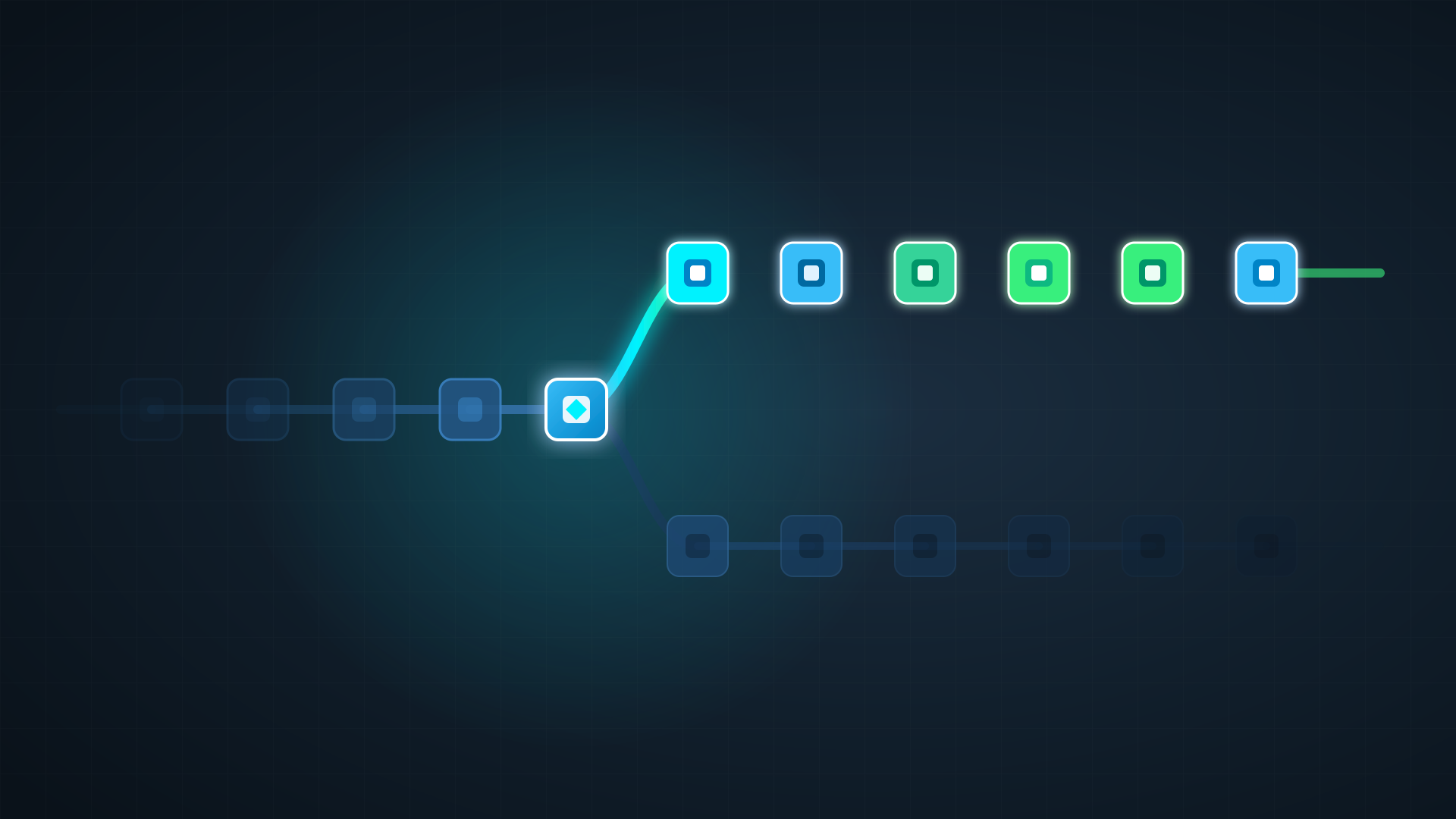
Third, task-level isolation, not feature-level isolation. An agent’s unit of work is a task, with different granularity than a human feature — one feature may encompass a dozen tasks, each modifying only three to five files. If every task requires the full “create branch → commit → push → create PR → merge → delete branch” workflow, the overhead eats the agent’s productivity advantage. What agents need is a lightweight isolation model — one virtual branch per task, auto-squash-merge at task end, no PR, no naming burden.
Fourth, output format optimized for LLM token budgets. An agent executes oak status or oak diff not to read in a terminal — the output goes directly into the LLM’s context window. Context windows have token limits, and token consumption directly maps to economic cost. Git’s default output format is designed for 80-column terminals and human eyeballs — colored, paged, with full file path lists. Agents need compact, high-information-density output: how many files changed, how many lines added/deleted per file, the top five affected paths — sufficient. If full output is needed, the agent can request it explicitly.
This requirements list points to a conclusion: agents need an embeddable version control engine — human-facing version control platforms (like Git) have too much functionality and too much friction in this scenario. Git is the latter, and Oak is trying to be the former.
Oak’s Approach: Deriving API Design Backwards From Agent Workflows
Oak’s public repository and documentation show specific design choices addressing these requirements. Not every choice is necessarily correct, but each precisely targets a Git “human-friendly assumption.”
Branch descriptions replace commit messages. Oak’s oak commit doesn’t accept a -m parameter. Commits themselves are silent — whatever you changed, that’s what gets stored. Narrative is elevated to the branch level: oak desc "add OAuth authentication to user service" sets a branch description that automatically becomes the squash merge message at oak merge time. Branches are the narrative unit; commits are just snapshots. This aligns with an agent’s working rhythm — an agent may checkpoint many times within a task, but only needs to write one summary for the entire branch when the task completes. This compresses “write a message for every commit” into “write one description per task” — cost goes from O(n) to O(1).
Content-addressed lazy mounting. Oak uses BLAKE3 for content hashing and fastcdc for content-defined chunking. When a repo is mounted to a directory, file contents are hydrated on demand — no full clone required. Creating a mount point for a task is sub-second, even if the repo has tens of gigabytes of binary assets. For an agent, this means “less waiting” — “less disk space” is a side benefit. Cloning large repos with Git can take minutes to tens of minutes — agents can’t afford that latency. Oak’s benchmark logs record an experiment: switch -c branch creation latency went from ~51ms to ~8ms — a difference that, when an agent creates branches hundreds of times per day, accumulates into perceptible time cost.
Flat branch topology. All Oak branches fork directly from main, with no nested branch stacking allowed. This simplifies the agent’s merge model — merging only requires comparing “current branch” and “main,” with no transitive dependencies between branches. The cost is reduced flexibility — human teams’ common feature → sub-feature nested branch structures aren’t possible in Oak. But this cost may not apply to agents: agent tasks are naturally flat and independent — one task fixes one bug, with no need to fork from another unfinished task’s branch.
LLM-optimized output compression. Oak’s benchmark logs document a series of optimizations specifically targeting agent token consumption. In non-TTY mode, oak diff returns a stat summary by default instead of a full patch, showing only the top 5 affected file paths plus total line counts. The result: a wide-scope refactoring diff that would be ~25,881 bytes / 5,012 tokens is compressed to ~882 bytes / 233 tokens — a 95% reduction in token consumption. For repos with large binary assets, oak diff output goes from ~67MB to ~1.7KB. oak status non-TTY output goes from ~23K bytes to ~737 bytes. These numbers directly reflect Oak’s design philosophy: every extra byte an agent sees is cost and latency. Git has never optimized on this dimension, because human reading speed doesn’t significantly degrade when terminal output grows by a few hundred lines.
oak finish: a saga designed for unattended agents. Oak’s workflow endpoint is a single command called oak finish, not the combination of commit+push+merge. It does five things: pre-check the mount point’s status, write the branch description, checkpoint all dirty files, publish the virtual branch to the remote, and end the mount. It’s designed to be automatically called at the end of each agent prompt, requiring no human confirmation. If any step fails, it returns JSON indicating completed and pending phases, letting the agent decide the next action. Oak designed it as a retryable saga, abandoning atomic transaction semantics — a pragmatic engineering trade-off. Atomic transactions on distributed filesystem operations are extremely costly, and the saga pattern naturally matches the agent’s “read output → decide next action” execution loop.
The Awkwardness of Existing Approaches: Agents Already Use Git, But Git Wasn’t Designed for Them
Claude Code’s checkpoint mechanism is a useful reference point. Claude Code automatically creates a git commit as a rollback point before and after each tool call, with commit messages generated by the agent — typically something mechanical like checkpoint: before modifying src/auth.rs. These checkpoint commits have zero reading value for humans, yet they consume git history, pollute git log output, and each checkpoint is a full git operation — index update, tree construction, commit object writing — with non-negligible disk I/O overhead.
Codex uses a similar approach, just doing incremental filesystem-level backups instead of going through git. A more general approach is having the agent work inside a Docker container or sandbox, using filesystem snapshots for rollback — but this loses version control’s metadata capabilities and remote collaboration.
The common characteristic of these approaches: shoving the agent into a version control workflow designed for humans, then applying various workarounds for the parts that don’t fit. Checkpoint commit messages are mechanically generated (bypassing “humans need to understand”), branch names are random strings (bypassing “humans need to name things”), PRs are skipped (bypassing “humans need to review”). These workarounds prove that agents do need version control — otherwise they wouldn’t go to all this trouble to integrate — but they also expose Git’s awkwardness in this scenario: being currently available doesn’t make it appropriate.
Oak’s proposition is essentially: instead of stacking workarounds on Git, redesign the underlying primitives from the agent’s needs. This reasoning is logically sound, but its opponent includes Git’s tech stack and Git’s massive presence in LLM training data. As one HN commenter insightfully noted: agents are extremely familiar with Git; the training data contains vast amounts of git commands and git workflows. Any new tool starts at a disadvantage — you first have to teach the model what this tool is, how to use it, and where the pitfalls are. No matter how ill-suited Git’s design is for agents, it’s already “known” to them. Knowledge transfer cost may be Oak’s biggest barrier — harder to overcome than technical merit.
What an Agent-Facing Version Control API Should Look Like
Without discussing specific implementations, here’s an interface design derived purely from requirements. An agent-driven version control API should expose at minimum these primitives:
// Mount a repo to a local directory (lazy, hydrate on demand)
mount(owner, repo, path) -> MountHandle

// Create a temp branch for current task (no naming needed, system generates ID)
checkout_task(handle) -> BranchId

// Snapshot current working directory state without a message
snapshot(handle) -> SnapshotId

// Semantic diff: return structured change summary, not line-level patch
semantic_diff(handle, base, target) -> Vec<Change>
// Change = { entity: "UserService.authenticate", kind: SignatureChange, ... }

// Submit current branch as task's final state
publish(handle, description) -> MergeResult

// Check for semantic conflicts with target branch
check_conflicts(handle, target_branch) -> Vec<Conflict>

// List all snapshot points for current task
list_snapshots(handle) -> Vec<SnapshotMeta>
Notice what’s missing from this API: no commit message parameter (snapshot doesn’t need a message, publish only needs an optional description), no branch name parameter (branch names are system-generated), no PR concept (merge logic is embedded in publish), no line-level diff (only semantic_diff). What’s added are semantic_diff and check_conflicts — both directly serving the agent’s decision loop: should I merge? Will there be conflicts?
Of course, this is an idealized sketch. Real engineering implementations will hit hard problems around semantic diff accuracy, snapshot performance on large repos, and multi-agent concurrent write consistency. But the existence of these problems itself indicates the direction — when the primary user of version control tools is no longer “a human who writes commit messages,” the upper-layer abstractions of the API need to be reshuffled.
This Problem Is Bigger Than Oak
Whether Oak survives and gains adoption depends on commercial and community acceptance — engineering judgment can analyze logic but can’t predict markets. But the question it raises won’t disappear with Oak’s fate: when agents transition from code consumers to code producers, every link in the development toolchain designed for “human communication” is undergoing a silent stress test.
Commit messages are just the first to be questioned. Next will be the branch model, the code review workflow, the way issue tracking ties to code changes. All these mechanisms rest on the premise that “the person writing code and the person reading code need to communicate intent through text.” If an agent both writes and reads, the communication happens inside the model’s weights — no serialization-deserialization through natural language is needed.
Git itself won’t disappear — human developers still need it, and agent output will still be reviewed by humans (at least for now). But the friction between agents and Git has already grown large enough to birth alternatives like Oak. This fact itself is a signal: version control abstractions are undergoing a migration of their primary user, and the mismatch during this migration can’t be fixed by writing better commit messages.
Oak may not be the final answer. But the questions it asks are the right ones.