On July 19, 2026, two numbers swept through the global AI community: 2.4 trillion and 2.8 trillion.
First, Chinese AI startup Moonshot AI released Kimi K3, an open-source model with 2.8 trillion parameters, claiming it to be “the world’s first open 3T-level model.” Just hours later, Alibaba’s Qwen team announced Qwen 3.8 — 2.4 trillion parameters, also pledged to be open-source, and claiming to be “second only to Claude Fable 5.” And that’s not all: within 48 hours of Kimi K3’s launch, user demand overwhelmed Moonshot’s GPU capacity, forcing them to announce a pause on new user registrations on Twitter. A startup shutting its doors because it was too popular — that’s a historic moment in itself.
If you think this is just two Chinese companies competing on technical prowess, you’re only seeing the tip of the iceberg. This article digs into a deeper question: why are Chinese companies giving away the world’s most advanced AI models — which may have cost hundreds of millions to train — for free?
 Kimi K3 launch page. Moonshot AI calls it “the world’s first open 3T-level model."
"Open Source” Is Not Charity
To understand this, you need to grasp a key difference.
The leading US AI companies — OpenAI, Anthropic, Google — follow the “closed-source, paid” model. They invest billions in training models, then charge per token via API or sell subscriptions. GPT 5.6 Sol costs hundreds of dollars per month, and Claude Fable 5’s enterprise pricing is notoriously high.
Chinese AI companies have chosen the exact opposite path: open-source, free, with model weights available for public download.
This is not about “international communist spirit” or “technology for the common good.” As one Hacker News commenter put it: “Chinese companies are trying to commoditize intelligence — it’s the most effective way to undercut US frontier labs.”
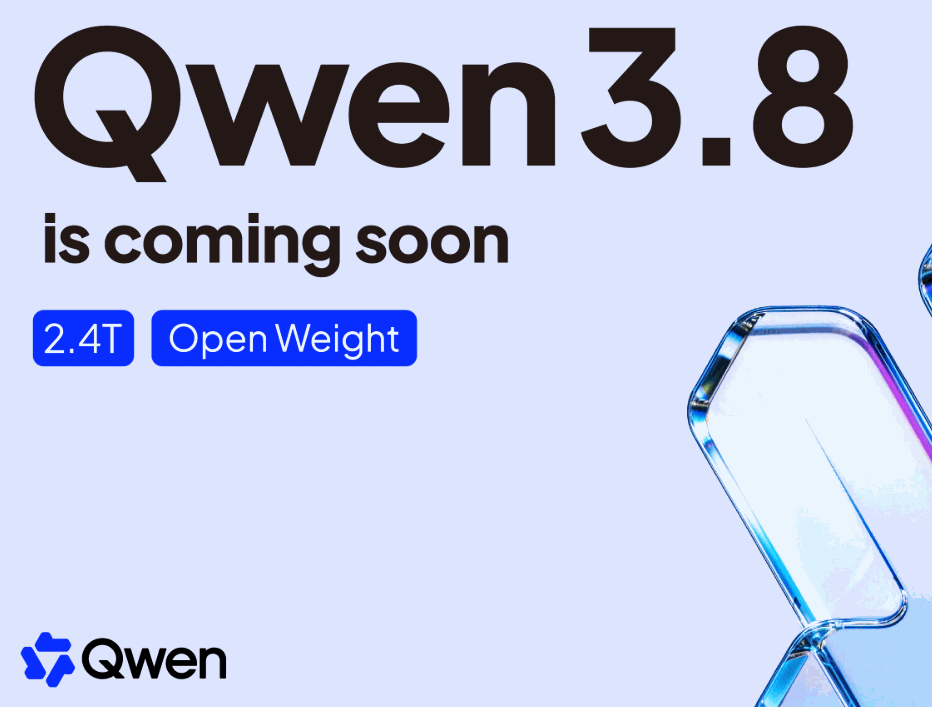 Alibaba’s Qwen team announces Qwen 3.8 open-source plans. Source: The Decoder
The strategy breaks down into three layers:
Layer 1: Directly undermine the competitor’s business model. OpenAI and Anthropic’s valuations rest on the premise that “we have the world’s best AI, and you have to pay to use it.” When Chinese companies open-source models of comparable performance for free, that premise crumbles. Do you want to pay $200 a month for GPT 5.6 Sol, or download Qwen 3.8 for free — a model that can write code, do analysis, and handle documents just as well? For millions of developers worldwide, that’s an easy choice.
Layer 2: The data flywheel in reverse. The more people use an open-source model, the more feedback and use cases emerge, and the faster the model iterates. Chinese companies gain free testers and data contributors from around the world. Closed-source models keep user data locked inside their walled gardens.
Layer 3: Infrastructure lock-in. Training and deploying trillion-parameter models requires massive compute clusters. Behind Alibaba Cloud and Moonshot are Chinese-made AI chips and cloud infrastructure. When research institutions, startups, and even governments around the world start depending on China’s open-source model ecosystem, they naturally become customers of China’s AI infrastructure.
The Villain’s Dilemma
The most direct “victims” of this strategy are US AI giants.
Just days before Kimi K3’s launch, OpenAI had announced GPT 5.6 Sol, and Anthropic was setting high prices for Fable 5. These companies have already invested tens of billions of dollars in closed-source commercial models — from compute procurement to talent acquisition to marketing. The Chinese open-source strategy is like burning the harvest fields just as they’re about to reap.
One Hacker News user cut to the heart of it: “Chinese companies want to see American AI labs burn. Even if model weights are open-source, plenty of customers will still pay Chinese companies for hosting and inference. And if necessary, the Chinese government can ban citizens and companies from using foreign inference services, creating a domestic monopoly for its own companies.”
That assessment may be overly conspiratorial, but the underlying logic is hard to dismiss. The tone of Moonshot’s suspension notice was remarkably measured and confident — “To protect the experience of existing subscribers, we are temporarily suspending new subscriptions.” This doesn’t sound like a startup scrambling; it sounds like a player who knows they hold the cards, adjusting their tempo. Bloomberg reported that Moonshot AI, after reaching $30 million in monthly recurring revenue, plans to IPO within six months.
Can Open Source Really Destroy the US AI Moat?
The truth may not be so simple.
First, parameter count does not equal intelligence. While Kimi K3 surpasses almost all open-source models in parameter count, its overall performance still trails Claude Fable 5 and GPT 5.6 Sol in benchmarks. Moonshot’s own blog concedes: “As a whole, K3’s user experience still has a noticeable gap compared to Claude Fable 5 and GPT 5.6 Sol.” Parameter count is like engine displacement — a bigger engine doesn’t always mean a faster car.
Second, America’s chip advantage remains. Training and inferencing trillion-parameter models requires massive quantities of high-end GPUs. While China is working to break through chip restrictions, US compute infrastructure still leads in the short term. That’s why Kimi K3 couldn’t handle the user load within 48 hours — not enough GPUs.
Third, open source also has a free-rider problem. As one Hacker News commenter noted, Moonshot’s own Kimi service is closed-source and paid — it’s the model weights that are open. “Open source” here may be partly a market strategy: get the developer community hooked first, then monetize through API and enterprise offerings. DeepSeek and GLM have already walked this path.
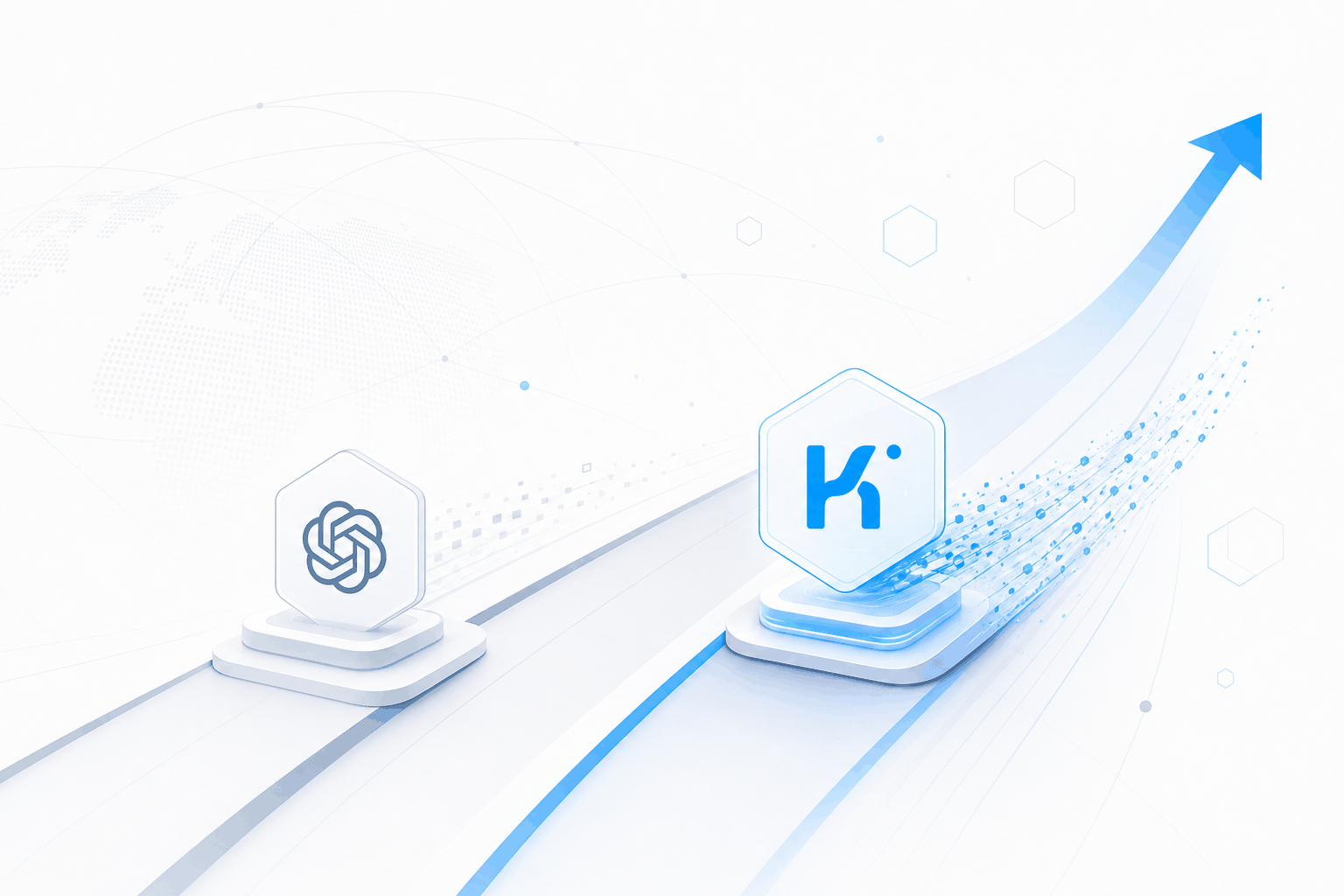 Kimi K3 performance across multiple benchmarks. Source: Moonshot AI official blog
The Bigger Board
If you zoom out from the model wars, a broader picture emerges.
Over the past two years, China’s open-source AI ecosystem has exploded: from DeepSeek V2 to Qwen 3.8, from GLM-5.2 to Kimi K3 — wave after wave of large models going global under the banner of open source. Meanwhile, US AI companies are becoming increasingly closed. OpenAI has gone from “open” to “closed for-profit”; Anthropic has tightened model access in the name of safety; Google, while open-sourcing the Gemma series, keeps its flagship models closed.
The clash of these two trajectories will define the AI landscape for the next decade.
For ordinary users, the good news is clear: AI capabilities are rapidly improving while costs are plummeting. What required a paid subscription six months ago may have a free open-source alternative today. Kimi K3’s “happy problem” of suspending registrations is essentially a microcosm of the Chinese AI arms race: supply can’t keep up with demand because growth is happening too fast.
Epilogue
This article neither glorifies nor demonizes either side. The “open-source” strategy of Chinese AI companies has both strategic considerations and real profit motives. The “closed-source” approach of US AI companies has both business logic and inherent vulnerabilities. The biggest beneficiaries of this competition are ordinary people who don’t care about geopolitics — they just want products that work.
When the world’s smartest AI models can be downloaded for free and deployed at will, the democratization of AI stops being just a slogan. Whether this is a grand strategy or a masterstroke, only time will tell.
References:
- Hacker News discussion: Qwen 3.8 (48966120)
- Hacker News discussion: Moonshot AI suspends registrations (48969291)
- Qwen team official Twitter announcement
- Kimi/Moonshot official Twitter announcement
- Moonshot AI official blog technical documentation
- The Decoder report: Alibaba’s Qwen takes on Kimi K3
- Bloomberg report: Moonshot AI revenue and IPO plans