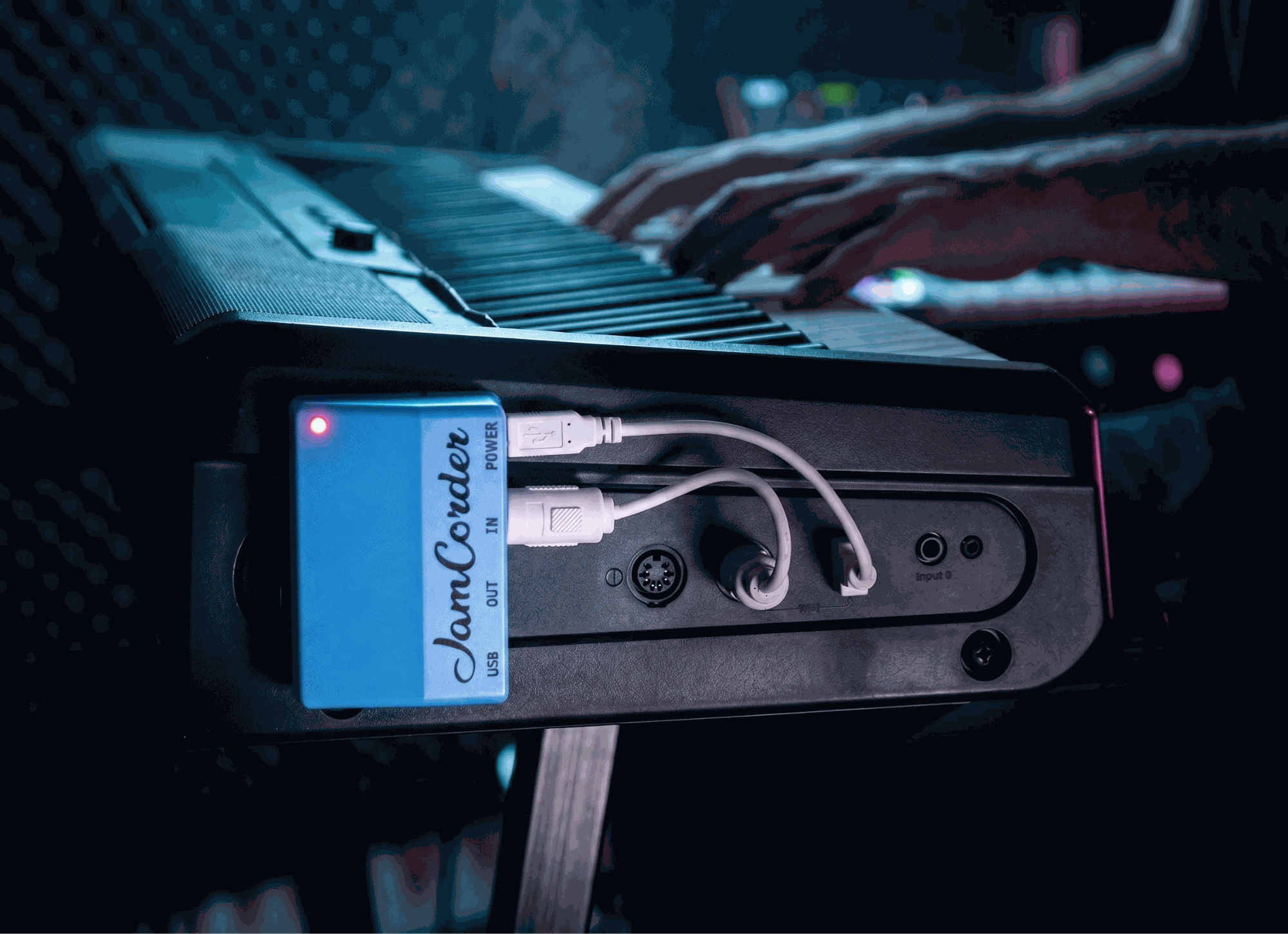
Last year, a software engineer named Chip Weinberger did something unconventional: he designed a hardware product — a USB MIDI recorder that plugs into a piano and automatically records whatever you play, no button-pressing required. He called it Jamcorder. And then he sold 2,500 of them.
2,500 units is not a huge number in the world of consumer electronics. An iPhone sells tens of thousands of times that in a single weekend. But for a solo founder starting from zero — designing, manufacturing, and shipping 2,500 physical objects with screws and circuit boards — that’s a feat worth examining.
What’s even more worth examining is his core takeaway: “Hardware is not that hard.”
Wait — hardware? The same hardware that everyone says is brutally difficult?
Who Invented the “Hardware Is Hard” Myth?
If you’ve spent any time in tech circles, you’ve heard it: “Hardware is hard.” It’s practically gospel.
Startup advisors will tell you: don’t do hardware — the cycles are too long, supply chains are too complex, inventory will kill you. Investors will say: we don’t fund hardware, it’s a low-margin grind. And tech forums are filled with war stories — PCB prototypes that failed, chip shortages, misaligned molds, FCC certification nightmares, factory batch rejections.
All of this has created a deeply ingrained narrative: hardware entrepreneurship is hell mode. Without millions of dollars, an experienced hardware team, and established supply chain connections, don’t even think about it.
The big companies’ hardware processes are indeed intimidating — Apple spent hundreds of engineers and years developing a single chip; Tesla burned billions to build a car. Even a typical smart hardware startup needs a team of hardware engineers, mechanical engineers, and production managers slogging for the better part of a year.
Against that backdrop, the idea of one person doing hardware solo sounds like a fantasy.
But Chip did it. And he says: hardware really isn’t as scary as the legend makes it out to be.
What Exactly Is Jamcorder?
Let’s look at what he built.
Jamcorder is a USB MIDI recorder. You plug it into a digital piano or keyboard, and it automatically captures every note you play — no record button, no computer software, no configuration required. Play, unplug, connect to a computer — your data is there.
Sounds simple, right? It is.
Its circuit board has only 25 components. The whole device assembly requires exactly one screw. The enclosure is injection-molded with generous draft angles — no slide mechanisms needed. If you know anything about molding, you know what that means: low tooling cost and high manufacturing yield. He even deliberately removed low-battery detection, ambient light sensing, a power button, and skipped USB-C — all in the name of keeping things simple.
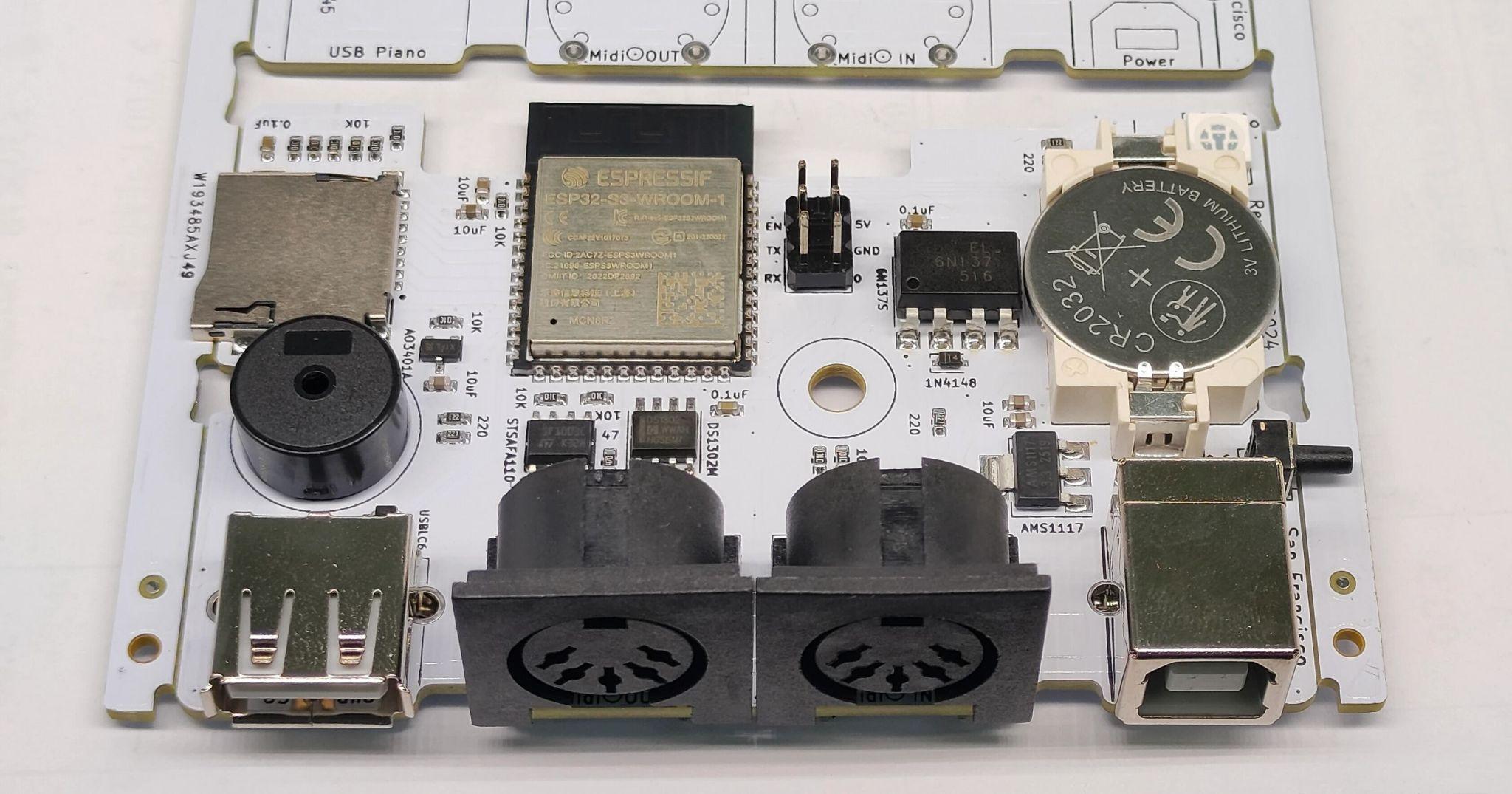 Jamcorder’s circuit board. Only 25 components, incredibly clean layout — the physical foundation of “hardware is not that hard.”
“I deliberately kept the device simple,” he says.
From Zero to 2,500 Units: What Went Wrong?
Chip’s entire career was in software. Hardware was something he’d always wanted to try.
The whole project, from concept to shipping, took over three years on the software side — about 200,000 lines of code spread across firmware, a mobile app, and the production toolchain.
And the hardware part? From first prototype to mass production, he describes it as “smooth sailing.”
He hand-assembled the first 500 units himself. In his kitchen. Over 4 days. The whole process went off without a hitch — no surprises, no rework needed. He couldn’t believe it himself: “I kept waiting for something to jump out and surprise me — a batch of dead boards, a component shortage. It never came.”
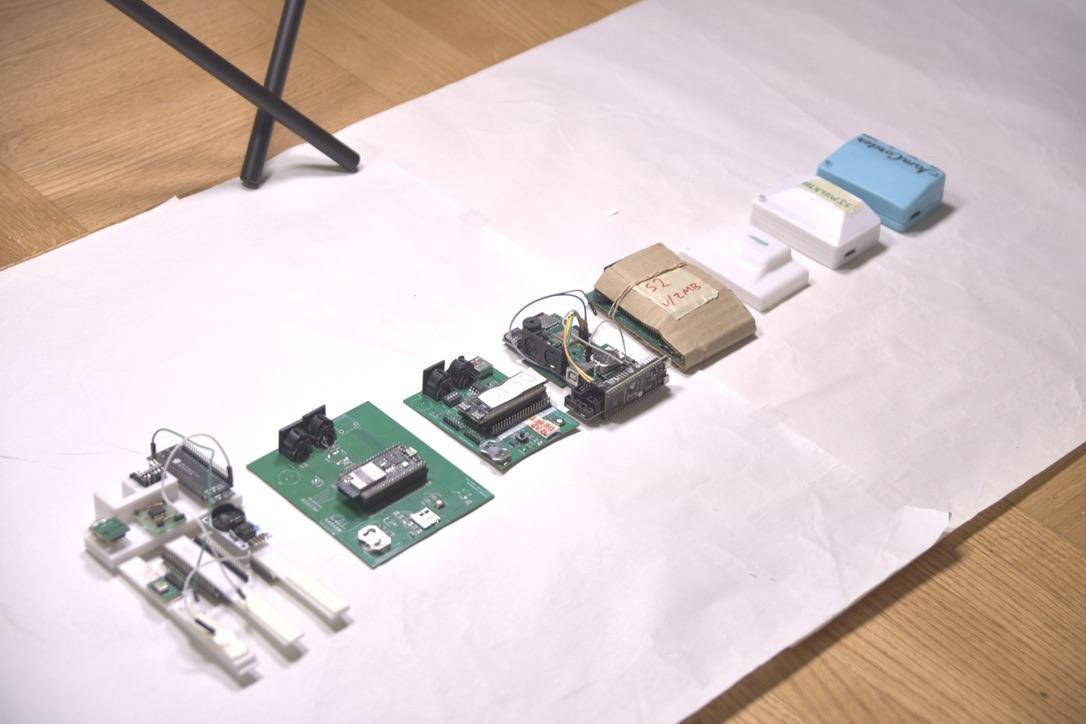 Jamcorder’s prototype evolution. From early hand-built samples to the clean final design.
This is the exact opposite of the hardware nightmare most创业 stories describe.
His lessons boil down to four principles:
- Keep the BOM simple. Avoid single-source chips. Make sure you can always swap suppliers.
- Work with Chinese assembly partners. Alibaba was his primary channel for finding suppliers.
- Maintain 70%+ gross margin. Profit gives you room to make mistakes.
- Stay lean. Hardware scales slower than software — more people just creates chaos.
He also emphasizes one thing many small hardware founders overlook: anti-cloning measures are essential.
The Hardest Part Was Actually the Software?
This is the most counter-intuitive takeaway from the entire story.
A hardware founder, at the end of the day, saying “the hardware was easy — the software was the hard part.”
He spent three years writing 200,000 lines of code, all in the “pre-LLM era” when he had to hand-write every line. Meanwhile, PCB design, finding a factory, managing logistics, handling customer support — the entire “hardware person’s daily grind” — barely bothered him.
Of course, we need to be honest about one thing: Jamcorder is essentially a software product wrapped in a hardware shell.
The Wi-Fi module is an ESP32-WROOM, which comes with built-in Bluetooth, Wi-Fi, and antenna — and it’s already FCC and CE certified. This meant Chip didn’t need to go through the complex EMC testing gauntlet or wrangle with regulators — a massive hidden cost saving. As one HN commenter pointed out: “Without modules like the ESP32, the difficulty would be orders of magnitude higher.”
The Other Side of the Story
If this article has you thinking “I should go build hardware too,” that would be a片面 reading. In the interest of balanced reporting, let me emphasize the other side.
First, Chip has an engineering background. He’s a software engineer by trade — he knows programming, he knows system design. This is a story about someone with a technical foundation crossing over into hardware. Those 200,000 lines of code were “hard,” but he had the skills to write them.
Second, he chose the simplest possible product form. 25 components. One screw. One PCB. The design complexity probably doesn’t even qualify as “entry-level” in the hardware world. If Jamcorder had been ten times more complex — requiring multiple chips, sensors, rechargeable batteries, active cooling, water resistance — this story might have ended very differently. He admits this himself.
Third, his starting capital was $15,000. That’s not a huge amount for hardware, but it’s not zero either. PCB prototyping runs a few hundred dollars, injection molds a few thousand, first production run a few thousand more. Website, domain, payment processing, packaging — it all adds up. $15,000 was just enough. If you can’t scrape together even $10,000, this story probably doesn’t apply to you.
Fourth, 2,500 units is a tiny scale. As mentioned at the start, 2,500 is a very small number in manufacturing. Many factories have minimum order quantities that exceed this. He could do it because he found Chinese suppliers willing to take small orders. If the goal were 250,000 units, the supply chain complexity and capital requirements would be an entirely different beast.
One HN commenter, a seasoned hardware founder going by skippyfish, put it well:
“Hardware has a reputation for being hard for three reasons. First, it scales completely differently from software — making 10 and making a million are entirely different ballgames. Second, there are too many unpredictable user-facing problems — someone will install the battery backwards, someone will drop the device, someone will plug it into a piece of vintage equipment you’ve never seen. Third, there are failure modes you don’t even know exist — like intermittent crashes caused by a decoupling capacitor placed too far from the chip, not a software bug.”
Conclusion: Hardware Is as Hard as You Make It
Chip himself summed it up perfectly: “Hardware is as hard as you make it.”
If you start by designing a complex product with ambitious targets in a competitive market — yes, hardware is brutally hard. But if you do what Jamcorder did — keep the product ruthlessly simple, find the right suppliers, maintain healthy margins, and control your scale expectations — hardware doesn’t have to be that scary.
The real value of this article is in deconstructing one specific case study, not in declaring that “hardware is easy.” Its value is in showing you: under what conditions, with what kind of product, and in what way, hardware entrepreneurship can succeed.
For independent founders hesitating on that first step, this is worth far more than those anxiety-mongering “how hard hardware really is” articles.
The hardest part is whether you can stick with it all the way to unit 2,500.
Reference links:
- Chip Weinberger: Hardware Is Not That Hard
- HN discussion (48966713)
Image captions:
Figure 1: Jamcorder plugged into a piano. A small white box connected via USB to a digital piano, quietly recording every performance.
Figure 2: The evolution from first prototype to first production run. The design progressively simplifies, culminating in a clean final version.
Figure 3: Jamcorder’s PCB. Just 25 components in a remarkably clean layout — the physical foundation of “hardware is not that hard.”