On August 18, 2026, hardware tracking outlet Tom’s Hardware published a striking set of market statistics: a 128GB DDR5-6400 RAM kit has surged to $3,399, representing a 10-fold increase from its historical low of $329 just one year ago. Data from the European market reveals that average memory prices have risen 345% compared to September 2025, with researchers noting that RAM pricing has effectively regressed to levels last seen in 2007.
In just a few months, two decades of cost-reduction dividends in the hardware industry have been virtually wiped out. This dramatic price spike marks a pivotal turning point: the physical expansion of AI compute capacity has begun directly billing the wallets of everyday consumers.
Memory Is No Longer a Standard Commodity, But a Strategic Material Priced by the Gram
PCPartPicker’s 18-month price tracking across mainstream retail specifications demonstrates a staggering upward trajectory. Between August 2025 and August 2026, 2x16GB 4800MT/s DDR5 kits jumped from $90 to $425—a 372% increase. Meanwhile, 2x32GB 5600MT/s kits skyrocketed from $191 to $1,118, marking a 485% surge. Even previous-generation DDR4 memory was not spared, with 2x32GB 3200MT/s kits climbing 177%.
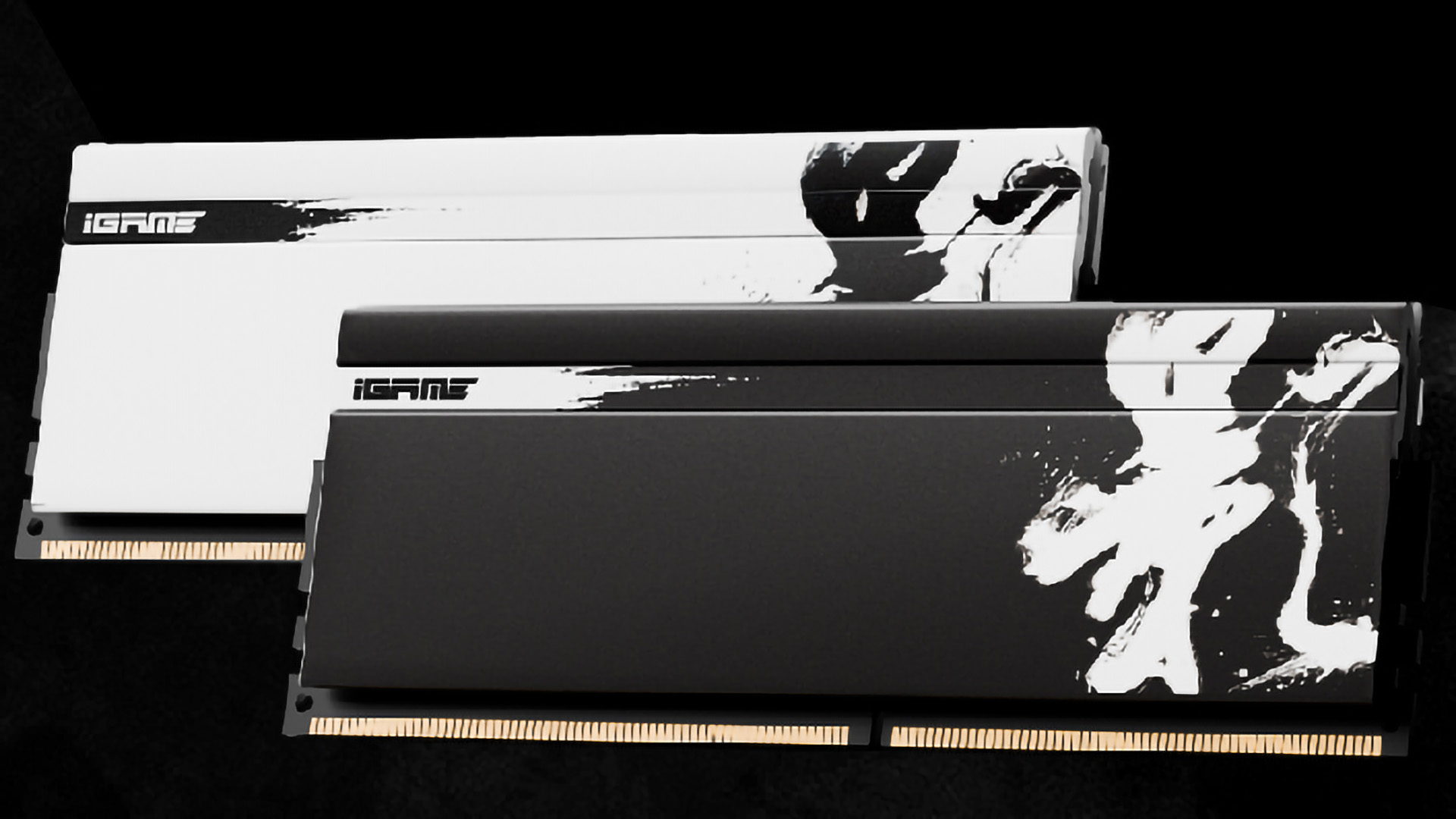 Figure: DDR4 memory module. Source: Tom’s Hardware
This cross-generational price explosion across all specifications indicates that the RAM shortage is not a transient supply-demand imbalance confined to high-end modules. Instead, silicon wafer capacity at the foundry level is being systematically drained. By actual physical weight, standard DRAM chips are now worth more than half their weight in gold.
This shift toward strategic material status is reflected directly in upstream financial reports. The big four memory suppliers—SK hynix, Samsung, Micron, and ChangXin Memory Technologies (CXMT)—have all reported double or triple quarterly revenue gains over the past year. Fabs are reallocating production lines toward high-margin HBM stacked memory and server-grade high-density DRAM, drastically squeezing line capacity for consumer products.
 Figure: 18-month price trend for 64GB DDR5-6000 kit. Source: PCPartPicker / Tom’s Hardware
Tech Giants Monopolize Future Fab Capacity, Leaving PC and Mobile as Secondary Buyers
The supply-side crisis is driven by the relentless demand for compute expansion in AI data centers. Hyperscalers like Microsoft, Google, and Meta have locked down the vast majority of global memory chip fab capacity through 2027 by placing billions of dollars in advance deposits. As tech giants hoard chips for large model training clusters, consumer electronics manufacturers have been relegated to secondary status.
PC and smartphone makers, who historically held dominant market leverage, are now left competing for whatever leftover wafer capacity remains after data centers take their fill. A Lenovo supply chain executive recently remarked at an industry conference that “RAMageddon” has become the mandatory new normal for consumer hardware.
This priority shift fundamentally alters the semiconductor supply chain. The two-decade paradigm of consumer hardware amortizing R&D costs through economies of scale has broken down. As long as ROI for AI data centers exceeds that of consumer devices, wafer capacity will prioritize enterprise server racks.
Offloading Compute Expansion Costs to Consumers and Buyer Defense Strategies
Over the past two years, most users perceived the AI boom through low-cost or free cloud interfaces like web chatbots and mobile assistants. The current surge in DRAM pricing exposes the real-world physical cost: infrastructure buildouts are ultimately passed down to anyone assembling a PC or updating their workstation.
Faced with 2x to 10x increases in component costs, end buyers and independent developers are adjusting their defense strategies. In Hacker News discussions, numerous developers expressed plans to extend the lifespan of existing hardware, causing activity in the second-hand market to surge.
In parallel with consumers opting to delay hardware upgrades, software engineering is being forced to confront memory efficiency. After years of abundant system RAM that encouraged heavy client-side frameworks like Electron to consume memory freely, developers are receiving a sharp reality check as hardware upgrade thresholds become prohibitive.
Fading Hardware Dividends Force Refined Software Engineering
Rising hardware prices are transmitting upstream into operating system and kernel development. In the Linux 7.3 kernel update released on the same day, developers introduced dedicated scheduling optimizations for vRAM and system memory exhaustion states, designed to minimize frequent page swapping under heavy workloads.
The tech community remains cautious regarding the root causes of the price spike. On Hacker News, several developers questioned how much of the surge stems from genuine AI buildout demands versus memory manufacturers engaging in tacit joint pricing. Regardless of supply-chain profit maneuvers, the rising cost of physical hardware is an inescapable reality.
This environment is forcing the developer ecosystem to regain respect for memory footprints. As engineers on HN noted, optimizing a few megabytes of RAM is no longer just an exercise for performance purists—it is becoming a critical requirement for software to run smoothly on user machines.
The Final Invoice for Compute Power Never Stays in the Cloud
Looking back at this industry-wide RAM surge, the core mechanism is clear: hyperscale cloud providers’ pursuit of compute scale propagates down the semiconductor supply chain, manifesting as uncontrolled price hikes for everyday PC components.
The massive capital and physical resource requirements of AI infrastructure are never absorbed solely in the cloud. When electronic components are priced by the gram like precious metals, every user forced to postpone a hardware upgrade has ultimately signed their name onto the compute bill.
Reference Links:
- Tom’s Hardware tracking data
- PCPartPicker average price statistics
- ComputerBase European market survey
- HN discussion (item?id=49334960)