On August 5, 2026, a user owning a 2023 Framework 13 laptop encountered a bricked device after following official email instructions to update system firmware. Despite zero physical damage to the motherboard’s flash chip, official customer support offered a single resolution: paying over 500 CAD out of pocket for a brand-new motherboard with a soldered CPU.
The user ultimately opted to purchase a third-party programmer and probe for $20.41 from an e-commerce platform. Flashing the firmware image back to the chip took under one minute, successfully reviving the laptop. A poster-child brand for hardware freedom and self-repair delivered an out-of-warranty response indistinguishable from traditional closed manufacturers during a routine system update. This incident highlights deep shortcomings in chip-level repair and software tool support for modular laptops.
Official Update Triggers Garbled Screen Crash: The Zero-Recovery Repair Dilemma
The incident stems from an official email sent by Framework on July 7, 2026, urging users to upgrade to BIOS version 3.20 to patch 5 CVE security vulnerabilities. After the user executed the flashing program on August 5, garbled triangle patterns suddenly covered the screen, followed by a total system lockup. On official brand forums, numerous users upgrading firmware from 3.18 to 3.20 experienced identical deadlocks, with related flashing risks having been reported in the community as early as March 2025.
Faced with the bricked device, official customer support guided the user through routine steps such as unplugging power and removing the battery to discharge. When those proved fruitless, support cited that the device was out of warranty and refused further assistance. The sole resolution offered was for the user to spend over 500 CAD (around $370 USD) in the official store to purchase a brand-new motherboard. When a ~$5 flash chip suffered firmware corruption, the customer was required to bear the cost of replacing the entire board, including the soldered processor. Using exorbitant replacement costs to address micro-repairs undermines the economic rationale of modular design during software failures.
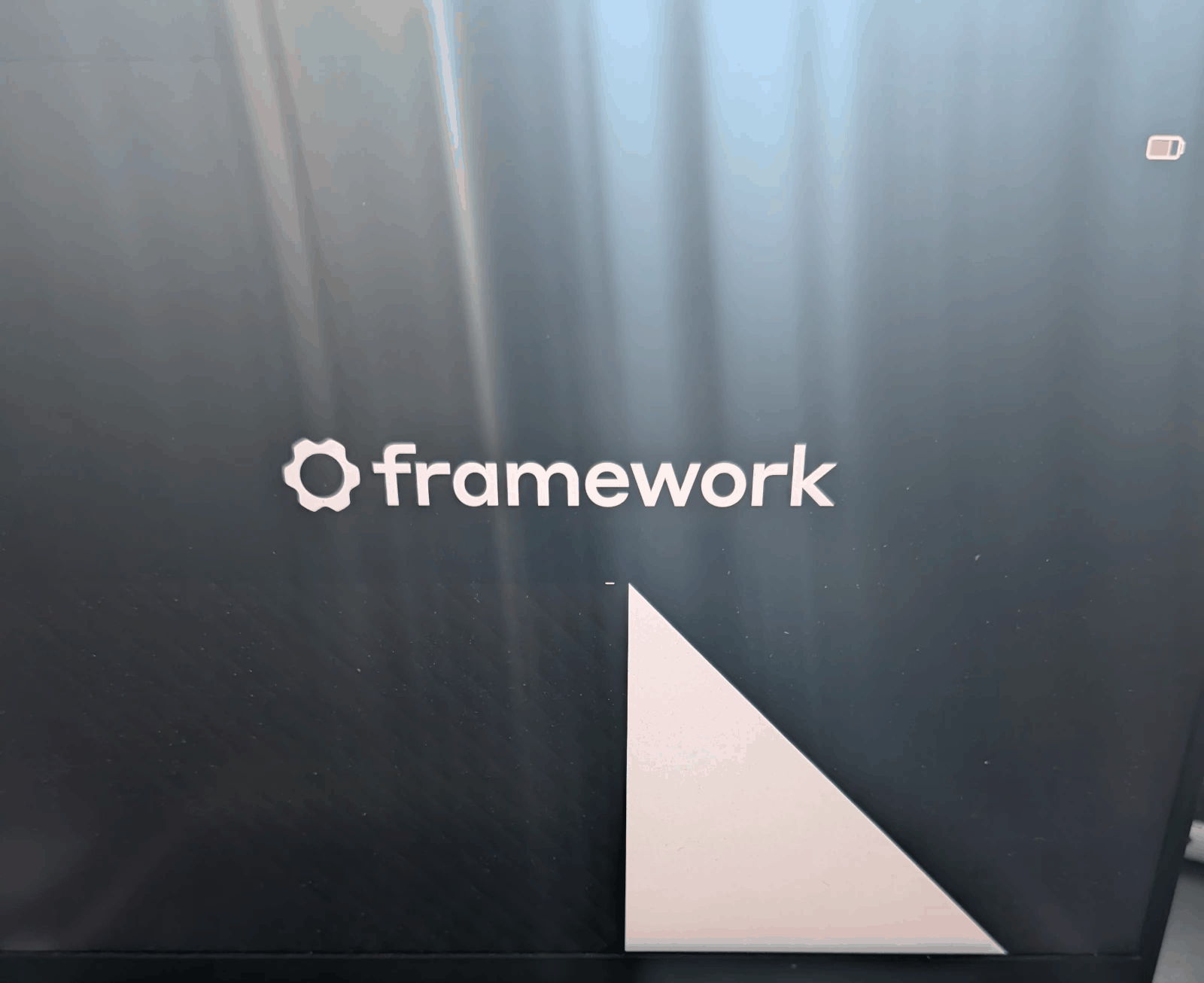 Figure: Garbled screen pattern after BIOS flash failure. Source: Quantum Blog
Two-Decade-Old Motherboards Had Emergency Flash Guard; Modular Poster Child Omits It
In the desktop and commercial laptop sectors, hardware fail-safes against system firmware update failures have long been industry standards. As early as 2004, ASUS P4P800SE motherboards featured CrashFree BIOS 2 technology, allowing users to complete automatic recovery simply by inserting a floppy disk or optical disc containing the BIOS image. Dell popularized USB emergency firmware recovery via Ctrl+Esc key combinations on its laptops, while HP workstations incorporated Sure Start dual-firmware automatic verification and recovery systems.
In contrast, the Framework 13 laptop—tailored for tech enthusiasts and self-repair functionality—lacked backup firmware chips or blind-flash recovery channels in its circuit design. When firmware data corrupted during the writing process, the entire device fell into an unbootable deadlock state. A software fault-tolerance mechanism achievable on motherboards two decades ago was absent on modern modular hardware. Hardware modularity without firmware protection layers leaves devices vulnerable during routine system maintenance.
$20 Probe and Programmer: A Difficult Chip-Level Self-Rescue
Rejecting the official motherboard swap quote, the user pursued chip-level re-flashing independently. The motherboard utilizes a Winbond 25R256JWEQ BIOS flash chip operating at 1.8V with 32MiB capacity in a surface-mount WSON 8x6mm package. Lacking exposed pins, this package cannot be gripped by traditional clip fixtures, making it one of the trickiest targets for manual micro-electronics repair.
The user ordered a CH347 programmer ($4.99), a 1.8V level shifter board, and WSON8 pogo pin probes ($7.83) for pressing against the surface-mount chip from an online platform—totaling $20.41 USD in hardware costs. Because Framework refused to publicly release raw .bin firmware images—providing only encrypted .cap installers—the user extracted the full 32MiB firmware file using the open-source tool InsydeH2O-extractor. After verifying matching hashes across 6 consecutive reads using flashrom, the chip write operation repaired the device in under one minute.
Though restored to life, self-flashing left indelible technical marks. Lacking factory provisioning tools, internal BIOS identifiers like system serial number and UUID were wiped to generic strings like 1234567890, and all UEFI boot entries were lost. The $20 hardware tools restored circuit function in under a minute. This proved the hardware itself was undamaged; the steep repair barrier stemmed entirely from vendor lock-in around raw firmware images and provisioning tools.
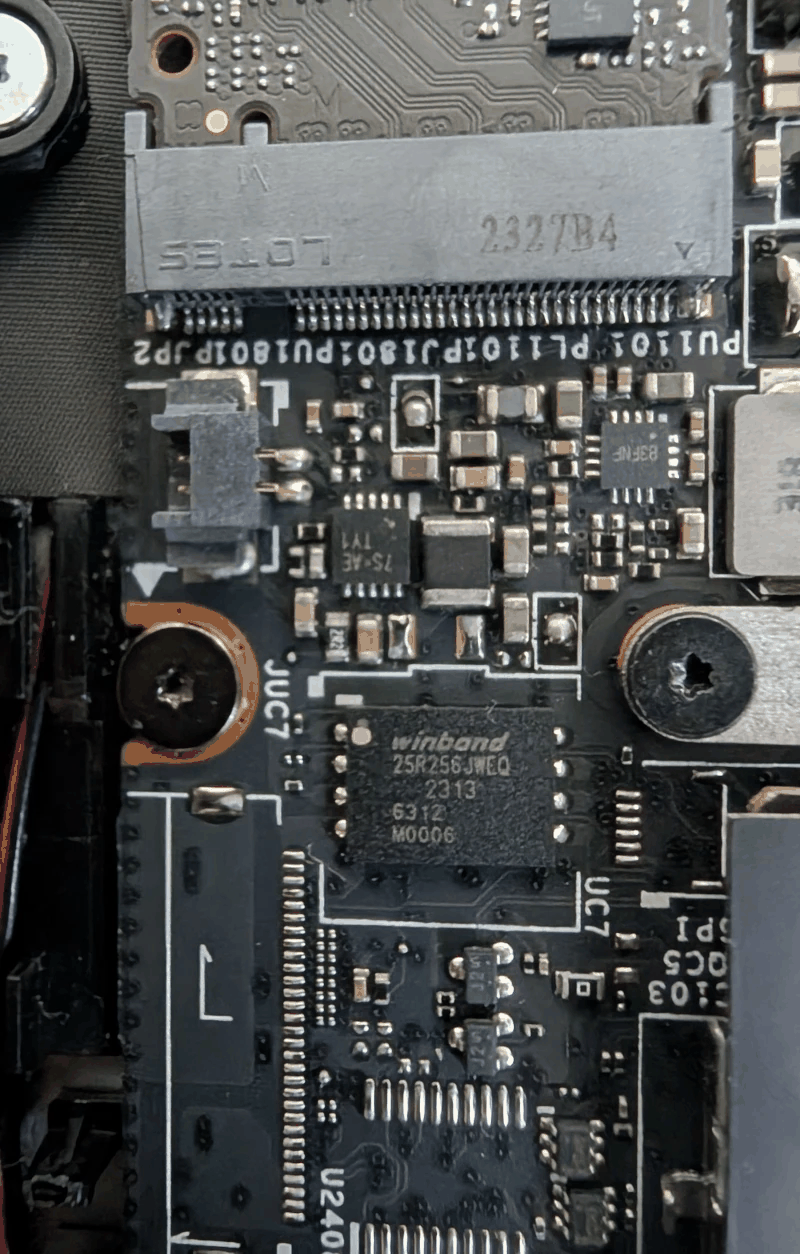 Figure: BIOS chip on the Framework 13 motherboard. Source: Quantum Blog
Component Swapping Isn’t Full Repairability: Ideological Rift in Right to Repair
The global Right to Repair movement defines device repairability not merely as offering modular spare parts, but explicitly requiring manufacturers to provide complete repair manuals, schematics, and firmware images to users. Framework built its business model on selling modular expansion cards and replaceable mainboards, but maintains traditional consumer electronics barriers when it comes to schematics, pinout diagrams, and raw firmware availability.
As the self-repair blog post went viral, Framework issued a customer notice on August 6, 2026, confirming that a 0-day vulnerability in third-party analytics platform Metabase had exposed customer names, emails, phone numbers, and addresses. On Hacker News, the repair story reached 331 points and 221 comments, with developers and hardware engineers dissecting every disassembly step and firmware extraction detail. The author closed the blog post referencing the 4,000-year-old Babylonian clay tablet of Ea-nāṣir complaining about copper quality, substituting computer hardware for copper.
Widespread community attention reflects a shift in focus among tech enthusiasts regarding hardware sovereignty. When hardware achieves screw-fastened modularity but firmware and services remain tied to vendor-controlled channels, user repair rights remain constrained. When “repairability” is confined to swapping major component modules without extending to chip and software restoration, the core premise of Right to Repair faces a reality check.
Rethinking Repairability: From Mechanical Disassembly to Open Firmware
The Framework 13 unbricking experience reminds us that personal computer lifecycle management is a systemic endeavor spanning hardware mechanics, low-level firmware ecosystems, and after-sales support policies. Providing accessible screws and modular ports does not automatically empower users against low-level firmware failures. When software failures caused by routine updates can only be solved by full board replacement, the environmental and economic benefits of modularity are severely diluted.
True hardware ownership requires vendors to accompany modular hardware with firmware recovery tools, raw binary images, and chip-level repair documentation. For hardware makers embracing Right to Repair, opening basic firmware flashing tools and emergency recovery mechanisms is vital for building enduring user trust.
As hardware technology rapidly evolves, the author believes this $20 probe self-rescue is not just an engineering feat, but a benchmark case for balancing firmware openness with customer support in the personal computer industry.
Reference Links:
- Quantum Blog
- Framework Forum
- HN Discussion (item?id=49345220)
- Lobsters Discussion (s/phisnd)