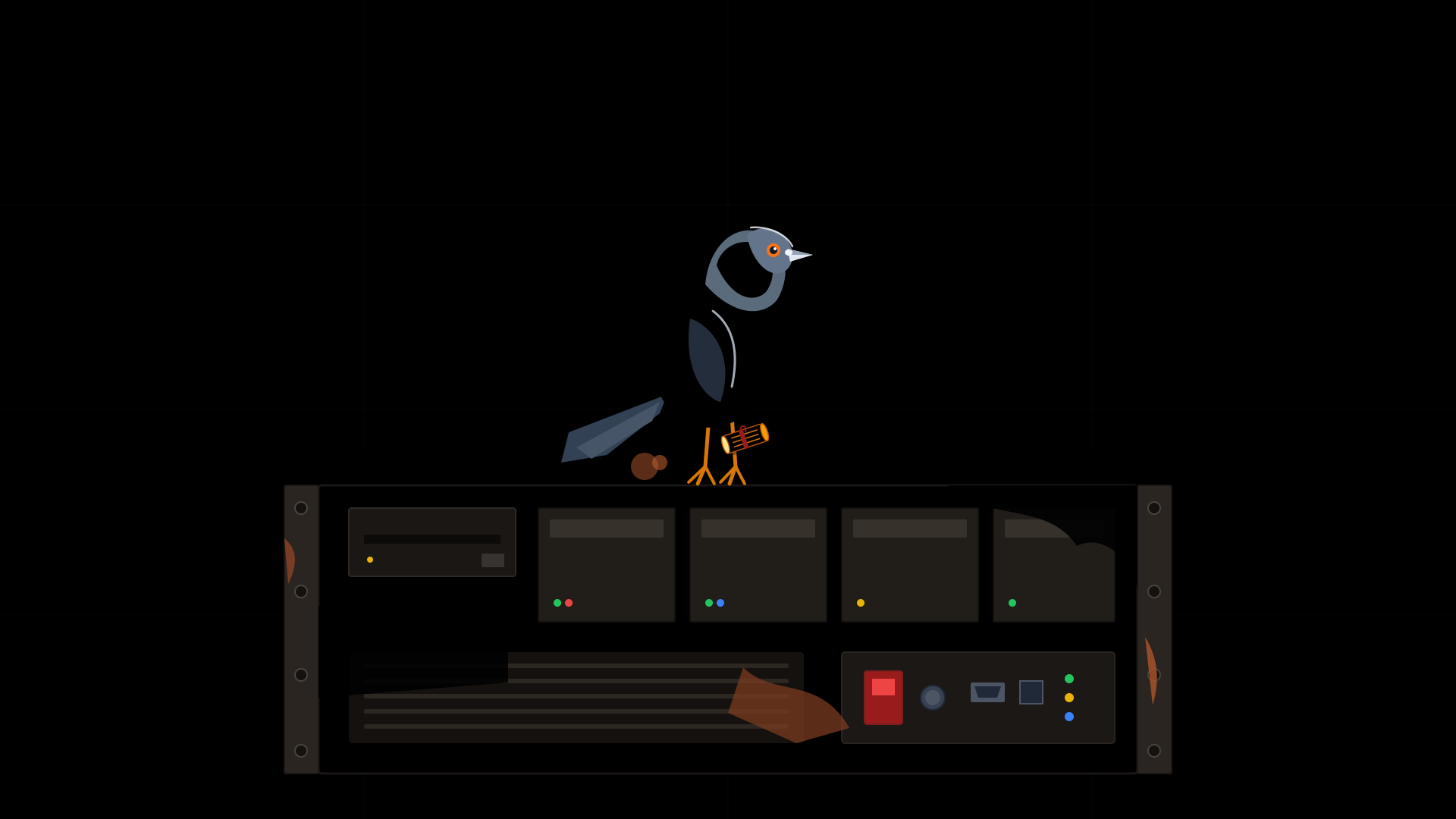
On April 1, 1990, American engineer David Waitzman published RFC 1149, “A Standard for the Transmission of IP Datagrams on Avian Carriers.” Written in the rigorously formal prose of Internet protocol standards, it described how to route data packets between computers using homing pigeons. It was meant purely as an April Fools’ Day joke. Yet Christie’s has just listed a creased 41 × 210 mm paper slip with an auction estimate of $3,000.
Eleven Years Later, Nine Pigeons Brought the Parody RFC to Life
On April 28, 2001, a group of computer enthusiasts from the Bergen Linux User Group (BLUG) in Norway gathered printers and homing pigeons. They converted IP packets into hexadecimal strings, printed them out on narrow paper slips, rolled them tightly, and duct-taped them to the birds’ legs.
The pigeons flew five kilometers across the Norwegian landscape to a destination loft, functioning in the physical world as network cables. The team dispatched a total of nine packets and successfully recovered four. When a piece of absurd parody is carried out by human hands with exacting engineering discipline, its nature transforms from mere humor into a genuine engineering milestone.
A 55% Packet Loss Rate, but the Core Link Held
During the test, which spanned nearly three hours, the system experienced a 55% packet loss rate, largely due to human handling errors. After typing ping commands into the terminal, the fastest round-trip time clocked in at over 3,000 seconds, with an average latency reaching an astonishing 5.22 million milliseconds (about 87 minutes).
In modern terms, such latency is indistinguishable from total disconnection. Yet the packet loss stemmed primarily from operational mishaps; the underlying link itself proved entirely viable. As one participant later reflected on a forum, in the dial-up era of the early 2000s, it was this seemingly ridiculous experiment that helped him find a lifelong community of fellow hackers.
A Creased Strip of Paper Heads Toward a $3,000 Hammer Price
Lot 150 currently on the block at Christie’s is one of those original paper slips detached from a pigeon’s leg back in 2001. It still bears the tight creases from being rolled around a bird’s talon, mounted in a frame alongside a signature from David Waitzman himself. Bidding has already surpassed $1,300.
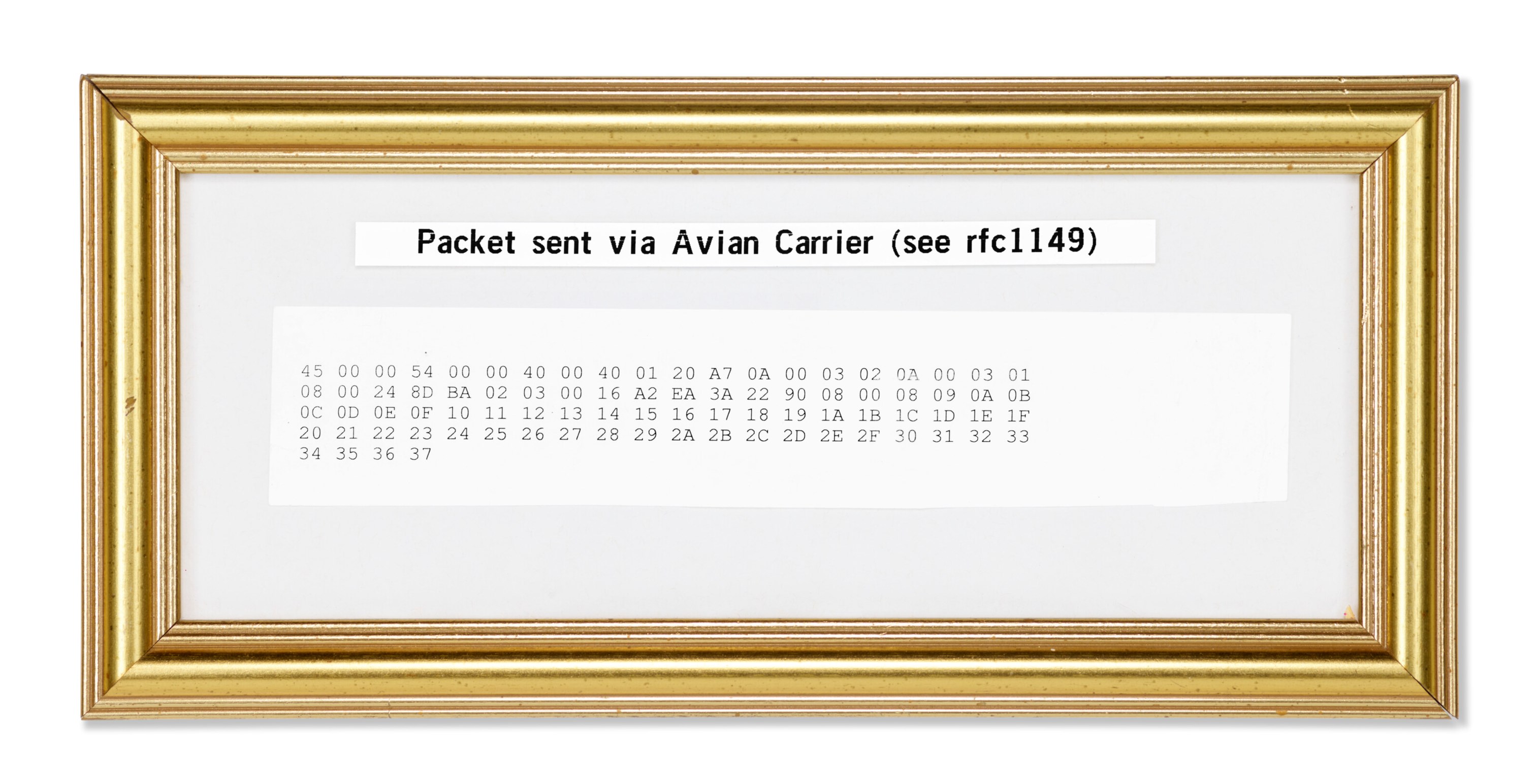 Figure: The paper IP packet actually delivered by homing pigeon in 2001, showing visible roll creases. Source: Christie’s
The reason a weathered scrap of paper can command a $3,000 estimate at a major auction house is that the team executed every packaging detail in strict accordance with the RFC specification. Treating an absurd specification as a serious engineering endeavor is precisely what endowed this scrap of paper with enduring historical value.
Hawks and Physical Packet Loss: Unintentional Encapsulation in the Wild
In the original specification, Waitzman tongue-in-cheek cataloged the unique hazards of avian networking. Chief among them was “unintentional encapsulation” by birds of prey: raptors might intercept the carrier mid-flight and devour both bird and packet. Not to mention that decapsulation in the field is inherently messy and risks tearing the underlying data payload.
In 2004, researchers pushed the physical bandwidth potential of avian carriers even further. By strapping flash memory cards to pigeons over a 100-kilometer flight, they transmitted 4 GB of data in one go. Enormous physical throughput compensated for sluggish flight times, securing avian transport a permanent footnote in the history of experimental networking.
 Figure: A homing pigeon acting as a physical network link. Source: Wikimedia Commons
Transforming a joke RFC into a prized auction artifact wasn’t just about a sense of humor. When engineers devote time and ingenuity to implementing the most ridiculous premise by the book, what they leave behind is far more than just a creased strip of paper.
References:
- Christie’s auction lot page
- RFC 1149 original specification
- Bergen Linux User Group discussion archive


