265 Comments: Who Does Robotic Parking Actually Solve Problems For?
“So I have to drive my car into a garage, park it myself, and get a shuttle to the terminal—just so a robot can move my car from where I parked it to somewhere else?”
— Hacker News user
pontus, commenting on the Gatwick Airport robotic parking news
This single comment shot to the top of the discussion with 156 upvotes. Below it, 223 comments formed a long thread, with most people asking the exact same question: Who on earth was this actually designed for?
 Image: Stanley Robotics parking service at Gatwick Airport. Source: Aerospace Global News
Let’s turn the clock back to July 2026. London Gatwick Airport—the UK’s second busiest airport—proudly announced the launch of “the UK’s first airport robotic parking service.” The press release pulled no punches: “Eliminate the hassle of searching for a parking space,” “Get you from your car to the terminal faster,” and “A true game-changer.”
Sounds amazing, right? Until you read the second paragraph.
The Complete Step-by-Step Robotic Parking Workflow
Here is how the process actually works:
- You book online in advance (no walk-ins on the day, you read that right).
- You drive to a closed garage cabin near Gatwick’s South Terminal.
- You scan your booking QR code and park the car yourself.
- You get out of the car and walk to the terminal yourself—or take a free shuttle bus.
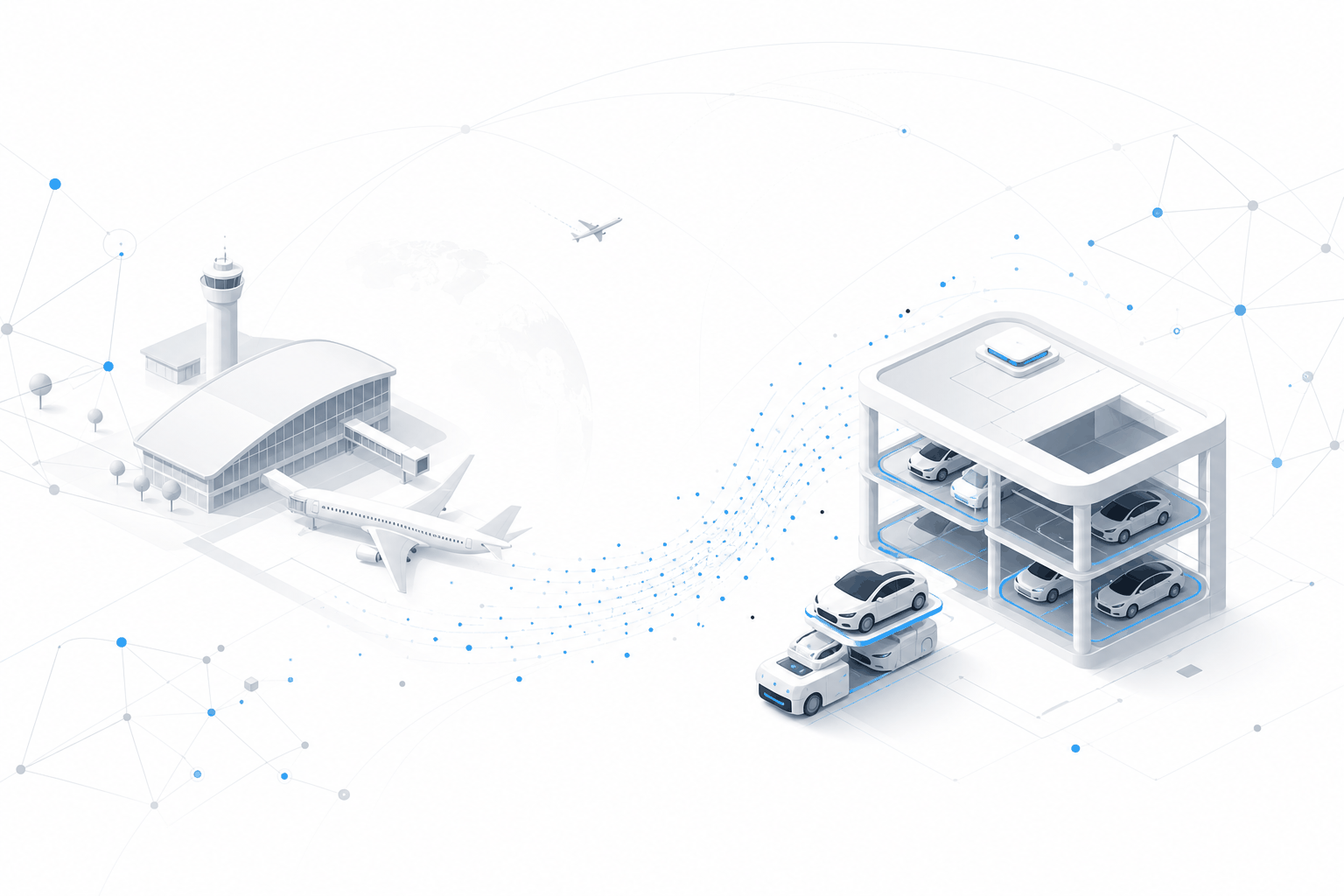
- Meanwhile, an autonomous robot named Stan slides under your vehicle, lifts the tires, and hauls your car deeper into the lot to a high-density parking area.
- When you return, the system checks your flight info in advance and delivers your vehicle back to a pickup cabin.
- You walk back to that cabin yourself (or take the shuttle), get in, and drive away.
Notice anything? Your keys stay with you the entire time. That is the repeatedly highlighted selling point: “You don’t need to hand your keys over to anyone!”
But wait. If you are driving the car yourself, parking it yourself, and walking/shuttling to the terminal yourself—what exactly did the robot do for you?
The answer is: It did something for the airport.
Technical Solutions vs. Real User Needs
Hacker News user simonklee hit the nail on the head: “This solves a problem for the airport, not for the user.”
Gatwick faces a very real challenge: a shortage of parking spaces. Tens of millions of passengers travel through every year, leaving garages packed to capacity. Expanding physical car parks? High costs, long construction cycles, and tough environmental approvals.
However, if you don’t need to leave space for human drivers to open car doors, you can pack vehicles much closer together. In a standard car park, several feet of clearance are required between cars for doors to swing open. When robots maneuver the cars, the gap between vehicles can shrink to mere inches—because nobody ever needs to open a car door again.
Data from Stanley Robotics shows that this approach allows the exact same parking footprint to accommodate around 30% more vehicles. No expansion needed, no regulatory permits required—just buy a few autonomous robots that look like sleek forklifts.
The commercial reality: this “innovation” exists to make the airport’s balance sheet look better.
But Is Gatwick Wrong?
To be fair, Gatwick wasn’t lying. The press release did mention “utilizing parking space more efficiently.” Airport executives interviewed about “helping the airport handle growing parking demand”—that at least was honest.
Oli Bedford, Head of Airport Access, Commercial Products and Marketing at Gatwick Airport, called it a “true game-changer.” That depends entirely on whose perspective you take—if you’re a parking facility operator, it probably is.
Another angle worth mentioning: traditional “meet-and-greet” valet parking does suffer from a history of horror stories. You hand your car and keys to a stranger, who drives it off to a lot miles away. User blitzar recalled on HN: “The last thing I want is handing my keys to valet parking companies who joyride your car while you’re on vacation.” User nextos added that the horror stories he’s heard could fill a short story anthology.
So, the “keep your keys” aspect of robotic parking does alleviate genuine anxiety for some travelers. The problem is: the core value of valet parking lies in dropping your car off right at the terminal curb and walking away, not in whether you keep your keys. If I still have to drive to the car park, park it myself, and take a shuttle bus—why wouldn’t I just use standard long-stay parking? It’s cheaper.
Robotic parking addresses the drawback of valet parking (the risk of handing over keys), while completely sidestepping the benefit of valet parking (saving time and walking less). Innovating from the wrong angle makes for a fascinating study.
 Image: Stanley Robotics’ Stan parking robot lifting a vehicle. Source: Parking Network
A Masterclass in Tech Theater
This isn’t the first time a company has wrapped a feature that offers zero practical benefit to users in flashy technology. Silicon Valley calls this “Tech Theater.” Building impressive tech that solves internal company operational problems, but packaging it publicly as “innovating for the customer.”
Stanley Robotics’ hardware is undeniably impressive. In demo videos, the device—looking like an oversized robot vacuum—slides underneath the vehicle, extends four arms to cradle each wheel, and smoothly lifts and transports the entire car away. Guided by LiDAR and high-precision GNSS positioning, it parks vehicles with millimeter accuracy. Cool tech, no doubt.
Yet no amount of technological glitter can hide the fundamental issue: your user experience is identical to every other parking customer—you park yourself, walk yourself, and take the shuttle yourself. The only difference is that your car got towed to a spot you’ll never see.
User myself248 summed it up brilliantly on HN: “It lacks the core value proposition of valet parking—being able to drop off your car right at the terminal curb and walk away. Without that, it’s not valet parking.”
What If We Look at It Differently?
Perhaps we should give this service a more balanced evaluation.
If you are someone who feels deep anxiety about handing vehicle keys to strangers—perhaps due to a past bad experience with valet parking—robotic parking offers a genuine middle ground. The trade-off you accept: handling the first leg of parking and airport transit yourself. The return you get: your car is parked by a machine that never gets fatigued, never experiences road rage, and won’t take your vehicle on a joyride.
Furthermore, because robots don’t need breathing room or door clearance, the facility fits significantly more cars. Economically speaking, increasing parking supply should theoretically help stabilize prices—though that remains theoretical.
At Gatwick, official pricing for robotic parking is nearly identical to standard long-stay parking. In other words: you pay roughly the same amount, walk just as far, and the only difference is that a robot moved your car.
This isn’t a piece claiming “Gatwick did something evil.” Robotic parking can be a fantastic idea in specific contexts—such as tight urban automated multi-storey garages, or fully autonomous drop-off zones where you park at the terminal entrance and the robot moves it five levels underground. In fact, Stanley Robotics’ previous deployments at other European airports functioned much closer to “true valet.”
At Gatwick, physical space constraints—a fixed distance between the car park and the terminal that cannot be bypassed—have turned this implementation into an awkward compromise. The convenience gained is minimal, leaving us with a thought-provoking question:
When a technology fails to improve the user’s life even by a fraction, what is its existence really for?
Until the day a robot meets you right at the South Terminal departure curb so you can grab your luggage and walk straight inside—that will be a true “game-changer.” Until then, it’s mostly just a somewhat expensive standard parking space wearing a robotic suit.
References:
- Aerospace Global News: London Gatwick introduces robotic parking service
- HN Discussion (item?id=49058669)
- Gatwick Airport Official Robotic Parking Page
- Tech Trends Daily 2026-07-27