In October 2026, an unusual policy took effect in a UC Berkeley lecture hall: students who submit their homework on time receive a perfect score, regardless of whether their answers are right or wrong. The mathematician behind the decision is Richard Borcherds, winner of the 1998 Fields Medal and one of the world’s most distinguished figures in pure mathematics.
Borcherds openly acknowledged in an interview that grading based solely on completion is hardly an ideal system. Yet with students regularly turning in flawless problem sets generated by AI, paying graduate student instructors to nitpick every line of derivation has lost any practical purpose. When problem sets can no longer assess genuine comprehension, the diagnostic utility of traditional homework drops to zero.
Full Marks for Submission: A Fields Medalist Drops Step-by-Step Grading
The execution of this policy is as blunt as it is pragmatic. Borcherds removed all accuracy grading on homework assignments. As long as students upload their coursework before the deadline, they receive full marks for that portion of their grade. In university curricula, homework typically accounts for 20 to 30 percent of the final mark, long serving as a primary benchmark of continuous learning.
The motive behind this concession is straightforward. In recent semesters, student submissions have arrived with immaculate formatting and near-perfect accuracy across the board. Borcherds realized that generative AI’s reasoning capabilities in mathematics had comfortably surpassed the passing bar. Continuing to spend scarce departmental budgets on human graders auditing machine-generated proofs had devolved into an expensive, empty formality.
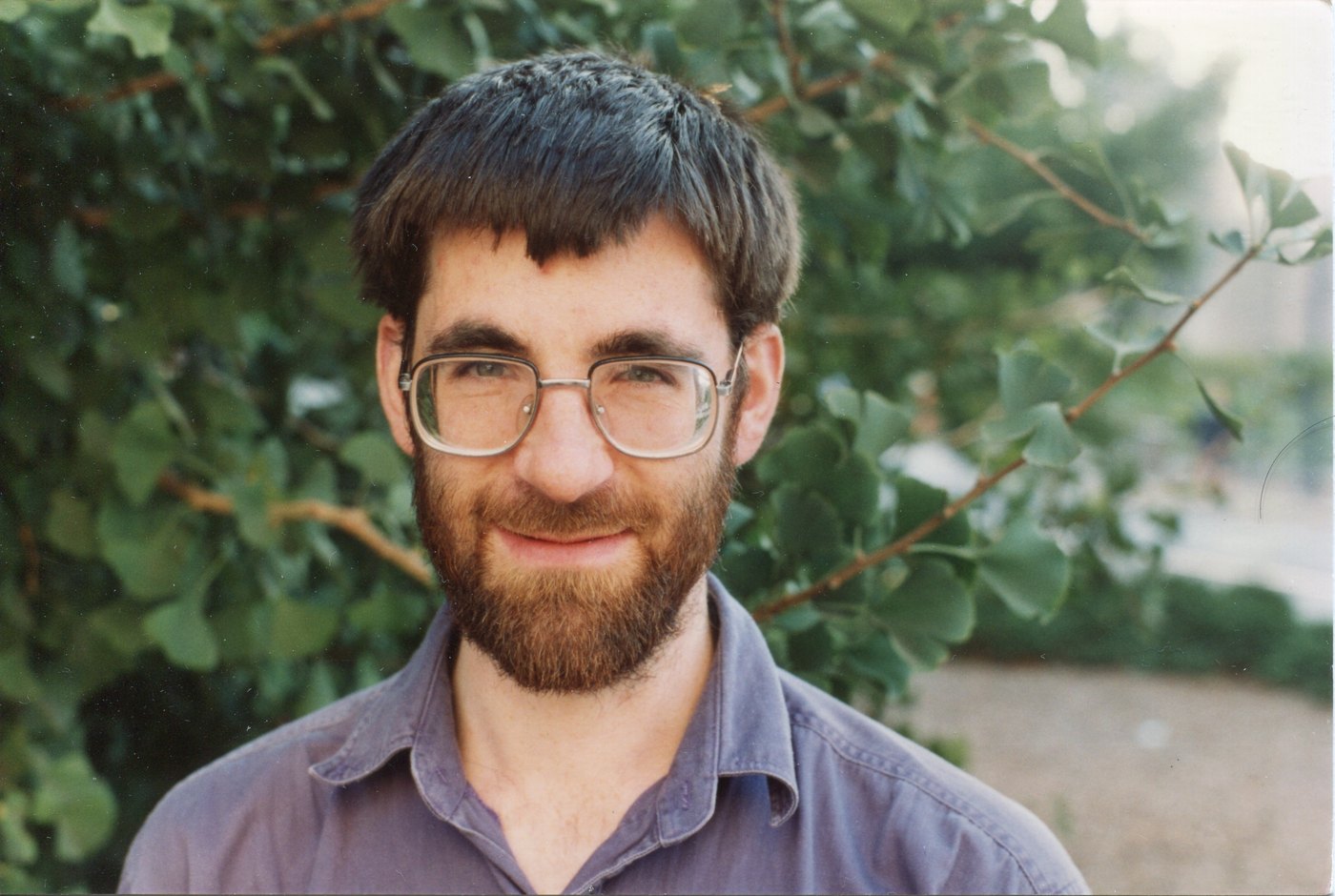 Photo: 1998 Fields Medalist Richard Borcherds. Source: Wikimedia Commons (Photo by George Bergman, CC BY-SA 4.0).
Borcherds earned the Fields Medal—often regarded as mathematics’ Nobel Prize—in 1998. Having spent decades working at the frontiers of Lie algebras, conformal field theory, and string theory geometry, he holds proof rigor to the highest aesthetic and logical standards. The academic breaking this longstanding convention sits at the very pinnacle of theoretical mathematics. Borcherds admits he currently sees no better alternative; the traditional evaluation framework has simply fractured.
AI Solves Problem Sets Flawlessly: Homework Loses Its Diagnostic Power
In modern higher education, homework serves as a vital diagnostic probe. It is designed to expose conceptual blind spots after class: instructors rely on grading to spot cognitive gaps, while students rely on error correction to build intuitive mastery. That百年-old positive feedback loop has now been severed by large language models.
Automated systems can generate complex, multi-step algebraic derivations within seconds and format them directly into clean LaTeX. Problem sets originally designed to test the depth of knowledge in a student’s mind have instead become measures of prompting competence. When anyone can query an algorithm for textbook-perfect solutions, homework scores lose all discriminatory power.
What makes the academic community even more uneasy is the timing of this shift. Borcherds discussed his grading shift just as OpenAI announced that its automated research agents were attempting to tackle the Navier-Stokes existence and smoothness problem—one of the seven Millennium Prize Problems, carrying a $1 million reward and baffling physicists and mathematicians for over a century. If frontier algorithms are mounting serious attacks on humanity’s deepest mathematical mysteries, standard undergraduate problem sets stand little chance of holding the line.
Reflecting on technological history, Borcherds noted how mechanical looms replaced hand weavers and automobiles superseded horse-drawn carriages. In previous technological waves, abstract symbolic reasoning was considered the exclusive preserve of the human intellect. Yet in mathematics, this form of automated substitution is unprecedented. If AI continues to iterate at its current pace, Borcherds observed, the relative edge human mathematicians hold in computation and proof construction will diminish sharply in the coming years.
High False-Positive Rates: Berkeley Rejects Campus-Wide Detection Tools
Faced with widespread automated homework solving, why can’t universities simply deploy technical countermeasures? UC Berkeley did not simply look the other way. Campus administrators previously conducted evaluations of two major commercial academic anti-cheating platforms, Turnitin and Rumi, assessing whether either could be rolled out campus-wide. The pilot results revealed that neither tool met the institutional threshold required for universal adoption.
Text-based AI detectors work primarily by calculating lexical perplexity, a heuristic that routinely breaks down in technical fields. Rigorous mathematical proofs inherently follow fixed axioms, lemmas, and standard phrasing. A valid proof naturally displays low perplexity and predictable syntax. Detection software is caught in an intractable dilemma: it routinely flags careful, human-written proofs as synthetic, while failing to catch lightly paraphrased machine outputs.
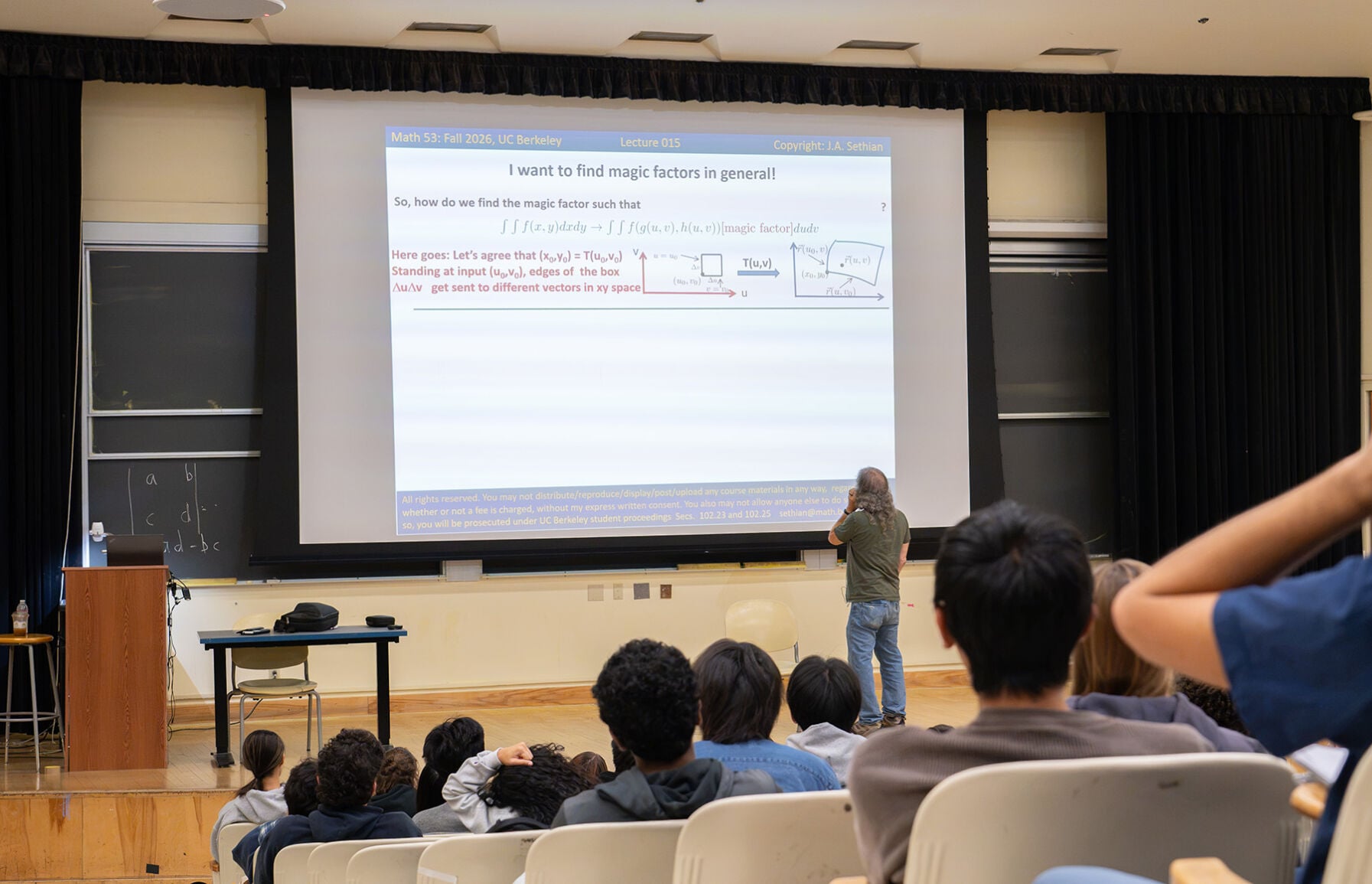 Photo: UC Berkeley campus. Source: The Daily Californian (Photo by Isaac Kim).
In higher education, false accusations carry unacceptable costs. Once an automated tool incorrectly brands an honest student as a cheat, the covenant of trust between faculty and students collapses. Conversely, dialing down detector sensitivity to prevent wrongful accusations turns the software into security theater. Weighing the risks, Berkeley’s evaluation committee rejected both platforms as campus-wide safeguards.
Retreating to In-Person Closed-Book Exams: The Unsustainable Cost of Oral Defenses
Navigating the disruption, the UC Berkeley Academic Senate adopted a decentralized governance approach, leaving enforcement policies to individual course instructors. The university established an “AI Hub” repository containing sample syllabus statements and instructional guidance. Anne Marie Richard, assistant vice provost for undergraduate education, explained the rationale, noting that course levels and disciplinary contexts vary so widely that a rigid, one-size-fits-all policy is unenforceable.
De-escalating centralized control effectively shifts the burden of establishing new standards onto teaching faculty. Some instructors have responded by eliminating homework weights entirely, shifting 100% of final grades onto supervised, in-person closed-book examinations. Others advocate for oral exams, requiring students to work through theorems at the blackboard to verify authentic comprehension.
Yet individualized oral defenses impose prohibitive operational overhead. In an advanced calculus course enrolling 300 undergraduates, administering a weekly 15-minute oral examination per student would consume 75 instructional hours every week. Departmental budgets and academic scheduling cannot sustain that load. The funding structure of public research universities rules out scaling elite Oxbridge-style tutorial models to everyday coursework.
An even deeper hazard lies in student motivation. If homework morphs into a routine check-in where full marks are granted for mere submission, students lacking strong self-discipline may stop working through challenging problem sets altogether. Pushing all evaluative pressure onto a single final exam rarely fosters deeper understanding; instead, it risks widespread academic failure. The fallout from a broken assessment mechanism extends far beyond simple grade inflation.
20 Years of Idle Printing: Institutional Inertia Stalls Assessment Reform
Beyond classroom logistics, Borcherds highlighted a deeper institutional inertia in his interview. While tech observers expect academia to pivot quickly, Borcherds candidly noted that it would not be surprising if math departments look virtually identical two or three years from now. Academic institutions exhibit immense path dependency, an inertia already demonstrated in scholarly publishing.
Borcherds pointed to print journals as an analogy: online preprint platforms like arXiv achieved mainstream adoption more than twenty years ago. Yet two decades later, thousands of costly paper journals continue to be printed and distributed, sitting largely unread on library shelves. Institutional processes do not operate solely on functional utility. As long as tenure evaluations and grant allocations remain pegged to legacy publication models, ceremonial workflows will persist through sheer inertia.
This institutional hesitance is generating genuine anxiety for young scholars. Five years ago, pure mathematics was widely seen as a safe haven—a discipline where impenetrable logic stood immune to algorithmic automation. Just five years later, Borcherds admits he now hesitates to advise prospective undergraduates to major in mathematics. When he posed the question to ChatGPT, even the AI replied that it could not predict how the field’s trajectory will unfold.
Surrendering to full marks on homework pulls back the curtain on a quiet crisis in modern education. When machines can produce rigorous derivations in seconds, assignments relied upon for a century no longer measure human minds. Print journals managed to idle forward on momentum for twenty years. But unless universities fundamentally reconstruct how they assess intellectual mastery, lecture halls will struggle to uphold the value of knowledge itself.
Reference links: