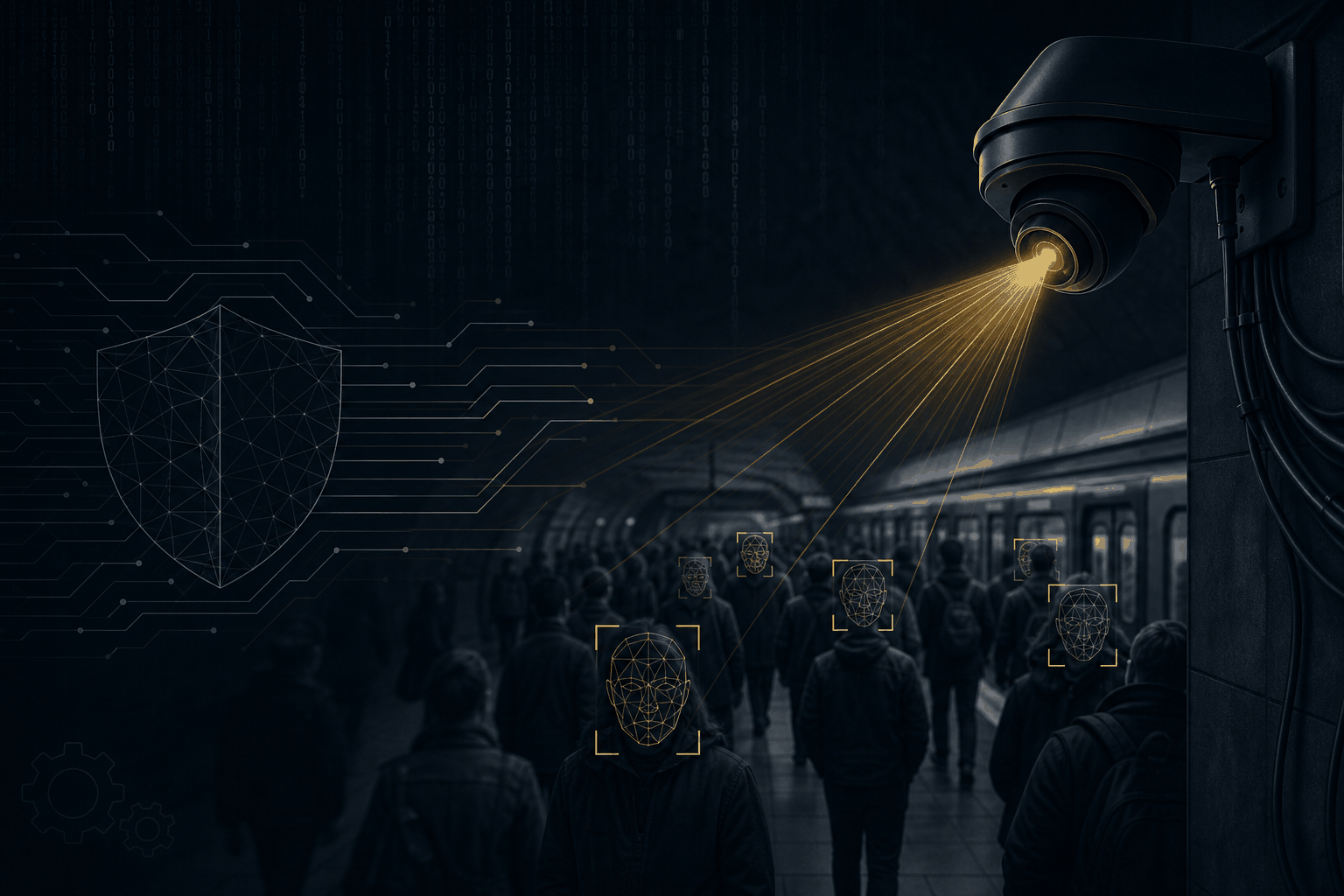
A security researcher has discovered 181,874 meeting records exposed on the public internet—accessible to any registered user without requiring a password. Despite reporting the issue on January 28, the vendor’s CTO failed to reply to a single email for six months. When the researcher checked again on July 22, the data remained completely accessible.
The vendor behind the flaw is tl;dv, a popular AI meeting assistant claiming over 2 million users. During online calls, it sends a bot into Google Meet, Zoom, or Teams to automatically record, transcribe, and summarize proceedings.
These tools capture far more than casual chatter: sales calls, job interviews, performance reviews, and executive strategy sessions are all recorded. As the research report accurately noted: someone in the meeting announces “this call will be recorded,” everyone shares an awkward smile, and then they proceed to spend 45 minutes discussing sensitive business secrets.
The Root Cause: Flawed Access Control
tl;dv stores meeting records in a cloud database governed by security rules intended to determine access permissions. These rules were supposed to enforce user isolation—letting users view only their own meetings. In practice, the actual configuration allowed any registered user to query and retrieve every single meeting record across the entire platform.
Consider an analogy: an apartment building where every unit door is locked, but the manager’s master file cabinet in the lobby is left wide open—allowing any resident to flip through tenant records. Worse still, the files contained instructions on where spare keys were hidden: every meeting record included a direct meeting link, and for live recordings, those links were actively live.
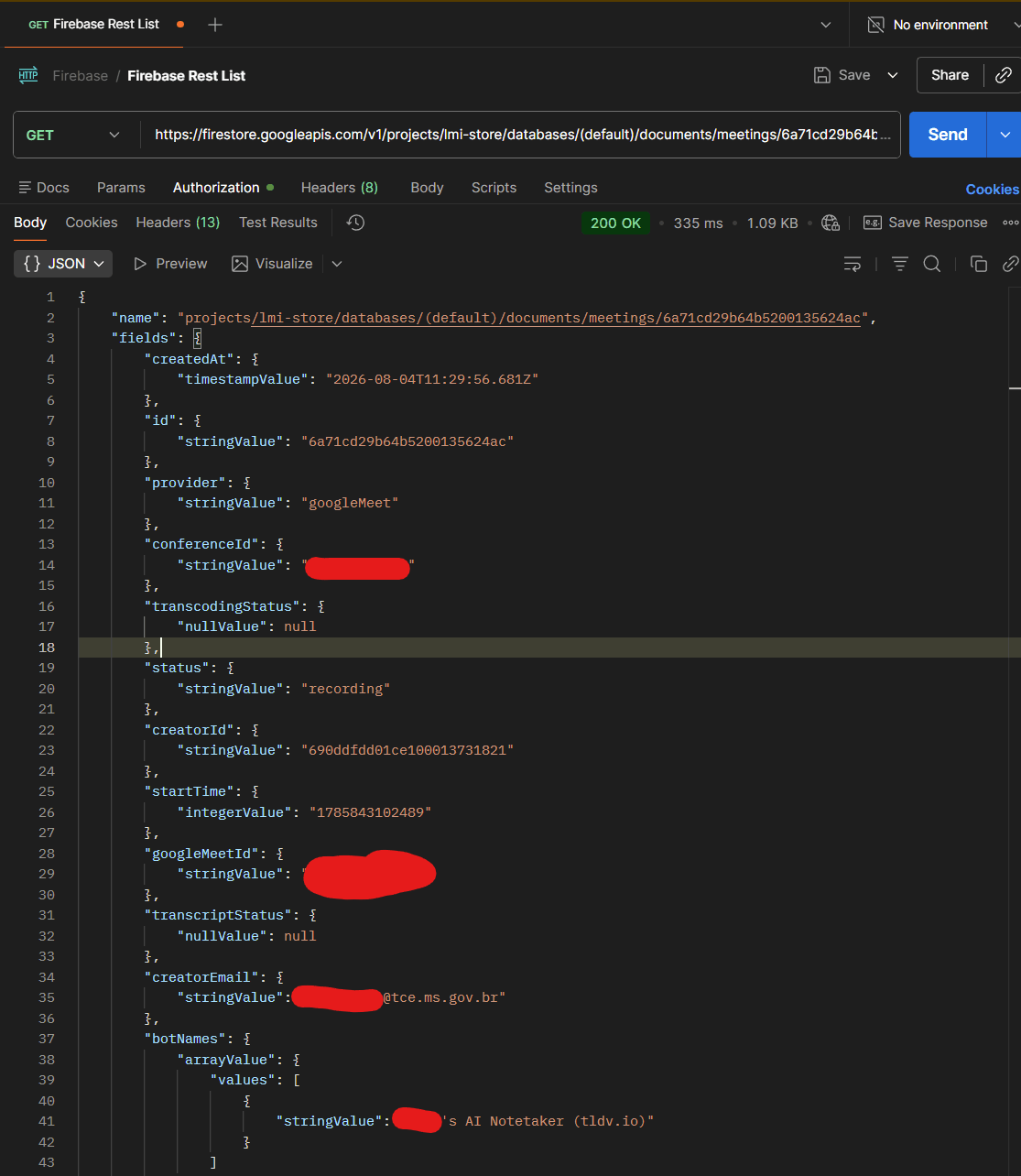 Figure: Leaked meeting record query interface. Source: bobdahacker.com
The researcher found that at any given moment, roughly 1,000 meetings were actively recording with fully accessible links. In a live demonstration, she used one of these links to enter an ongoing online conference held by the Ministry of Education of Malaysia with over 157 attendees—without any invitation. She also walked into a startup pitch discussion among US university students, where 21 participants were sharing screens filled with unreleased code and design prototypes.
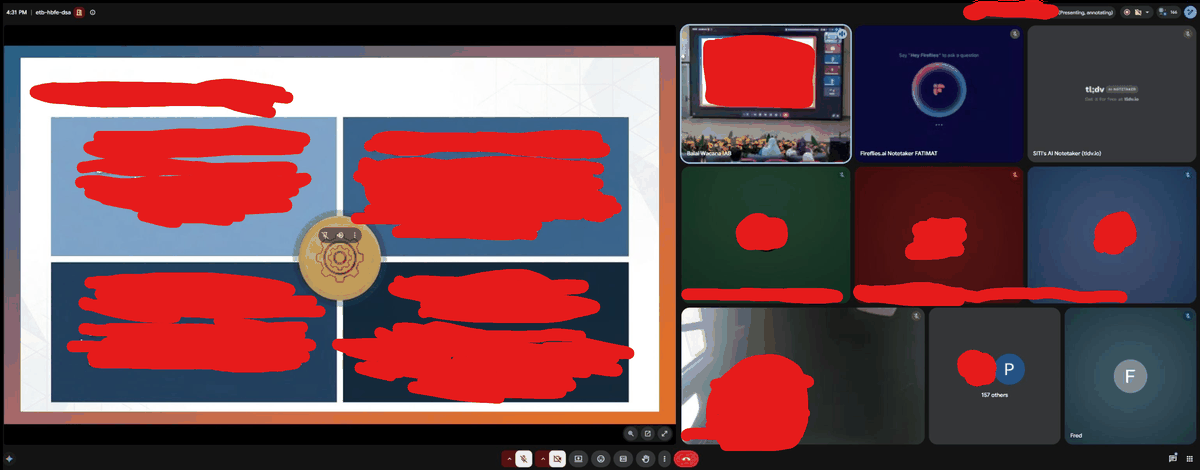 Figure: Screenshot when entering the Ministry of Education of Malaysia meeting. Source: bobdahacker.com
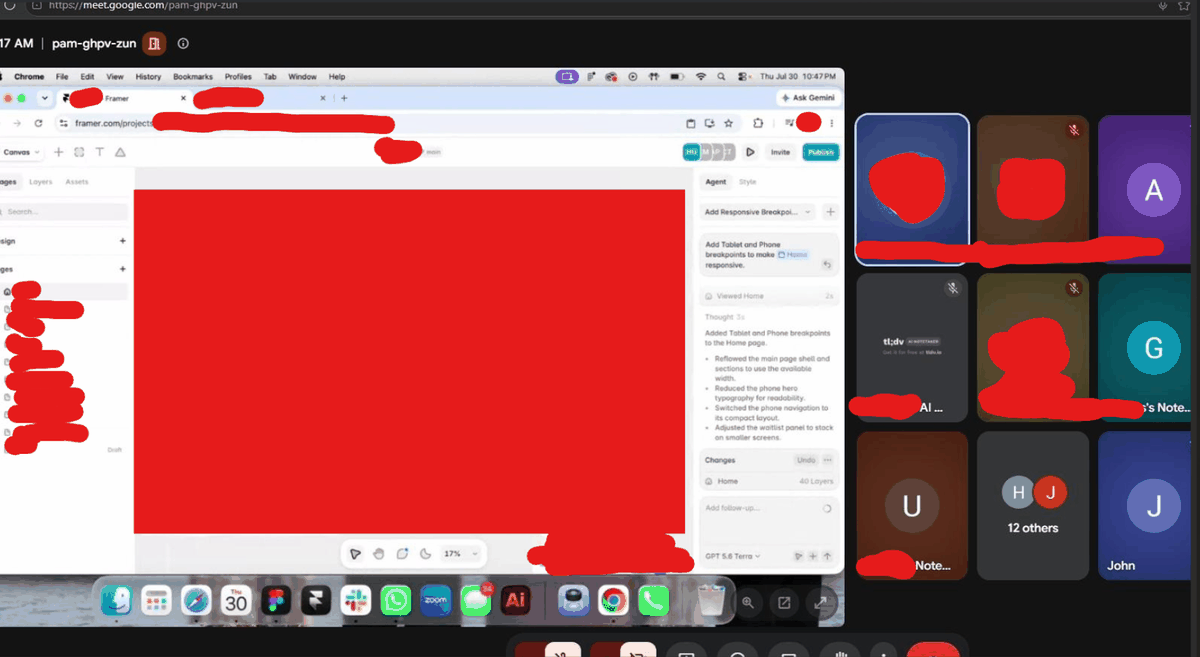 Figure: Screen share of the US university student startup meeting. Source: bobdahacker.com
The entire process required no exploits, no malware, and no stolen credentials. A single line was missing from the database access rules. Behind the figure of 181,874 records lay no sophisticated cyberattack—the threat vector was simply the open internet.
The Scope: From Governments and Universities to Public Companies
The exposure extended well beyond meeting links. The 181,874 meeting records belonged to 84,312 users across 35,003 corporate and institutional domains. Government meetings from 23 countries were exposed, including Brazil, Ukraine, the United States, Japan, and Malaysia. Academic institutions affected included UC Berkeley and the University of Tokyo. Corporate users included high-profile names such as HubSpot, Confluent, and Mitsui Fudosan. Activity peaked in July 2025, with 43,000 new meeting records created in a single month.
In a sample audit of 27,334 public-status meeting records, over 1,000 allowed direct viewing of full contents, exposing 715 attendee email addresses in the process. When a company’s meeting records enter a tool configured this way, it effectively hands over the keys to the conference room to the vendor’s default configuration.
The Company’s Response vs. The Discrepant Timeline
tl;dv eventually responded, though only after media reports surfaced. On August 5, CTO Allan Bettarel published a response outlining several core points: the leak was “strictly limited to metadata,” without exposing audio recordings, transcripts, or AI summaries; the vulnerability reported in January was patched; the access path demonstrated in July was a separate new issue that was mitigated within 24 hours; and the company committed to completely removing Firebase from its technology stack. The CTO acknowledged: “I take full responsibility for failing to maintain continuous follow-up on the researcher’s report earlier this year.”
However, the accounts from both sides conflict sharply. The researcher’s documented timeline indicates a disclosure on January 28 followed by seven status inquiries—none of which received a response from the CTO—and the vulnerability remained reproducible on July 22. Conversely, the vendor maintains these were two independent flaws that were each promptly remediated. On the Lobsters technical forum, many engineers characterized the company’s response as “gaslighting”—not denying the underlying facts, but attempting to reframe the severity.
While outside observers cannot independently verify every detail of the dispute, one fact remains clear: the vendor prominently displays SOC2 and GDPR compliance badges on its security page alongside a commitment to a “24-hour response time from our security team,” yet failed to reply to six months of emails from a researcher. Compliance certifications prove that procedures were documented, not that data is actually secure.
Racing for Market Share Faster Than Fixing Security
AI meeting transcription is currently one of the most crowded SaaS verticals, with tools like Fathom, Otter, Fireflies, and tl;dv aggressively competing for the same user base. Market acquisition speed frequently outpaces security engineering effort. The typical trajectory for such startups involves setting broad default permissions to minimize user friction, while deferring security access policies until after product launch.
A telling detail highlighted in the research illustrates the internal security posture: tl;dv hosted a public World Cup prediction mini-app on an open subdomain without authentication, exposing the names and corporate email addresses of 19 employees via unauthenticated API endpoints. A company tasked with safeguarding meeting recordings for 2 million users failed to secure its own internal employee directory. More than any security audit, this reveals a corporate culture where security awareness was never embedded into organizational practice.
What This Means for Everyday Users
Every word spoken in an AI-monitored meeting is uploaded to vendor servers, transcribed, processed by AI models, and stored in databases. Whether that data remains secure depends almost entirely on the vendor’s default settings—yet organizations procuring these tools rarely audit default security configurations. Decision-makers focus on feature demos, pricing, and sales pitches, while critical questions—where data resides, who holds access rights, and whether deletion is truly permanent—go unasked because vendors often lack clear answers.
Individual users have limited leverage, but several practical precautions can be taken: refrain from enabling AI meeting tools during discussions involving compensation, HR matters, or M&A strategy; review account settings in active tools to ensure historical meetings are not marked “public” and tighten sharing permissions; and at the organizational level, insist on clarity regarding data storage, access controls, and deletion mechanisms prior to procurement. While few vendors currently provide satisfying answers, persistent questioning from buyers will force vendors to default to secure configurations.
The exposure of 180,000 meetings is a matter of record. Whether future waves of AI tools repeat these default configuration mistakes depends on whether users start asking hard questions. Vendors calculate the balance between convenience and privacy—it is time for users to start doing the same.
Reference links:
- BobDaHacker Research Report: 181,874 Meetings Exposed to Public Web
- Lobsters Discussion (s/97laur)
- tl;dv Official Response: Statement on DarkReading Coverage (CTO Allan Bettarel)
- Hacker News Discussion (item?id=49188723)