
In August 2026, research into hardware security re-emerged on developer forums: a backdoor intentionally embedded inside computer processors by the manufacturer.
The project, titled Rosenbridge, surfaced on Hacker News this month, reaching over 300 points and 90 comments. One of the top comments summed up the reaction: “This shouldn’t be something we are only exposing in 2026.” That statement captures the core issue surrounding hardware security today.
Bottom line: While the list of affected chips is narrow, it exposes a long-standing vulnerability—the hardware in your computer comes from a supply chain you cannot audit. Whether a processor is truly trustworthy remains largely a matter of blind trust.
What the Backdoor Looks Like: A Hidden Secondary Core Inside the CPU
Standard x86 processors are typically thought of as a single room designed for a single tenant. Rosenbridge reveals that inside this room lies a secret compartment housing an entirely separate “core.” This secondary core does not execute x86 instructions; instead, it operates on a custom architecture that researchers refer to as a “deeply embedded instruction set.”
Under normal conditions, this compartment is locked. Unlocking it requires two conditions: enabling a specific control bit in a Model-Specific Register (MSR), followed by issuing a special “launch instruction.” Once opened, commands formatted to look like standard x86 instructions can be fed directly to the hidden core, executing code while completely bypassing all silicon-level memory protection and privilege checks.
The outcome is immediate: unprivileged user applications (running in ring 3) gain direct read and write access to the kernel (ring 0). It is equivalent to a tenant entering the building’s electrical control room without a key to modify meters or turn off security cameras. In the researcher’s demonstration, a single command granted regular users full kernel privileges.
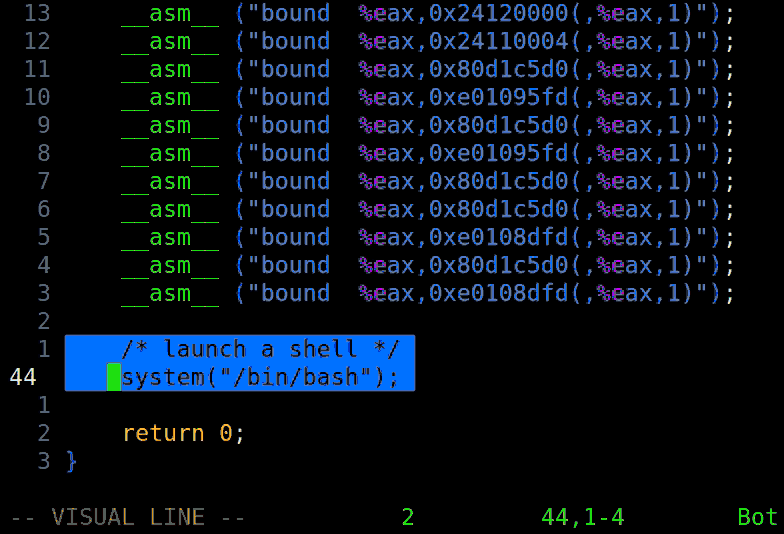 Figure: Rosenbridge demonstration showing a userland process obtaining kernel privileges via the hidden core. Source: GitHub repository
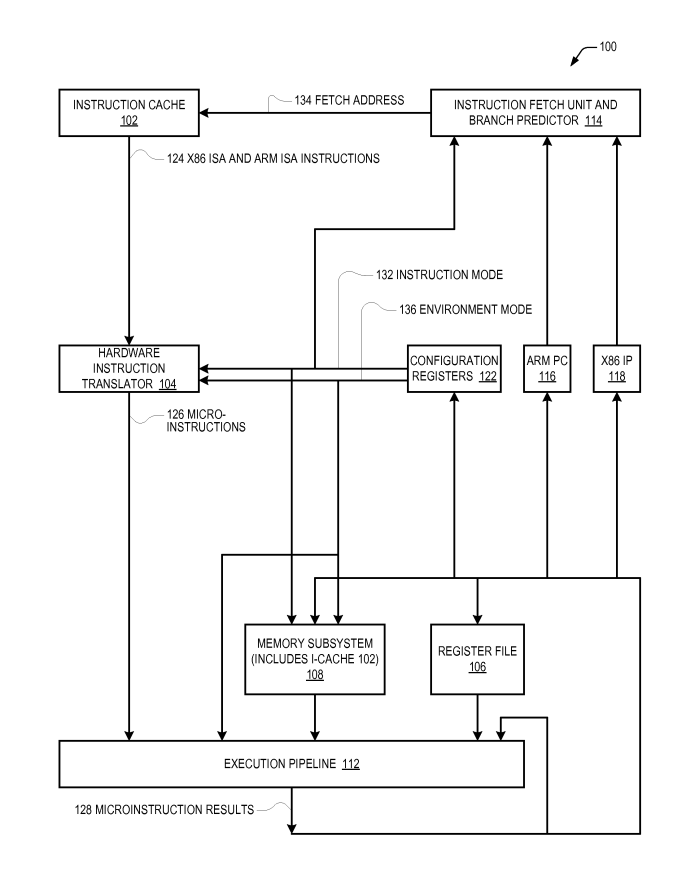 Figure: Backdoor architectural concept reconstructed from patent filings. Source: Black Hat whitepaper (Domas, God Mode Unlocked)
Why It Was Hard to Find: Sifting 43 Unknown Switches Out of 1,300
Conventionally, microprocessors are regarded as fixed hardware, assuming security flaws originate in software. Rosenbridge proves the opposite: hardware itself can leave open doors.
Discovery was difficult because all blueprints remain proprietary. The researcher initially picked up clues from public patent documents, which mentioned that an internal control register could allow users to bypass security mechanisms. By scanning over 1,300 Model-Specific Registers (MSRs) on the chip and filtering out documented features, 43 “unidentified” registers remained. One specific control bit was identified and dubbed the “God Mode Bit.” Using Sandsifter, a custom hardware fuzzing tool, the researcher swept through the x86 instruction encoding space until uncovering the specific instruction required to awaken the hidden core.
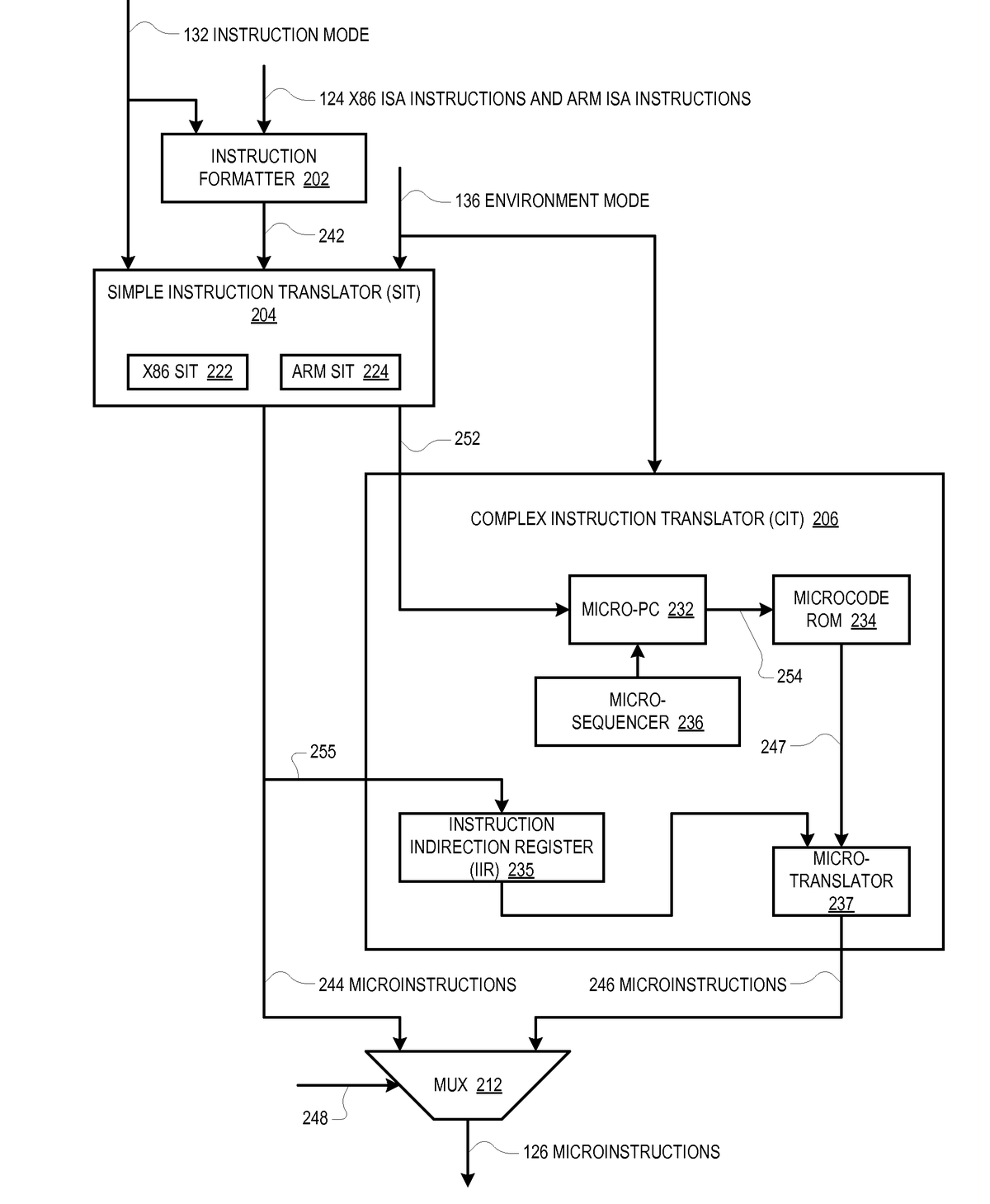 Figure: Hypothesized backdoor mechanism where instruction streams are secretly routed to a secondary core. Source: Black Hat whitepaper
Out of 1,300 registers, only 43 stood out as undocumented, while the rest were assumed normal. The vast majority of hardware switches are known only to their designers. Without a map—which is never made public—finding a hardware backdoor is nearly impossible.
Compounding the problem is detection itself. The verification script provided by the researcher is explicitly marked as an “alpha test.” Running it on unaffected hardware can cause system freezes, panics, or hard crashes. For end users, there is virtually no practical way to verify whether their processor contains such a mechanism.
Why It Can’t Be Patched: Hardcoded Silicon Means Software Can Only Mitigate
When software vulnerabilities surface, vendors ship a patch. Hardware backdoors cannot be erased. The researcher provided a mitigation script that toggles the control bit early during system boot to lock the hidden compartment.
However, the script notes a fundamental flaw: if an attacker gains kernel privileges later on, they can re-enable the bit at any time. Furthermore, the mitigation only targets the specific chip variant analyzed: “If the backdoor implementation varies even slightly, the tool will fail to recognize it.”
Ultimately, “patching” is a misnomer for hardware backdoors. At best, software can close the door temporarily while the key remains in silicon. This underscores why commentators note that hardware flaws are far more severe than software supply chain vulnerabilities—they are rarely audited, and vendors have little incentive to recall hardware that cannot be fixed in software.
Who Is Affected: 20-Year-Old Processors Still Quietly Running in Production
Public disclosures indicate that the vulnerability affects VIA C3 series processors, manufactured in the early 2000s. At the time, these chips targeted industrial automation, point-of-sale (POS) systems, ATMs, medical devices, and some low-power PCs.
Over two decades later, many of these devices remain active in critical infrastructure. Replacing embedded hardware in ATMs, check-in kiosks, or industrial controllers entails high financial cost and operational downtime, leading organizations to keep them running indefinitely. The researcher noted that the secondary core may have originally been designed as a debugging feature for embedded markets without malicious intent, but early production generations simply failed to disable it by default. The repository’s disclaimer explicitly states that no malicious intent is implied.
This represents one of the few reassuring aspects of the report, as well as the center of ongoing debate.
Weighing Both Sides of the Argument
One side argues that modern processors have grown exponentially complex. Hidden subsystems like Intel ME or AMD PSP have long existed, but Rosenbridge demonstrates a backdoor embedded even deeper—with unconstrained access to execution pipelines, registers, and system memory. The fact that a vendor left a door open 20 years ago highlights the fundamental lack of user transparency in hardware manufacturing.
The opposing view suggests there is no need for immediate panic: the issue is isolated to legacy hardware from two decades ago, with the feature removed in subsequent generations. The research was originally presented at security conferences back in 2018, and the repository has been public for years; it simply gained renewed attention on Hacker News this month. Most modern smartphones and consumer PCs remain unaffected.
Both perspectives carry weight. For VIA C3 chips specifically, widespread panic is unnecessary. However, as a case study in supply chain trust, the discussion is vital. End users have no visibility into the manufacturing pipelines of the processors powering their devices, nor any realistic way to audit them.
This does not mean throwing away current hardware. Rather, it serves as a reminder to treat “hardware trust” as a hypothesis requiring defense-in-depth: keeping critical systems isolated, updating firmware, and avoiding unverified hardware vendors remain essential practices even in the face of silicon-level backdoors.
Reference Links:
- GitHub: Rosenbridge Repository
- HN Discussion (item?id=49219508)