On July 31, 2026, the Governor of Illinois signed into law the Child Social Media Safety Act (HB5511). While intended to protect minors on social platforms, the law quietly slipped in another far-reaching mandate: starting in 2028, operating systems on smartphones and computers must be able to verify a user’s age and pass that information to any requesting app. Advocates framed the bill as a win for child safety. But across global developer forums, the response was immediate uproar—because nobody has a clear technical answer for how this can actually be implemented.
A Child-Safety Law That Also Wrote Phones Into It
On the surface, the law targets social platforms with familiar restrictions: minors must receive a chronological feed by default (disabling “recommended for you” recommendation algorithms); push notifications to minors are banned between 10:00 PM and 7:00 AM; and adult strangers are barred from viewing minors’ profiles or sending them direct messages. Platform names like TikTok, Instagram, and Snapchat were highlighted in press releases, making it look like a typical child online safety bill.
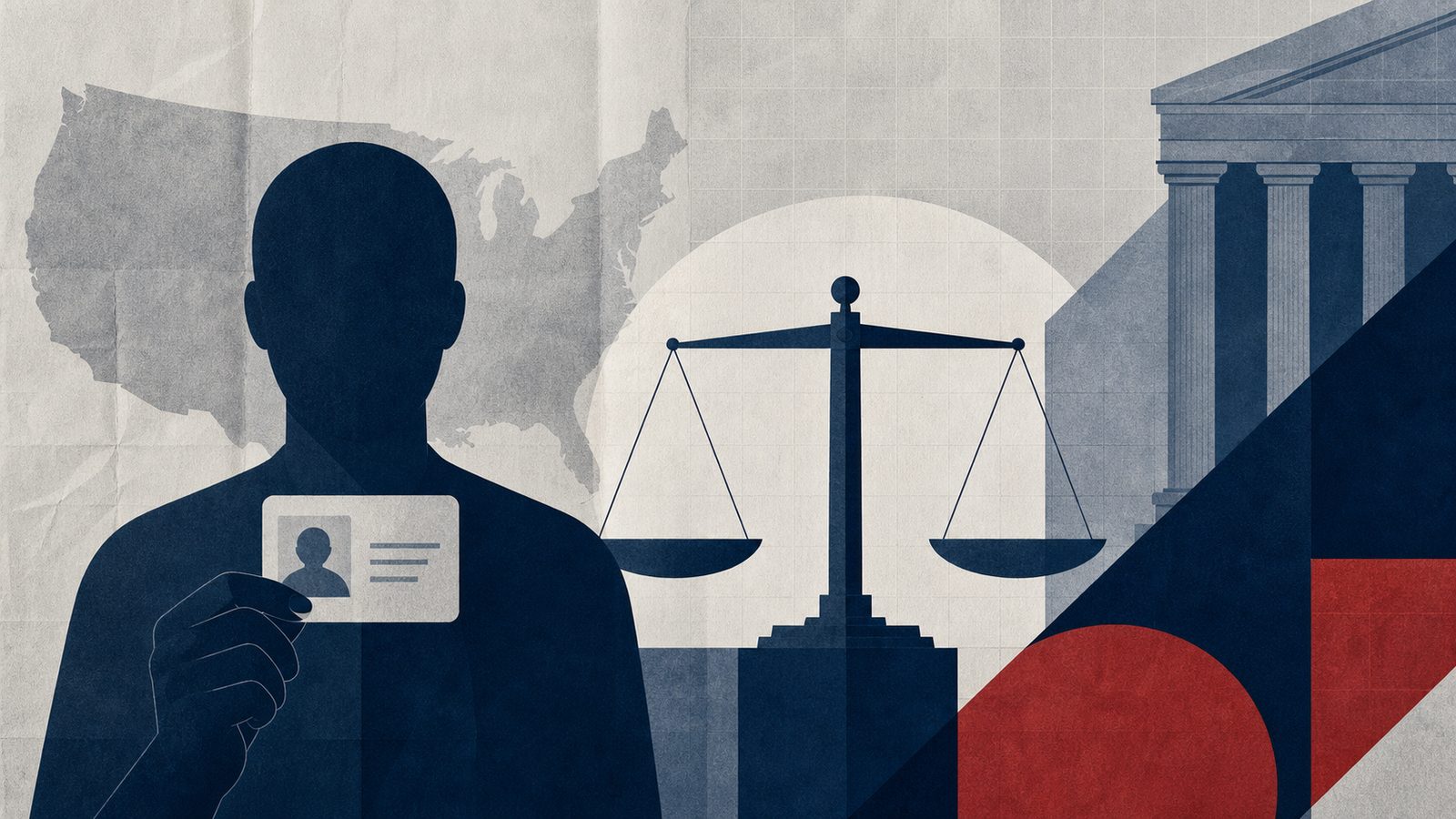
What remained overlooked was the second half. The legislation explicitly defines a new entity—“operating system provider”—and groups smartphone makers, OS developers, and app stores under a sweeping category called “covered manufacturers.” By January 1, 2028, these vendors must insert an age prompt into the device setup workflow to ask for the user’s date of birth. The OS converts the answer into one of four age tiers—under 13, 13 to 15, 16 to 17, and 18 or older—and stores it. When an app requests the user’s age bracket, the OS transmits it via an encrypted API. Once an app learns the user is a minor, all associated protective restrictions automatically take effect.
The bill sailed through the state legislature with virtually zero opposition: 57–0 in the Senate and 113–0 in the House. Curiously, the enforcement penalties are inconsistent: the bill text sets civil penalties of $2,500 per affected child for negligent violations and $7,500 for intentional violations, whereas official press releases from the Governor’s office claimed fines of up to $50,000 per violation. The discrepancy went unexplained in official materials. For a bill intended to govern hundreds of millions of devices nationwide, failing to align even its own fine amounts suggests that few lawmakers scrutinised the technical details line by line before passing it.
How Does a Phone “Know” Your Age? A Question Nobody Can Answer
While the law mandates that operating systems “verify” user age, it offers zero guidance on how that verification should occur. This ambiguity sits at the center of the controversy.
Under the current statutory wording, the requirement amounts to mere self-declaration: a prompt during initial device setup asking for a birth date. There is no ID scan, no facial recognition, and no real difference from filling in a birth date on a website registration form—except that instead of every app asking individually, the OS asks once. While this sounds lightweight, the fundamental flaw is obvious: anyone can lie. A 10-year-old can enter 1990, and a setup completed by parents before handing a phone to a child can easily be reconfigured later. At the OS level, there is no mechanism to prove whether the declared date is true.
 Photo: Coverage image. Source: TechTimes (Photo: Gaelle Marcel / Unsplash)
Supporters argue that even self-declaration is better than nothing, adding a hurdle for parents when setting up devices. Critics counter that it resembles hiring a security guard to check IDs at a building’s front entrance while leaving hundreds of side doors, fire exits, and parking garages completely unmonitored. More concerning is what happens next: once self-declaration is proven ineffective at stopping kids, lawmakers will inevitably escalate to mandatory ID uploads, facial scanning, or integration with commercial identity verification providers. At that point, “age verification” will no longer be about typing a year, but about handing over every adult’s identity credentials.
The Open-Source Dilemma: Lawmakers Finding Nobody to Hold Liable
Why has the developer community reacted so strongly? Because open-source operating systems like Linux present a scenario where the law is practically unenforceable. Major commercial platforms—iOS, Android, Windows—are backed by companies like Apple, Google, and Microsoft, whom regulators can hold accountable. Open-source systems, by contrast, have no unified account system, no centralized app store, and no corporate entity. Anyone can freely download, modify, and recompile the kernel—you could literally change a single line of code so the OS always reports “adult status” to requesting apps, and then distribute that build globally.
In a Hacker News discussion thread with over 300 comments, this conflict erupted into an open standoff. The founder of an open-source project posted that he would never implement such a feature, stating he would rather face jail time than write that code. A commenter claiming to be a lawyer warned that courts possess ample enforcement tools—ranging from sales injunctions to steep fines—and advised him to seek counsel. Another user countered by invoking the legal maxim “the law does not compel the impossible” (lex non cogit ad impossibilia), to which the lawyer replied: “Technical impossibility has never been a defense in a court of law.” Neither side convinced the other.
Compounding the absurdity is the law’s overly broad definitions. HB5511 defines an “operating system provider” as any business or non-profit entity that controls an operating system for an internet-connected device. Under this definition, servers, virtual machines, smart refrigerators, and connected vehicles all fall under the scope. Engineers joked on forums: if you run code on a Linux server in Illinois, will it demand proof of age before booting up? A headless server running background compute jobs doesn’t even have a screen for someone to click “I am 18 or older.”
If Real “Verification” Is Enforced, What Is the Cost?
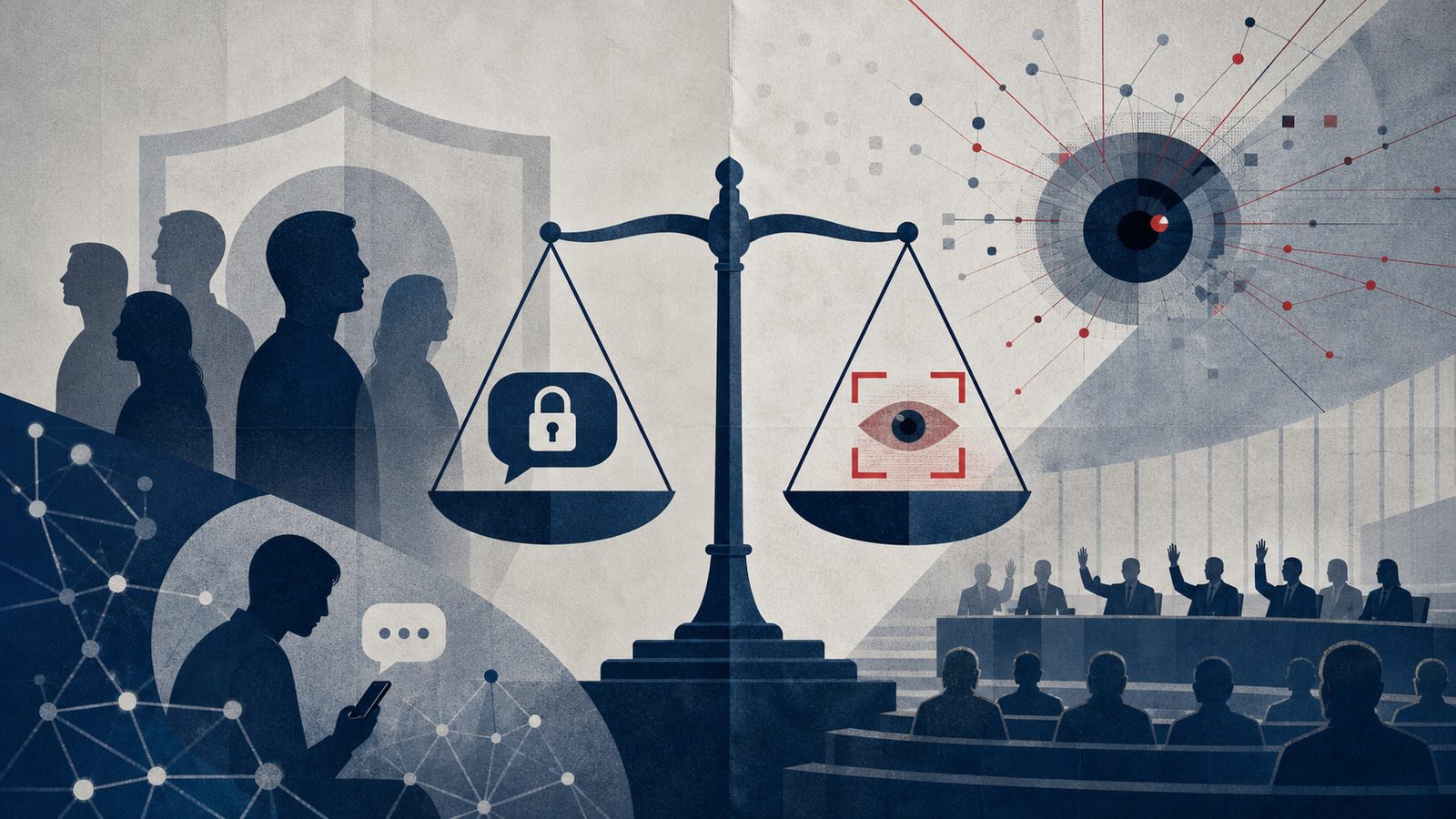
Self-declaration fails to block minors, yet real verification is extraordinarily costly and risky—a dilemma that privacy advocates have warned about. Before the bill was signed, the Electronic Frontier Foundation (EFF) sent a letter to Governor Pritzker urging a veto, calling the bill a “privacy and free speech nightmare.” The ACLU of Illinois and major tech industry associations representing Google and Meta joined EFF in opposing the legislation.
Their concerns are rooted in real-world precedents. Commercial identity verification vendors have a troubling track record of security failures. One Israeli vendor that provided verification services for TikTok and Uber left administrative credentials exposed in public channels for 18 months, leaking names, dates of birth, social security numbers, and ID scans. A UK verification provider was fined roughly $1.1 million by Spanish regulators this year for unlawful processing of biometric data. Discord’s third-party age verification provider suffered a breach last year that exposed government-issued ID documents. Meanwhile, when Florida passed a similar law, local VPN demand surged by 1,150%—demonstrating that such legislation primarily drives adoption of evasion tools rather than meaningfully curbing minor access.
Illinois Re-creates Pitfalls Other States Tried to Avoid
The concept of OS-level age verification was adapted from earlier legislation in California and Colorado. However, both states stumbled over the same pitfall: broad definitions that accidentally encompassed open-source communities. Colorado eventually added explicit open-source exemptions after lobbying by system founders, while California is pursuing remedial amendments to carve out open-source projects. Illinois, rather than adopting these refined provisions, copied the original broad language without a single exemption. Given that industry groups have already launched lawsuits against similar state laws across six US states—with mixed rulings so far—HB5511 will likely face legal challenges or statutory revisions before its 2028 effective date.
 Graphic: Coverage illustration for OS-level age verification. Source: VPN Lab
With more than a year until January 1, 2028, corporate giants like Apple, Google, and Microsoft will likely implement a minimal “setup prompt” to comply at low cost. The open-source community will likely ignore the mandate or, as one developer suggested, set the default birth year in installation scripts to the Nixon administration. As to how this clash between legal mandates and technical reality will end—whether the law takes effect, tech finds a compromise, or courts step in—remains uncertain. But one reality is clear: when “protecting children” requires every citizen to submit proof of age, the bill is inevitably paid by adults who don’t even use social media.
References:
- LinuxStans: Illinois HB5511 Operating System Age Verification Breakdown
- Hacker News Discussion Thread (item?id=49249150)
- TechTimes: Illinois Signs Child Social Media Safety Act into Law
- VPN Lab: Illinois HB 5511 Signing Analysis
- EFF: Veto Call to Governor Pritzker