
15-Minute On-Site Screening: Moving Diagnostics to the Home Medicine Cabinet
In August 2026, LymeAlert, the first at-home diagnostic kit designed to test ticks for infection, officially entered the US market. The product, which garnered widespread media coverage, highlights rapid point-of-care screening immediately following a tick bite. Outdoor enthusiasts or pet owners who discover a tick attached to themselves or family members can place the removed tick into the test kit and receive results in approximately 15 minutes.
The target of LymeAlert is Borrelia burgdorferi within the tick body, the primary bacterium responsible for Lyme disease. Data from the Centers for Disease Control and Prevention (CDC) indicates that there are roughly 476,000 new cases of Lyme disease diagnosed annually in the United States. This staggering number demonstrates how tick bites have evolved from sporadic wilderness accidents into a high-frequency public health challenge. Moving testing capabilities upstream into domestic settings essentially attempts to ease public anxiety around infection through low-cost, point-of-care tools.
According to a report by Smithsonian Magazine, the product aims to become a standardized fixture in family first-aid kits. Users no longer need to wait days for laboratory mail-in results or line up at urgent care centers immediately after a bite. The rapid local data provides bite victims with an immediate, intuitive risk reference.
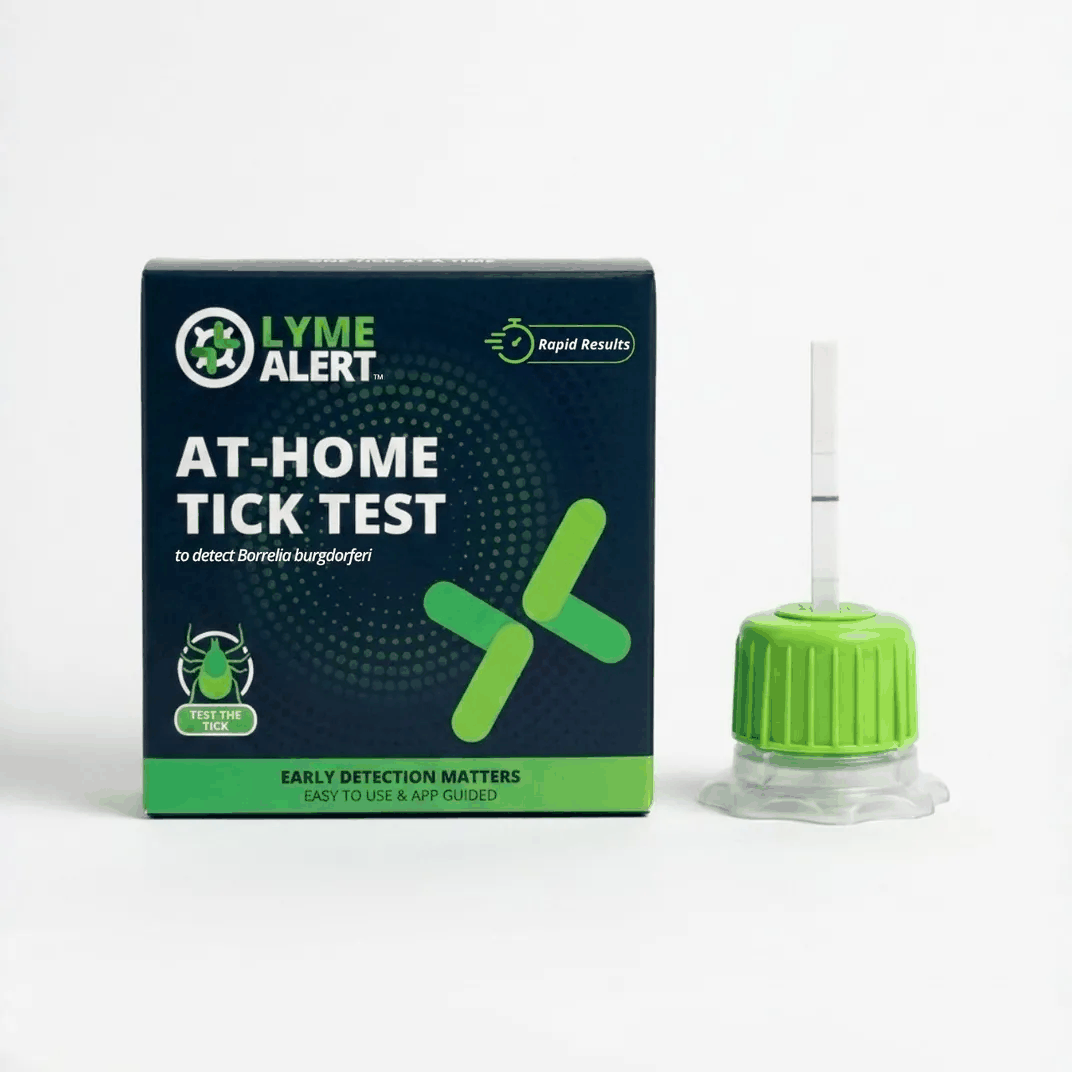 Figure: The LymeAlert at-home tick test kit aims to bridge the early decision gap following outdoor bites via a 15-minute rapid screen. Source: Smithsonian Magazine
Testing the Vector Is Not Testing the Host: Three Biological Blind Spots Behind False Negatives
While obtaining results in 15 minutes delivers a seamless user experience, medical specialists and the CDC express strong reservations regarding its clinical utility. The kit measures the presence of pathogens inside the detached tick—which is fundamentally distinct from the infection status of the human host. This physical separation between tested specimen and host organism introduces non-negligible risks of false-negative outcomes.
The first blind spot stems from source uncertainty in tick bites. During outdoor activities, an individual might be bitten by multiple larvae or adult ticks simultaneously, yet only one visible tick is typically retrieved and tested. If another bacterium-carrying tick detached on its own after feeding, the human host remains fully exposed to bacterial transmission even if the tested tick returns a negative result.
The second blind spot lies in the spatial distribution and bacterial load of pathogens within the tick. Borrelia burgdorferi resides primarily in the tick’s midgut and migrates to the salivary glands to be injected into the host only during active blood-feeding. If the specimen is insufficiently ground during preparation, or if the bacterial load falls below the detection threshold of immunochromatographic test strips, the kit will yield a negative output, luring the user into a false sense of security.
The third blind spot arises from physical sensitivity constraints of consumer test kits. Microfluidic or lateral flow test strips designed for home use are constrained by size and cost, making their sensitivity incomparable to laboratory PCR amplification. Submitting samples with minute pathogen concentrations to home kits carries a substantial risk of false negatives.
 Figure: Transmission mechanisms of Lyme pathogens between ticks and hosts are complex, highlighting the physical sensitivity limitations of point-of-care test kits. Source: Smithsonian Magazine
Erythema Migrans and the Critical Window: Why Health Authorities Advise Against Tick Testing for Clinical Decisions
Due to these biological limitations, the CDC explicitly advises against relying on tick test results to guide clinical therapy decisions. Pathogen transmission of Lyme disease generally requires an attached tick to feed continuously for 24 to 48 hours or longer. The gold standard for clinical diagnosis remains rooted in physical sign observation and symptom presentation.
The classic early hallmark of Lyme disease is Erythema migrans (the characteristic “bulls-eye” rash), typically appearing between 3 to 30 days post-bite alongside fever, headaches, and joint aches. Timely intervention with antibiotics such as doxycycline during early infection yields exceptionally high cure rates. Conversely, abandoning symptom monitoring due to trust in a negative tick test can allow pathogens to disseminate into the nervous system, myocardium, or joints, evolving into irreversible chronic Lyme disease.
In discussions on Hacker News, several Lyme disease patients recounted painful experiences caused by delayed diagnosis. Some patients missed the vital 72-hour treatment window because no tick was found or early skin changes went unnoticed, subsequently enduring years of debilitating chronic arthritis and neurological damage. Community sentiment strongly emphasizes that observing personal symptoms and consulting a physician is vastly more reliable than expending effort on testing the tick itself.
The Core Controversy: Decision Support Tool vs. False Psychological Comfort
The commercial launch of LymeAlert has sparked contrasting views between the medical establishment and consumer health advocates. Proponents argue that in high-incidence Lyme regions, a positive tick result provides concrete warning evidence, prompting patients to seek immediate care and encouraging physicians to consider prophylactic antibiotic administration. During the 2 to 4-week window required before human serum antibodies become detectable, such early warning signals offer practical clinical utility.
Cautious medical experts, however, worry that consumer diagnostic kits can easily cause public misinterpretations of medical diagnostics. Lay consumers without medical training frequently equate a “negative tick” directly to “no infection,” thereby ignoring subsequent fevers or rashes. Such over-reliance risks causing high-risk individuals to miss critical therapeutic windows, paradoxically exacerbating public health risks.
While the trend toward consumerized healthcare empowers the public with greater data awareness, the threshold for accurate data interpretation has not lowered. Diagnostic kits should serve as early-warning radars indicating potential risk, not definitive tools for self-clearing health dangers.
Positioning Diagnostic Kits: Safeguard the Health Baseline
The fundamental objective following a tick bite is to prevent the pathogen’s invasion of the human body, rather than isolating the infection status of a single vector. The value of LymeAlert lies in its rapid alert and care-seeking prompt when positive, assisting individuals in deciding whether to consult a physician immediately; however, a negative result must never replace clinical observation and professional medical diagnosis.
Advances in portable diagnostics bring unprecedented convenience to home health management. Yet the dynamic evolution of biological infections remains profoundly intricate. When confronting infectious diseases with long incubation periods and severe long-term complications, vigilant self-observation and prompt medical consultation at legitimate healthcare institutions remain the gold standard for safeguarding personal health.
References:
- Smithsonian Magazine
- Time
- Yahoo Health
- Hacker News Community Discussions