Countless people have experienced the frustrating cycle of yo-yo dieting: weeks of strict caloric restriction shed a few pounds, only for a holiday feast to send the scale rebounding right back. The physiological root of this vulnerability lies deep within the stubborn biology of human adipose tissue.
In adults, the total number of fat cells (adipocytes) remains essentially fixed after puberty. When caloric intake exceeds expenditure, fat cells expand like inflating balloons. When dieting burns stored energy, those cells do not disappear—they merely release triglycerides and shrink in volume. As long as the cellular structures persist, they stand primed to refill the moment normal eating habits resume.
Caliway, a biopharmaceutical company based in New Taipei City, Taiwan, developed an investigational small-molecule injectable designated CBL-514 to bypass this biological roadblock. On October 1, 2026, investigators presented Phase 2 clinical data at the European Association for the Study of Diabetes (EASD) Annual Meeting in Milan, with Science News reporting on the trial’s findings on October 9, 2026.
Adult Fat Cells Never Truly Leave: Why Caloric Deficits Only Starve Them
To understand how the new compound functions, one must first confront the physiological ceiling of conventional weight-loss strategies. Adipocytes function as specialized microscopic reservoirs designed to store surplus energy. Caloric restriction and aerobic exercise lower the liquid level inside the reservoirs, but the number of containers remains untouched.
When calorie intake falls below metabolic demand, the body mobilizes stored triglycerides from adipocytes for energy. This process causes individual fat cells to shrink, leaving their cell membranes and metabolic machinery completely intact. As long as the cells themselves survive, the endocrine system continues dispatching hunger cues to replenish the drained lipid pools.
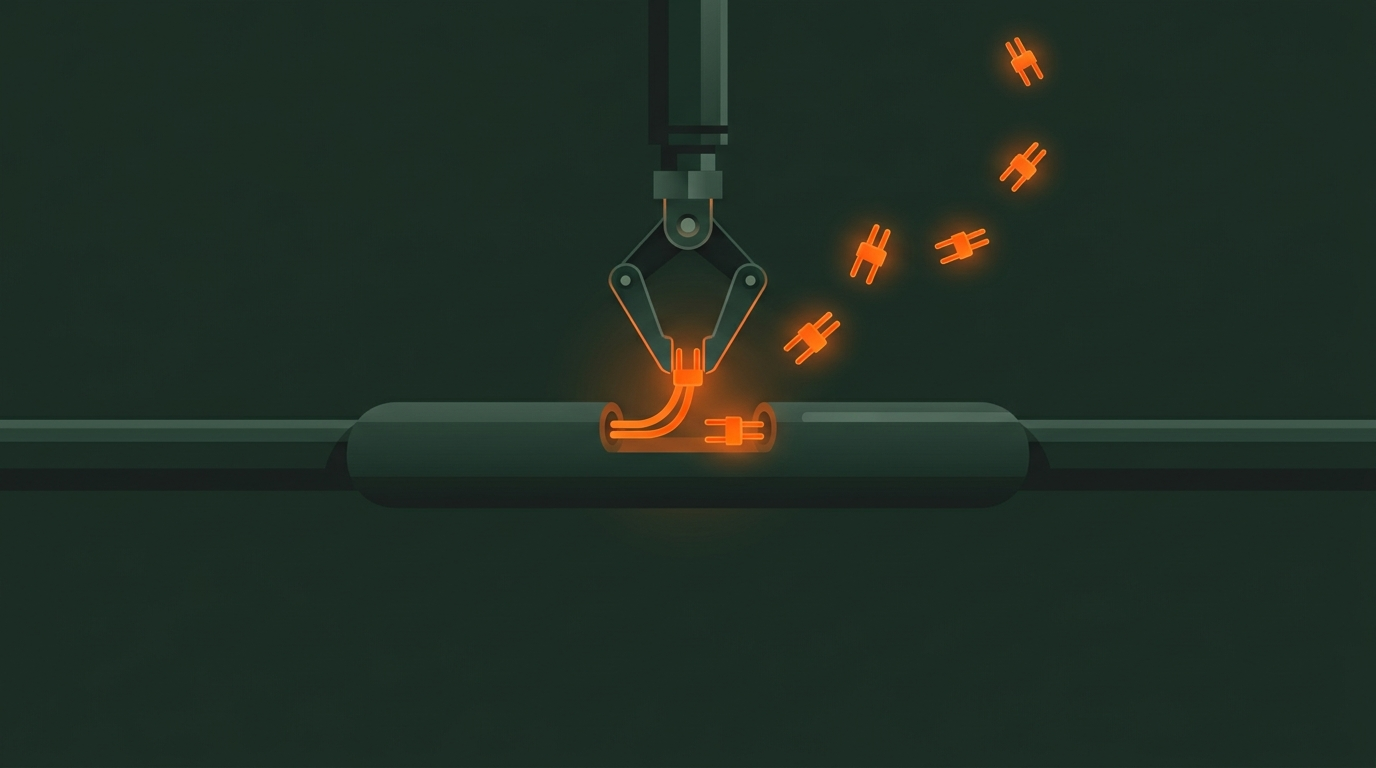
CBL-514 adopts a fundamentally distinct biological pathway. It selectively inhibits DYRK1B (Dual-specificity tyrosine-regulated kinase 1B), an intracellular protein kinase essential for maintaining adipocyte viability. By shutting down this molecular target, the drug initiates apoptosis—a programmed cellular suicide cascade wherein cells systematically self-dismantle.
Once DYRK1B activity is blocked, targeted adipocytes undergo membrane blebbing and lysis. Surrounding macrophages and immune cells then digest and clear the cellular debris. Rather than draining the reservoir, the mechanism demolishes the storage tanks altogether, producing a physical reduction in absolute adipocyte count.
 Figure: CBL-514 achieves fat volume reduction by inducing adipocyte apoptosis. Source: SciTechDaily (EASD Annual Meeting presentation data)
Targeted Apoptosis in Action: A 10% Drop in Visceral Fat Over 12 Weeks
The research team conducted two Phase 2 clinical trials, designated CBL-0204 and CBL-0205. The primary efficacy analysis evaluated an MRI subgroup of 40 participants with body mass index (BMI) levels ranging from 22 to 30, encompassing healthy-weight to overweight profiles.
Participants were randomized into two cohorts: 23 received subcutaneous CBL-514 injections, while 17 received placebo injections. Doses were administered subcutaneously into the lower abdomen once every 3 weeks at up to 600 mg per session, across a treatment course lasting up to 12 weeks. As the abdominal fat layer thinned, injection frequency was adjusted downward accordingly.
Baseline magnetic resonance imaging (MRI) revealed comparable starting volumes of visceral fat—the deep adipose tissue packed between abdominal organs: 642.5 mL in the CBL-514 group and 677.4 mL in the placebo group.
Four weeks following the completion of treatment, visceral fat volume in the CBL-514 cohort declined by an average of 71 mL, representing a 12.01% reduction. Conversely, the placebo group experienced a visceral fat gain of 31 mL (+5.68%). At an extended follow-up visit 8 to 12 weeks post-treatment, the CBL-514 group maintained a 10.45% reduction below baseline, whereas placebo participants trended 11.76% above baseline. The net divergence in visceral fat change between the two arms reached 22.21 percentage points.
A reduction of 71 mL corresponds to roughly one-quarter cup of liquid (approximately 63 to 71 mL). While seemingly modest in absolute terms, shedding over 10% of deep visceral fat yields substantial cardiometabolic dividends.
 Figure: Abdominal visceral fat accumulation is tightly linked to chronic metabolic diseases. Source: New York Post (stock.adobe)
Where Liposuction Cannot Reach: Targeting Lethal Deep Abdominal Fat
Adipose tissue is not uniform throughout the body. Compared to pinchable subcutaneous fat situated just beneath the skin, visceral fat carries significantly greater clinical risks. Deep visceral fat continuously secretes free fatty acids and inflammatory cytokines into the portal venous system, accelerating insulin resistance, type 2 diabetes, and atherosclerotic cardiovascular events.
Many patients turn to cosmetic procedures such as liposuction or tummy tucks. However, surgical cannulas can only reach superficial subcutaneous layers. Because surgery cannot navigate deep into the peritoneal cavity without risking internal organ damage, liposuction provides zero reduction in visceral fat.
CBL-514 demonstrated concurrent reductions across both subcutaneous and visceral depots. Eight weeks post-treatment, 69.6% of treated patients achieved a subcutaneous fat loss of ≥150 mL (approximately 5 fluid ounces, or roughly half a typical single-serve milk carton), compared to 0% in the placebo cohort.
Dr. W. Timothy Garvey, professor at the University of Alabama at Birmingham and consultant to Caliway, emphasized the clinical distinction: “Patients are going to be happy with a flat belly, but what is medically important is the reduction of visceral fat and improvements in blood pressure and cholesterol.”
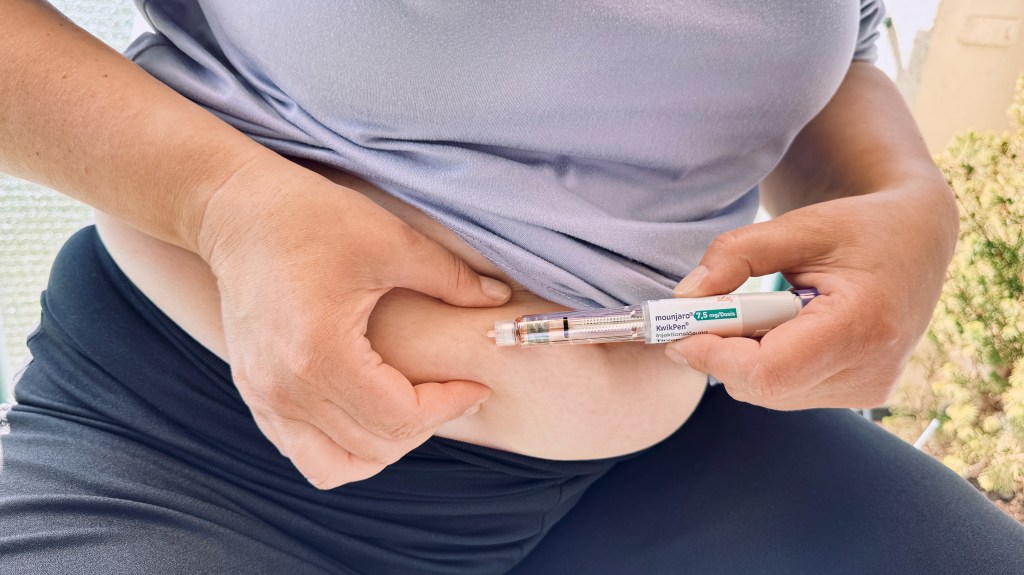 Figure: CBL-514 is a localized small-molecule injectable operating through mechanisms distinct from appetite-suppressing drugs. Source: New York Post (stock.adobe)
Combination Regimens May Delay Rebound, but Human Validation Remains Early
Blockbuster GLP-1 receptor agonists (such as semaglutide, marketed as Ozempic and Wegovy) produce rapid weight loss by curbing central appetite, but discontinuation frequently unleashes rapid weight regain. Real-world clinical evidence shows that patients regain roughly two-thirds of lost weight within a year of stopping GLP-1 therapy. Furthermore, up to 25% of weight shed on incretin therapies can consist of lean mass rather than adipose tissue.
To explore strategies for mitigating rebound, the team conducted combination studies in rodent models. Administering CBL-514 alongside tirzepatide not only produced greater total weight loss in rats, but significantly retarded the rate of weight regain after treatment was discontinued.
Researchers hypothesize that physically removing adipocytes limits the body’s latent energy storage capacity, thereby prolonging the post-treatment rebound window. However, this synergistic mechanism has so far been demonstrated strictly in preclinical animal models and awaits confirmation in human trials.
Concurrently, safety data for CBL-514 showed an encouraging profile. The most frequent treatment-emergent adverse reactions were transient, localized injection-site reactions, including mild erythema, tenderness, and localized swelling that resolved quickly without systemic intervention. No serious drug-related adverse events occurred. The compound has now secured regulatory authorization to enter Phase 3 trials—the pivotal step prior to commercial approval.
The study authors also acknowledged key methodological limitations. While MRI verified physical volume reductions, corresponding systemic improvements in blood pressure and glycemic markers require confirmation in larger cohorts. Furthermore, the MRI analysis encompassed a modest sample size of 40 participants.
From Shrinking to Physical Deletion: A Structural Shift in Fat Loss
Conventional weight management has historically focused on starving adipocytes into remission. Yet preserving the underlying cellular scaffold leaves an ever-present cellular reservoir for rebound. CBL-514 introduces a paradigm shift: leveraging molecular precision to trigger apoptosis and physically eliminate the cells themselves.
While significant clinical hurdles remain across Phase 3 development, targeted cellular deletion provides a biological countermeasure against the relentless yo-yo effect. By shifting the objective from temporary cell shrinkage to structural cellular elimination, long-term metabolic health maintenance may finally find firmer footing.
References:
- Science News, October 9, 2026
- European Association for the Study of Diabetes (EASD) Annual Meeting presentation data, Milan