A Summer Splash Sends a Pond Hunter into the Human Nose
On hot summer days, countless people flock to freshwater lakes to swim and dive. When jumping into the water, a sudden splash can force water deep into a swimmer’s nasal passages. In the vast majority of cases, protective mucus and the immune system swiftly clear away any debris or microbes swept in with the flow.
On extraordinarily rare occasions, however, that water carries a single-celled organism: Naegleria fowleri, commonly known as the brain-eating amoeba. In warm freshwater, it spends its life grazing harmlessly on bacteria. But once flushed into the nasal cavity, it can crawl along the olfactory nerve straight into the cranial cavity, destroying brain tissue in its wake. In the United States, fewer than 10 cases occur each year—making the odds lower than being struck by lightning—yet the fatality rate remains nearly 100%.
The public often assumes that this microscopic creature possesses a predatory instinct specifically tuned to seek out human brains. New findings from cell biologists shatter that myth: this single-celled predator has no innate drive to attack human tissue. It is simply a hunter on a foraging run that took a disastrously wrong turn.
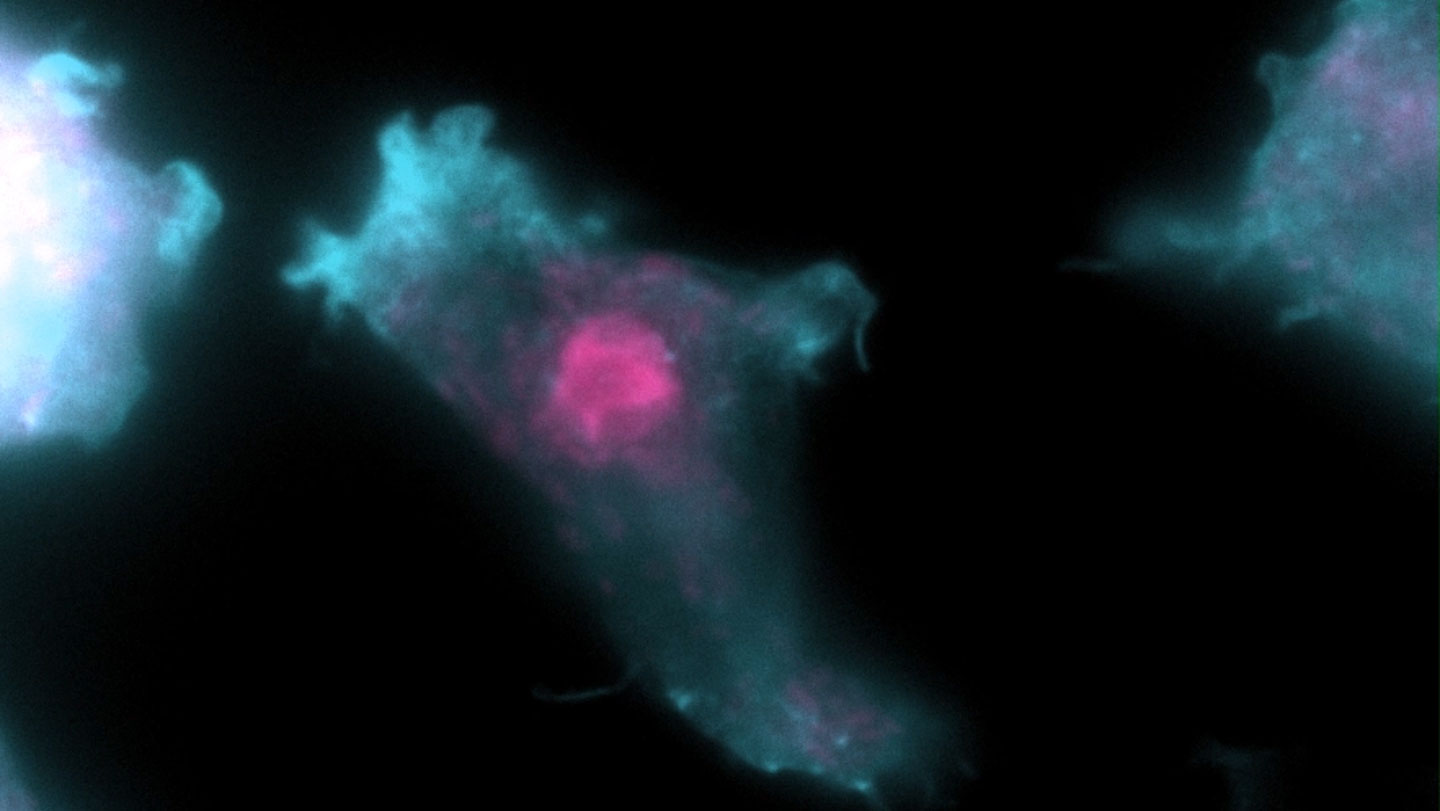 Photo: Microscopic image of Naegleria amoebae under experimental observation. Source: Science News / K.B. Velle et al., PNAS 2026
Narrow Channels Double the Amoeba’s Crawling Speed
On September 10, 2026, researchers supported by the Howard Hughes Medical Institute (HHMI) published a study in the Proceedings of the National Academy of Sciences (PNAS). The team placed these single-celled organisms under a microscope to track exactly how they crawl when forced through extremely confined spaces.
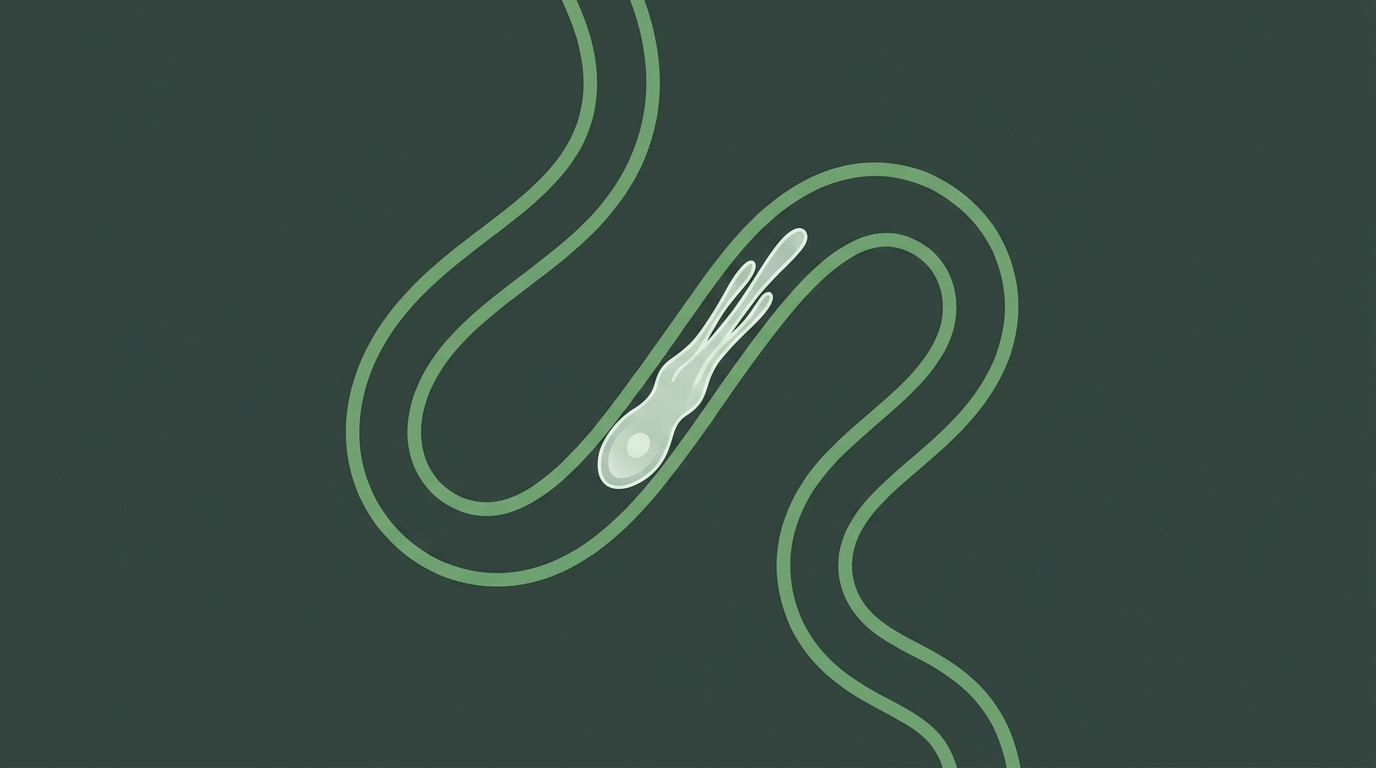
To record their journeys, the scientists fabricated microfluidic channels on chips, with widths just a fraction of a human hair. The amoeba measures around 20 micrometers across—roughly one-fifth the thickness of a human hair. When squeezed into narrow channels even smaller than their own bodies, the amoebae exhibited counterintuitive behavior.
In open fluid, the amoebae crawl relatively slowly. But the moment they enter a tight microchannel, their crawling speed doubles. Rather than slowing them down, confinement acts as an accelerator.
Like Microscopic Robots, the Amoebas Never Turn Back
At channel intersections and dead ends, the amoebae displayed equally striking persistence. Most single-celled organisms back up or change direction when meeting an obstacle. Naegleria, by contrast, almost never retreats back through the opening it entered.
Even when encountering sharp turns or bifurcations, they persistently push forward. As the research team observed: “They’re like robots. They just go and go and go.”
This unrelenting forward momentum is powered by the cytoskeleton of the amoeba, extending pseudopods to creep relentlessly ahead. To test whether this behavior was unique, researchers evaluated another common type of amoeba under identical conditions. That amoeba neither accelerated in narrow channels nor showed any obsession with moving forward. The finding confirms that this persistent, forward-only drive is a hallmark of the genus Naegleria.
 Photo: Amoebae exploring narrow microfluidic channels in the laboratory. Source: Science News / K.B. Velle et al., PNAS 2026
Experiments with a Harmless Relative Reveal a Deadly Byproduct
Because Naegleria fowleri carries a fatality rate near 100%, culturing dangerous pathogenic strains in a standard laboratory carries immense risk. The team instead conducted experiments using its harmless relative, Naegleria gruberi. As cell biologist Lillian Fritz-Laylin put it: “It’s a lot safer to work with something that can’t kill you.”
The two species share virtually identical cellular architecture and motor proteins. Experiments confirmed that both follow the exact same microscopic crawling mechanics.
“We know almost nothing about the basic biology of these organisms,” noted Fritz-Laylin, an investigator at the University of Massachusetts Amherst and HHMI. The microfluidic experiments demonstrated that the driving force sending the amoeba deep into the nasal cavity stems directly from fundamental, physical cellular properties.
Hunting Tactics Evolved for Pond Sediment Mistakenly Target the Brain
In the wild, Naegleria thrives in the sediment at the bottoms of warm freshwater lakes and ponds. Grains of silt and mud form a labyrinth of micrometer-scale crevices.
The bacteria that Naegleria feeds on cluster deep within these muddy crevices. To forage efficiently, Naegleria evolved its speed boost in tight spaces and its relentless forward drive. These traits allow the amoebae to squeeze through packed sediment and steadily expand their hunting territory.
When water is forced deep into human nostrils, the tiny crevices along the olfactory mucosa mimic the geometry of that muddy labyrinth. As Fritz-Laylin emphasizes, put one at “the wrong place at the wrong time, and it can cause devastating infection.” Hunting tactics honed in lake sediment inadvertently match the anatomical highway leading directly to the brain.
An Evolutionary Coincidence Behind a Microscopic Tragedy
The single-celled organism harbors no animus toward humans or brains. The exploratory instincts it evolved to survive in pond mud simply overlap with the anatomy of the human nasal passage.
The amoeba operates like a microscopic robot following programmed cues. In muddy pond bottoms, that program guides it to bacteria. In the human nasal cavity, the exact same routine compels it through narrow channels, across physiological barriers, and into brain tissue.
Recognizing this evolutionary coincidence provides crucial scientific insight for tackling these fatal infections. The single-celled hunter bears no malice; it is merely obeying its survival programming, crawling relentlessly wherever the crevice leads.
References:
- Science News Report
- PNAS Research Article