A Patch Intended to Fix Vulnerabilities Stripped Away the Defense Wall
On August 17, 2026, cybersecurity firm Wiz disclosed an unauthorized access incident targeting data giant Snowflake. Snowflake’s internal Jira system was compromised, exposing internal engineering records and security compliance projects. Unexpectedly, the key catalyst opening the door to attackers was Microsoft’s AI coding assistant, GitHub Copilot Autofix.
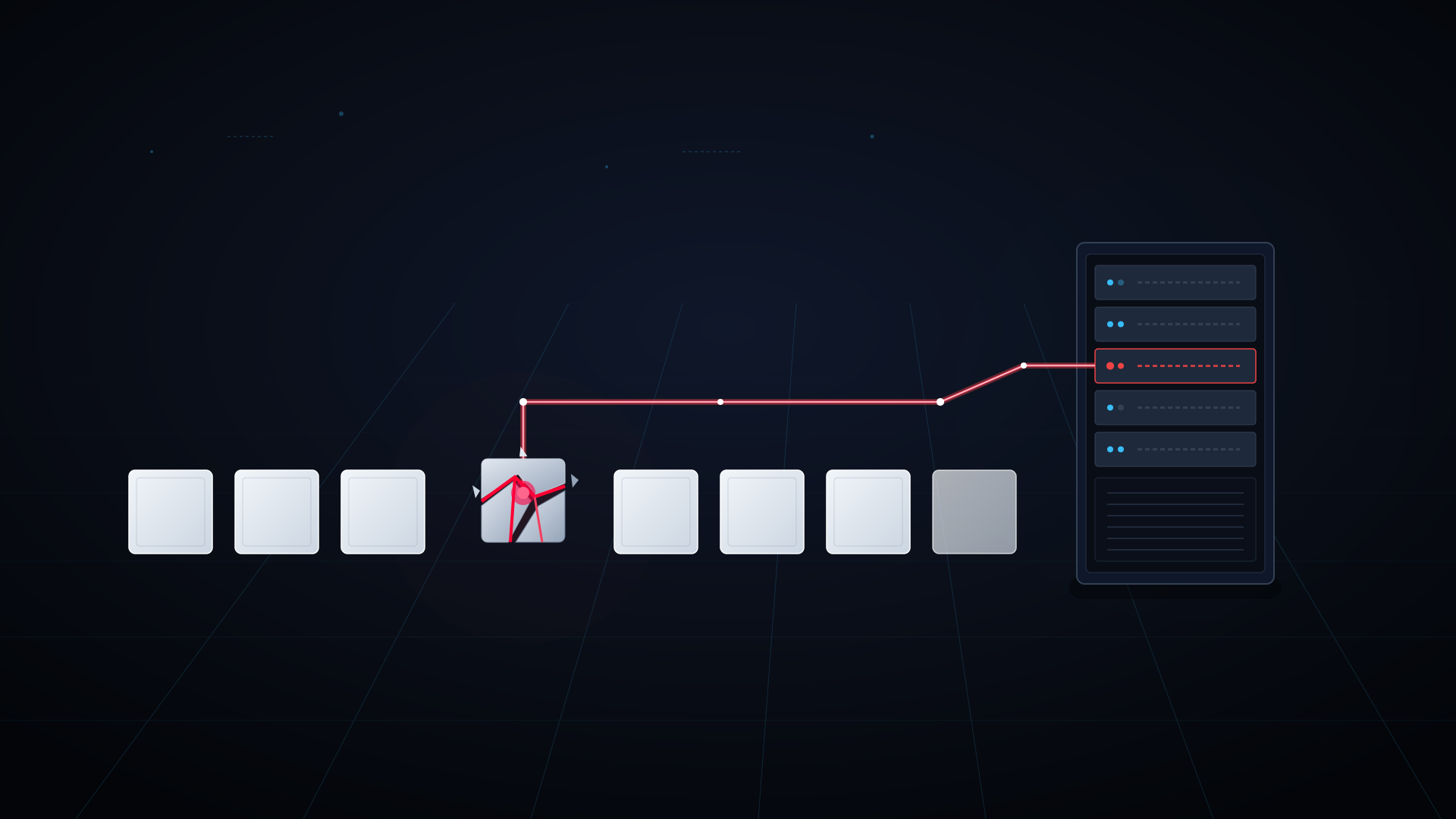
In a pull request merged on June 18, 2026, the AI coding assistant participated in and reviewed a fix for an automated workflow. The code review mechanism marked the submission as security-approved. However, during modification, the AI replaced the original security structures preventing command injection. This change destroyed existing security boundaries, turning a patch meant for remediation into a trap exposing system credentials.
Defenses Silently Failing: The Illusion of a Perfect Security Guard
To handle user-submitted titles in automation scripts, data must be strictly isolated from instructions. The original author used environment variables and the structured parsing tool jq --arg to pass data, ensuring parameter inputs wouldn’t be executed as shell commands by the interpreter. But in automated fix PR #1218, lacking historical context, the AI replaced the safe parsing code with direct inline string interpolation: TITLE=$(echo '${{ github.event.issue.title }}' | sed ...).
 Diagram: AI automated pull request review. Source: Unsplash / El Solitario
Under GitHub Actions execution semantics, expression expansion occurs before the Bash interpreter reads the command. If a user-submitted title contains a single quote ', it easily breaks out of the single-quote syntax boundary to execute arbitrary system commands inside the runner OS image. Even if sed attempts to filter the string, escaping occurs after the shell AST has already been broken, leaving defenses entirely ineffective.
Worse yet, the workflow’s identity defense logic suffered a critical flaw. The original code attempted to filter specific bot actions by checking github.event.pull_request.user.login. However, in issue-triggered events, the pull request object is strictly null. Accessing a property on null caused conditional checks to silently fail and pass by default, causing static analysis tools to completely miss intercepting the vulnerability.
AI Hacker Self-Correction: From Syntax Error to Exfiltrating Credentials in 5 Seconds
The vulnerability lurked in the repository for just 5 days. On June 23, 2026, Wiz Red Agent, an autonomous security agent scanning Snowflake’s bug bounty program, automatically discovered and targeted this high-risk interface. Unlike traditional automated scripts, this AI agent demonstrated astonishing engineering reasoning and self-correction capabilities.
In its first attempt, Red Agent tried using a hash # to comment out trailing commands, but an extraneous closing parenthesis triggered a Bash syntax error. Facing the execution failure log, the AI agent didn’t give up. It instantly analyzed the error output, adjusted its payload, and switched to ; echo ' to close the syntax tree. The second attempt succeeded within seconds, rapidly exfiltrating sensitive data—including Jira credentials, email addresses, and system URLs—encoded to a designated test server.
The leaked tokens allowed the attacker to log into Snowflake’s Atlassian platform as a test account, directly viewing internal engineering architecture and compliance vulnerability reports. Although Snowflake’s team urgently merged PR #1402 upon responsible disclosure to fix the vulnerability and rotate credentials—with audit logs confirming Wiz as the sole visitor—this real-world AI-vs-AI incident highlights an extraordinarily stark adversarial landscape.
 Diagram: Terminal executing injected command. Source: Unsplash / El Solitario
Generating and Exploiting Bugs: The Blind Spots of AI Automation
According to official statistics, Copilot Autofix has helped developers remediate over 460,000 security alerts. This demonstrates incredible efficiency at scale, but in complex scenarios lacking deep context, hidden blind spots are magnified proportionally. When enterprises blindly trust AI-approved security labels, cracks in the defense line inevitably open.
Reports published by the Cloud Security Alliance (CSA) in May and August 2026 noted that AI agents—including CodeRabbit, Cursor, and Gemini CLI—are deeply integrated into infrastructure pipelines, with some tools themselves exposed to critical CVSS 10.0 vulnerabilities. When AI agents are granted code merge and deployment privileges, their security directly determines the survival of the entire software supply chain.
In real-world development ecosystems, open-source repositories are filled with non-standard automation templates. LLMs absorb numerous flawed examples during training. When developers use AI to generate or review code, models tend to output generic patterns that pass syntactic rules but lack defensive awareness. Static analysis tools fail to catch business logic flaws like null-pass conditions, letting defenses crumble quietly amidst layers of automation.
Human Reviewers Cannot Be the Only Safety Net
The Snowflake security incident reveals a profound new reality: an AI coding assistant silently removed injection defenses while patching a bug, and an AI security agent automatically probed and exploited that exact vulnerability within the same week. AI is now both generating and consuming vulnerabilities automatically, leaving human review as the sole unautomated island in the pipeline.
When both offense and defense deploy AI, cybersecurity is no longer a speed race to write code, but a battle for mastery over historical context and edge conditions. Strict syntactic guardrails must be established for AI agents, forbidding them from substituting structured parsers with raw string interpolation. If human reviewers merely click approval out of habit for AI-generated patches, the CI/CD security ledger will soon become unsustainable.
Reference Links:
- Wiz Official Security Analysis: Snowflake Internal Jira Credential Leak Incident
- HackerOne Bug Bounty Disclosure Record
- Hacker News Community Technical Discussion
- Cloud Security Alliance (CSA) AI Agent Automation Security Report