A 166K-Like Backlash: How Readers Are Exercising the Right to Refuse with “AI;DR”
On August 16, 2026, a brief post by developer @seclilc on X rapidly gathered 346,000 views and 166,000 likes. The post introduced a new acronym: “AI;DR”—short for “AI; didn’t read.” Over the next two days, the concept ignited heated discussions across Substack and Hacker News, where a single discussion post earned 473 points.
While internet users previously relied on “TL;DR” (Too Long; Didn’t Read) to express exhaustion with lengthy texts, the emergence of “AI;DR” marks a fundamental shift in how readers approach written content. Tech practitioner Rick Manelius noted in his article AI;DR that despite being an enthusiastic proponent of artificial intelligence, receiving unedited and unreviewed AI text output still triggers a sense of visceral discomfort. This psychological aversion is spreading into a widespread public sentiment against the deluge of machine-generated content.
This sentiment was captured by community member gortok in a sharp comment on Hacker News: “If you didn’t take the time to write it, why should I take the time to read it?” Readers are using this stance to exercise their right to refuse, reclaiming control over where they direct their attention. It signals that AI-generated text has moved beyond being a mere productivity tool, sparking a broader crisis of social etiquette around respect and integrity.
Zero-Cost Production and the Heavy Tax on Human Trust
For generations, text-based communication among humans has rested on an implicit social contract: the author invests time in thinking and writing, while the reader invests attention in absorbing and understanding. Generative AI models have broken this natural balance by reducing the marginal cost of producing written text to near zero. When anyone can generate a multi-thousand-word report or message with a single prompt, text loses the weight of human effort and thought behind it.
When the barrier to writing drops to zero, the time spent reading becomes a rare luxury. Readers are forced to sift through mountains of empty prose and filler text. The true cost of generative AI is not just compute resources, but a heavy tax levied on overall human trust and attention.
This erosion of trust is particularly evident in professional collaboration. While customers accept automated responses in standardized support settings, posting long, uncurated LLM outputs in internal channels like Slack is increasingly viewed as lazy and disrespectful. The core value of written text lies not only in the raw information transmitted, but in the thought, care, and genuine intent embedded between the lines.
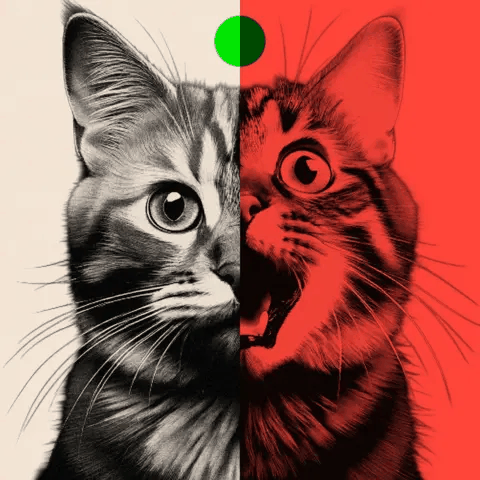 Image: Comparison of the same cat in a real photo vs an AI-generated image. Source: BBC
Platform Cleanup and the Internet’s “Prove You’re Human” Rituals
The flood of low-quality content poses a threat not just to individual readers, but to the entire ecosystem of digital platforms. Citing research from Kapwing, the BBC reported that approximately 20% of YouTube Shorts recommended to newly created accounts consist of low-quality, AI-assembled content. This indicates that recommendation algorithms are struggling against automated production, allowing low-grade content to crowd out genuine creators.
Even more surprising is the monetization scale of these “slop generators.” For instance, an AI channel named Bandar Apna Dost amassed 2.07 billion views through automated video creation, earning an estimated $4 million annually. These massive revenues highlight how automated arbitrage exploits the attention economy. Without intervention, unchecked automated content risks overwhelming core digital infrastructure.
In response, major platforms and communities are launching self-defense initiatives. As reported by The New York Times, LinkedIn introduced a “Seems like AI slop” reporting option in July 2026, while quietly phasing out its own AI post-polishing tools. The shift by tech giants from promoting AI writing features to building defensive safeguards demonstrates a growing realization that unchecked generative content damages user trust.
Within online communities, everyday users are engaging in playful yet practical ways to prove their humanity. Because large language models heavily favor using em dashes (—), many forum users intentionally type double hyphens (--) to signal human authorship. Using distinct typing quirks to distinguish humans from machines underscores the public’s heightened vigilance against synthetic text and imagery.
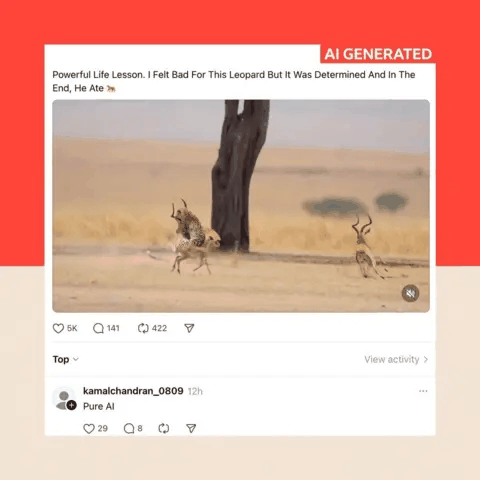 Image: AI-generated image of a leopard widely circulated on Facebook, with users adding warning comments. Source: BBC
Reshaping Digital Etiquette: Do You Respect My Attention?
Not all tech commentators share the exact same view. Tech writer Alberto Romero pointed out that the premise behind AI;DR assumes reading boycotts can curb AI slop much like boycotting fast fashion curbs waste. However, since reading is inherently a private act, individual refusal rarely manifests as collective pressure. His critique suggests that reader boycotts alone may not fully halt the spread of automated content generation tools.
Nevertheless, the rapid adoption of “AI;DR” has launched a broader conversation about digital etiquette. What people are rejecting is not technology itself, but the dismissive attitude of dumping raw AI output onto others to fulfill an obligation. In an era of severe information overload, forwarding unvetted machine text simply offloads the burden of curation onto the receiver.
In this ongoing balance between human effort and machine productivity, editorial discretion and quality control matter far more than generation speed. When anyone can produce thousands of words in a second, taking the time to think, condense, and edit becomes the ultimate demonstration of respect. The trust built around human attention is fragile—once overdrawn, restoring genuine communication will come at a cost too high to bear.
Reference Links:
- Rick Manelius: AI;DR (AI; Didn’t Read)
- NYT: AI Slop Is Everywhere. Spotify, LinkedIn and Others Have Had Enough.
- BBC: Kapwing AI Content Research
- Hacker News Community Discussion (item?id=44937829)