The Vanishing Neutral Public Square
The world’s largest open-source AI public square is about to bear the nameplate of the world’s largest closed-source hardware manufacturer. According to Bloomberg and other media outlets, NVIDIA is attempting to acquire Hugging Face for $13 billion. This acquisition, which could set a new record in AI infrastructure, immediately sent a chill through the developer community.
Hugging Face currently hosts millions of open-source models and datasets. This sheer volume indicates that during this phase of explosive growth in model varieties, developers have become heavily reliant on a single distribution network for code flow and deployment. On this neutral soil, anyone can freely distribute and test models. Once the platform falls into the hands of a single hardware vendor, this delicate ecological balance will face disintegration.
Distribution Rights as the Hardware Moat
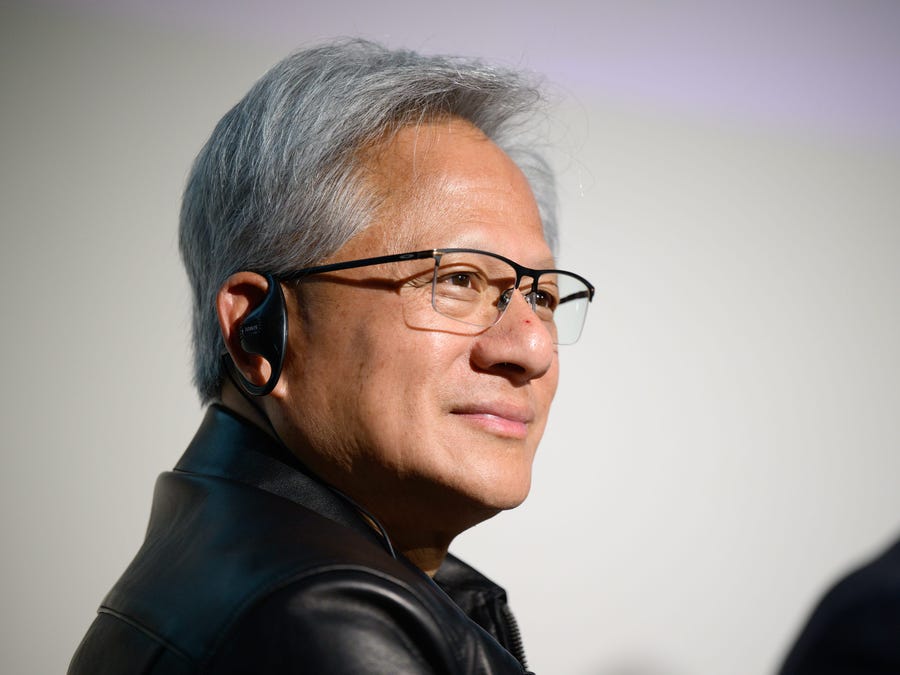 Image: NVIDIA CEO Jensen Huang. Source: Business Insider / Bloomberg
In this author’s view, NVIDIA is not obsessed with the models themselves; it wants to secure the chokepoint of next-generation AI computing power. The $13 billion buys control of the shelves in the “AI App Store.” When developers worldwide are accustomed to fetching weights from Hugging Face, the deployment toolchains integrated by default on the platform become an invisible barrier that is extremely difficult to cross.
NVIDIA’s current computing hegemony is largely built on the monopoly of its CUDA ecosystem. If Hugging Face belongs to NVIDIA, they only need to bias the default inference options of models towards their own optimization libraries to quietly lock newly emerging applications within the CUDA ecosystem wall. This soft constraint based on upper-layer distribution infrastructure is far more lethal than underlying hardware exclusivity agreements. Chip startups attempting to break through by ensuring compatibility at the intermediate layer may find themselves without even a seat at the table.
A Price Tag on Open-Source Faith
 Image: Hugging Face Logo with shipping container warehouse visual metaphor. Source: Ars Technica / Hugging Face
Hugging Face’s management has long been wary of these stakes. In late 2025, NVIDIA proposed a $500 million investment based on a $7 billion valuation for the platform. At that time, Hugging Face explicitly rejected the funds, citing that the platform could not bring in a dominant player who would influence decisions. This confirms that the core premium of an infrastructure network is precisely its non-aligned nature; any exclusive bundling would dilute its community value.
Just half a year later, the acquisition offer skyrocketed to $13 billion. The heavy blow of capital is testing the pressure limits of open-source faith. Microsoft has also attempted to engage with Hugging Face, but failed to advance into deep waters. The logic of tech giants hunting the open-source community is highly consistent: in a future where computing power is highly homogenized, controlling the distribution channel is equivalent to controlling the flow of developers.
Who Will Guard the Community Boundaries?
Neutral developer grounds are becoming an extremely scarce asset. NVIDIA’s massive $13 billion bid to acquire Hugging Face essentially transforms a public square into a racetrack for its own computing power. When the largest chipmaker simultaneously controls the largest model distribution hub, the independent operating space of the open-source ecosystem will be severely compressed.
This transaction directly exposes the centralization risks of the AI era. When $13 billion is enough to buy out the gateway to a thriving open-source ecosystem, the rules of the game for frontier innovation have already changed. The real question now is: under the dual squeeze of capital and computing power, how long can the next neutral refuge hold out?
Reference Links:
- Business Insider Report
- The Information Report
- Bloomberg Report