Identical Sensory Inputs Become Two Different Objects Under Different States
Walking down a quiet, dark narrow alley late at night, a sudden rustle of leaves will send your heart rate spiking immediately as the brain sounds a danger alarm. But hearing the exact same volume of rustling in a sunlit park, most people would simply assume it’s a pigeon flapping its wings to take off. The vibration frequencies striking the eardrum are identical, yet the brain assigns the two identical sounds to completely different categories.
For a long time, traditional neuroscience depicted the brain as a passive filing cabinet. Under this legacy view, the eyes, ears, nose, and tongue receive fine details first, and the brain decodes features layer by layer before matching templates in a memory bank. If the brain were truly a faithful recorder, identical sounds should trigger identical judgments without being arbitrarily warped by environment or mood.
On August 24, 2026, Lisa Feldman Barrett, a psychologist and neuroscientist at Northeastern University, and Earl Miller, a neuroscientist at MIT, published joint research redefining categorization—the cognitive mechanism by which the brain treats distinct things as equivalent. Their study demonstrates that the brain is a predictive engine that constantly evaluates the body’s internal state and actively reduces the dimensionality of incoming information.
Ninety Percent of Visual Cortex Connections Transmit Outward Predictions
Intuitively, people assume vision works like a camera: whatever the eyes capture, the mind displays. Yet anatomical data reveals that approximately 90% of synaptic connections (synapses, the junctional connections where chemical and electrical signals pass between neurons) in the human visual cortex are dedicated to transmitting top-down prediction signals sent outward by the brain. Raw feedforward signals (the raw sensory data transmitted from the external world into the deep brain) account for less than 10% of the cortex’s connection resources.
This data outlines a picture that completely overturns intuition: when processing visual information, the vast majority of neural wiring is running internal predictions, leaving incoming real-time sensory inputs as a minority channel. As noisy external signals travel deep into the brain, they also undergo drastic layer-by-layer compression. Converging from a vast number of dense, small neurons into fewer, strongly connected large neurons, fine details are stripped away, leaving only highly abstract concepts.
This anatomical architecture means the brain cannot process all incoming sensory details; it must rely on feedback signals (predictions sent outward based on prior experience) to filter information in advance. In the daily operation of the nervous system, the brain primarily monitors unexpected occurrences that mismatch its predictions. Only when a prediction errs do sensory signals travel upward to adjust the prediction.
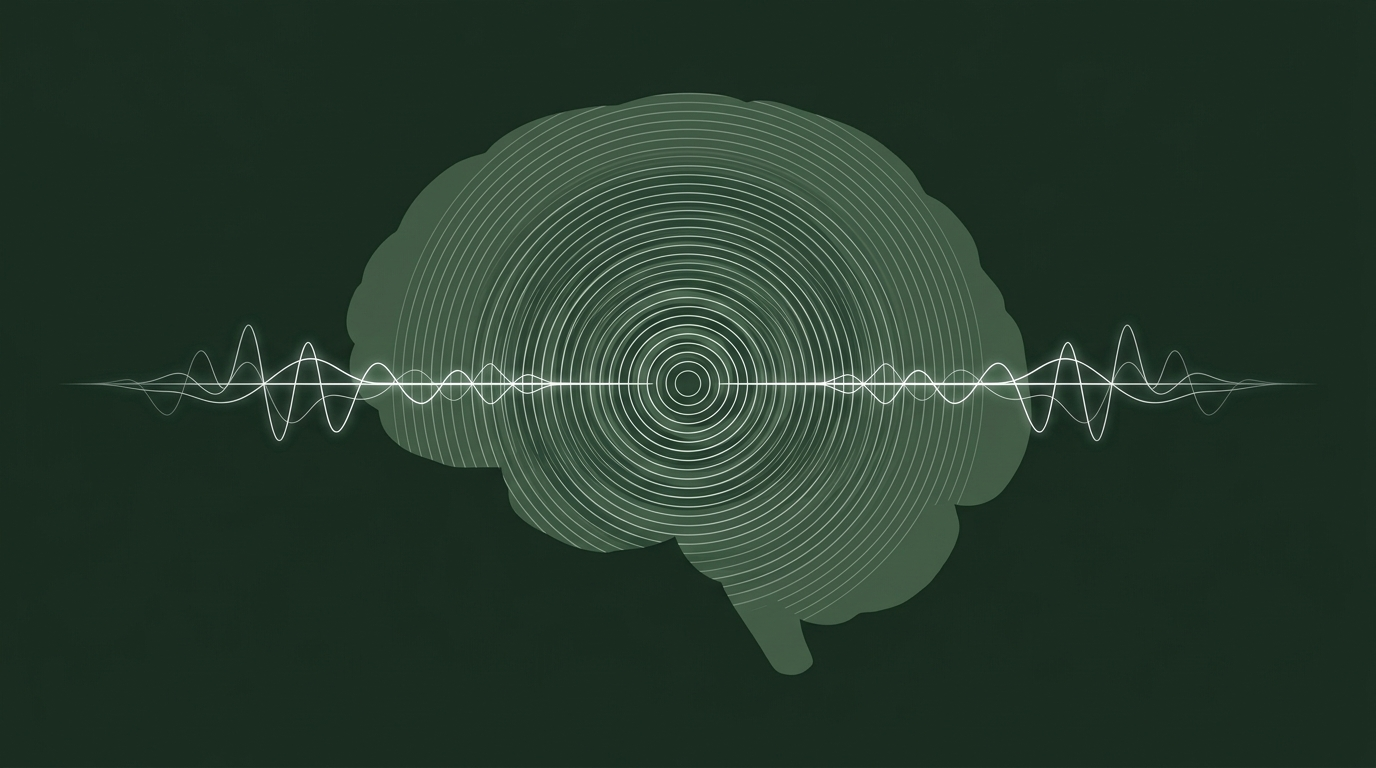
 Figure: Visual illustration of the brain compressing a noisy sensory world into distinct categories. Source: Quanta Magazine
Two Scholars Who Never Collaborated Find Convergence at the Limbic Core
In the neuroscience community, Barrett and Miller previously operated in distinct research spheres. Barrett focused on emotions and cognition from a macro perspective of psychology and brain networks, while Miller long investigated at the micro level how neurons in the prefrontal cortex encode working memory. In 2025, Barrett reached out to Miller for an interdisciplinary collaboration to bridge electrical signal measurements with high-level cognitive architecture.
Their research converged at the limbic core—a deep brain region adjacent to the hypothalamus specialized in compressing physiological signals and external sensory info. In the past, scholars generally believed that the origin of brain prediction signals resided in the cerebral cortex responsible for high-level thinking. However, recent anatomical evidence indicates that the true starting point of predictive signals is the limbic core right next to the hypothalamus.
The hypothalamus constantly monitors body temperature, blood glucose, heart rate, and hunger. The limbic core compresses internal physiological indicators and incoming sensory signals to the highest degree, forming a bidirectional neural hub. Prediction is not an exalted rational process; at the foundational level of the nervous system, it is intertwined directly with physiological metabolism.
The Ultimate Consideration of Labeling Everything Is Energy Allocation
Why does the brain go to such great lengths to compress information? The new framework points to allostasis—the regulatory mechanism by which an organism predicts and allocates energy in advance for survival. The primary directive of the nervous system is managing the body’s energy budget. Running massive numbers of brain cells is extremely calorie-expensive; proactive prediction and categorization serve as an efficient energy-saving strategy.
The category “apple” contains far more than visual traits like roundness and redness; it encompasses an action plan tailored for the body. A slightly bruised apple, when the body is exhausted and hungry, will be categorized as urgently needed food, triggering salivation and gastric motility. Immediately after a full meal, that same apple might be categorized as stale garbage, inducing disgust and prompting a gesture to toss it out.
Having your leg brushed by a blade of grass in a safe living room will be deemed a harmless contact by the body. But when you are spooked in a dark wilderness, the exact same brushing sensation is instantly categorized as a snakebite threat. The internal state of energy balance and safety demands consistently determine which category sensory signals get mapped into.
 Figure: The brain labels objects based on current physiological needs rather than objective features. Source: Quanta Magazine
Emotions and Perceptions Are Essentially Body Action Plans
This theory simultaneously refreshes our understanding of emotion. Emotional categories like fear, anger, and sadness are not hardwired, pre-packaged circuits built into the brain. They are essentially action plans generated by the brain temporarily mobilizing full-body resources to meet the energy demands of specific situations.
Timothy Buschman, a neuroscientist at Princeton University, commented that the rationale for categorization depends entirely on the task at hand; humans continuously categorize objects according to their survival significance for the individual. Sandra Reinert, a researcher at UCL (University College London), also noted that internal physiological states exert just as much influence over categorization outcomes as external sensory inputs.
The entire human process of perceiving the world is never a sequence of “see first, then understand.” The brain is constantly generating guesses based on the body’s energy ledger and past experience, while the senses merely fine-tune when guesses turn out wrong. The categories and reality we perceive are precisely survival plans carefully compressed and delivered to the body by the brain, allowing humans to live low-cost lives in a complex world.
 Figure: Sensory signals and internal body states jointly determine categorization outcomes. Source: Quanta Magazine
Reference Links:
- Quanta Magazine Report
- Nature Reviews Neuroscience Paper