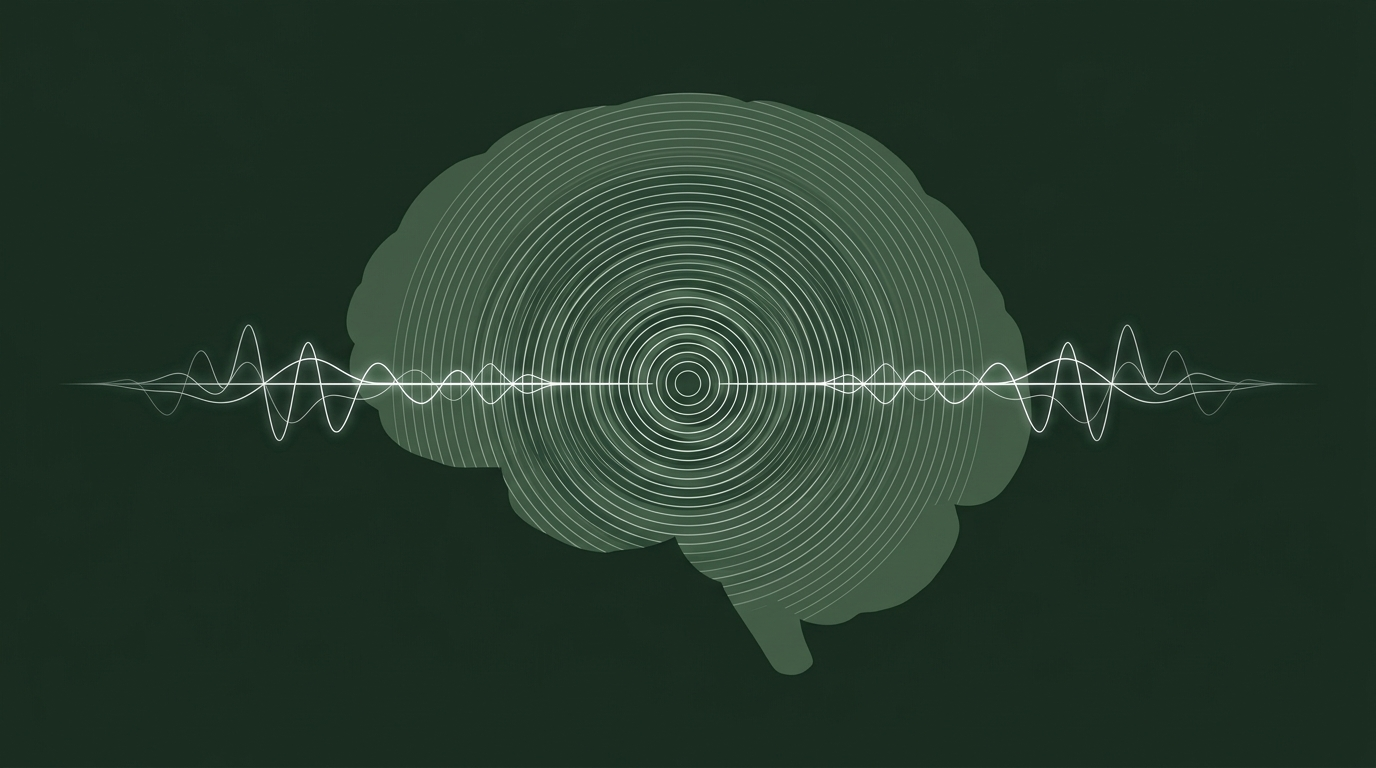
When you sit in a packed stadium and tens of thousands of spectators rise and throw their arms in unison, a human wave sweeps across the stands. When you walk through a grocery store deciding what to buy, a remarkably similar phenomenon unfolds across your mind: waves of electrical signals propagating through neural tissue. The cerebral cortex—the wrinkled outer mantle of neurons governing perception, language, and executive decision-making—is continuously coursing with these waves. The brain devotes roughly half of its energetic resources simply to maintaining electrochemical gradients across cellular membranes. In practical terms, that means about a quarter of your daily caloric intake is consumed solely to keep tens of billions of neurons poised on a knife’s edge, ready to fire at a millisecond’s notice.
Stadium Waves and the Brain’s Hidden Signals
As far back as the 1920s, medicine pioneered electroencephalography (EEG), a non-invasive technique that records voltage fluctuations from electrodes placed on the scalp. For nearly a century, neuroscientists largely dismissed these oscillating waves as the background hum of neural machinery—much like listening to the revving of an engine, evidence that the motor is running but revealing little about the steering. Shielded behind a thick skull and cerebrospinal fluid, scalp electrodes could capture only blurred, aggregate rhythms, masking the fine-grained spatial structure underneath.
Conventional models long assumed that cortical oscillations traveled primarily as simple planar waves—flat wavefronts sliding uniformly in a single direction. A landmark 2024 study in Nature Human Behavior dismantled this assumption. Neural traveling waves do not merely drift; they actively shuttle across the cortex in functional trajectories. When you focus on a street sign ahead, waves surge from the visual cortex at the rear of the skull forward to the prefrontal cortex, which orchestrates working memory and planning. The moment you pause to retrieve a street name from memory, the propagation direction flips in reverse.
100 Intracranial Electrodes Capture Rotating Neural Waves
To map the true trajectory of these electrical currents, researchers had to bypass the dampening barrier of the human skull. A team led by Joshua Jacobs and Anup Das at the University of Chicago identified an elegant clinical opportunity. They monitored patients suffering from drug-resistant epilepsy who had undergone surgery to implant intracranial electrode grids—roughly 100 microelectrodes placed directly on the cortical surface to pinpoint seizure foci.
With patient consent, the team recorded high-fidelity electrophysiological data while participants remained awake and engaged in cognitive tasks. With 100 microelectrodes distributed across a patch of cortex no larger than a postage stamp, the setup was the neural equivalent of installing a dense grid of meteorological stations across a microclimate. This unprecedented spatial resolution allowed neuroscientists to observe the coordinated firing of neuron populations at a level of detail never before achieved in living humans.
In April 2026, the team published their findings in Nature Communications. For the first time in awake humans, researchers observed two entirely distinct classes of traveling waves. The first was a concentric wave—emanating outward from a central point like ripples spreading across water after a pebble drops, or converging inward toward a central sink. The second was a rotating spiral wave: a vortex of electrical fields spinning clockwise or counterclockwise around a tranquil central eye.
 Figure: Researchers Joshua Jacobs (left) and Anup Das (right). Source: Quanta Magazine (Courtesy of Joshua Jacobs)
Ripples and Hurricanes: A Functional Division of Memory
These newly documented wave geometries are not random mathematical curiosities; they exhibit a clear division of cognitive labor. During simple verbal memory tasks—such as recalling a list of words displayed on a screen—the cerebral cortex predominantly displayed basic planar and concentric ripples. However, when participants navigated complex 3D virtual environments and had to recall spatial landmarks, the incidence of rotating spiral waves surged markedly. High-dimensional navigation and complex spatial problem-solving appear to recruit these rotational dynamics directly.
Earlier studies overlooked spiral waves because of an observational blind spot. Study co-author Bard Ermentrout, a mathematical biologist at the University of Pittsburgh, illustrated the dilemma with a meteorological analogy. If you stand hundreds of kilometers away on the outer rim of a hurricane, all you feel is a powerful wind blowing in one straight direction. You have no way of knowing the storm is spinning unless your weather station sits adjacent to the eye itself.
Earl K. Miller, a cognitive neuroscientist at the Massachusetts Institute of Technology, emphasized that traveling waves represent a foundational operational motif: “The work coming out is moving this from ‘Are they relevant?’ to ‘This is a major motif of how the cortex processes information.’”
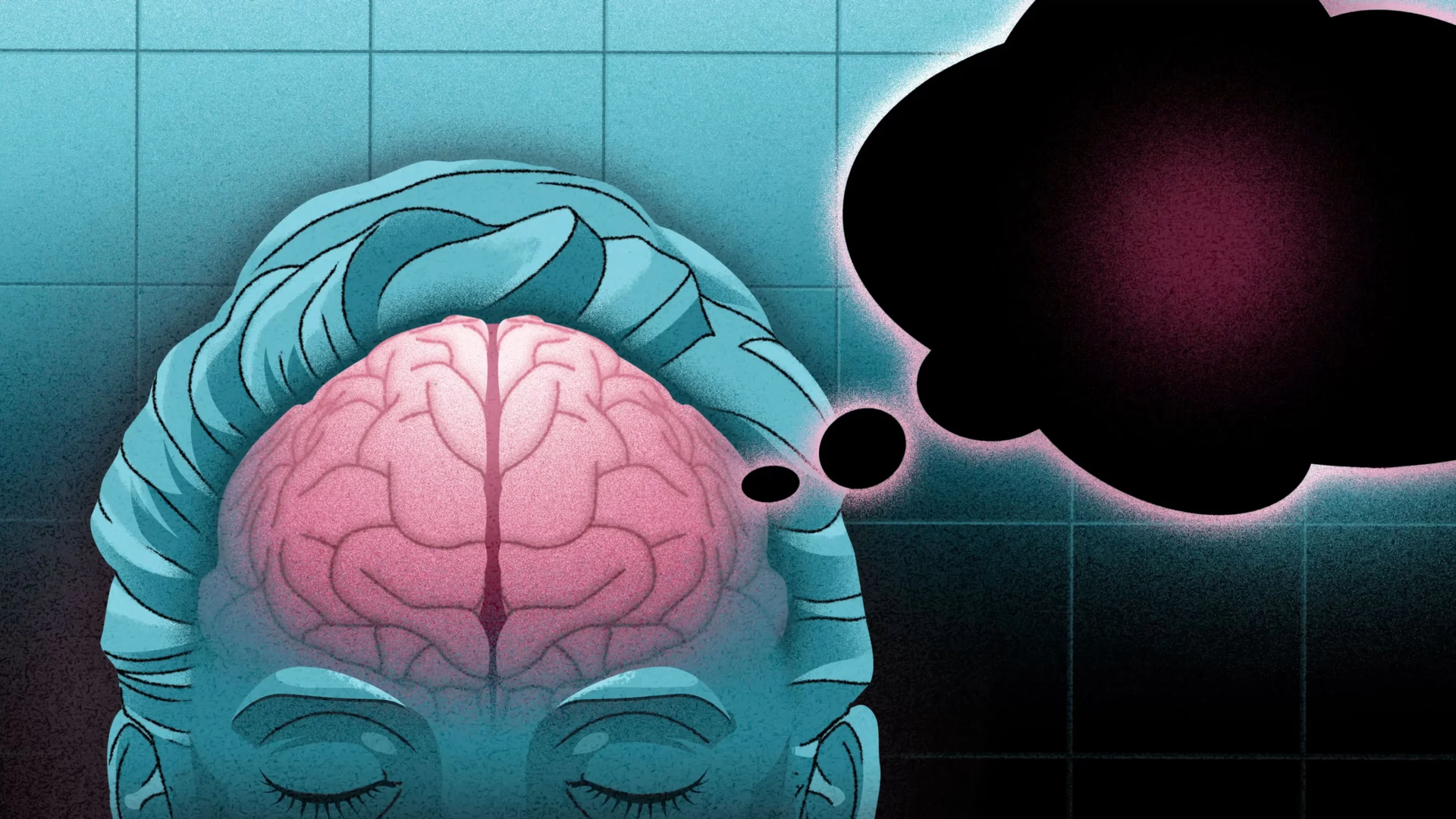 Figure: Artistic rendering of traveling waves in the brain. Source: Quanta Magazine (Mark Belan)
Spiral Axonal Wiring Unlocks Second-by-Second Adaptation
Why does the brain generate spiral and concentric wave dynamics? The answer lies in the fundamental physical constraints of neural architecture. Structural connections between neurons are like concrete highways. Physically growing or remodeling an axon—the long cellular transmission cable that conduits action potentials—requires days, weeks, or even months of biological synthesis. Yet navigating traffic on a bustling street or answering an unexpected question demands adaptive cognitive flexibility within fractions of a second.
A study published in Science in June 2026 revealed the underlying physical circuitry behind these wave patterns. Neuroscientist Zhiwen Ye of the Shenzhen Medical Academy of Research and Translation (SMART) and Nicholas Steinmetz of the University of Washington discovered mirrored, synchronized spiral waves across both hemispheres of the mouse somatosensory cortex—the region integrating tactile sensory input with motor execution. Crucially, anatomical mapping revealed that the underlying axonal pathways in this cortical zone are themselves wired in a spiraling, circular architecture.
As Ye pointed out: “What we found was there is a circuit, a connection of cells to form these waves, to mediate these waves. If they are not important, why would the brain try to wire these cells in this way?” Structural connectivity represents the long-term knowledge baked into the cortical substrate. Traveling waves, by contrast, are the dynamic medium through which that stored information is selectively summoned, recombined, and expressed during active cognition.
Brain Waves as the Mind’s Dynamic Gearbox
Important questions and constraints remain. Intracranial high-density recording grids can only be deployed in patients undergoing invasive clinical evaluations for epilepsy, limiting observation windows to specific surgical zones. Jacobs notes that science may only be glimpsing the tip of the iceberg, and that spiral waves could be far more pervasive across the healthy human brain than currently documented.
Physical neural rewiring operates on the scale of days and months, yet human cognition requires second-by-second adaptation. The discovery of concentric ripples and rotating spiral waves reveals the dynamic mechanism through which the brain reorganizes its activity in real time without altering its underlying physical wiring.
Traveling waves serve as the brain’s internal gearbox. It is this agile, biophysical organizational layer that enables tens of billions of stationary neurons to dynamically regroup in milliseconds, powering every fluid thought, decision, and memory.
References:
- Quanta Magazine Report
- Nature Communications Paper