On September 11, 2026, a remarkable joint declaration appeared on mathandai.org under an uncompromising title: A Severe Misalignment of AI in Mathematics. The document carried the signatures of just 25 initial signatories—every single one of them a Fields Medalist. Spanning nearly half a century of mathematical leadership, the roster stretches from 1978 laureate Pierre Deligne and 2006 medalist Terence Tao to 2026 winner Yu Deng. This unprecedented collective stance by the discipline’s foremost minds arrives at a critical juncture: while Silicon Valley tech giants celebrate conquering one mathematical milestone after another, the thinkers who understand mathematics most intimately sense a profound crisis.
The genesis of this crisis lies in a fundamental paradigm shift within AI research and development. In an effort to prove the reasoning capabilities of large language models, frontier AI labs have aggressively co-opted International Mathematical Olympiad (IMO) problems and open mathematical conjectures as testing grounds. Within Silicon Valley’s engineering logic, this approach seems bulletproof: mathematics is pure; a proof is either right or wrong, entirely free from the ambiguities that plague natural language evaluations. Treating mathematics as a benchmarking arena has become the ultimate test of raw compute.
Yet to research mathematicians, this pursuit represents a grave misalignment. As the declaration explicitly defines it: “solving problems is only a tool and proxy for achieving the primary goal of conceptual understanding and insight.” This single sentence lays bare a fundamental clash of values between two worlds. For tech companies, the objective is outputting the correct answer. For the mathematical community, the true objective is comprehending why that answer is true, and weaving that truth into humanity’s broader tapestry of knowledge.
Landmarks and Infrastructure
To understand the gravity of this clash, one must look to the history of mathematical discovery. Historically, famous open problems have never been mere combination locks waiting to be cracked. The declaration underscores that these milestones serve as “landmarks and lighthouses” across the mathematical landscape, functioning as guideposts to measure the expansion of human comprehension across abstract domains.
Cracking a major problem was historically a reliable indicator that new conceptual breakthroughs had occurred. It signaled that someone had carved out a viable path through uncharted territory. If a machine produces an answer purely through statistical probability while remaining unable to illuminate the underlying geometric or conceptual structure of that path, the answer offers little substantive value to the discipline. The true growth of knowledge resides in the infrastructure built along the journey; the final “True” at the destination is merely a byproduct.
Proving a theorem marks only the beginning of a long journey in knowledge creation. Once a proof is announced, the community embarks on an arduous process of talks, seminars, and sustained debate to strip the core ideas bare from their computational mechanics. Through this demanding simplification, arguments originally grasped only by a handful of elite minds are distilled into textbook presentations that undergraduate students can absorb. Decades or centuries later, some of these ideas evolve into universal tools powering modern society.
This is the irreplaceable chain of human transmission. As the declaration directly warns: “without the willing mathematicians who must take care of their development and integration into the mathematical canon, AI-conceived ideas would never become fully alive and the crucial human transmission chain between mathematicians would be lost.”
| Dimension | AI Companies’ Engineering Goals | Mathematical Community’s Core Purpose |
|---|---|---|
| Primary Goal | Solve benchmark problems of targeted difficulty to raise leaderboard scores | Attain conceptual understanding and insight; establish new epistemic coordinates |
| Evaluation Method | Automated benchmark solve rates, formal system verification passes | Peer review, lecture deconstructions, seminar debates, textbook synthesis |
| Nature of Output | High-velocity, large-scale isolated “true/false” statements | Human-digestible theories capable of generational transmission within the community |
| Workflow Paradigm | Consumed as training data; prioritized on end-to-end output | Rigorous attribution, isolation of novel methods and concepts, diligent citation of prior work |
This comparison exposes the core of the dilemma: a catastrophic mismatch between the sheer velocity of machine generation and the finite capacity of human digestion. When compute clusters churn out unassimilated results at industrial speed, the traditional academic relay race breaks down.
When Speed Crushes Academic Attribution
An immediate crisis is already unfolding within academic norms. Driven by the imperative to capture media attention during product rollouts, solutions generated by AI systems are routinely rushed out as monumental breakthroughs. “Often these solutions are announced in a rush, leaving no time for a proper writeup, the isolation of new methods and ideas, and citing relevant previous work of others,” the declaration notes with alarm. As in any creative field dependent on the intellectual lineage of ideas, prioritizing speed over attribution “raises severe attribution and plagiarism questions.”
In a supplementary post on his personal blog, Terence Tao contextualized the origins of the declaration. The document emerged from a week of intensive internal deliberations. Recognizing the urgency of the situation, the group bypassed an extended public consultation. That urgency was not misplaced: in their pursuit of commercial influence, tech titans are dumping rough, uncurated derivations directly onto the academic community.
As the signatories emphasize, “the mass production at faster and faster pace of ‘true/false’ statements could destroy fertile ground instead of breathing life into new ideas.” The credit economy of scientific research relies fundamentally on citation and intellectual lineage. When machines emit raw conclusions at lightspeed, the cognitive bandwidth of human reviewers is shattered. Researchers dedicated to methodically tracing the genesis of ideas risk being drowned in an ocean of algorithmically synthesized answers.
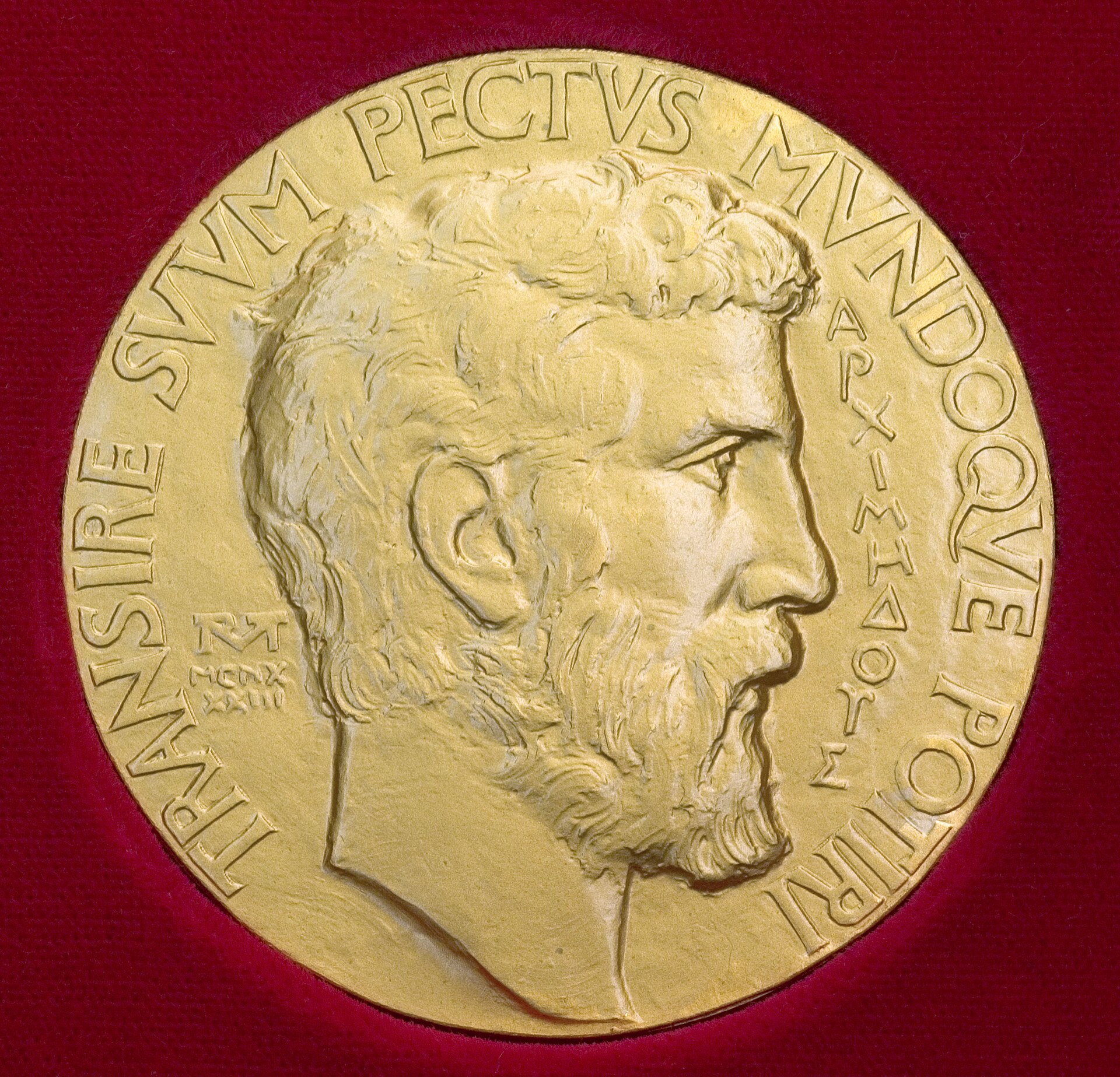 Figure: Obverse of the Fields Medal. Source: Wikimedia Commons
A Wasteland or a New Vein of Ore?
The reaction across technical communities to this high-level intervention highlights starkly divergent worldviews. On Hacker News, the discussion thread quickly garnered 497 points and 566 comments, becoming the most actively debated topic of the day. The conversation swiftly outgrew algorithmic critiques, turning into an existential debate over the fate of human knowledge production. By contrast, on Lobsters, a forum favored by systems developers, a mirrored post attracted only 28 points—an order of magnitude lower in engagement.
In the HN commentary, dissenting voices offered sharp historical counterpoints. A highly upvoted comment pointed out that when Japanese mathematician Shinichi Mochizuki presented his purported proof of the abc conjecture, he effectively delivered an impenetrable framework that defied external comprehension. Yet that opacity did not kill research in the field; instead, it triggered a decade of dedicated conferences, explanatory papers, and intense debate. That very friction and communal effort is precisely what the academic community is built for. An AI delivering incomprehensible proofs need not mark the death of mathematics; it could instead represent a deposit of raw, unrefined ore that forces humanity to invent novel smelting techniques.
Other commentators, however, recalled a colder precedent. Since Deep Blue defeated Garry Kasparov in 1997, chess engines have thoroughly outclassed human players for over thirty years. Today, even grandmasters largely depend on sponsors and streaming rather than pure competitive preeminence. Some developers expressed concern that if algorithms take over the heavy lifting of derivation and formal verification, mathematical research could follow a similar trajectory. Academic research posts might face drastic cutbacks, much like specialized archeology departments, marginalized due to a perceived lack of immediate economic utility.
A chilling philosophical question surfaced: if a large language model proves an epoch-making conjecture, but no human alive can comprehend the underlying derivation, that breakthrough becomes a tree falling in an empty forest—an echo stripped of epistemic meaning.
The authors of the declaration clearly recognize that technological momentum cannot simply be reversed, acknowledging an uncertain horizon: “whether these changes ultimately benefit the field or have a destructive effect will in large part be determined by the decisions of the humans in control of this new technology.”
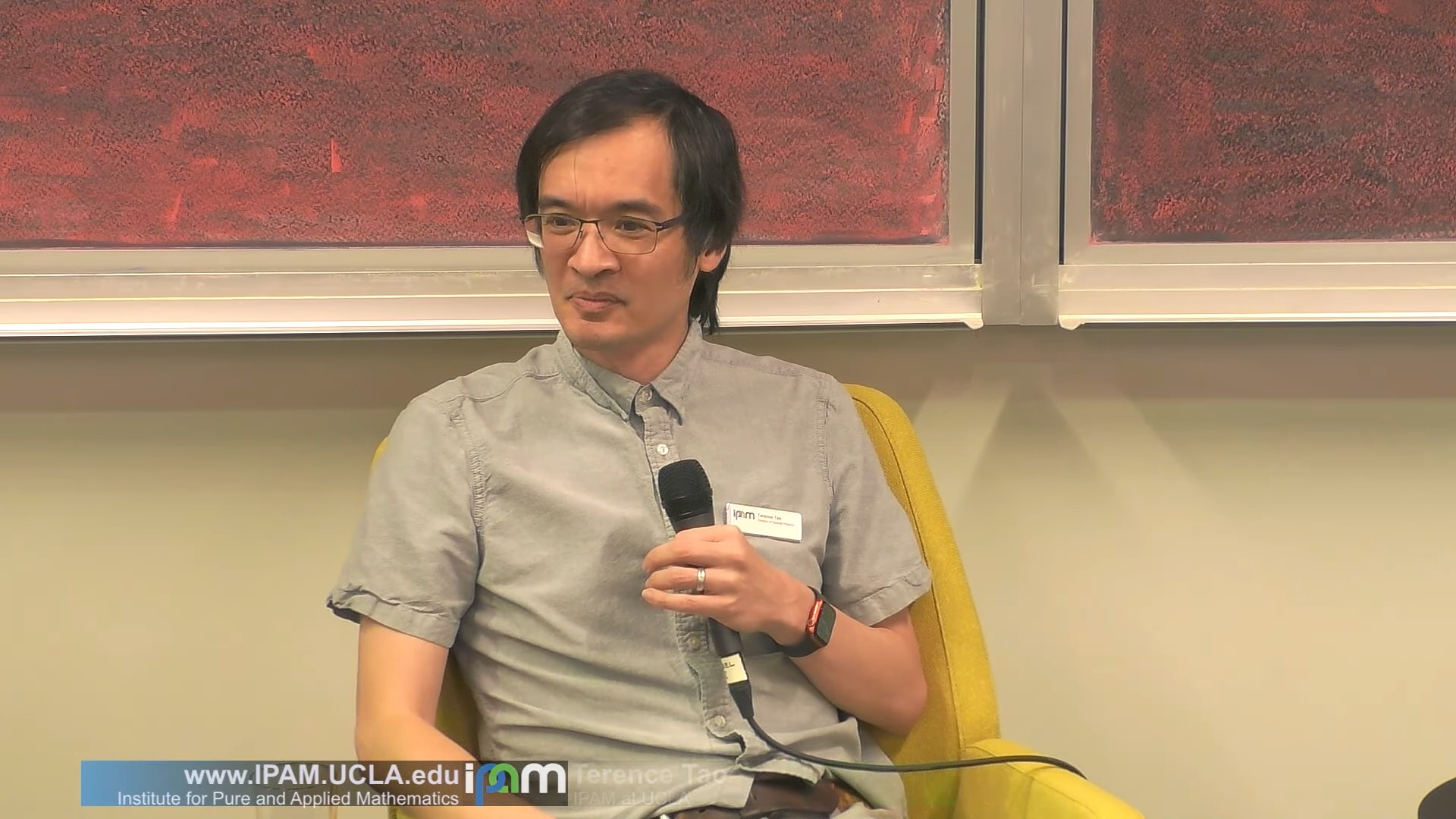 Figure: Terence Tao during a fireside chat at IPAM in 2026. Source: Wikimedia Commons
Without Understanding, Victory Loses Its Meaning
Treating advanced mathematical problem-solving merely as a model benchmark is a triumph of brute-force engineering, but a perilous deviation from scientific progress. While tech companies race for compute supremacy, mathematicians must defend the living artery of human knowledge transmission. Solving problems has always been a conduit; human insight remains the ultimate destination.
Conflating the means with the end to chase vanity metrics on leaderboards threatens to deplete the intellectual soil that sustains scientific inquiry. The edifice of human mathematics has endured for millennia because every conceptual brick can be felt, understood, and reconstructed by the rational faculties of succeeding generations. If blind compute replaces human derivation, the very foundations of the discipline risk dissolving into the void.
References:
- mathandai.org Official Declaration
- Terence Tao’s Blog
- Hacker News Discussion
- Lobsters Discussion