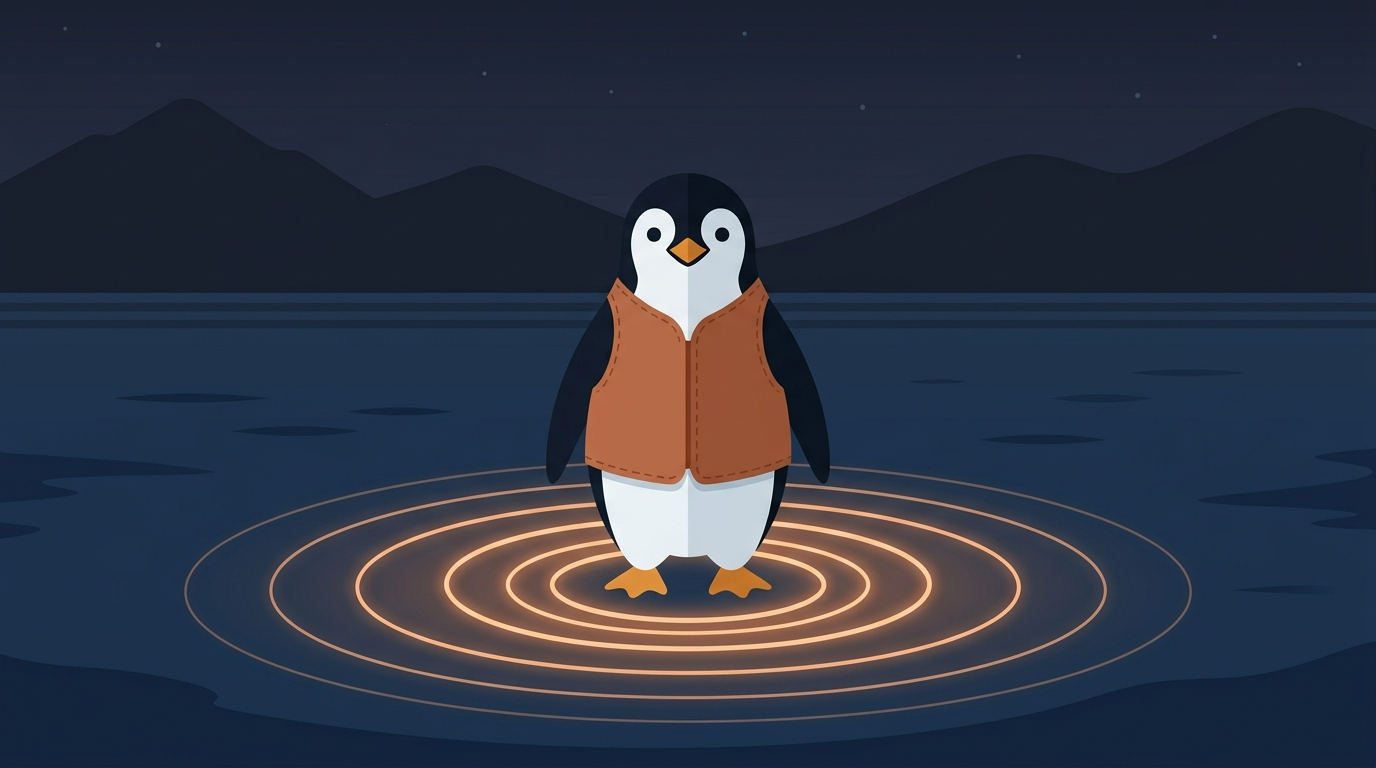
Between 2024 and 2025, a joint survey conducted by Chilean and international researchers across the nation’s primary breeding colonies revealed an alarming reality: the number of active Humboldt penguin nests had plummeted by 63% compared to the exact same survey sites just three years earlier. Meanwhile, at the Buin Zoo on the outskirts of Santiago and across coastal non-profit wildlife clinics, veterinarians found themselves overwhelmed with weakened penguins washed ashore—entangled in commercial fishing nets, sliced by boat propellers, or slowly starving. To help their wounds heal as rapidly as possible, researchers began outfitting them with specialized, form-fitting red vests.
Physical Barrier Meets Metal Ions: Blocking Bacterial Pathways
Penguins’ natural anatomy and instincts present formidable engineering obstacles to clinical rehabilitation. Endowed with remarkably flexible necks and sharp, powerful beaks, penguins instinctively twist around after suffering injuries or undergoing surgery to peck at their wounds, often wrenching fresh sutures straight out of their flesh. This destructive reflex readily reopens wounds, triggering secondary tearing and life-threatening infections. The red vest’s most immediate function is mechanical: providing a tailored, form-fitting physical barrier that isolates the bird’s sharp beak from its vulnerable incisions.
Yet the garment’s core innovation lies in microscopic metallic elements embedded directly within the fabric. Chilean researchers wove copper and zinc microfibers into the vest. Such copper-and-zinc microfiber textiles are not entirely new to veterinary medicine; for years, they have been successfully deployed in domestic pet dermatology—especially for cats and dogs recovering from traumatic skin injuries—with exceptional clinical feedback. When exposed to the moist environment of an animal’s skin, copper and zinc ions are released gradually. Copper ions exert a potent “oligodynamic effect,” piercing the cell walls of bacteria and fungi to disrupt essential intracellular enzymes, suppressing pathogens without reliance on antibiotics. Meanwhile, zinc ions stimulate fibroblast proliferation, promote angiogenesis, and accelerate tissue re-epithelialization.
Ignacio Idalsoaga, director of Buin Zoo, explained the origin of this cross-species intervention: “We started thinking: Why not use it on penguins?” Humboldt penguins, however, possess hydrodynamic, streamlined bodies and dense plumage evolved for deep-sea diving, making off-the-shelf pet apparel completely unwearable. Researchers had to precisely measure the birds first, mapping the contours of their chests and bellies before tailoring the initial production run of custom suits.
Field feedback following deployment was immediate and positive. Tomás Pino, a veterinarian at Conservación Humboldt, an NGO dedicated to marine wildlife rescue in northern Chile, documented the clinical outcomes: “We saw very good tolerance. We noticed that from one day to the next, the wound condition was better.” This not only reduced the length of time penguins spent confined in clinical facilities, but also significantly minimized the risks associated with routine antibiotic overuse.
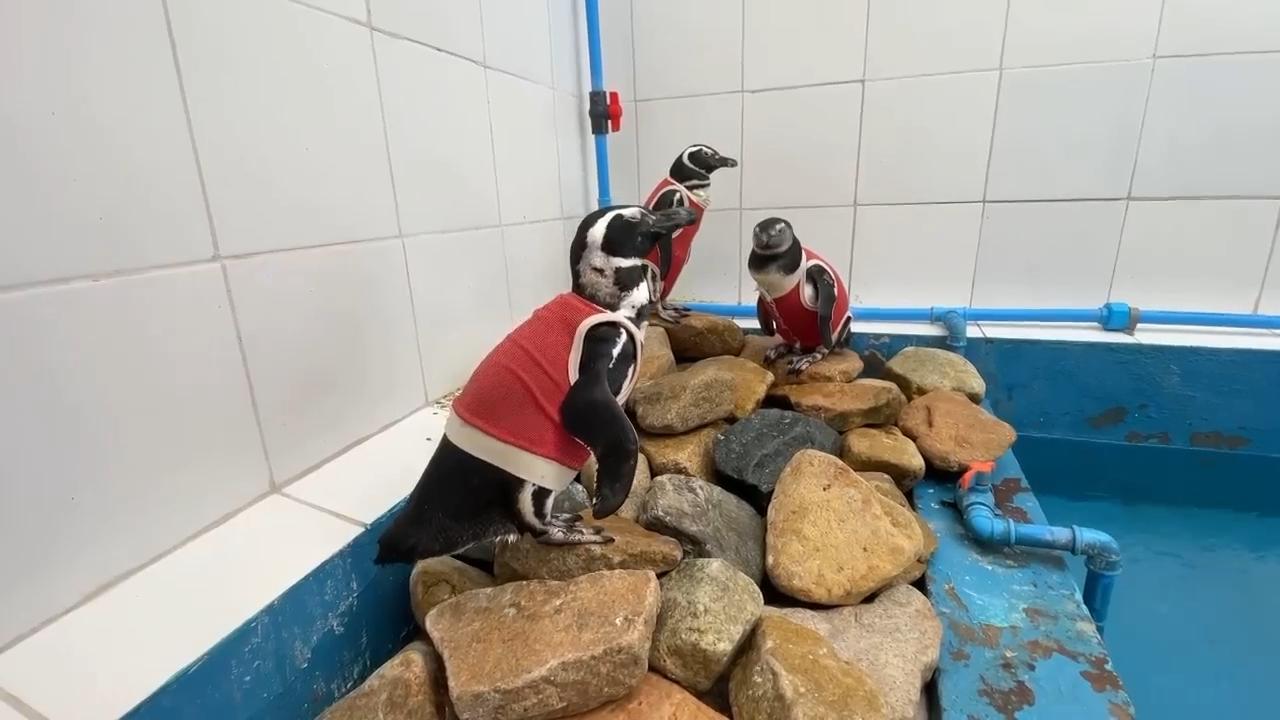 Figure: Chilean researchers designed copper-and-zinc fabric rehabilitation vests for injured Humboldt penguins. Source: AP News
Backed by National Resources: Mining Riches Stitching Ecological Fractures
Chile’s selection of copper as a protective biological material carries unmistakable industrial resonance. As the world’s largest copper producer, copper mining is intrinsic to Chile’s national identity. Transforming heavy industrial ore into micron-thin filaments woven into garments to shield vulnerable wildlife creates a striking technological contrast.
On Hacker News, this interdisciplinary crossover between materials science and conservation biology gained considerable traction, earning 53 points and 16 comments. Much of the community discussion centered on a pragmatic engineering principle: taking a mature veterinary material proven in domestic pet care and deploying it directly into fragile wildlife rescue, skipping years of redundant fundamental R&D to solve an urgent crisis with an off-the-shelf solution.
| Treatment Method | Mechanism of Action | Applicable Scenario | Limitations & Risks |
|---|---|---|---|
| Conventional Surgical Sutures | Mechanically pulls wound margins together to close incisions | Deep lacerations, extensive laceration wounds | Penguins peck and tear at sutures, risking secondary reopening; requires neck collars that birds tolerate poorly |
| Systemic Antibiotics | Suppresses pathogens via bloodstream circulation | Severe systemic infections, critical high-risk phases | Disrupts gut microbiota; prolonged usage fosters drug resistance and increases metabolic burden |
| Topical Ointments | Directly coats wound surface to isolate and disinfect | Superficial abrasions, mild localized inflammation | Easily smeared off by dense feathers; rapidly washes off in water, resulting in fleeting efficacy |
| Copper-Zinc Microfiber Vest | Physical barrier + continuous oligodynamic ion release | Post-operative recovery, extensive superficial wounds | Effective only for external trauma; cannot treat internal pathology; requires custom tailoring |
In practice, most injured Humboldt penguins arriving at clinics are recovered along Chile’s vast coastline. Tomás Pino pointed out that rehabilitation centers consistently receive emaciated birds stranded on beaches. Some suffer limb necrosis after becoming hopelessly tangled in commercial fishing gear; others have flesh sheared to the bone by spinning propellers. Slipping them into red vests woven with their country’s flagship mineral is a modest human effort to make amends after ravaging their ocean home.
A 63% Plunge in Three Years: Ocean Anomalies Sever the Food Supply
Yet propeller cuts and fishing net entanglements represent only a minor fraction of the threats mounting against the Humboldt penguin. Plastic pollution, novel pathogens, and direct competition with industrial fishing fleets already squeeze the species from every direction. But the decisive factor driving the sudden collapse of breeding populations is the growing frequency and severity of El Niño events.
A 63% crash in active nests represents a grim ecological verdict. Losing more than half of active nesting sites in just three years cannot be dismissed as local fluctuation. El Niño brings anomalous surges of warm ocean water, upending the coastal marine ecosystem from the seabed up. In normal years, the robust Humboldt Current (Peru Current) upwells from deep offshore trenches, carrying abundant mineral nutrients that fuel colossal blooms of phytoplankton, supporting massive shoals of cold-water forage fish—the indispensable dietary foundation of the Humboldt penguin.
When El Niño warms surface waters, that upwelling highway is capped. Surface nutrients deplete rapidly, plankton populations collapse, and the marine food web breaks at its base. Cold-water fish seeking suitable temperatures and sustenance are forced to dive deeper or migrate en masse southward toward colder waters. As a consequence, penguin parents venture out hungry and return empty-beaked. They cannot dive dozens of meters into the dark depths, nor can they undertake multi-thousand-kilometer migrations chasing elusive schools of fish.
Starvation forces a brutal reproductive choice: abandoning the brood. When adult penguins cannot secure enough calories to sustain their own survival, they leave their clutches of eggs or young chicks behind to perish. Many penguins beached along the coast bear no visible lacerations; they are simply starved to the brink of death. With lipid reserves drained and muscle tissue withered, they lack even the strength to paddle ashore against the breakers, washing up helplessly in the surf.
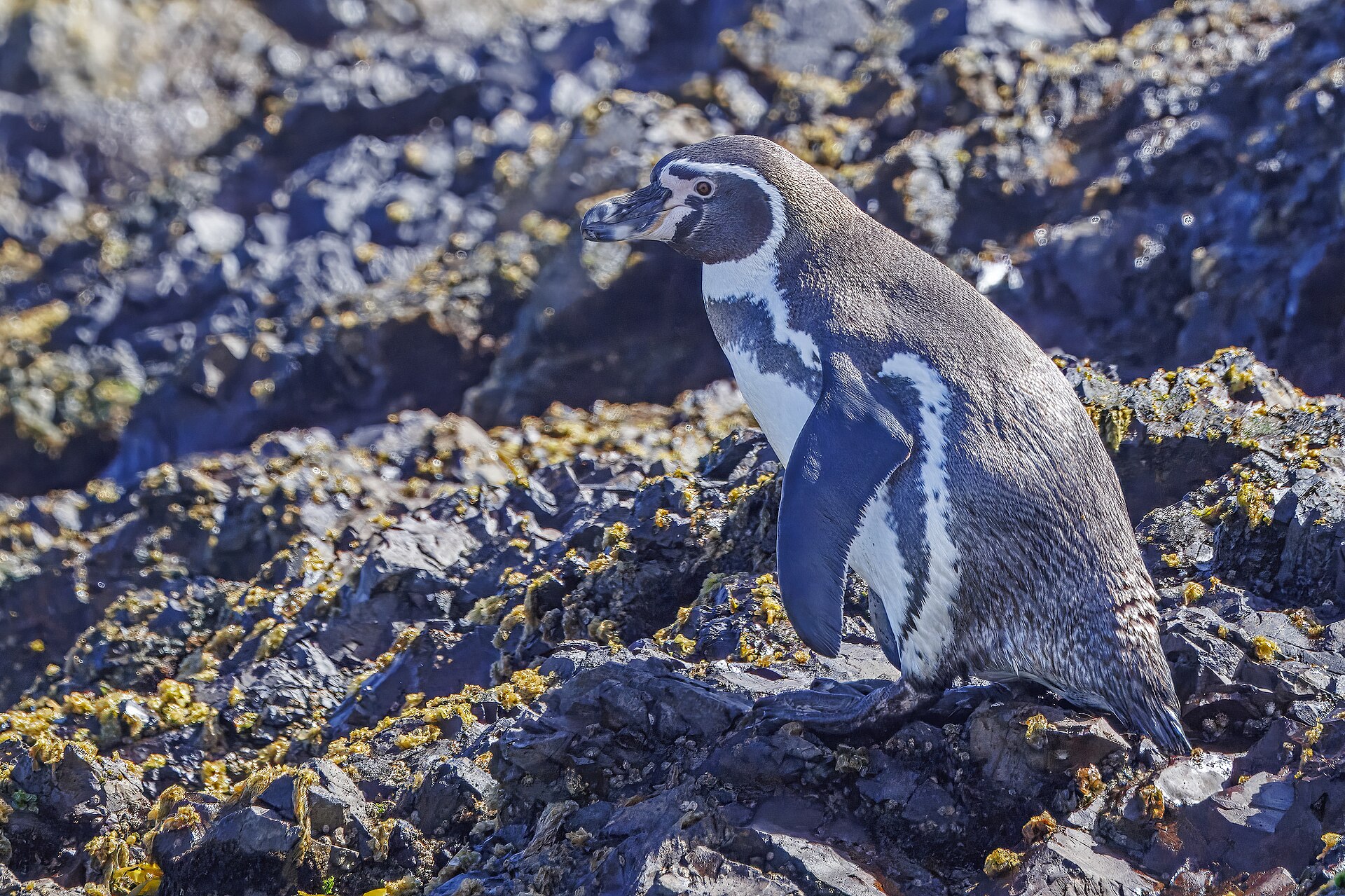 Figure: Humboldt penguins in Chiloé, Chile. Source: Wikimedia Commons
Fabric Heals Flesh, But Cannot Cure What Wounds Them
Transplanting mature copper-zinc microfiber technology from domestic pet care to wild animal rehabilitation is an admirable engineering achievement. Every red vest represents tireless dedication by veterinarians to save individual lives. Yet when one steps back from the clinic examination tables at Buin Zoo to contemplate those 63% vacant nests, this technical ingenuity reveals an unsettling fragility.
The vest heals physical trauma, but cannot heal the forces that inflicted it. Industrial trawlers use sonar to sweep forage fish from the ocean, while propellers tear deep gouges into penguin flesh. Greenhouse gas emissions destabilize global climate cycles, intensifying El Niño into a relentless disruptor that transforms life-giving cold currents into marine heatwaves. Then, humans extract copper from open-pit mines, spin it into microfibers, and gently drape it over the surviving birds. This red vest can suture torn skin, but it cannot mend an ecological foundation fractured by human excess.
Reference Links:
- Chilean researchers customize copper vests for penguins
- Humboldt penguins face compounding survival threats
- Climate change impacts on coastal Chilean ecosystems
- Hacker News discussion thread