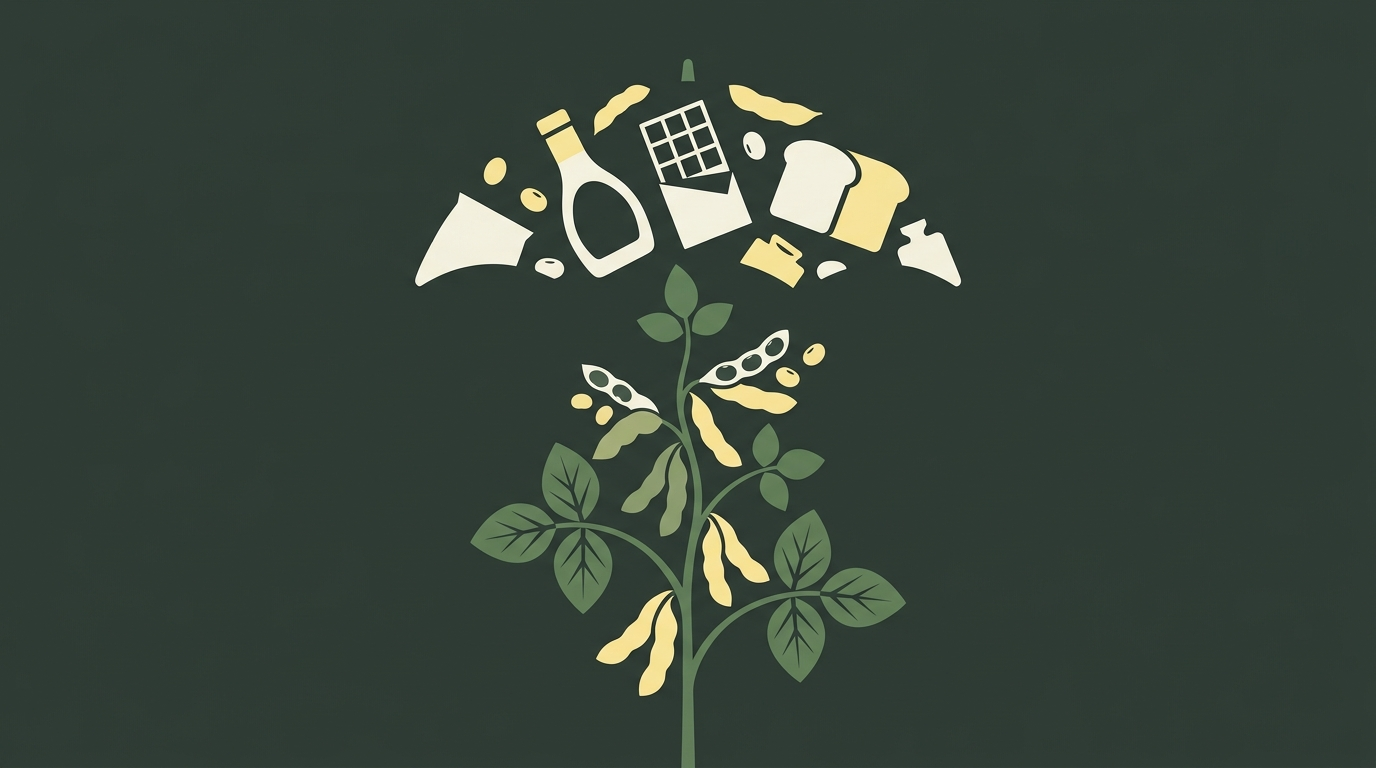
A sandwich slathered with mayonnaise for breakfast, a garden salad for lunch, chocolate chips and an energy bar for an evening snack. Most people assume they spent the day eating wheat, fresh vegetables, and cocoa. But trace those meals back to their agricultural origins, and they share a single, unexpected foundation.
According to projections from the U.S. Department of Agriculture, American farmers are poised to harvest a record-breaking 4.52 billion bushels of soybeans in 2026. At 60 pounds per bushel—roughly the weight of an eight-year-old child—that amounts to approximately 800 pounds of soybeans for every person in the United States. Yet the vast majority of Americans never touch a block of tofu and rarely drink soy milk. Those 800 pounds of calories are hiding in plain sight, engineered into invisibility by the modern industrial food complex.
Behind the Wrapper: Ingredient Lists Saturated with Soy
Industrial processing routinely dismantles the soybean into versatile component parts. Soybean oil lurks in salad dressings, mayonnaise, infant formula, baked goods, and fried snacks. Soy protein is packed into energy bars, breakfast cereals, and canned soups as an economical fortifier and filler.
Another ubiquitous derivative is soy lecithin, a natural emulsifier that keeps oil and water smoothly bound together without separating. It can be found in virtually every mass-produced chocolate bar and loaf of sliced bread, lending a silky texture while extending commercial shelf life.
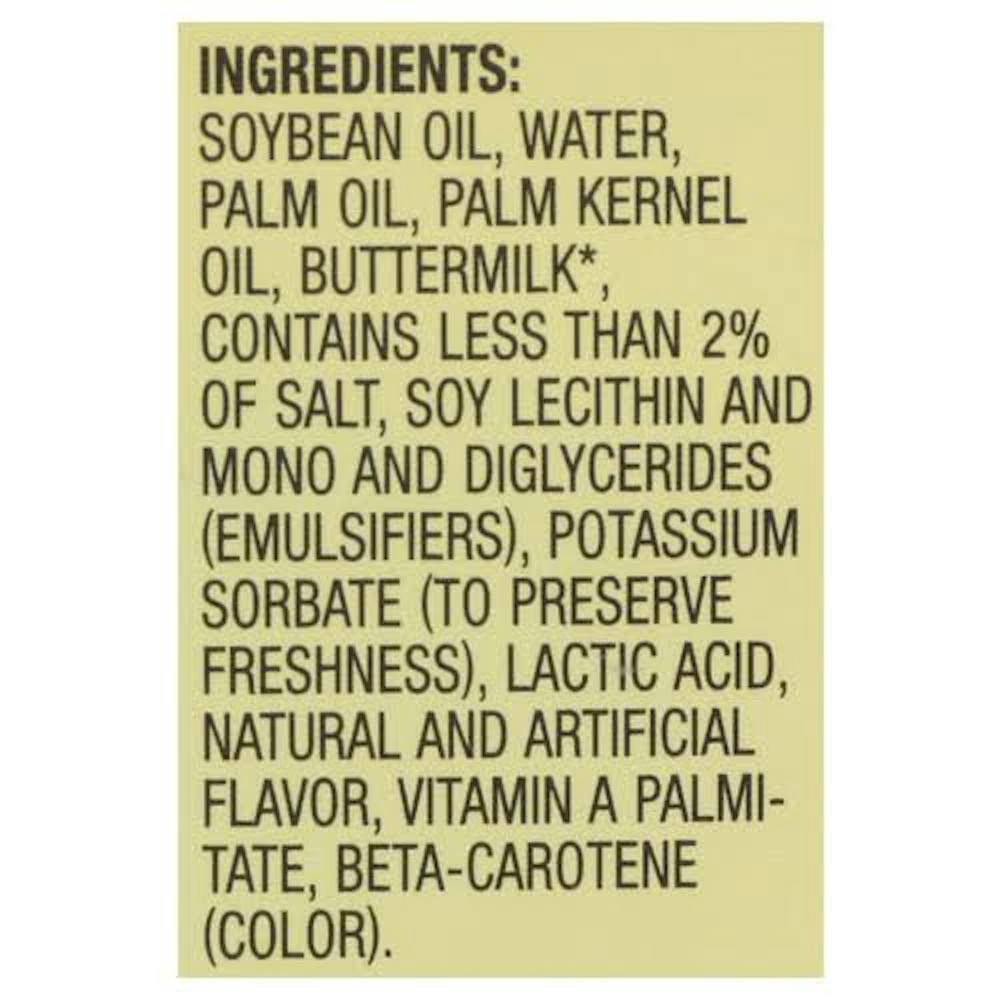 Figure: Food label showing soy-derived ingredients including soybean oil and soy lecithin. Source: The Conversation
Once fractured and refined into odorless, neutral-flavored building blocks, soy fills every crevice of processed grocery items. What contemporary shoppers consume is not the whole legume, but an industrial breakdown of its elements.
A Century in the Shadows: From Foreign Curiosity to American Commodity
The soybean originated in China, where farmers domesticated the crop (Glycine max) from its wild progenitor (Glycine soja) between 6,000 and 9,000 years ago. By the first millennium BCE, early Chinese texts already enshrined it among the revered “Five Grains.”
In North America, however, the legume remained an obscure botanical oddity for generations. In 1764, English sailor Samuel Bowen brought a handful of soybeans to Savannah, Georgia. Although he secured a British patent three years later for his method of brewing soy sauce, the crop largely languished in American obscurity for more than a century.
The turning point came around 1900, when Frank Meyer, an agricultural explorer with the USDA, traveled across China to collect dozens of distinct varieties. Researchers screened these specimens at Virginia’s Arlington Experimental Farm before distributing seed stocks nationwide. In those early decades, the crop was grown almost exclusively as hay and forage for livestock.
The Auto King’s Nightmare Banquet: Henry Ford’s Soy Crusade
During the 1910s, mechanical and chemical crushing technologies emerged, splitting the legume into two lucrative commodities: protein-rich meal for cattle and oil destined for margarine, paint, and soap factories. The crop soon caught the attention of an ardent champion: Henry Ford. In 1933, Fortune magazine remarked that the industrialist was “as much interested in the soya bean as he is in the V-8” engine.
Ford dedicated 8,000 acres in Michigan to cultivate 300 soybean varieties, determined to integrate agriculture into automotive manufacturing. Starting in 1935, every vehicle rolling off Ford assembly lines incorporated roughly a bushel of soybeans in its paints and molded plastic components. By 1941, Ford unveiled his famous “Soybean Car,” constructed with 14 soy-derived plastic panels mounted onto a tubular steel frame.
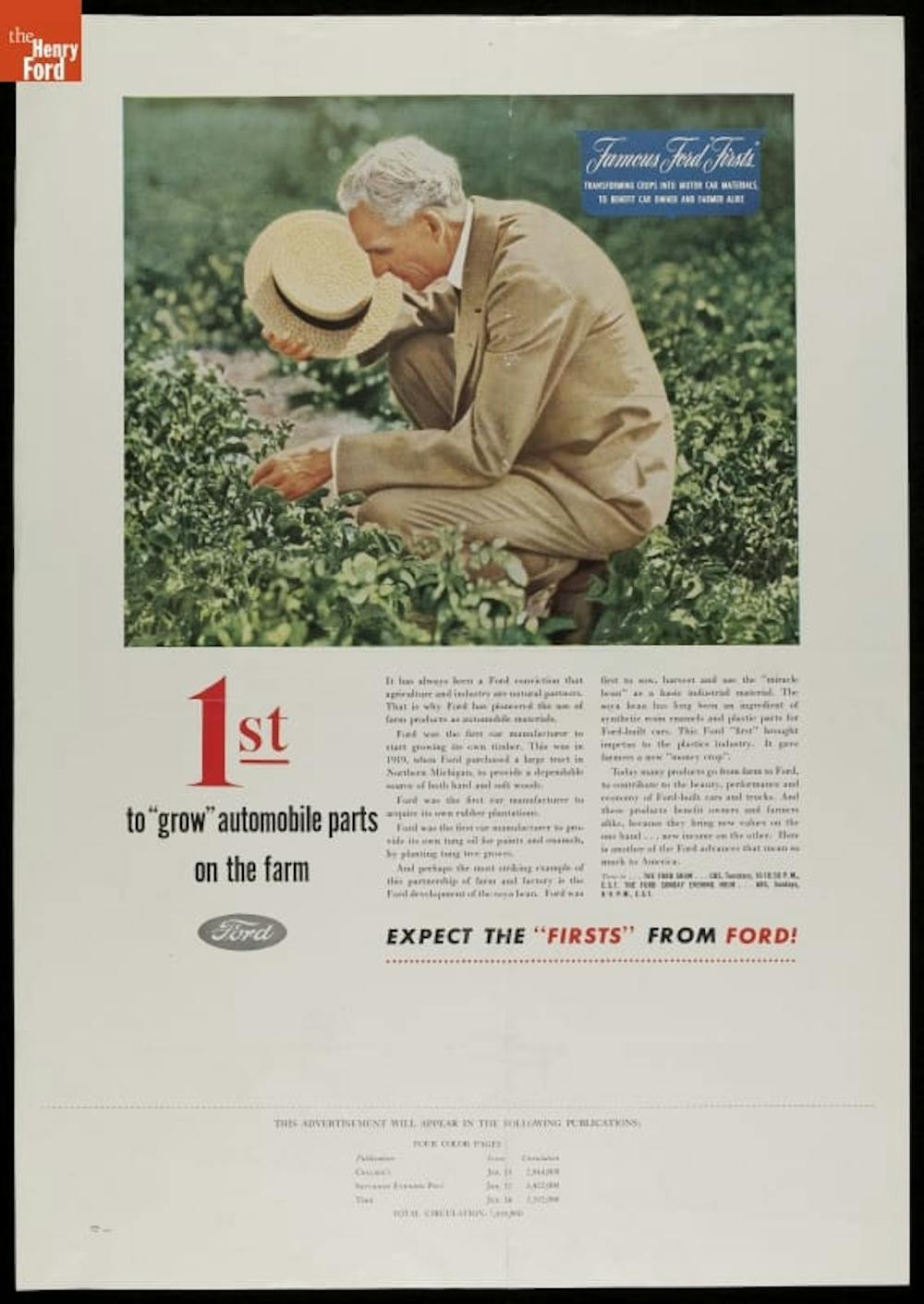 Figure: 1940s promotional campaign featuring Henry Ford in a soybean field. Source: The Conversation
Eager to convert the American palate, Ford hosted an ambitious promotional banquet for 30 journalists at the 1934 Century of Progress Exposition in Chicago. The all-soy menu featured soybean purée, soy cheese, soy bread, soy coffee, and apple pie baked in a soybean crust. The reaction was brutal: one reporter later described the experimental biscuits as “the most vile-tasting things you ever put in your mouth.” Ford’s crusade to have Americans eat whole soybeans collapsed in embarrassing failure.
Wartime Scarcity and the Margarine Boom: Soy Takes the Edible Oil Market
It was war, rather than culinary persuasion, that ultimately secured soy’s place on the dinner table. When World War II severed overseas trade routes for imported fats and tropical oils, domestic soybean oil stepped in to fill the void. Following the war, a booming livestock sector devoured soaring volumes of soybean meal, leaving processors with vast rivers of cheap byproduct oil that urgently required commercial outlets.
Economics quickly reshaped national eating habits. Between 1942 and 1972, annual per capita butter consumption in the United States plummeted from 16.4 pounds to just 5 pounds, while margarine consumption surged from 2.9 pounds to 11.1 pounds. By 2008, soybean oil accounted for approximately 80% of the 18 billion pounds of edible oils consumed nationwide each year.
Beyond the Dinner Table: From School Buses to Fuel Tanks
The reach of soybeans continues to expand well beyond supermarket shelves. In March 2026, newly finalized federal mandates raised renewable-fuel blending requirements, channeling ever-larger volumes of soybean oil toward biomass-based diesel and sustainable aviation fuel. Today, the school buses shuttling children and the jetliners cruising at 30,000 feet run partly on soy.
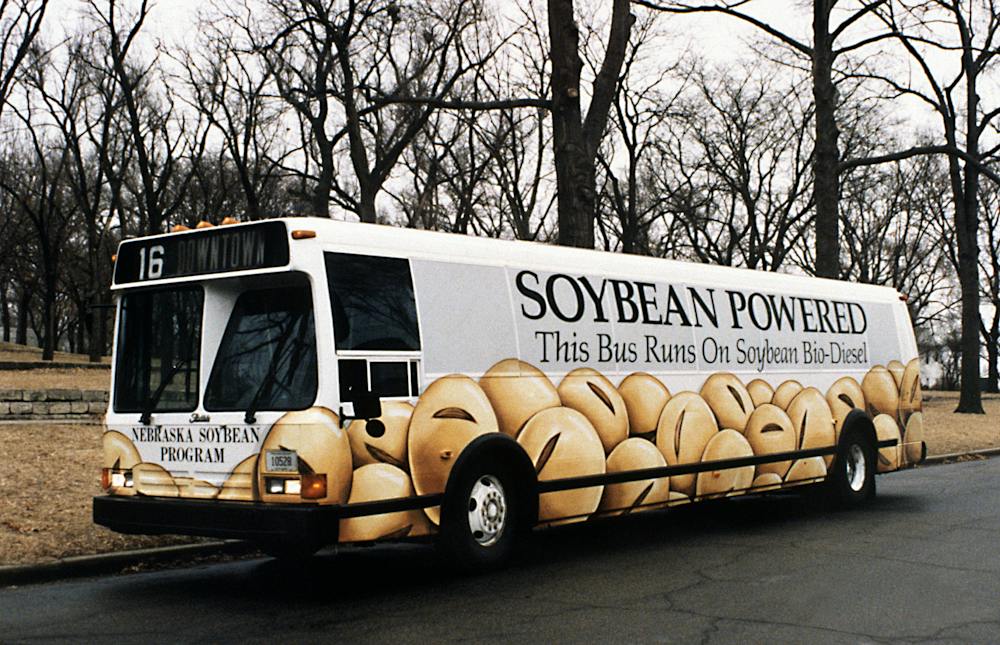 Figure: A bus powered by soybean-based biofuel in Nebraska. Source: The Conversation
On the global stage, soybeans have also emerged as high-stakes geopolitical bargaining chips in international trade. What began as an unheralded legume in rural test plots has evolved into a vital gear driving modern industrial infrastructure.
The conquest of the American diet proves that industrial food systems can fundamentally restructure a nation’s nutritional intake without consumers ever noticing. Fragmented into oil, lecithin, and protein isolates, soy quietly underpins thousands of everyday products. Shoppers wandering grocery aisles may believe they are freely selecting their meals, but the economic menu was decided long before they reached the checkout.
References:
- The Conversation report